Side-by-Side IQ Profile: Herding Minds Unpacked
Both the Australian Shepherd and the Australian Cattle Dog exemplify the sharp intellect required of herding breeds, though their cognitive strengths manifest uniquely across five key dimensions. Examining these specifics reveals the nuanced differences between these two diligent working dogs.
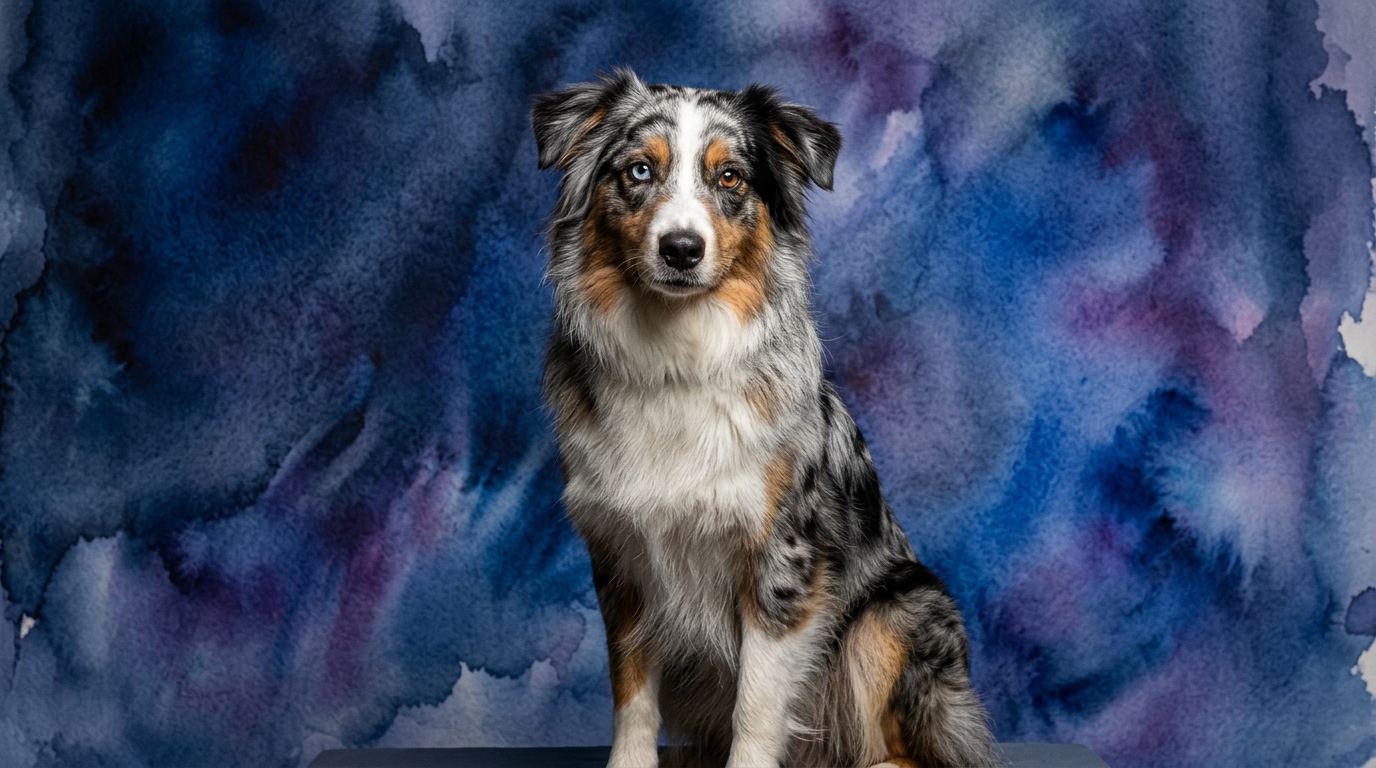
The Australian Shepherd demonstrates exceptional Problem Solving with a perfect 5/5 score, indicating a dog capable of quickly analyzing complex situations and devising effective strategies, whether it's navigating an agility course or figuring out a puzzle toy. Their Training Speed also stands at 5/5, reflecting their eagerness to learn and retain commands with remarkable efficiency and minimal repetition. Where the Australian Shepherd truly shines distinctly is its Social Intelligence, scoring a 4/5; these dogs are particularly adept at reading human emotions and cues, fostering deep, communicative bonds. Their Instinctive Drive is a powerful 5/5, channeling intense herding instincts that require consistent engagement, while their Memory also rates 5/5, ensuring they recall learned behaviors and routines reliably over extended periods.
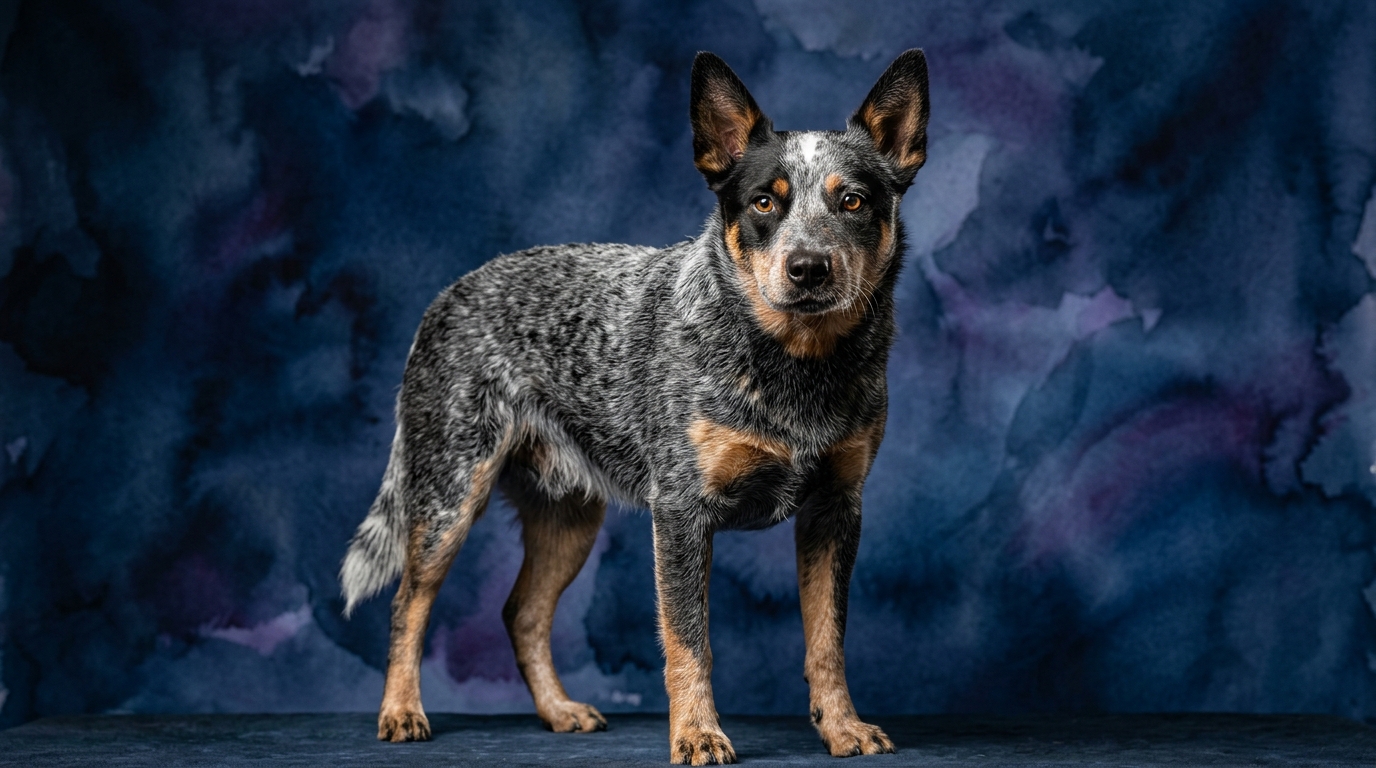
The Australian Cattle Dog matches the Australian Shepherd in several core cognitive areas, starting with a 5/5 in Problem Solving. This reflects their history of independent work on vast ranches, where quick, often solitary, decision-making was paramount for handling stubborn cattle. Their Training Speed is equally impressive at 5/5, showcasing their capacity to absorb and perform complex tasks swiftly once a clear purpose is established. However, the Australian Cattle Dog’s Social Intelligence is a distinctive 3/5; while fiercely loyal to their inner circle, they tend to be reserved, even aloof, with strangers and can be less overtly communicative of their internal state compared to an Aussie. Their Instinctive Drive is a commanding 5/5, characterized by tenacious herding and protective tendencies, and their Memory is also a robust 5/5, crucial for retaining complex commands and territory knowledge.
Where the Australian Shepherd Wins Cognitively
The Australian Shepherd's primary cognitive advantage lies in its elevated Social Intelligence, scoring 4/5 compared to the Australian Cattle Dog's 3/5. This difference isn't merely academic; it translates directly into a more fluid and outwardly expressive relationship with humans and a greater adaptability in varied social contexts. An Aussie is typically more attuned to subtle shifts in human mood and tone, often proactively seeking to engage or comfort their family members.
This enhanced social cognition enables Australian Shepherds to interpret and respond to nuanced verbal and non-verbal cues with greater precision. They often excel in activities like therapy work or service dog roles, where reading human needs and adjusting their behavior accordingly is paramount. While both breeds form deep bonds, the Australian Shepherd's social aptitude generally makes them more outwardly affectionate and universally welcoming to people they deem part of their extended social group, contributing to a perceptibly more 'people-oriented' presence in a home environment.
Where the Australian Cattle Dog Wins Cognitively
The Australian Cattle Dog's unique cognitive strengths are best understood through its unparalleled independence and tenacity, which while reflected in its 5/5 problem-solving, is perhaps more profoundly evident in its Coren ranking of #10—a specific measure of working intelligence and obedience. While the Australian Shepherd isn't formally ranked by Coren, the ACD's high placement underscores a particular type of operational brilliance.
This high ranking often points to a dog that combines rapid learning with an unshakeable resolve to complete tasks, even in challenging environments or when primary human guidance is less immediate. Their social intelligence of 3/5, rather than a deficit, can be seen as an asset in their original working role, fostering a certain self-reliance where they rely more on their own judgment than constant human affirmation. This independence, coupled with their relentless drive, means they are less likely to be distracted by external factors and more prone to seeing a task through to completion on their own terms, making them formidable partners in demanding herding or protective work.
Which Is Easier to Train and Why
While both breeds boast a 5/5 Training Speed, the 'easier' tag is nuanced by their differing social intelligence and innate behavioral patterns. The Australian Shepherd, with its 4/5 social intelligence, often appears more straightforward to train. They are generally more eager to please and more sensitive to their handler's desires, translating into a dog that readily offers behaviors and strives for cooperation. Their higher social attunement means they often pick up on subtle training cues, verbal or otherwise, with greater ease and seem to inherently understand the 'why' behind the exercise, motivated by the desire to engage with their human.
The Australian Cattle Dog, despite its equivalent training speed, can present a different training dynamic due to its 3/5 social intelligence and intense independent streak. While they grasp concepts quickly, they demand a handler who is consistent, clear, and provides a compelling 'reason' for performing a task beyond mere pleasing. An ACD is less likely to blindly follow commands and might 'problem-solve' a way to achieve their own goals if the training isn't structured and engaging enough. Their strong instinctive drive, combined with a discerning social nature, means training sessions need to be stimulating, purposeful, and establish clear leadership to prevent them from taking charge or becoming bored.
Which Makes a Better Family Pet for Active vs. Engaged Owners
For owners who are highly active and deeply engaged, both breeds offer robust companionship, but their specific social and instinctive drives steer them toward different family dynamics. The Australian Shepherd, with its higher social intelligence (4/5) and innate desire for close human interaction, often integrates more seamlessly into a bustling family life. They thrive on being involved in all family activities, from hikes and sports to simply relaxing nearby. Their communicative nature and desire to please make them adaptable to various family social scenarios, though their 5/5 instinctive drive still demands significant physical and mental exercise.
The Australian Cattle Dog, conversely, appeals to highly active owners who appreciate a more independent and tenacious companion, one that often forms a singular, fierce bond with a primary handler while maintaining a more reserved demeanor towards others. Their 3/5 social intelligence means they are less outwardly expressive and may be less tolerant of constant novelty or interaction with many strangers. While equally requiring a 5/5 commitment to exercise and mental stimulation, the ACD prefers structured activities and clear boundaries, flourishing in environments where their intelligence is channeled into specific tasks rather than broad social engagement. Neither breed is suitable for truly 'relaxed' owners; both demand rigorous daily exercise, consistent training, and ample mental challenges to prevent boredom and destructive behaviors.
The Verdict: When to Choose Each Breed
Choosing between an Australian Shepherd and an Australian Cattle Dog hinges on the specific blend of companionship and activity you seek in your home.
The Australian Shepherd is an excellent fit for owners who desire a highly interactive, socially attuned dog that will eagerly participate in all aspects of family life, thriving on communication and collaboration. Its social intelligence and eagerness to please make it an adaptable partner for a wide range of activities and social situations, provided its intense physical and mental needs are consistently met.
The Verdict
Choose the Australian Shepherd if you desire a deeply communicative, socially engaged dog that thrives on collaborative activities and a high degree of integration into family life.
Opt for the Australian Cattle Dog if you value an independent, intensely loyal, and tenacious partner who excels at purposeful work and thrives with a consistent, strong leader, even if it means a more reserved social presence.
🧠 Find Your Pet's IQ Score
Our Pet IQ Lab assessment covers 25+ tests across 5 cognitive dimensions — personalized to your breed.
Take the Full IQ Test →Frequently Asked Questions
Do Australian Shepherds bark more than Australian Cattle Dogs?
Australian Shepherds tend to be more vocal, often using barks to communicate or alert their owners, a trait stemming from their herding style and higher social intelligence. Australian Cattle Dogs are generally more reserved, barking typically only when necessary for warning or protection.
Which breed is better with children?
Both breeds can be good with children in active, experienced homes, but require careful socialization and supervision. Australian Shepherds' higher social intelligence often makes them more patient and adaptable to children's unpredictable movements, while Australian Cattle Dogs' strong herding instinct might lead them to 'nip' at running children if not properly trained and managed.
Are Australian Shepherds or Australian Cattle Dogs more prone to separation anxiety?
Australian Shepherds, due to their strong social bonds and higher need for engagement, can be more prone to separation anxiety if not adequately stimulated or left alone for extended periods. Australian Cattle Dogs, with their more independent nature, may tolerate solitude better, but still require significant mental and physical exercise to prevent boredom and destructive tendencies.