
Side-by-Side Cognitive Profiles
The Cosmic Pet Pet IQ Lab employs a five-dimensional framework to assess canine intelligence, offering a nuanced view beyond simplistic rankings. For the Border Terrier, a breed with a Coren ranking of #30, we see a profile geared towards independent action and rapid learning. Their Problem Solving is rated 4/5, indicating a strong capacity for independent thought and strategic thinking when faced with obstacles. Training Speed also stands at 4/5, reflecting their responsiveness and quick grasp of new commands. Social Intelligence is 3/5, suggesting they form strong bonds but maintain a degree of self-reliance. Instinctive Drive is 3/5, acknowledging their terrier heritage but within a manageable domestic context, and Memory is 4/5, highlighting their ability to retain learned behaviors and experiences.
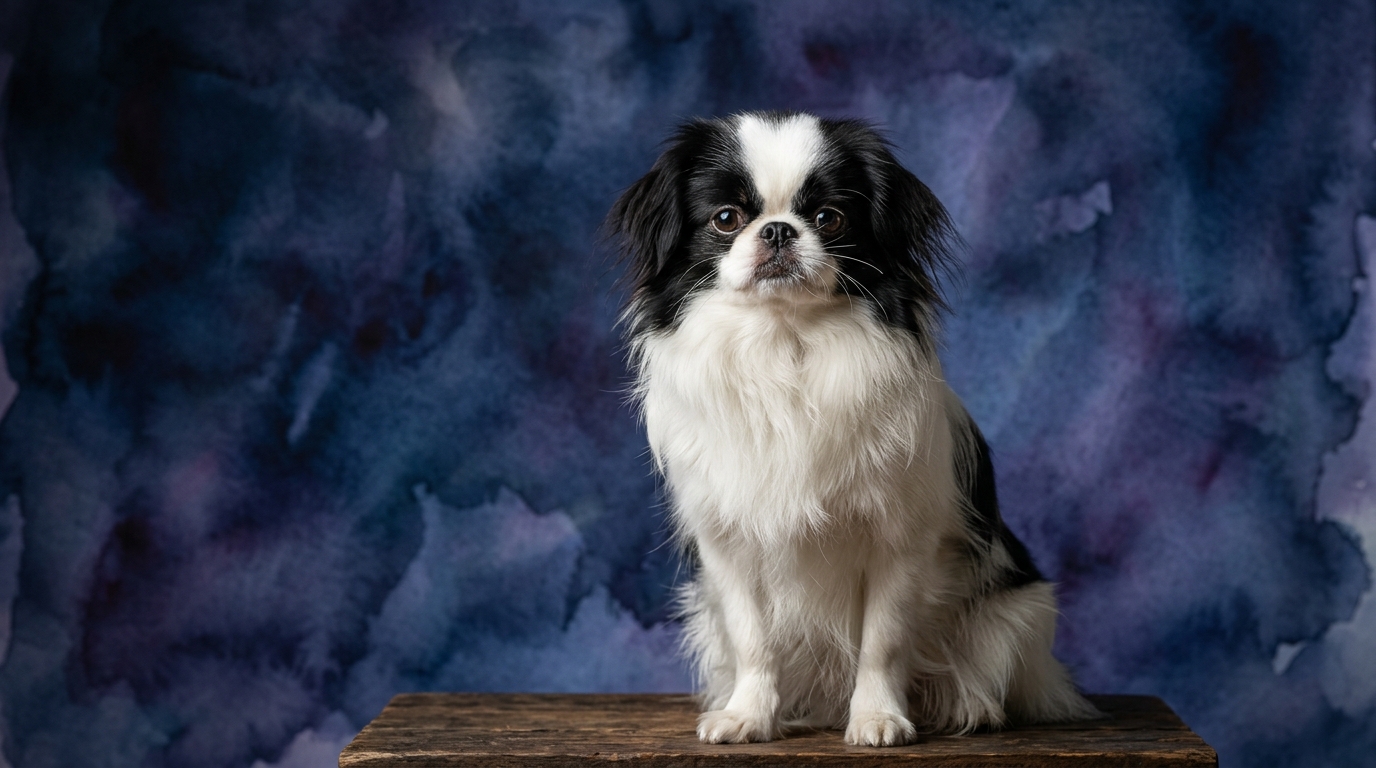
In contrast, the Japanese Chin, a toy breed not included in Coren's traditional rankings, presents a cognitive profile more aligned with companionship and sensitivity. Their Problem Solving is rated 3/5, indicating an ability to navigate familiar challenges but often with a preference for human assistance over complex independent strategizing. Training Speed is 3/5, meaning they learn at a moderate pace, thriving on positive reinforcement rather than demanding rapid mastery. Social Intelligence is 3/5, demonstrating a deep attunement to human emotions and a desire for close connection. Instinctive Drive is also 3/5, reflecting a focus on comfort and interaction rather than pronounced working instincts. Finally, Memory is 3/5, allowing them to recall routines and familiar faces, but perhaps not as readily retaining intricate sequences as a working breed.
Where the Border Terrier's Mind Excels
The Border Terrier's cognitive strengths are deeply rooted in its working history, manifesting most prominently in its problem-solving abilities and training aptitude. Their 4/5 Problem Solving score means they exhibit remarkable resourcefulness, often demonstrating an innate capacity to figure out how to access a desired item, navigate a complex environment, or overcome a physical barrier. This isn't about brute force; it's about strategic thinking, like deciphering how to manipulate a latch or outsmart a puzzle toy, showcasing an independent cognitive approach.
Furthermore, their 4/5 Training Speed is a significant advantage. Border Terriers are often eager students, absorbing new commands and complex sequences with notable efficiency. This stems from a combination of focus and a desire for engagement, making them highly responsive to consistent, stimulating training methods. Their superior 4/5 Memory complements this, allowing them to retain vast repertoires of commands, tricks, and routines over time, making them adept at advanced obedience or canine sports where recall of learned behaviors is paramount.
The Japanese Chin's Unique Cognitive Strengths
While the Japanese Chin's scores might appear numerically lower in some areas, their cognitive profile is perfectly adapted for their role as a devoted companion, showcasing unique strengths that are often overlooked in traditional intelligence metrics. Their Social Intelligence, rated 3/5, manifests as an exceptional sensitivity to human moods and emotional states. They are often profoundly intuitive, capable of mirroring an owner's calm or offering subtle comfort, making them highly attuned emotional barometers within the home.
Their moderate 3/5 Instinctive Drive contributes to another cognitive advantage: adaptability to low-stimulus environments. Unlike breeds with strong working instincts that require constant outlets, the Chin is cognitively content with a quieter, indoor lifestyle where their primary focus is harmonious human interaction. When faced with challenges, their 3/5 Problem Solving often leans towards seeking human assistance or employing gentle persuasion rather than independent, forceful strategies, reflecting a different, often charming, approach to navigating their world. This less direct problem-solving style is a strength in a companion setting, where collaboration with their human is preferred.
Training Dynamics: Border Terrier vs. Japanese Chin
When it comes to trainability, the Border Terrier generally offers a more straightforward experience for owners seeking a responsive learner. Their 4/5 Training Speed means they grasp concepts quickly, and their 4/5 Problem Solving fuels an eagerness to engage with mental challenges presented during training sessions. However, their 3/5 Instinctive Drive, particularly their prey drive, requires consistent management and early socialization to prevent distractions from small animals. Training needs to be engaging and varied to keep their independent minds stimulated, otherwise, they might devise their own, less desirable, activities.
The Japanese Chin, with a 3/5 Training Speed, requires a more patient and nuanced approach. These sensitive dogs thrive on positive reinforcement, gentle guidance, and short, frequent sessions. Harsh corrections are counterproductive and can lead to withdrawal. While their lower instinctive drive means fewer external distractions from hunting instincts, their focus might be more on receiving affection or finding a comfortable spot rather than rigorous task completion. Owners might encounter moments of charming 'selective hearing' if the motivation isn't compelling enough, underscoring the need for high-value rewards and a strong bond to encourage consistent compliance.
Matching Canine Minds to Lifestyles
For the active owner seeking a canine partner for adventures and mental gymnastics, the Border Terrier is often the ideal match. Their high scores in Problem Solving (4/5) and Memory (4/5), combined with a moderate but present Instinctive Drive (3/5), mean they thrive on structured activities like agility, earthdog trials, or long, exploratory hikes. They need consistent mental engagement through training, puzzle toys, and varied experiences to channel their cognitive energy constructively and prevent boredom-induced behaviors. An owner who enjoys teaching new skills and providing ample outlets for their dog's inquisitive nature will find a rewarding companion in the Border Terrier.
Conversely, the Japanese Chin is remarkably well-suited for owners who prefer a more relaxed, companion-centric lifestyle. Their moderate scores across all cognitive dimensions, particularly their 3/5 Instinctive Drive, mean they do not demand extensive physical exertion or complex mental challenges. Instead, they derive immense satisfaction from close human companionship, gentle play, and a comfortable, predictable routine. An owner who values quiet devotion, enjoys a dog that is content to lounge nearby, and appreciates a sensitive, intuitive presence will find the Japanese Chin's cognitive makeup perfectly aligns with their desire for a tranquil, affectionate household member.
The Verdict
Choose the Border Terrier if you seek a resilient, quick-witted canine partner eager for mental engagement and structured activities, capable of mastering complex tasks and thriving with consistent guidance.
Opt for the Japanese Chin when your home offers a calm sanctuary, and you desire a sensitive, adaptable companion whose greatest joy lies in close human connection and gentle interaction, rather than demanding extensive cognitive challenges.
🧠 Find Your Pet's IQ Score
Our Pet IQ Lab assessment covers 25+ tests across 5 cognitive dimensions — personalized to your breed.
Take the Full IQ Test →Frequently Asked Questions
Do Border Terriers need a lot of mental stimulation?
Yes, their high problem-solving and memory scores indicate a significant need for mental engagement. They benefit from puzzle toys, training classes, and varied experiences to prevent boredom and channel their cognitive energy constructively.
Is the Japanese Chin difficult to house train?
Japanese Chins can sometimes be a bit slower to house train due to their moderate training speed, requiring consistent routines and patience. Positive reinforcement and frequent outdoor access are key to success, as they are sensitive to harsh corrections.
How do their social intelligence scores impact their family life?
Both breeds score 3/5, but manifest it differently. Border Terriers are often good family dogs, bonding deeply but retaining some independence, while Japanese Chins are intensely devoted to their primary people, often preferring close proximity and quiet companionship within the home.