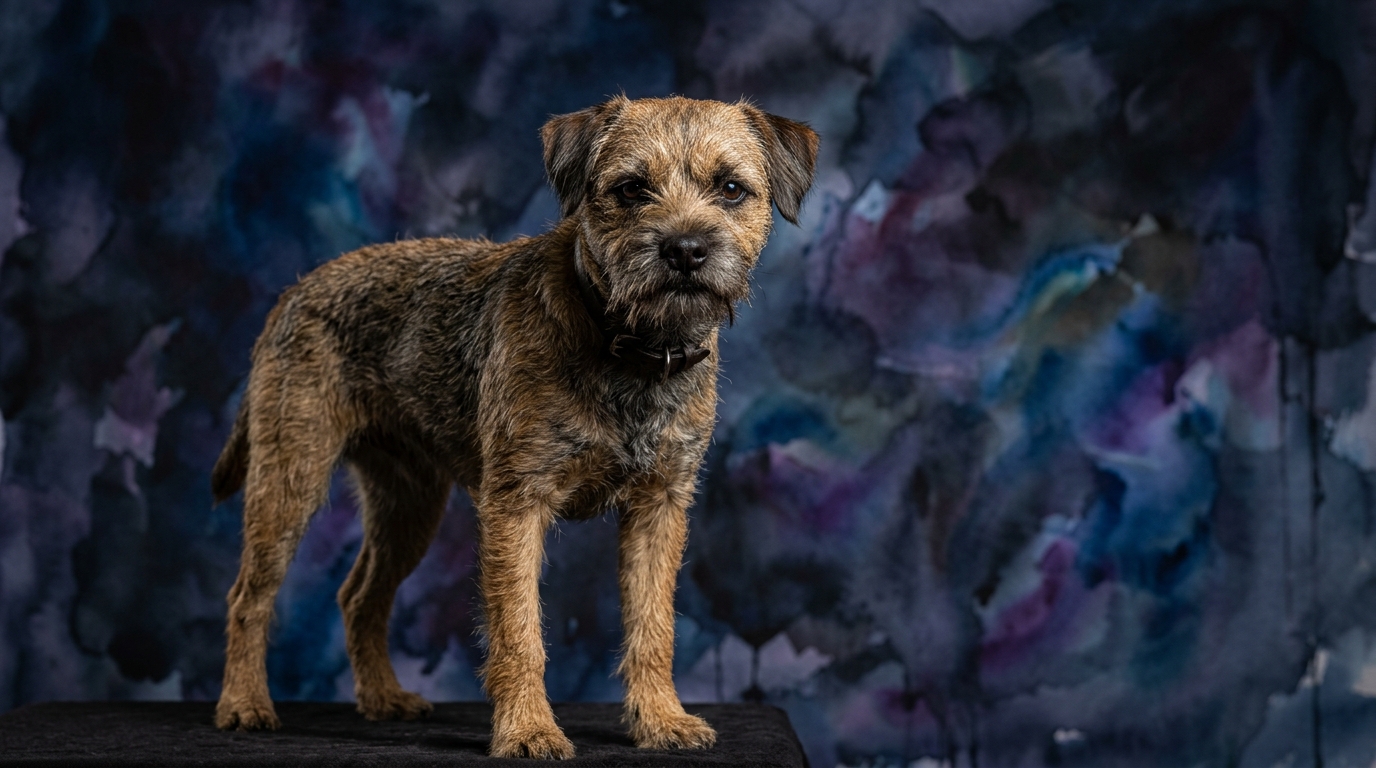
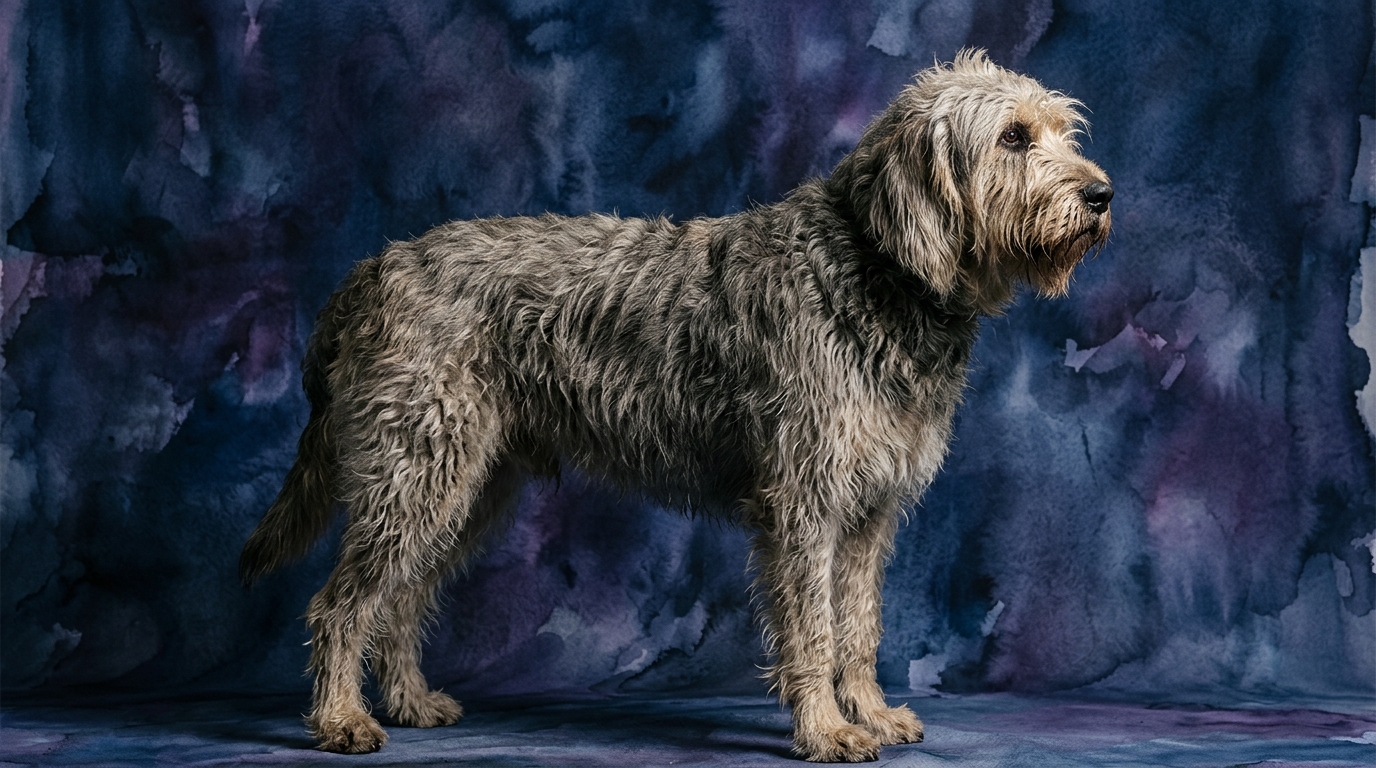
Side-by-Side IQ Profile: Border Terrier vs. Otterhound
At The Cosmic Pet Pet IQ Lab, we evaluate canine intelligence across five key dimensions. For the Border Terrier, a breed ranked #30 by Coren, its scores reflect a sharp, independent working mind. Its Problem Solving is rated 4/5, indicating a strong capacity for independent thought and navigating complex situations, often requiring quick decisions in the field. Training Speed also scores 4/5, suggesting a quick grasp of new commands and a responsiveness to instruction. Social Intelligence is 3/5, indicating a solid connection with its immediate family but perhaps a more reserved demeanor with strangers. Instinctive Drive, at 3/5, points to a moderate but persistent drive for its original purpose, such as hunting small game. Memory, scoring 4/5, highlights its ability to recall learned behaviors and environmental details.
The Otterhound, a robust hound breed not specifically ranked by Coren, presents a different cognitive profile tailored to its unique heritage. Its Problem Solving is rated 3/5, focusing more on persistent tracking than novel environmental manipulation. Training Speed also stands at 3/5, indicating that while trainable, it often requires more patience and repetition due to its independent nature and powerful scent drive. Social Intelligence is rated 3/5, reflecting an amiable but often boisterous disposition, typically bonding well within its 'pack.' Instinctive Drive, also 3/5, is strongly geared towards scent work and tracking, a deep-seated behavioral trait. Memory, scoring 3/5, suggests a functional recall for trails and routines, though perhaps less emphasis on intricate sequences than the Border Terrier.
Where the Border Terrier Leads Cognitively
The Border Terrier demonstrates a distinct cognitive advantage in areas demanding rapid intellectual processing and independent decision-making. Its 4/5 rating in Problem Solving reflects a history of navigating challenging underground terrains and outsmarting quarry, translating into an aptitude for quickly figuring out puzzles or adapting to new household rules. This breed doesn't just react; it often proactively assesses situations.
In terms of Training Speed, the Border Terrier's 4/5 score highlights its eagerness to engage and its ability to form strong associations between commands and actions with fewer repetitions. This mental agility makes them highly receptive to structured learning environments, excelling in obedience and performance sports. Their attention span, when focused on a task, tends to be more sustained than many scent hounds.
The Border Terrier's 4/5 Memory score further reinforces its capacity for intricate learning. They can recall complex sequences of commands, remember specific routes, or retain detailed information about their environment. This robust memory contributes significantly to their overall trainability and their ability to excel in activities requiring precision and recall, such as agility courses or advanced obedience routines. Their Coren ranking of #30 underscores their general capacity for understanding and compliance.
Unique Cognitive Strengths of the Otterhound
While the Otterhound's scores might appear lower than the Border Terrier's in some areas, its cognitive strengths are uniquely adapted to its specialized purpose. Its 3/5 in Problem Solving, combined with a 3/5 Instinctive Drive, manifests as an unwavering persistence in scent tracking. This isn't about quick, novel solutions, but rather the cognitive endurance to meticulously follow a faint scent trail over long distances, filtering out distractions and maintaining focus for hours. It's a specialized form of environmental problem-solving.
The Otterhound's Social Intelligence, rated 3/5, is particularly geared towards cooperative pack dynamics. This involves understanding subtle cues from other dogs and coordinating efforts, a distinct form of social cognition different from human-centric responsiveness. Their amiable nature often fosters smooth interactions within a multi-dog household or during group activities, reflecting a strong sense of canine community.
Regarding Memory, the Otterhound's 3/5 score, while not indicating general superiority, speaks to an exceptional olfactory memory. This breed can recall specific scent profiles with remarkable accuracy, overlaying them onto current trails to effectively map their environment through smell. This specialized memory is crucial for its hunting success and represents a sophisticated form of sensory information processing, vital for its original work in tracking otters through varied terrain and water.
Finally, their Instinctive Drive, also 3/5, fuels a remarkable physical and mental resilience. This cognitive tenacity allows them to work tirelessly for hours in challenging conditions, maintaining focus on their objective despite fatigue or discomfort. It's a strength of sustained mental effort and dedication to a singular goal, rather than rapid, multi-faceted engagement.
Trainability: Which Breed is Easier to Shape?
When considering ease of training, the Border Terrier generally presents a more straightforward experience for most owners. Their 4/5 rating in Training Speed and Problem Solving indicates a natural inclination to grasp commands quickly and engage with their human handlers. They are often eager to please and respond well to positive reinforcement, forming associations between actions and rewards efficiently. Their Coren ranking further supports their higher general trainability, making them good candidates for various canine sports and obedience work.
The Otterhound, with its 3/5 Training Speed, requires a significantly different approach and a greater degree of patience. Their powerful, independent scent drive means they are often more interested in following a compelling smell than in responding to a human command. Training an Otterhound is less about speed and more about consistent, engaging, and highly rewarding sessions that can compete with the allure of their nose. While they can certainly be trained, owners must be prepared for a longer journey, often needing to make lessons more compelling than any environmental distraction, and accepting that their hound instincts will always be a powerful influence on their behavior. Consistency and understanding their hound nature are paramount.
Lifestyle Match: Active vs. Relaxed Owners
For truly active owners seeking a mentally and physically engaging companion, both breeds offer suitable, yet distinct, partnerships. The Border Terrier thrives with owners who can provide consistent mental stimulation, structured training, and varied physical exercise. They excel in activities like agility, earthdog trials, or long, exploratory walks where their problem-solving skills and quickness can be utilized. Their need for engagement means they are not content to be mere couch potatoes and require an owner willing to invest time in their intellectual and physical well-being.
The Otterhound also demands significant physical activity, particularly opportunities for scent-based exploration. Long hikes, extended walks in varied terrain, or safe, contained areas where they can follow a trail are crucial. Their endurance means they can keep going for hours, making them excellent partners for owners who enjoy robust outdoor adventures. However, their exercise needs are more about stamina and olfactory engagement than high-speed bursts or intricate maneuvers.
Owners seeking a truly relaxed, low-maintenance canine companion will find both breeds challenging. A Border Terrier, if not sufficiently stimulated, can become bored and potentially develop undesirable behaviors like digging or excessive barking. Their active minds require an outlet.
Similarly, the Otterhound is not suited for a sedentary lifestyle. While they can be quite calm and affectionate indoors after their exercise needs are met, achieving that relaxed state requires considerable owner effort. An Otterhound deprived of opportunities to engage its powerful nose and expend its energy will likely become restless and vocal. Neither breed is a good fit for owners who prefer minimal daily engagement beyond short walks.
The Verdict
Choose the Border Terrier if you seek a mentally agile, highly trainable companion for sports and intricate tasks, and you enjoy consistent engagement with a quick-witted partner. They thrive with owners who appreciate their problem-solving prowess and memory.
Opt for the Otterhound if you are a patient owner who values a robust, scent-driven companion, willing to dedicate time to long, exploratory walks and understanding the unique cognitive demands of a hound. They are best for those who appreciate deep-seated instinct and endurance.
🧠 Find Your Pet's IQ Score
Our Pet IQ Lab assessment covers 25+ tests across 5 cognitive dimensions — personalized to your breed.
Take the Full IQ Test →Frequently Asked Questions
Are Border Terriers good for first-time dog owners?
Their trainability (4/5) and relatively compact size make them manageable, but their strong terrier instincts and need for mental engagement mean new owners must be committed to consistent training and activity. They are not a "hands-off" breed and thrive with structured guidance.
Do Otterhounds require a lot of grooming?
Yes, their rough, shaggy double coat, adapted for water, requires regular brushing to prevent matting and occasional stripping to maintain coat health. Their characteristic beards can also collect food and water, necessitating frequent cleaning to maintain hygiene.
What kind of activities do Border Terriers excel at?
Given their problem-solving (4/5) and training speed (4/5), Border Terriers excel in activities like agility, earthdog trials, obedience, and rally. Their memory (4/5) also makes them adept at learning complex sequences and performing precise tasks.