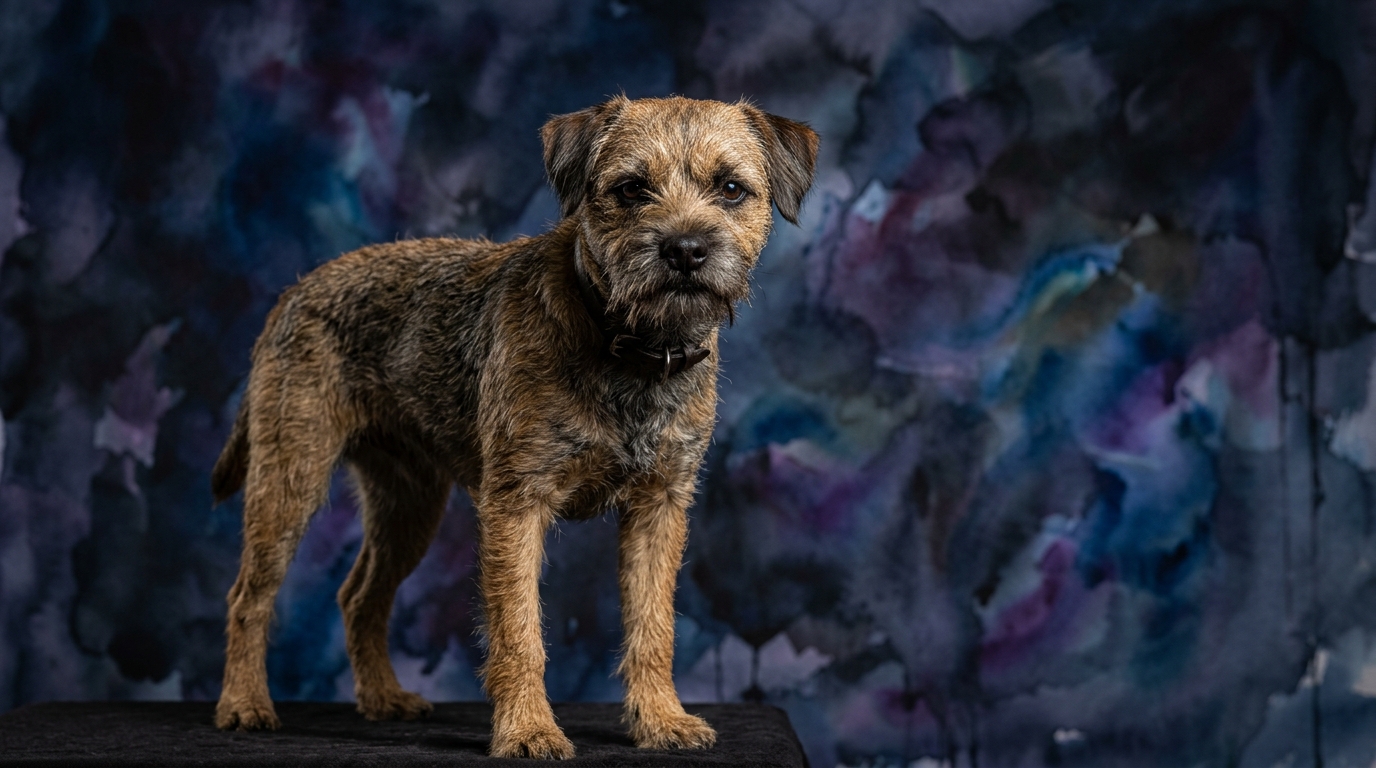
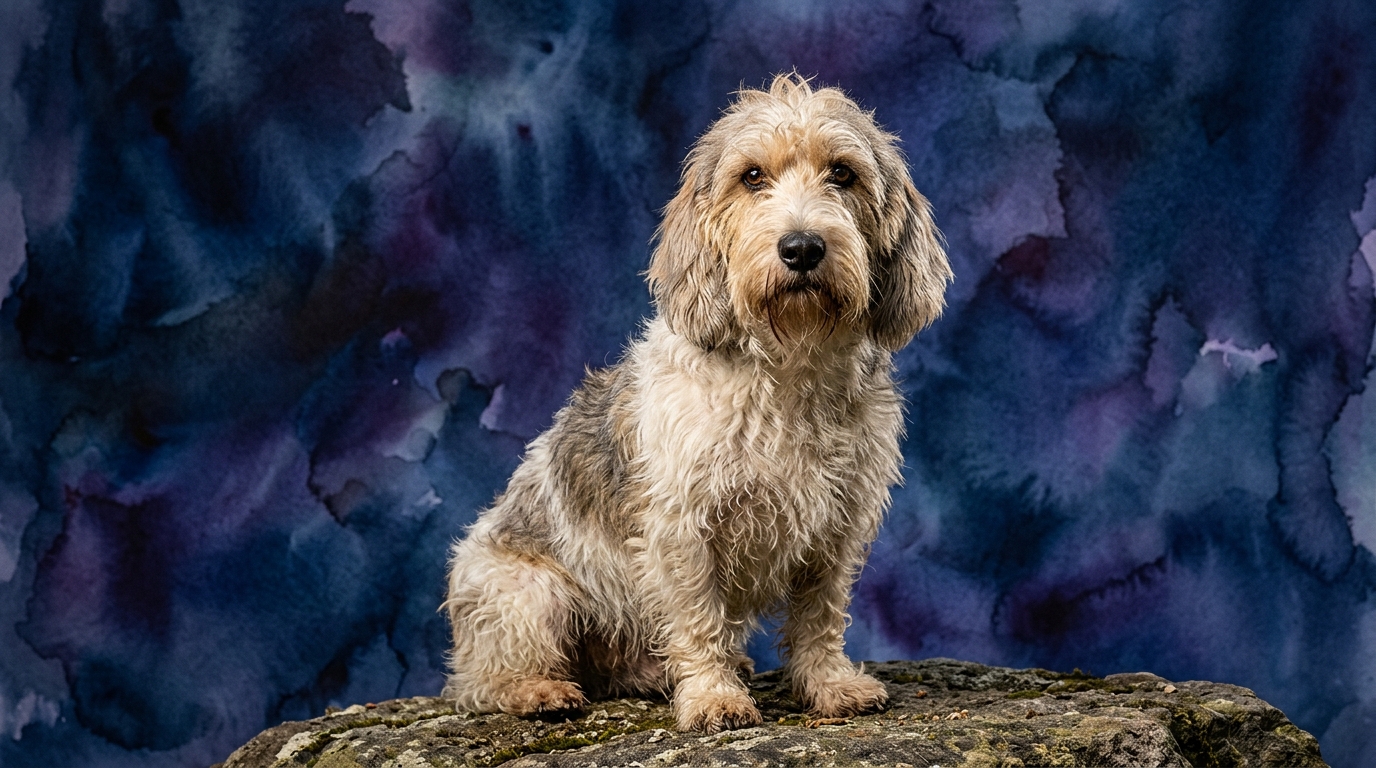
Side-by-side IQ profile
The Border Terrier, Coren-ranked #30, presents a formidable cognitive profile. Their Problem Solving ability rates 4/5, signifying a keen capacity to navigate obstacles and figure out puzzles, often finding innovative solutions to achieve goals. Training Speed also scores 4/5, reflecting their quick grasp of commands and new behaviors, eager to engage in learning. Social Intelligence, at 3/5, indicates they read human cues, but with a characteristic terrier independence. Their Instinctive Drive, 3/5, leans into their vermin hunting heritage, manifesting as strong prey drive, digging, and exploration. Memory, rated 4/5, highlights excellent retention of learned tasks, routines, and spatial awareness.
The Petit Basset Griffon Vendéen (PBGV), while not Coren-ranked, possesses a distinct cognitive makeup shaped by its scenthound heritage. Their Problem Solving is rated 3/5, meaning they resolve challenges but often rely more on senses, particularly scent, than abstract reasoning. Training Speed, 3/5, indicates a moderate learning pace, requiring patience, especially when their powerful nose is engaged. Social Intelligence, 3/5, shows they are affable, but focus can shift to environmental stimuli. Instinctive Drive, 3/5, is profoundly centered on scenting, compelling them to track and explore. Memory, 3/5, allows recall of routines and familiar places, though perhaps not with the same complexity as a Border Terrier.
Where Border Terrier wins cognitively
The Border Terrier distinctly excels in areas requiring rapid cognitive processing and adaptive problem-solving. Their 4/5 rating in Problem Solving means they are adept at navigating complex environments, figuring out how to open doors, or devising strategies to access forbidden areas. This isn't just persistence; it's an active mental engagement, allowing them to learn from experience and apply knowledge to new situations, such as retrieving a toy stuck under furniture.
Furthermore, the Border Terrier's superior Training Speed (4/5) and Memory (4/5) combine to give them an advantage in formal obedience and trick training. They grasp new commands with impressive alacrity, requiring fewer repetitions. Once learned, behaviors are retained reliably, making them consistent performers in dog sports like agility or rally. This cognitive strength allows them to build a broad repertoire of learned behaviors, leading to a highly responsive and versatile companion.
Where Petit Basset Griffon Vendéen wins cognitively
While the PBGV's numerical scores may appear lower, their unique cognitive strengths shine brightly within their specialized domain. Their Instinctive Drive (3/5) represents a highly refined sensory intelligence. They possess an unparalleled ability to process and interpret a vast array of scent information, maintaining focus on a specific trail amidst numerous distractions. This complex cognitive process involves pattern recognition, memory of scent profiles, and sustained attention, allowing them to navigate intricate landscapes purely by olfaction.
This exceptional scenting prowess allows the PBGV to "win" in scenarios demanding sustained, independent work driven by their nose. They can track a scent over long distances and for extended periods, showcasing remarkable endurance and mental stamina. While a Border Terrier might outsmart a puzzle toy, a PBGV could flawlessly navigate a hidden scent trail, demonstrating a form of problem-solving deeply integrated with their sensory perception and historical purpose.
Which is easier to train and why
When evaluating ease of training, the Border Terrier generally presents a more straightforward experience due to their higher scores in Training Speed (4/5) and Memory (4/5). They tend to be more focused on their human partners during sessions and possess a natural inclination to respond quickly. Their problem-solving acumen, while sometimes leading to independence, can be channeled into learning complex tasks and understanding training "rules." They often pick up basic obedience rapidly and are good candidates for advanced training.
The Petit Basset Griffon Vendéen, with a Training Speed of 3/5, typically requires more patience and creative approaches. Their powerful Instinctive Drive (3/5) towards scent means they are inherently more distractible; a captivating smell can easily override a command. Training a PBGV involves making learning more rewarding than scent trails. Consistency, positive reinforcement, and short, engaging sessions are key. Their independent nature and strong drive mean they may not always prioritize human directives, making sustained focus a greater challenge.
Which suits active owners vs relaxed owners
Both breeds are active, but channel energy differently, appealing to distinct types of active owners. The Border Terrier, with 4/5 Problem Solving and Training Speed, thrives with owners who enjoy structured activities. They excel in dog sports like agility, obedience, or earthdog trials, satisfying physical and mental needs. Owners who appreciate a dog learning complex sequences, engaging in interactive games, and accompanying them on brisk walks will find a compatible partner. Their intelligence demands consistent mental engagement.
Neither breed suits a truly sedentary lifestyle. However, if "relaxed" implies less structured, more exploratory activity, the PBGV might align. Their profound Instinctive Drive (3/5) for scent exploration makes them ideal for owners who enjoy long, meandering walks in varied environments, allowing their dog to follow trails. These owners should be prepared for significant outdoor time to satisfy natural instincts, often with a cheerful, boisterous demeanor, but less focus on precision than a Border Terrier.
The Verdict
For owners seeking a quick-witted, adaptable companion who excels in structured learning, enjoys varied activities like agility, and thrives on intellectual engagement, even if it comes with a streak of terrier tenacity. This breed is an excellent match for those who appreciate a dog that learns fast and is eager to participate in training challenges.
For those who appreciate a cheerful, scent-driven companion, willing to embrace their independent spirit and provide ample opportunities for their powerful nose to explore, especially in outdoor environments. This breed suits owners who value a dog's natural instincts and enjoy being led on scent-driven adventures.
🧠 Find Your Pet's IQ Score
Our Pet IQ Lab assessment covers 25+ tests across 5 cognitive dimensions — personalized to your breed.
Take the Full IQ Test →Frequently Asked Questions
Are Border Terriers good at learning tricks?
Yes, their 4/5 training speed and 4/5 memory suggest they pick up tricks quickly and retain them well, often enjoying the mental challenge. They can master a wide array of commands and complex sequences with consistent, positive reinforcement.
How does a PBGV's scent drive affect its trainability?
Their strong instinctive drive for scent (3/5) means they can be easily distracted by interesting smells, making consistent, positive reinforcement training crucial to keep their focus. Owners must understand that a PBGV's nose will often take precedence, requiring patience and creative motivation.
Which breed is more independent?
Both exhibit independence, but the Border Terrier's problem-solving often manifests as self-reliance in figuring things out. The PBGV's independence is more rooted in its historical role as a solo hunter following a scent trail, making them less inclined to seek constant human direction.