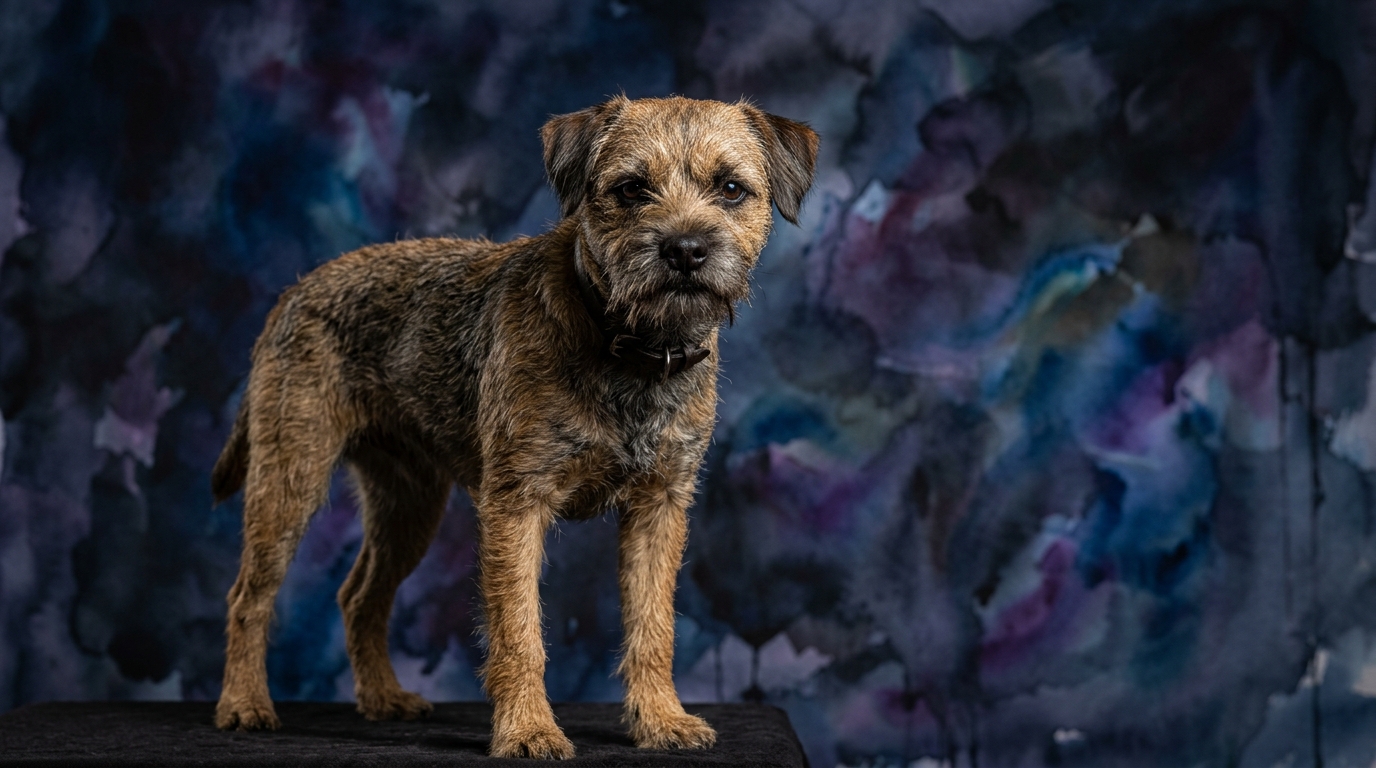
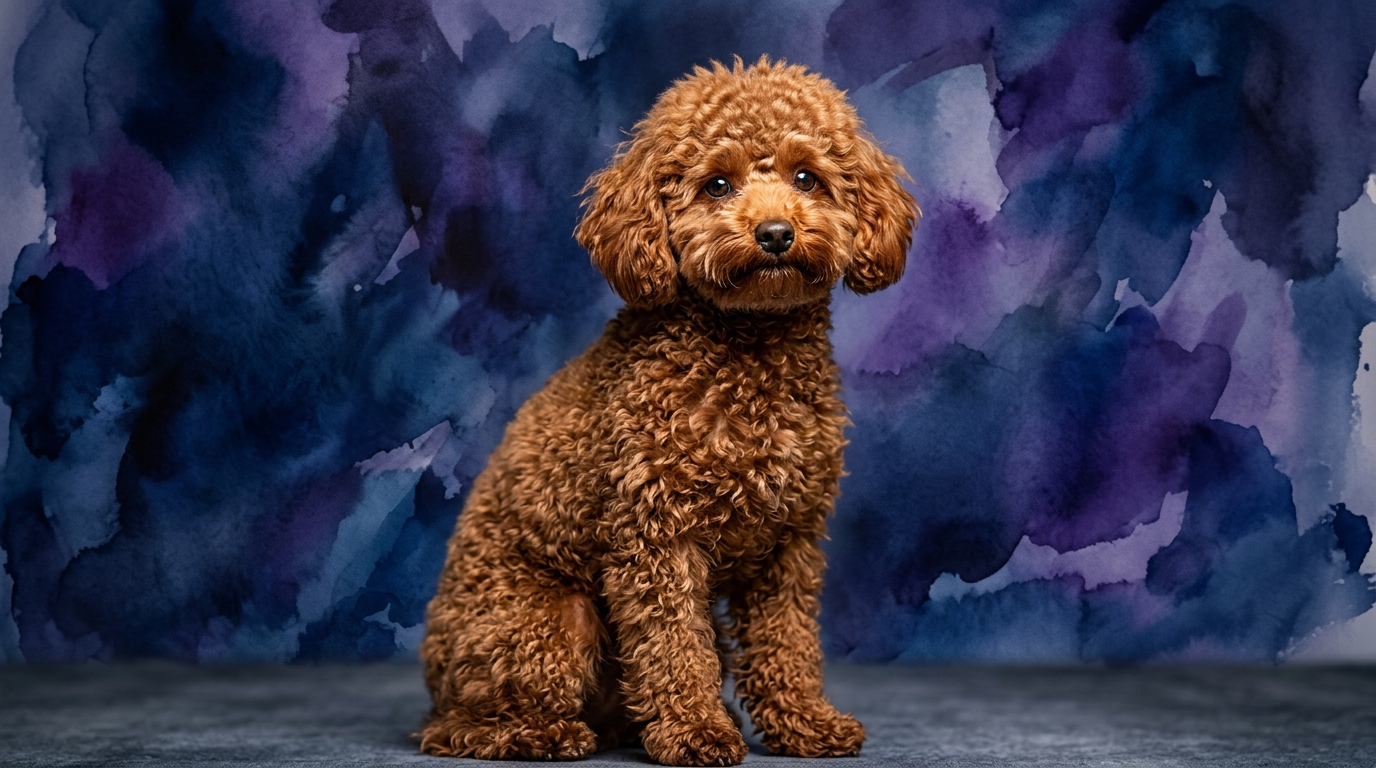
Side-by-Side IQ Profile: Border Terrier vs. Toy Poodle
The Cosmic Pet Pet IQ Lab evaluates five key cognitive dimensions, providing a granular view of each breed's mental landscape. For the Border Terrier, ranked #30 by Coren, its IQ profile reflects a working breed designed for independent action and problem-solving in challenging environments. Its Problem Solving score of 4/5 indicates a capacity for figuring out novel situations and navigating obstacles with resourceful determination, typical of a terrier tasked with finding quarry. Training Speed, also at 4/5, suggests they learn new commands efficiently, though perhaps with a distinct terrier flair for selective hearing if not properly motivated. Social Intelligence sits at 3/5, implying they are capable of reading human cues but might prioritize their own agenda over constant deference. Instinctive Drive, at 3/5, speaks to their inherent drive to hunt and explore, a foundational aspect of their cognitive makeup. Memory, a strong 4/5, means they retain learned behaviors and spatial information effectively, crucial for tracking and navigation.
In contrast, the Toy Poodle, holding an impressive Coren rank of #2, presents a profile of exceptional cognitive flexibility and responsiveness. Its Problem Solving score of 5/5 highlights an outstanding ability to analyze situations, devise solutions, and even manipulate their environment to achieve goals, often in complex social contexts. Training Speed, an exemplary 5/5, signifies their remarkable aptitude for rapidly acquiring and executing a vast array of commands, making them highly receptive to advanced training and tricks. Social Intelligence, matching the Border Terrier at 3/5, indicates they are attuned to human emotions and social structures, capable of forming deep bonds and understanding subtle interactions. Instinctive Drive, also 3/5, points to a moderate level of inherent urges, less focused on traditional hunting and more adaptable to various activities. Their Memory, a perfect 5/5, allows for the retention of extensive command repertoires, routines, and experiences over long periods, contributing to their reputation for consistent performance.
Where the Border Terrier Cognitively Excels
While the Toy Poodle boasts higher scores in several areas, the Border Terrier's cognitive strengths lie in a different kind of practical intelligence. Its 4/5 Problem Solving, coupled with its 3/5 Instinctive Drive, suggests a dog adept at independent, task-oriented thinking. This breed excels at figuring out how to navigate complex physical environments, such as finding a way around an obstacle in a field or locating a hidden toy, often relying on its keen senses and persistent nature rather than explicit human instruction. Their 4/5 Memory supports this by allowing them to recall successful strategies and locations, making them excellent at repetitive, goal-driven tasks like agility courses or scent work where they must navigate a known pattern or find a specific item.
Where the Toy Poodle Cognitively Excels
The Toy Poodle’s cognitive prowess is evident across multiple dimensions, particularly its perfect 5/5 scores in Problem Solving, Training Speed, and Memory. This trifecta allows them to master intricate sequences of commands, excel in competitive obedience, and even learn complex parlor tricks that require multi-step reasoning. Their problem-solving often manifests in understanding human expectations and adapting their behavior accordingly, such as figuring out how to get a specific toy from a tricky spot or even communicating their needs through nuanced behaviors. Their exceptional memory ensures that once a concept or command is learned, it is deeply ingrained, leading to highly reliable and consistent performance in various settings.
Ease of Training: Behavioral Differences
When it comes to ease of training, the Toy Poodle generally presents a more straightforward experience. Their 5/5 Training Speed indicates a rapid comprehension of new commands and a strong desire to please, making them highly responsive to positive reinforcement methods. They thrive on mental engagement and collaboration with their handler, often enjoying the process of learning complex routines and demonstrating their abilities. Their adaptability means they can focus intensely during training sessions, quickly connecting actions with desired outcomes.
The Border Terrier, with its 4/5 Training Speed, is certainly trainable but requires a more nuanced approach. Their terrier heritage imbues them with a degree of independence and a strong instinctual drive, which can sometimes translate into a 'what's in it for me?' attitude. Training them often involves making lessons engaging, consistent, and short, to prevent their attention from wandering to more exciting environmental stimuli. While they learn quickly, their inherent drive to explore or chase might occasionally override a command, necessitating patient, reward-based methods and careful management of their environment to maintain focus.
Suitability for Active vs. Relaxed Owners
For active owners seeking a canine partner for adventures and mental challenges, the Border Terrier is a strong contender. Their 3/5 Instinctive Drive and robust physical nature mean they thrive on regular exercise, exploring new scents, and engaging in activities that tap into their problem-solving skills, such as earthdog trials, agility, or long hikes. Owners who appreciate a dog with a persistent, independent streak and are prepared to channel its natural drives will find a rewarding companion. They require consistent mental and physical stimulation to prevent boredom and potential mischievousness.
The Toy Poodle, while certainly capable of high-energy activities, offers remarkable versatility. Its high Problem Solving and Memory scores mean its cognitive needs can be met through a variety of engaging activities, from advanced obedience and rally to canine freestyle or even therapy work. While they enjoy walks and play, their physical exercise requirements are generally less demanding than the Border Terrier's, making them suitable for owners who might prefer intellectual engagement over strenuous outdoor pursuits. They adapt well to urban living or smaller spaces, provided their minds are kept active with puzzles, training, and interactive play, appealing to both moderately active and more relaxed owners who prioritize mental stimulation.
The Verdict: When to Choose Each
The Verdict
Choose the Border Terrier if you are an active owner who appreciates a tenacious, independent thinker with a practical problem-solving approach and are prepared to engage their natural working drives through consistent, stimulating activities. They thrive with owners who understand and channel their terrier spirit.
Opt for the Toy Poodle if you seek a highly adaptable, rapidly trainable companion who excels at complex learning and thrives on close collaboration and mental engagement. They are ideal for owners who enjoy teaching advanced commands and appreciate a dog that can seamlessly integrate into various lifestyles, from competitive sports to devoted companionship.
🧠 Find Your Pet's IQ Score
Our Pet IQ Lab assessment covers 25+ tests across 5 cognitive dimensions — personalized to your breed.
Take the Full IQ Test →Frequently Asked Questions
Which breed is better for first-time dog owners?
The Toy Poodle's exceptional training speed and eager-to-please nature generally make it a more forgiving and manageable choice for first-time dog owners. Their responsiveness to commands and adaptability can help new owners build confidence in their training skills more quickly than with a more independent breed like the Border Terrier.
Do Border Terriers and Toy Poodles have similar social intelligence?
Both breeds score 3/5 in Social Intelligence, indicating they are capable of understanding human cues and forming bonds. However, the manifestation differs; the Border Terrier's social intelligence often supports its independent working style, while the Toy Poodle's is typically geared towards more cooperative interaction and understanding complex social dynamics within a family unit.
Which breed requires more mental stimulation?
Both breeds benefit from significant mental stimulation, but the *type* often differs. The Toy Poodle's high Problem Solving and Memory scores mean it thrives on learning new tricks, advanced obedience, and puzzle toys. The Border Terrier, with its instinctive drive, benefits from activities that engage its senses and natural instincts, such as scent work, exploring new environments, or interactive games that mimic hunting.