
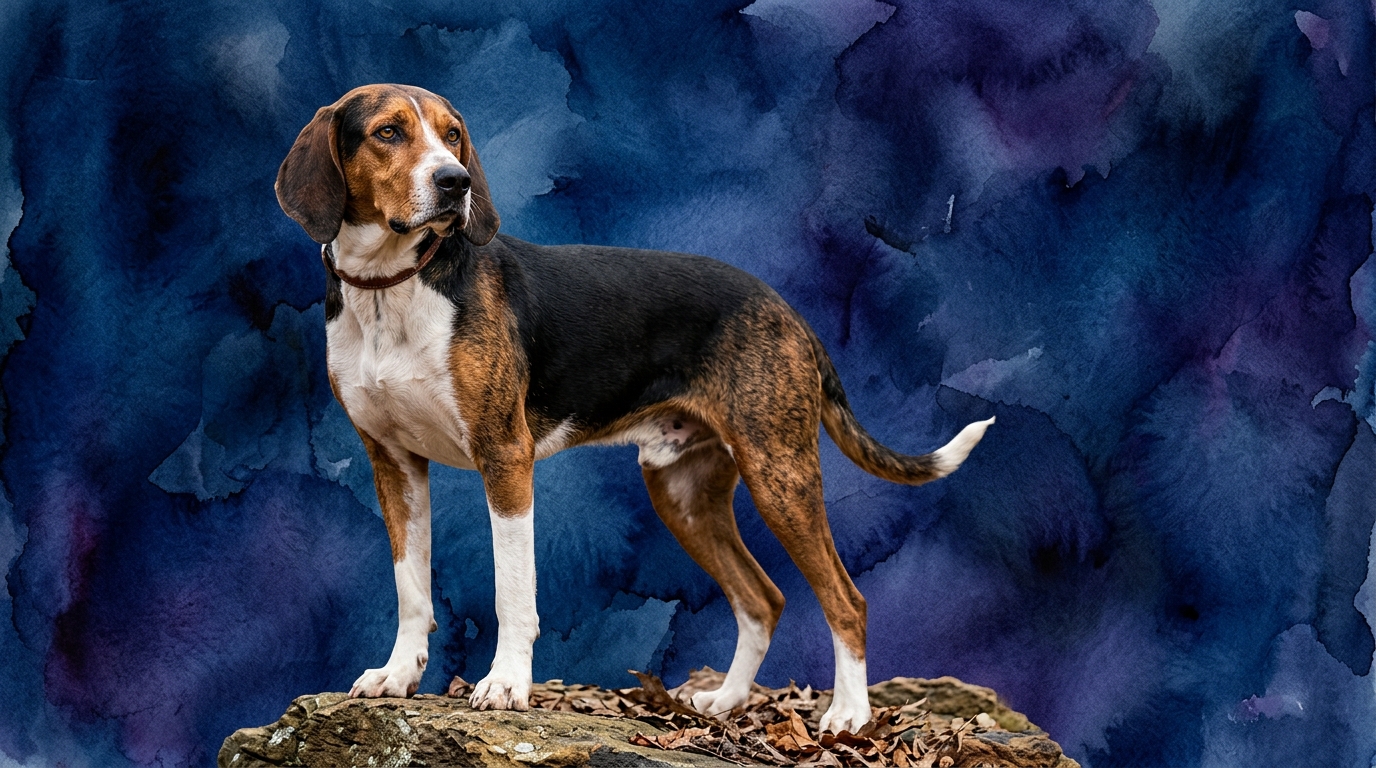
Side-by-Side IQ Profile: Border Terrier vs. Treeing Walker Coonhound
The Cosmic Pet Pet IQ Lab employs a five-dimensional framework to assess canine intelligence, offering a nuanced view beyond simple obedience. For the Border Terrier, a breed with a Coren rank of #30, its cognitive profile paints a picture of a quick-thinking and adaptable companion. Its Problem Solving is rated 4/5, indicating a strong capacity to analyze novel situations and devise solutions, often exhibiting resourcefulness in overcoming obstacles or figuring out how to access desired items. Their mind isn't just quick; it's also adaptable, allowing them to learn from experience and apply past knowledge to new challenges. Training Speed for the Border Terrier is also 4/5, meaning they generally grasp new commands and routines with impressive alacrity. Their eagerness to engage and their ability to quickly associate actions with consequences make them receptive pupils, often requiring fewer repetitions to achieve proficiency in basic obedience and even more complex tasks. Social Intelligence stands at 3/5; while not the most effusive, Border Terriers possess a moderate understanding of human cues and social dynamics within their family unit. They can read body language and tone well enough to navigate household interactions, though their independence means they might not always prioritize human directives over their own interests. Their Instinctive Drive is 3/5, with their terrier heritage manifesting as a moderate but persistent drive for tasks like digging, chasing small prey, and exploring. This isn't an overwhelming, single-minded focus, but it’s a tangible part of their cognitive makeup that influences their engagement with the world around them. Finally, Memory for the Border Terrier is 4/5, as they tend to retain learned information and experiences over long periods. Whether it's a specific route, a command, or a past interaction, their recall is robust, contributing significantly to their trainability and their ability to adapt to consistent routines.
In contrast, the Treeing Walker Coonhound, a breed not formally Coren-ranked, presents a cognitive profile deeply rooted in its specialized hunting heritage. Its Problem Solving is rated 3/5, meaning this breed approaches problem-solving with a practical, often instinct-driven mindset. While they can navigate challenges, their solutions frequently revolve around their primary scenting and tracking drives rather than abstract reasoning; they are adept at figuring out how to follow a trail or locate quarry. Training Speed for the Coonhound is 3/5; they learn at a steady pace, but their independent nature and powerful scenting instincts can sometimes make them appear less responsive to traditional training methods. Consistency and patience are key, as they process information methodically and may require more repetition to solidify commands, especially when distractions are present. Social Intelligence is 3/5, as Coonhounds display a moderate level of social awareness, forming strong bonds with their human families and often getting along well with other dogs. They can interpret human moods and intentions, though their primary focus might shift to a compelling scent if one arises, momentarily overriding social engagement. Their Instinctive Drive, also 3/5, is a powerful, defining characteristic for tracking and treeing; this specialized intelligence governs much of their behavior and cognitive focus, directing their attention to scent trails and the pursuit of game, reflecting a focused, rather than broad, application of instinct. Memory for the Treeing Walker Coonhound is 3/5, as they possess a functional memory for learned routines and familiar environments. While they can recall commands and experiences, their memory is often strongly linked to their sensory experiences, particularly scents, allowing them to remember specific trails or locations with accuracy.
Where the Border Terrier Wins Cognitively
The Border Terrier demonstrates a distinct cognitive advantage in areas requiring adaptable thought and rapid learning. With a Problem Solving score of 4/5, they exhibit a notable capacity for figuring out novel situations, whether it's manipulating puzzle toys or navigating complex environments. This isn't just about persistence; it’s about applying logical sequences to achieve an outcome, making them remarkably resourceful in day-to-day challenges. Their Training Speed, also at 4/5, means they generally pick up new commands and routines with greater ease and fewer repetitions than many breeds. This quick assimilation of information stems from their attentive nature and a strong desire to engage with their human companions in structured activities. Furthermore, their Memory score of 4/5 underpins these strengths, allowing them to retain vast amounts of learned information over time, from specific obedience cues to the layout of their territory. This robust recall contributes significantly to their reliability in various settings and their ability to build upon past learning experiences without constant reinforcement.
Where the Treeing Walker Coonhound Wins Cognitively
While the Treeing Walker Coonhound's general scores might not reach the Border Terrier's peaks, their cognitive strengths are profoundly specialized and exceptionally effective within their intended purpose. Their Instinctive Drive, rated 3/5, might appear equal on paper, but for the Coonhound, this represents an unparalleled dedication to scent work. This breed possesses an extraordinary ability to process and follow complex scent trails, a cognitive task requiring immense focus, discrimination, and endurance. Their problem-solving, though rated 3/5, is acutely tuned to the challenges of the hunt; they excel at figuring out how to navigate varied terrain, overcome obstacles, and persist on a trail for hours, demonstrating a practical, goal-oriented intelligence that is unrivaled in its niche. This sustained, single-minded application of cognitive effort towards a specific, instinctual goal is where the Treeing Walker Coonhound truly shines. Their memory, also 3/5, is particularly adept at recalling specific scent profiles and geographical features associated with a successful hunt, making them masters of their specialized domain.
Which is Easier to Train and Why
Based on their cognitive profiles, the Border Terrier is generally easier to train in a conventional sense. Their Training Speed of 4/5 indicates a quicker uptake of commands, a greater eagerness to please, and a more focused attention span during training sessions. They are often motivated by praise and treats, readily forming associations between actions and rewards. A Border Terrier's higher Problem Solving and Memory scores also contribute, allowing them to understand the 'why' behind commands and retain them consistently. In contrast, the Treeing Walker Coonhound, with a Training Speed of 3/5, requires more patience and a different approach. Their powerful Instinctive Drive for scent work means they can be easily distracted by compelling odors, often prioritizing a fascinating scent over a human command. While capable of learning, their independent nature as a hound means they might question the immediate utility of a command or simply become engrossed in their environment, making consistent recall and off-leash reliability more challenging without extensive, consistent, and highly motivating training.
Which Suits Active Owners vs. Relaxed Owners
The Border Terrier, with its balanced cognitive profile and moderate instinctive drive, suits active owners who enjoy engaging their dog in various activities beyond just physical exercise. Owners who appreciate a dog that can quickly learn new tricks, participate in dog sports like agility or earthdog trials, and enjoy interactive puzzle toys will find the Border Terrier a rewarding companion. They thrive on mental stimulation and consistent interaction, making them a good fit for families or individuals who can integrate them fully into their daily routines and provide structured learning opportunities. For relaxed owners, neither breed is truly a 'couch potato.' However, the Treeing Walker Coonhound, with its immense endurance and powerful scent drive, demands a specific kind of active owner. These are individuals dedicated to providing outlets for their hound's primary instinct – tracking, long hikes, or even participation in scent work competitions. A relaxed owner who cannot fulfill this deep-seated need would likely find a Coonhound restless and potentially destructive. Their cognitive focus is on the hunt, and without that outlet, their energy and mental faculties can become misdirected. Therefore, while both require activity, the Border Terrier suits a broader range of 'active' lifestyles, whereas the Coonhound needs an owner whose activity aligns with its specialized intellectual and physical requirements.
The Verdict
Choose the Border Terrier if you seek a quick-witted, adaptable companion eager to learn a variety of tasks, thrive on mental engagement, and integrate smoothly into a diverse range of family activities.
Opt for the Treeing Walker Coonhound if you are a dedicated owner prepared to channel their immense, specialized scent drive into purposeful activities, appreciating a dog whose cognitive world is profoundly shaped by the thrill of the trail.
🧠 Find Your Pet's IQ Score
Our Pet IQ Lab assessment covers 25+ tests across 5 cognitive dimensions — personalized to your breed.
Take the Full IQ Test →Frequently Asked Questions
Does the Border Terrier's problem-solving ability make them prone to mischief?
Their 4/5 problem-solving score means they are adept at figuring things out, which can sometimes extend to opening cabinets or escaping enclosures if not properly managed. This resourcefulness requires consistent mental engagement and secure environments to prevent unintended "problem-solving" behaviors.
How does the Treeing Walker Coonhound's Instinctive Drive impact its behavior at home?
Their 3/5 Instinctive Drive for scent work means they can be highly focused on smells, potentially leading to a tendency to follow their nose outdoors and be less attentive to commands when a strong scent is present. Indoors, this drive might manifest as curious sniffing or a desire to explore, but it primarily affects their outdoor activities.
Is a Border Terrier better with children due to its social intelligence?
With a 3/5 social intelligence score, Border Terriers are generally good with children, especially when raised together and properly socialized. They can understand social cues, but their terrier nature also means they appreciate respect for their space, making supervision always important with young children.