Side-by-Side IQ Profile: Boston Terrier vs. Akita
The Cosmic Pet Pet IQ Lab employs five distinct dimensions to evaluate canine intelligence, offering a nuanced perspective beyond simple obedience. For both the Boston Terrier and the Akita, a Coren rank of #54 suggests an average working and obedience intelligence, yet their cognitive architecture presents a compelling contrast.
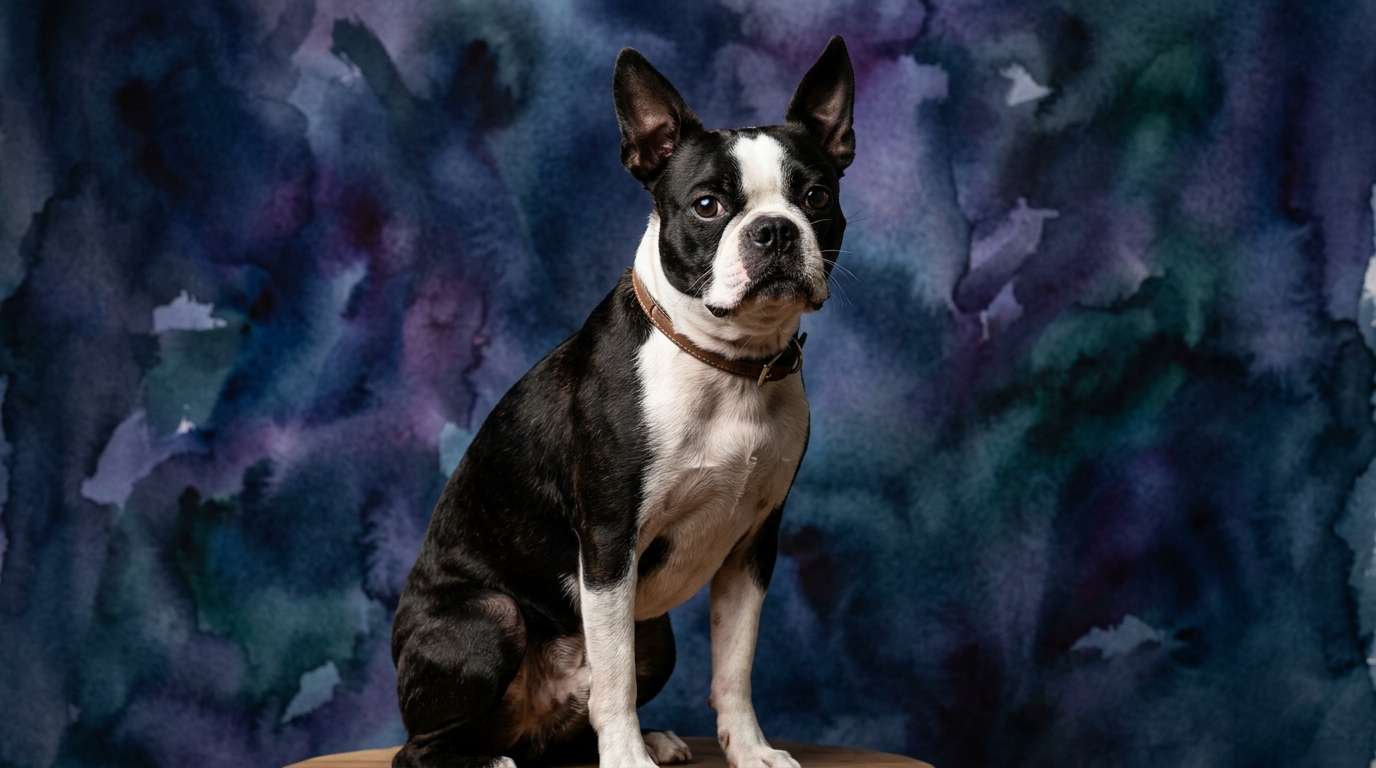
The Boston Terrier, classified in the Non-Sporting group, exhibits a Problem Solving score of 3/5, indicating a moderate capacity for navigating novel challenges and strategizing. Its Training Speed is also 3/5, suggesting it learns new commands at an average pace, often aided by its eagerness to please. Where the Boston truly shines is in Social Intelligence, scoring a robust 4/5, reflecting its strong attunement to human emotions and social cues. Its Instinctive Drive is lower at 2/5, aligning with its role as a companion animal rather than a working breed driven by primal tasks. Memory for the Boston Terrier stands at 3/5, meaning it retains learned information and experiences reasonably well.
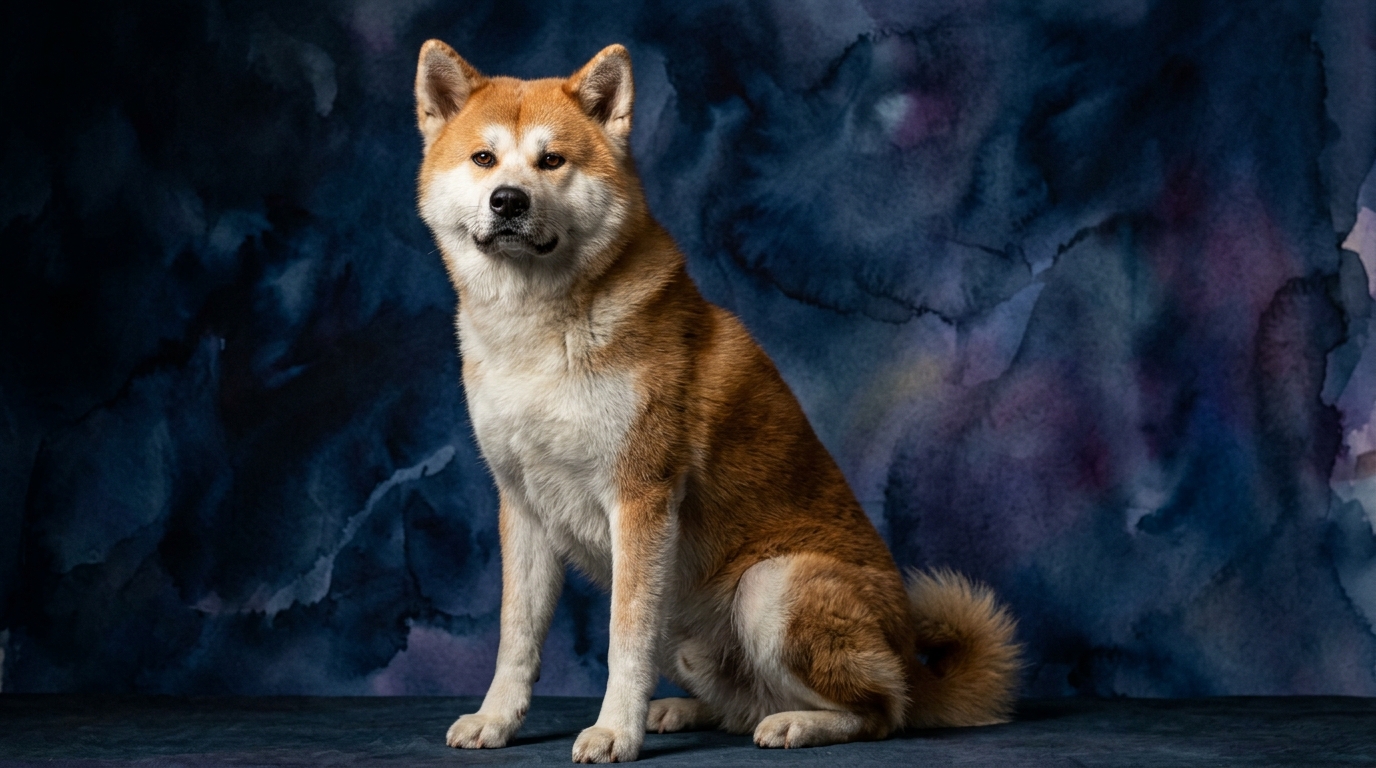
Conversely, the Akita, a powerful Working breed, shares the Boston's Problem Solving score of 3/5, demonstrating a similar foundational ability to work through dilemmas. However, its Training Speed is a lower 2/5, indicating a slower acquisition of new commands, often stemming from its independent nature rather than a lack of understanding. The Akita's Social Intelligence is 3/5, suggesting a more reserved and selective engagement with humans compared to the Boston. Its most striking cognitive feature is its Instinctive Drive, a perfect 5/5, reflecting its deep-seated guarding, hunting, and protective instincts. The Akita also boasts a superior Memory at 4/5, showing a strong ability to recall past events, lessons, and interactions over time.
Where the Boston Terrier Wins Cognitively
The Boston Terrier's cognitive strengths are deeply rooted in its companion animal heritage. Its superior Social Intelligence (4/5) allows it to excel in environments where nuanced human-canine interaction is paramount. This breed often demonstrates a remarkable ability to read facial expressions, body language, and vocal tones, making it particularly responsive to its owner's moods and intentions. This translates into a dog that is often more empathetic and attuned to the emotional atmosphere of a home, frequently offering comfort or playful distraction precisely when needed. Their moderate training speed (3/5) combined with this social acumen means they typically pick up house rules and social etiquette quickly, adapting to family routines with relative ease.
Furthermore, the Boston Terrier's lower Instinctive Drive (2/5) means it is less predisposed to independent, task-oriented behaviors that might conflict with a domestic setting. Instead, its problem-solving (3/5) is often directed towards figuring out how to gain attention, access a favorite toy, or navigate a household obstacle, all within the context of its human family. For instance, a Boston might strategically position itself to intercept a dropped treat or use a series of barks and nudges to communicate a desire for a walk, showcasing a practical, socially-driven application of its intelligence.
Where the Akita Wins Cognitively
The Akita's cognitive profile highlights a different set of strengths, forged by centuries of working alongside humans in demanding roles. Its perfect 5/5 in Instinctive Drive is a testament to its profound protective and territorial nature. This isn't just a behavioral trait; it's a deeply ingrained cognitive framework that allows the Akita to constantly scan its environment, assess potential threats, and make independent decisions regarding the safety of its family and territory. This drive fuels a powerful sense of purpose and vigilance, making it an exceptional guardian. Their Problem Solving score of 3/5 often manifests in tactical ways, such as figuring out how to secure a perimeter or outsmart a perceived intruder, rather than playful domestic challenges.
Akitas also possess a superior Memory (4/5) compared to Boston Terriers. This robust recall extends beyond simple commands; it encompasses a detailed remembrance of past interactions, perceived slights, and established routines. An Akita will remember a person who treated it poorly months later, or a specific route taken on a walk. This strong memory contributes to their steadfast loyalty and their ability to learn complex sequences of actions, even if the initial training speed (2/5) is slower. This deep memory means once an Akita truly understands and accepts a rule or a task, it is likely to adhere to it consistently over the long term, making it a reliable and formidable partner in specific roles.
Which is Easier to Train and Why
When considering ease of training, the Boston Terrier generally presents a more straightforward experience for the average owner. Its training speed of 3/5, combined with its high social intelligence (4/5) and lower instinctive drive, means it is typically more motivated by human approval and less prone to independent decision-making that might conflict with training goals. Boston Terriers often respond well to positive reinforcement, quickly associating actions with rewards and the pleasure of pleasing their human companions. Their compact size also makes managing them during training sessions simpler, and their tendency to be less strong-willed allows for smoother guidance through new commands and behaviors.
The Akita, with its training speed of 2/5 and formidable instinctive drive (5/5), demands a different approach and a higher level of commitment from its trainer. This breed's independence means it often questions the necessity of commands and may not see the inherent value in simply pleasing a human, especially if a task doesn't align with its own perceived purpose. Training an Akita requires immense patience, consistency, and a deep understanding of canine psychology, often focusing on building respect and a strong bond rather than pure obedience. Their strong memory (4/5) means they will retain lessons, but their initial willingness to engage and comply can be a significant hurdle. For example, while a Boston might quickly learn 'sit' for a treat, an Akita might first weigh whether sitting is truly beneficial or if there's a more pressing 'instinctive' task at hand.
Which Suits Active Owners vs. Relaxed Owners
The choice between a Boston Terrier and an Akita often hinges on an owner's lifestyle and their capacity to meet a breed's specific needs, both physically and cognitively. For relaxed owners, or those seeking a highly adaptable companion for a less demanding pace of life, the Boston Terrier is typically an excellent match. Their moderate instinctive drive (2/5) means they require less intense physical exercise than many breeds, often content with daily walks and indoor play. Their high social intelligence (4/5) makes them thrive on close human companionship and mental stimulation derived from interaction, rather than complex tasks. They are generally adaptable to apartment living and are happy to be a 'lap dog' during quiet evenings, making them suitable for individuals or families with a more laid-back routine.
Conversely, the Akita is best suited for active, experienced owners who are prepared for a significant commitment to management, training, and mental engagement. Their powerful instinctive drive (5/5) means they require consistent, structured activity that challenges both their bodies and minds. This isn't just about physical exertion; it's about providing outlets for their protective instincts, their problem-solving abilities, and their independent nature. Owners must be prepared for extensive socialization from a young age and ongoing training to channel their strong will and ensure they are well-adjusted. An Akita thrives with owners who respect its independence, understand its need for leadership, and are willing to dedicate time to outdoor adventures, training exercises, and maintaining a clear hierarchy. They are not a breed for novice or sedentary owners, as their intelligence and drive can quickly lead to behavioral challenges if not properly managed.
FAQs on Boston Terrier vs. Akita Intelligence
The Verdict
Choose a Boston Terrier if you seek a highly socially intelligent, adaptable companion who thrives on human interaction and fits seamlessly into a relaxed, domestic lifestyle.
Opt for an Akita if you are an experienced, active owner seeking a fiercely loyal, independently-minded guardian with a powerful instinctive drive and a deep memory for lessons and bonds.
🧠 Find Your Pet's IQ Score
Our Pet IQ Lab assessment covers 25+ tests across 5 cognitive dimensions — personalized to your breed.
Take the Full IQ Test →Frequently Asked Questions
Is an Akita really harder to train than a Boston Terrier?
Generally, yes. The Akita's strong instinctive drive and lower training speed mean it requires more patience, consistency, and an understanding of its independent nature, often questioning commands. The Boston Terrier, with its higher social intelligence and faster training speed, is typically more eager to please and easier to guide through training exercises.
Which dog is better for a family with children?
The Boston Terrier, with its higher social intelligence and lower instinctive drive, is generally more adaptable and tolerant in a family setting, often forming strong bonds with children. The Akita's powerful protective instincts and independent nature require careful socialization and supervision around children, making it better suited for experienced owners who can manage its strong personality.
Do both breeds require a lot of exercise?
The Akita, with its 5/5 instinctive drive, requires significant and structured physical and mental exercise to thrive, including daily vigorous activity and opportunities to engage its working instincts. The Boston Terrier, with a 2/5 instinctive drive, needs moderate daily walks and indoor play but is generally content with a more relaxed activity level, making it suitable for less active households.