
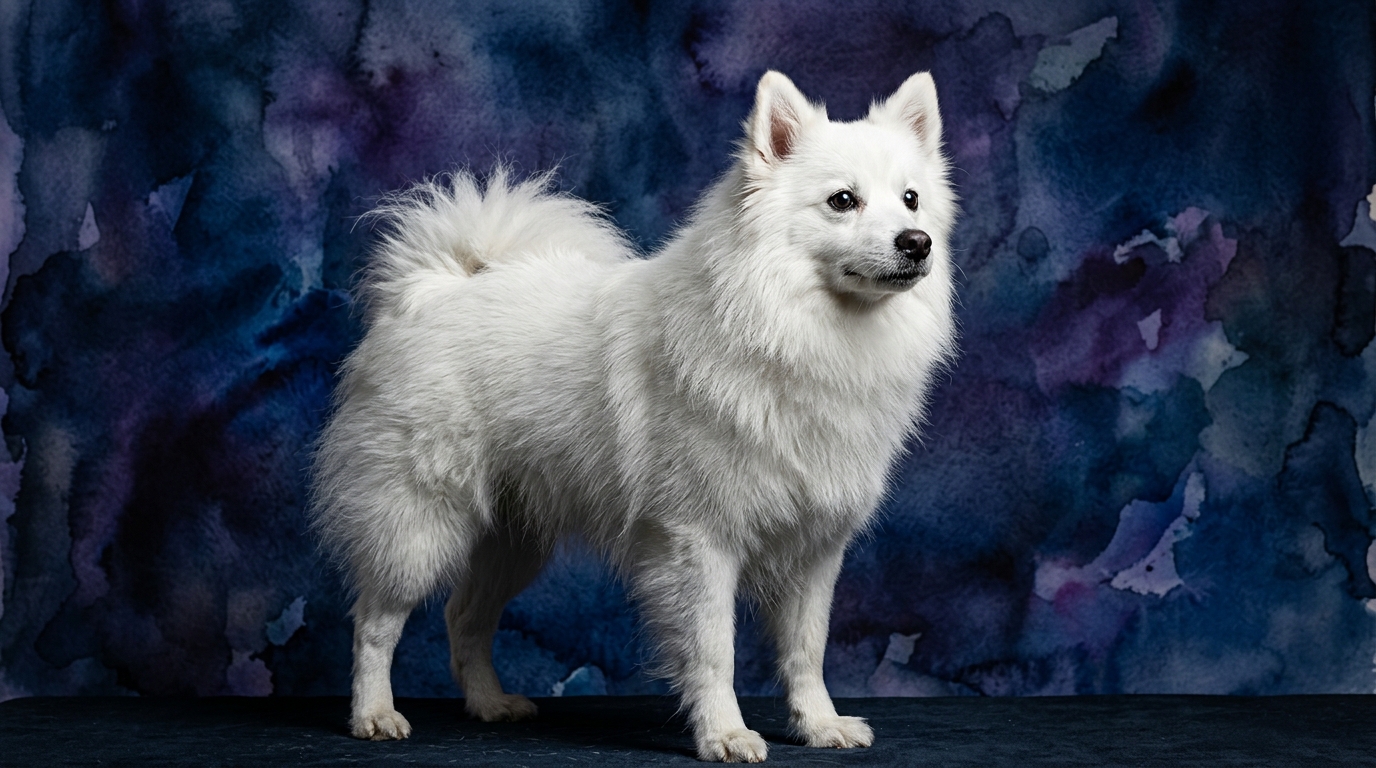
Side-by-Side IQ Profile: Boston Terrier vs. American Eskimo Dog
The Cosmic Pet Pet IQ Lab employs five dimensions to evaluate canine cognition, providing a nuanced understanding beyond simple obedience. For the Boston Terrier, ranked #54 by Coren, its IQ profile outlines specific strengths: Problem Solving (3/5), indicating an adequate capacity for navigating everyday puzzles; Training Speed (3/5), suggesting a moderate pace for acquiring new commands; Social Intelligence (4/5), highlighting an exceptional attunement to human cues and social dynamics; Instinctive Drive (2/5), revealing a lower inclination for traditional canine 'work' or independent pursuits; and Memory (3/5), showing a solid ability to retain learned behaviors and routines.
The American Eskimo Dog, while not Coren-ranked, presents a distinct yet comparable cognitive blueprint: Problem Solving (3/5), demonstrating a similar aptitude for practical challenges, often through observation; Training Speed (3/5), indicating a steady learning rate, though potentially requiring more engaging methods due to their independence; Social Intelligence (3/5), reflecting strong bonds with family but a more reserved demeanor with strangers compared to the Boston Terrier; Instinctive Drive (3/5), showcasing a moderate inherent drive typical of their Spitz heritage, translating to a desire for mental engagement and watchfulness; and Memory (3/5), possessing a reliable memory for commands and experiences, benefiting from consistent reinforcement.
Where the Boston Terrier Wins Cognitively
The Boston Terrier's standout cognitive advantage lies in its remarkable Social Intelligence, scoring a 4/5 compared to the American Eskimo Dog's 3/5. This higher social aptitude means Boston Terriers are exceptionally adept at interpreting human body language, vocal tones, and emotional states. They often seem to anticipate their owner's moods and desires, making them extraordinarily empathetic companions who thrive on close human interaction. This nuanced understanding allows them to integrate seamlessly into diverse family environments, often becoming the 'gentleman' of the household, quick to adapt their behavior to maintain harmony. Their lower Instinctive Drive (2/5) further enhances this social focus, as they are less distracted by independent pursuits and more inclined to engage directly with their human counterparts, seeking companionship and connection above all else. This pronounced social attunement translates into a dog that is often perceived as more 'person-oriented' and less prone to independent decision-making based on primal urges.
Where the American Eskimo Dog Wins Cognitively
The American Eskimo Dog demonstrates a cognitive edge in its Instinctive Drive, scoring a 3/5 against the Boston Terrier's 2/5. This elevated drive is a hallmark of their Spitz heritage, reflecting a natural inclination towards alertness, vocalization, and a desire for purpose. While not ranked by Coren, this inherent drive suggests a deeper engagement with their environment and a more pronounced inclination to 'work' or guard. Owners will find Eskies are often more vigilant, quick to notice changes in their surroundings, and may exhibit a stronger desire for activities that challenge them mentally and physically, like scent work or agility. Their problem-solving (3/5) and training speed (3/5) are on par with the Boston, but this underlying drive can make them more self-directed in their exploration and potentially more persistent in achieving their goals, whether that's finding a hidden toy or alerting their family to a perceived anomaly. This heightened instinct means they possess a natural zest for engagement that extends beyond mere companionship, requiring outlets for their inherent curiosity and watchfulness.
Which is Easier to Train and Why: Boston Terrier vs. American Eskimo Dog
While both breeds share a 3/5 score in Training Speed, their underlying cognitive profiles dictate different training approaches and perceived ease. The Boston Terrier, with its superior Social Intelligence (4/5) and lower Instinctive Drive (2/5), is often perceived as easier to train for obedience and manners. Their strong desire to please and deep connection with humans means they are highly motivated by positive reinforcement, particularly praise and affection from their owner. They are less likely to be distracted by independent urges or environmental stimuli, making them more focused during training sessions. Their Coren rank of #54 also hints at a historical capacity for obedience work, further supporting their trainable nature in a structured environment.
Conversely, the American Eskimo Dog's equivalent Training Speed (3/5) is paired with a higher Instinctive Drive (3/5) and slightly lower Social Intelligence (3/5). This means while they are capable learners, their training might require more creativity and consistency to channel their natural vigilance and independence. Eskies can be more prone to 'selective hearing' if not adequately motivated or if their environment presents too many interesting distractions. Their natural vocalizations and watchful nature also mean that teaching quiet commands and impulse control might require more dedicated effort than with the generally more placid Boston Terrier. For both, positive reinforcement is key, but the Boston Terrier's inherent people-pleasing nature often translates into a more straightforward and less challenging training journey for the average owner, requiring less redirection of innate drives.
Suiting Active vs. Relaxed Owners: A Cognitive Match
For owners seeking a more relaxed, primarily companion-focused lifestyle, the Boston Terrier is an excellent fit. Their lower Instinctive Drive (2/5) means they are generally content with moderate daily exercise, such as short walks and indoor play, and thrive on being close to their human family. Their high Social Intelligence (4/5) makes them exceptionally adaptable to various household routines and less demanding of constant external stimulation, preferring to engage socially rather than through independent exploration or intense physical activity. They are often happy to curl up on the couch, making them ideal for apartment living or individuals who prefer a calmer pace, as their cognitive needs are largely met through companionship and comfort.
The American Eskimo Dog, with its higher Instinctive Drive (3/5) and origins as a working companion, is better suited for more active owners. While not requiring extreme endurance, Eskies benefit significantly from regular, engaging activities that stimulate both their bodies and minds. This includes longer walks, consistent play sessions, and opportunities for mental challenges like puzzle toys or scent games. Their moderate Social Intelligence (3/5) means they appreciate family interaction, but their inherent watchfulness and desire for purpose necessitate outlets for their energy and curiosity. Owners who enjoy outdoor activities, or are prepared to provide structured mental enrichment, will find the American Eskimo Dog a more compatible and fulfilled companion, as their cognitive makeup requires more than just casual companionship to prevent boredom and potential behavioral issues arising from unchanneled drive.
The Verdict
Choose the Boston Terrier if you prioritize an exceptionally socially attuned companion who thrives on close human connection and requires moderate engagement, fitting seamlessly into a relaxed family life.
Opt for the American Eskimo Dog if you appreciate a watchful, moderately driven companion who benefits from consistent mental and physical challenges, suiting an active owner ready for engagement beyond casual companionship.
🧠 Find Your Pet's IQ Score
Our Pet IQ Lab assessment covers 25+ tests across 5 cognitive dimensions — personalized to your breed.
Take the Full IQ Test →Frequently Asked Questions
Do Boston Terriers bark a lot due to their social nature?
Boston Terriers can be vocal to express excitement or alert their owners, but their strong desire for harmony and social cues often means they can be trained to moderate barking. Their lower instinctive drive typically reduces excessive alarm barking compared to breeds with higher territorial instincts.
Are American Eskimo Dogs good with children, given their instinctive drive?
American Eskimo Dogs can be excellent family dogs, often forming strong bonds with children, but their higher instinctive drive means early socialization and consistent training are crucial. They appreciate respect and clear boundaries, and their watchful nature can make them good family protectors.
How do their different instinctive drives impact their adaptability to new environments?
The Boston Terrier's lower instinctive drive and higher social intelligence generally make them more adaptable to new environments, as they rely more on their human companions for security and cues. The American Eskimo Dog's stronger instinctive drive might lead to more initial caution or investigation in new settings, requiring patient introduction to feel secure.