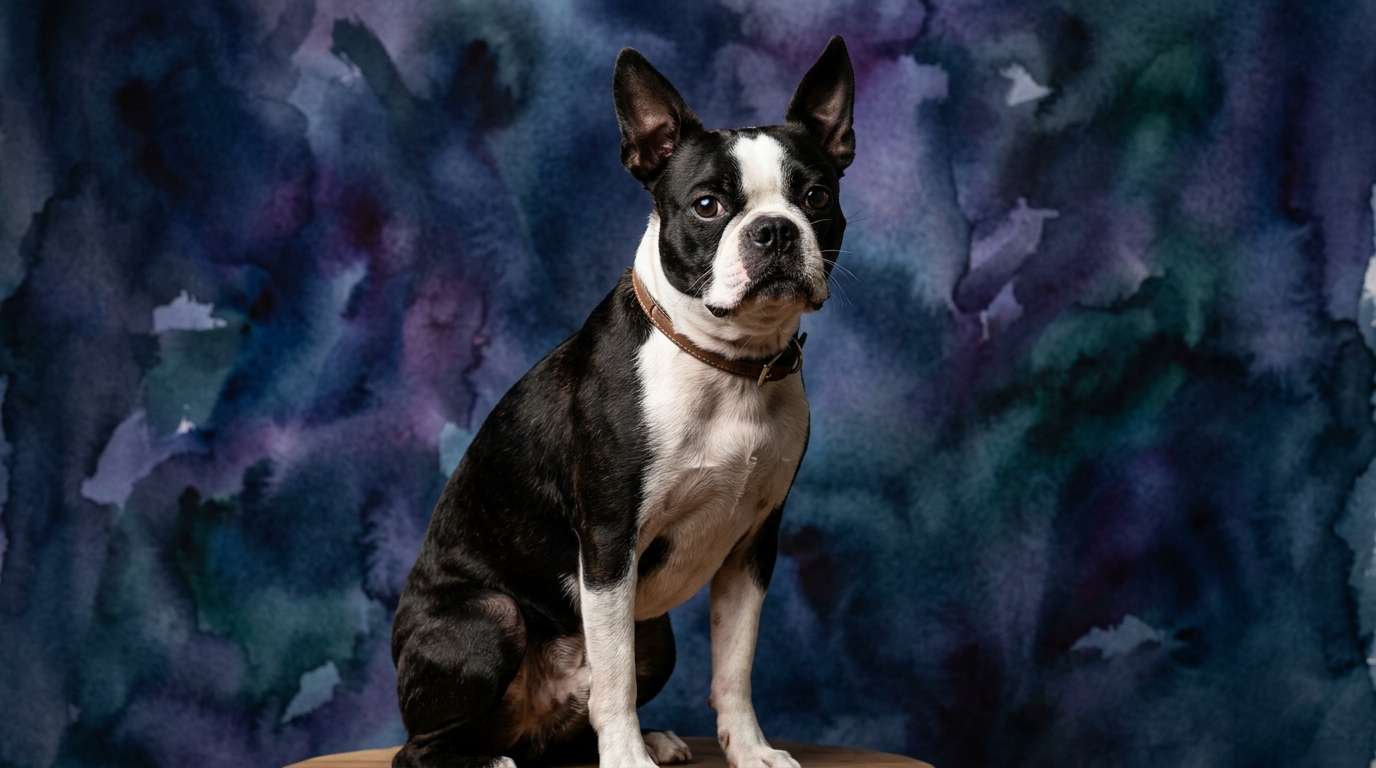
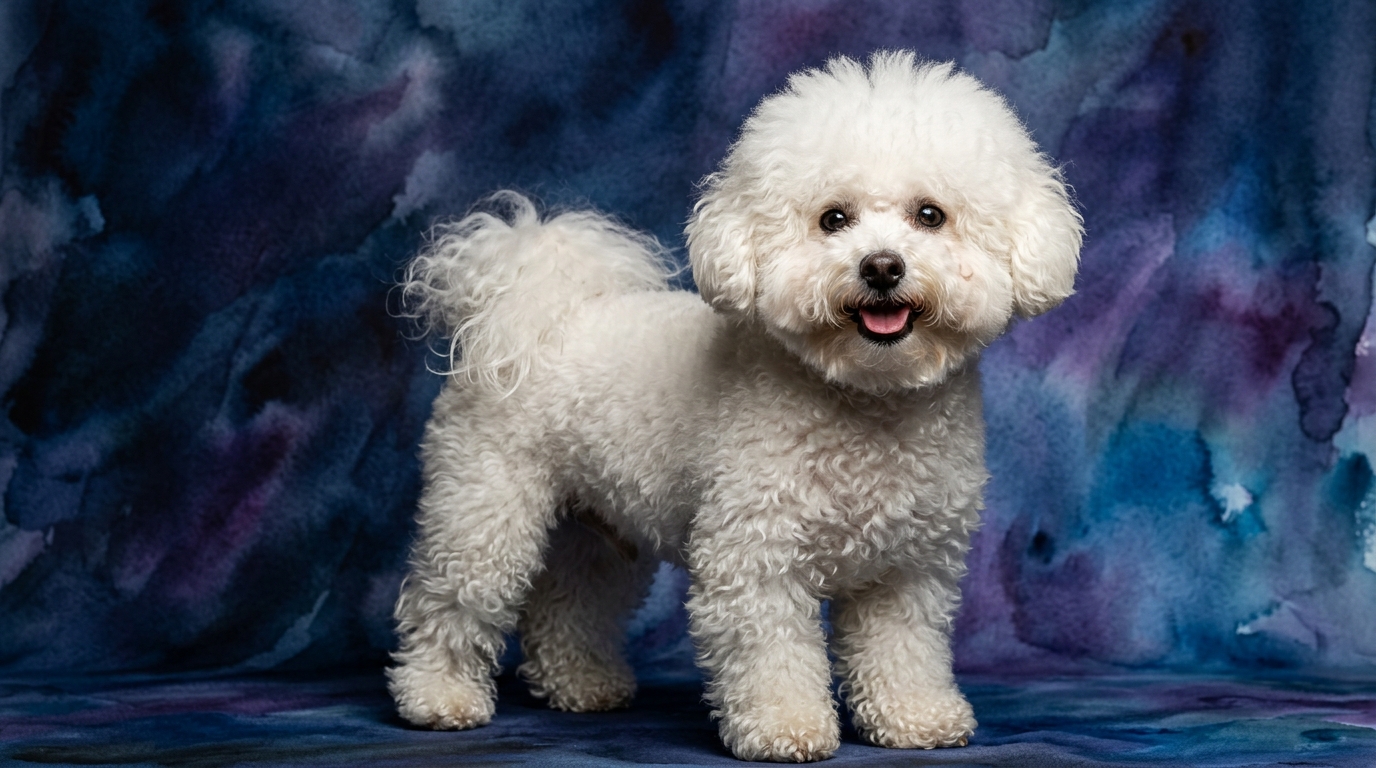
Side-by-Side IQ Profile: Boston Terrier vs. Bichon Frisé
At The Cosmic Pet Pet IQ Lab, we evaluate canine intelligence across several key dimensions to offer a comprehensive understanding of each breed's cognitive strengths. For the Boston Terrier, ranked #54 by Coren for obedience and working intelligence, we observe a Problem Solving score of 3/5, indicating a moderate ability to navigate novel situations and figure out household routines. Their Training Speed is also 3/5, suggesting they learn new commands with a reasonable amount of repetition and consistency. Social Intelligence stands at an impressive 4/5, highlighting their capacity to read human cues and form strong, perceptive bonds. Instinctive Drive is a low 2/5, meaning they are not typically driven by strong predatory or working instincts, while Memory is a solid 3/5, allowing them to retain learned behaviors and experiences effectively.
The Bichon Frisé, holding a slightly higher Coren rank of #45, presents a fascinating comparison. Like the Boston Terrier, they score 3/5 in Problem Solving, demonstrating similar aptitude for tackling everyday cognitive challenges. Their Training Speed also matches at 3/5, implying a comparable pace for acquiring new skills and commands. However, the Bichon Frisé truly shines in Social Intelligence, earning a perfect 5/5. This indicates an exceptional capacity for empathy, understanding human emotions, and thriving on interaction. Their Instinctive Drive mirrors the Boston Terrier's at 2/5, underscoring their primary role as companions rather than working dogs. Memory, too, is rated 3/5, suggesting a similar ability to recall learned information over time.
Where the Boston Terrier Excels Cognitively
While the individual IQ dimension scores for problem-solving, training speed, instinctive drive, and memory appear identical between these two breeds, the Boston Terrier's cognitive strengths often manifest in nuanced ways tied to their unique temperament. Their 4/5 social intelligence, though slightly lower than the Bichon's, often presents as a dignified perceptiveness. Boston Terriers are adept at understanding social boundaries and adapting their behavior to fit various family dynamics without being overly demanding. They possess a quiet observational intelligence, often learning by watching and internalizing household rules, which contributes to their reputation as 'the American Gentleman.' This means they can be remarkably good at anticipating routines and responding appropriately, making them excellent companions for owners who appreciate a dog that understands the unspoken rhythms of a home.
Their moderate problem-solving abilities, combined with this keen social awareness, allow Boston Terriers to navigate new environments or changes in routine with a composed adaptability. They are not prone to excessive anxiety or frantic problem-solving attempts, instead often approaching challenges with a thoughtful, measured approach. This cognitive resilience means they are less likely to be overwhelmed by minor disruptions, making them robust and consistent companions in a variety of living situations. Their memory of 3/5 supports their ability to retain these learned social cues and adaptive strategies, leading to a consistently well-mannered demeanor over time.
Where the Bichon Frisé Holds a Cognitive Edge
The Bichon Frisé's standout cognitive advantage lies unequivocally in their perfect 5/5 Social Intelligence. This isn't just about being friendly; it signifies an extraordinary capacity for emotional attunement. Bichons are exceptionally skilled at reading human body language, tone of voice, and even subtle shifts in mood, often responding with comforting nudges or playful antics. This makes them profoundly empathetic companions, almost intuitively understanding when their human needs cheering up or quiet companionship. Their entire cognitive framework seems geared towards fostering deep, reciprocal emotional bonds, making them masters of canine-human communication on a purely affective level.
Furthermore, the Bichon Frisé's higher Coren rank of #45, compared to the Boston Terrier's #54, suggests a subtle but significant edge in obedience and working intelligence. While their training speed score is the same, this higher rank indicates that, on average, Bichons might demonstrate a slightly greater willingness to comply with commands and a stronger focus on human direction during structured learning. This drive to please, fueled by their exceptional social intelligence, means they often approach training sessions with an enthusiastic engagement that can make the process feel more fluid and rewarding for the owner, even if the actual learning pace is similar. Their memory of 3/5 ensures that once these socially reinforced commands are learned, they are retained effectively.
Which is Easier to Train and Why
When considering ease of training, both breeds share a 3/5 Training Speed score, implying they learn new commands at a moderate pace, requiring consistent reinforcement. However, the Bichon Frisé's superior 5/5 Social Intelligence and higher Coren rank often translate into a perceived easier training experience for most owners. Bichons thrive on human interaction and praise; their motivation to learn is profoundly tied to pleasing their people and receiving positive attention. This strong social drive means they are typically eager participants in training sessions, less prone to independent streaks, and highly responsive to positive reinforcement methods.
The Boston Terrier, while also possessing a commendable 4/5 social intelligence, can sometimes exhibit a subtle independence that requires a slightly different approach. While they understand commands and want to please, they might occasionally weigh their options or get distracted by their environment, requiring a bit more patience and consistent motivation to stay engaged. Their 'gentleman' demeanor doesn't always equate to immediate, enthusiastic compliance; sometimes it's a thoughtful, considered response. Therefore, while both are trainable, the Bichon's intense focus on human connection often makes the training journey feel more effortless and mutually enjoyable for the average pet parent.
Suited for Active vs. Relaxed Owners
Neither the Boston Terrier nor the Bichon Frisé scores high in instinctive drive (both 2/5), meaning neither is inherently suited for demanding working roles or intense athletic pursuits. Both are primarily companion animals, but their cognitive profiles subtly influence their ideal lifestyle fit. The Boston Terrier, with its balanced problem-solving and strong social intelligence, is remarkably adaptable. They possess a lively energy that enjoys daily walks, playtime, and engaging in moderate mental challenges like puzzle toys or learning new tricks. They can keep up with active owners who enjoy regular outings, but are equally content to curl up on the couch for a relaxed evening, making them versatile companions for a wide range of activity levels, provided their social needs are met.
The Bichon Frisé, with its exceptional 5/5 social intelligence, thrives most with owners who can offer consistent companionship and interaction. While they are playful and enjoy bursts of energy, their cognitive strength lies in their ability to connect emotionally. They are best suited for owners who are home frequently, or who can include their dog in many daily activities, as their primary need is to be part of the family's emotional landscape. They enjoy moderate exercise, such as short walks and indoor play, but their greatest contentment comes from being present and engaged with their human companions, making them ideal for individuals or families seeking a highly interactive and emotionally responsive pet, regardless of their own activity level.
The Verdict: When to Choose Each Breed
The Verdict
Choose the Boston Terrier if you seek a resilient, adaptable companion with a dignified social intelligence that appreciates both lively engagement and quiet, composed companionship.
Opt for the Bichon Frisé if your priority is an exceptionally empathetic and highly interactive dog who thrives on deep human connection and whose eagerness to please makes training a joyful experience.
🧠 Find Your Pet's IQ Score
Our Pet IQ Lab assessment covers 25+ tests across 5 cognitive dimensions — personalized to your breed.
Take the Full IQ Test →Frequently Asked Questions
Are Boston Terriers good at problem-solving?
Boston Terriers score 3/5 in problem-solving, indicating a moderate ability to figure out routines and navigate household challenges. They are generally adept at understanding how things work in their environment and adapting accordingly.
How does social intelligence differ between the two breeds?
The Bichon Frisé excels with a 5/5 social intelligence, demonstrating exceptional empathy and responsiveness to human emotions, while the Boston Terrier follows closely with a strong 4/5, indicating excellent communication and perceptive understanding of their owners.
Which breed has better memory for commands?
Both the Boston Terrier and Bichon Frisé share a 3/5 score for memory, suggesting they retain commands and learned experiences at a comparable, moderate level, requiring consistent reinforcement for long-term recall and skill retention.