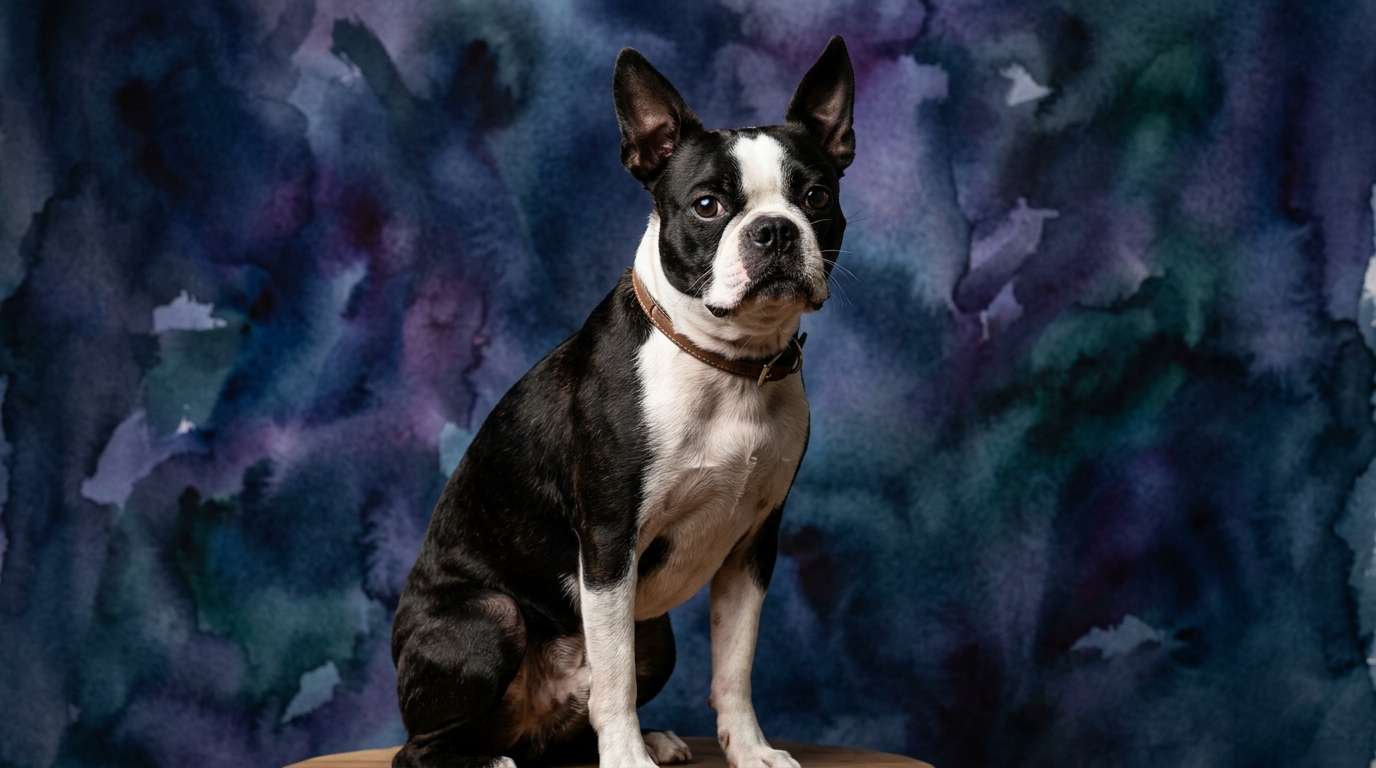
Side-by-Side IQ Profile: Boston Terrier
The Boston Terrier, holding a respectable Coren rank of #54, presents a balanced cognitive profile. Their Problem Solving and Training Speed both rate at 3/5, indicating a moderate capacity to navigate new situations and learn commands efficiently with consistent effort. Where they notably excel is in Social Intelligence, scoring 4/5, signifying a keen ability to interpret human emotions and intentions, fostering deep, responsive bonds. Their Instinctive Drive is a lower 2/5, meaning they are less driven by independent tasks or primal urges, instead preferring to focus on human companionship. Finally, their Memory is a solid 3/5, ensuring they retain learned behaviors and experiences reliably.
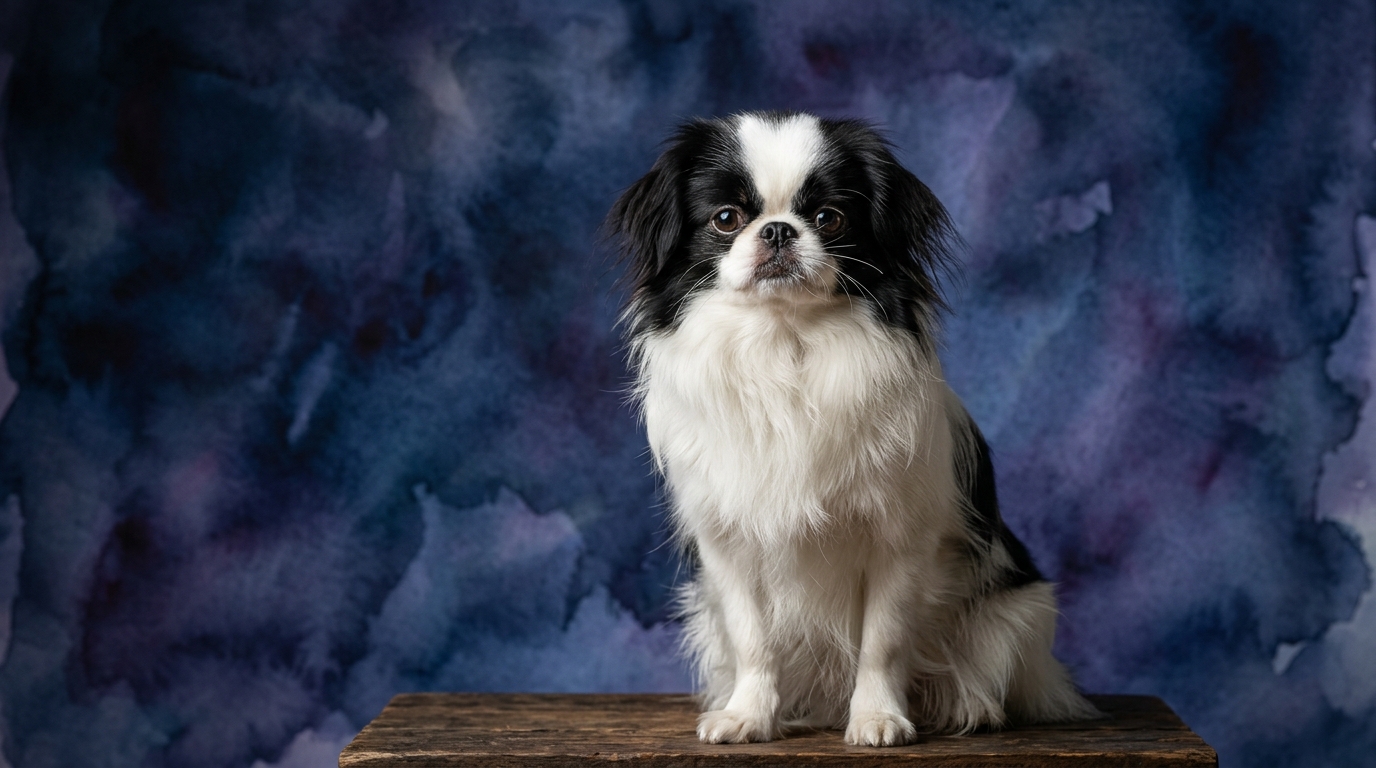
Side-by-Side IQ Profile: Japanese Chin
The Japanese Chin, though not featured in Coren's original rankings, demonstrates a distinct cognitive makeup. They share similar ratings with the Boston Terrier in Problem Solving (3/5), Training Speed (3/5), and Memory (3/5), suggesting comparable capabilities in learning and retention. Their Social Intelligence is rated at 3/5, indicating they are affectionate and responsive, though perhaps slightly less acutely attuned to human subtleties than the Boston Terrier. A key differentiator is their Instinctive Drive, which is a moderate 3/5, implying a slightly stronger inclination towards independent exploration or engaging with their environment through innate behaviors, a characteristic that shapes their overall approach to the world.
Where the Boston Terrier Wins Cognitively
The Boston Terrier distinguishes itself with a superior social intelligence score of 4/5, surpassing the Japanese Chin's 3/5. This heightened capacity means they are exceptionally adept at interpreting subtle human body language, vocal inflections, and emotional states, often intuiting their companion's needs and moods. This acute social awareness fosters an exceptionally strong, empathetic bond, making them highly responsive to their owner's presence and capable of intricate non-verbal communication within the family unit. Furthermore, their lower instinctive drive (2/5 compared to the Chin's 3/5) contributes to a cognitive profile less swayed by primal urges. This means a Boston Terrier is typically less distracted by external stimuli like small scurrying animals or novel scents, allowing for a more consistent focus on human interaction and learned behaviors, translating into a more predictable and compliant companion in varied social settings.
Where the Japanese Chin Wins Cognitively
The Japanese Chin's cognitive strengths emerge notably in its slightly higher instinctive drive, rated at 3/5 compared to the Boston Terrier's 2/5. While still primarily a companion breed, this subtle elevation in instinctive inclination suggests a dog with a potentially broader range of intrinsic interests beyond direct human interaction. This might manifest as a greater curiosity for exploring their immediate environment, a more pronounced engagement with play involving chase or 'hunting' toys, or a stronger independent streak in problem-solving scenarios that require self-motivation rather than direct human guidance. This nuanced difference means the Japanese Chin might exhibit a more self-directed approach when faced with novel objects or environmental changes, often investigating through scent and pawing, driven by an inherent curiosity rather than immediately seeking human assistance. Their intelligence, while socially adept, holds a stronger thread of self-sufficiency.
Which is Easier to Train and Why
When assessing ease of training, both the Boston Terrier and Japanese Chin score identically with a 3/5 in training speed, suggesting they learn new commands and routines at a moderate, comparable pace. However, the Boston Terrier's superior social intelligence (4/5) often gives it an edge in practical training scenarios. Their heightened ability to read human cues and strong desire to please mean they are typically more motivated by positive reinforcement stemming from human approval, actively seeking interaction and guidance. This responsiveness makes training feel more collaborative and straightforward. Conversely, while the Japanese Chin also learns effectively with positive reinforcement, its slightly lower social intelligence (3/5) and higher instinctive drive (3/5) can introduce different considerations. A Chin might occasionally be more prone to independent thought or momentary distractions if something in the environment triggers its innate curiosity, requiring a handler to maintain a more engaging approach. Both respond well to kindness, but the Boston Terrier's social attunement often translates into more reliably executed behaviors in varied settings.
Which Suits Active Owners vs. Relaxed Owners
For owners with an active lifestyle, the Japanese Chin's slightly elevated instinctive drive (3/5) could be a better match. While not requiring extensive physical exertion, their inherent curiosity and inclination for independent exploration mean they often enjoy varied environments and engaging in playful activities that stimulate their senses. They can be enthusiastic participants in short, exploratory walks or interactive games, deriving satisfaction from discovering new scents and sights. Their cognitive makeup encourages a degree of self-directed engagement, complementing an owner who enjoys providing opportunities for gentle adventure and mental enrichment. In contrast, the Boston Terrier, with its lower instinctive drive (2/5) and higher social intelligence (4/5), aligns more seamlessly with relaxed owners seeking a devoted, attentive companion. These dogs are typically content with moderate indoor play and shorter walks, prioritizing proximity and interaction with their human family over independent exploration. Their cognitive focus is primarily on their people, making them excellent companions for quiet evenings at home, valuing a deeply connected, emotionally responsive, and relatively low-maintenance cognitive companion in terms of external stimulation.
The Verdict
Opt for a Boston Terrier if your lifestyle benefits from a highly socially attuned companion eager to mirror your moods and thrive on direct interaction, requiring less independent stimulation.
Select a Japanese Chin if you appreciate a companion with a gentle independent streak and curiosity, enjoying varied, calm exploration alongside devoted companionship.
🧠 Find Your Pet's IQ Score
Our Pet IQ Lab assessment covers 25+ tests across 5 cognitive dimensions — personalized to your breed.
Take the Full IQ Test →Frequently Asked Questions
Are Boston Terriers good at learning tricks?
Yes, Boston Terriers, with their 3/5 training speed and 4/5 social intelligence, are generally proficient at learning tricks. Their desire to please and their ability to quickly understand human cues make them enthusiastic and responsive students in trick training sessions.
Does the Japanese Chin's lack of Coren ranking mean it's less intelligent?
No, the absence of a Coren ranking for the Japanese Chin doesn't indicate lower intelligence. Many toy breeds were not included in Coren's original studies, which focused more on working obedience. Their intelligence is well-suited to their role as companions.
Which breed is more prone to separation anxiety based on their IQ profile?
Given the Boston Terrier's higher social intelligence (4/5) and lower instinctive drive, they might be slightly more prone to exhibiting signs of separation distress due to their strong reliance on human interaction. The Japanese Chin's slightly higher instinctive drive could make them marginally more self-sufficient.