
Side-by-Side IQ Profile: Boston Terrier vs. Nova Scotia Duck Tolling Retriever
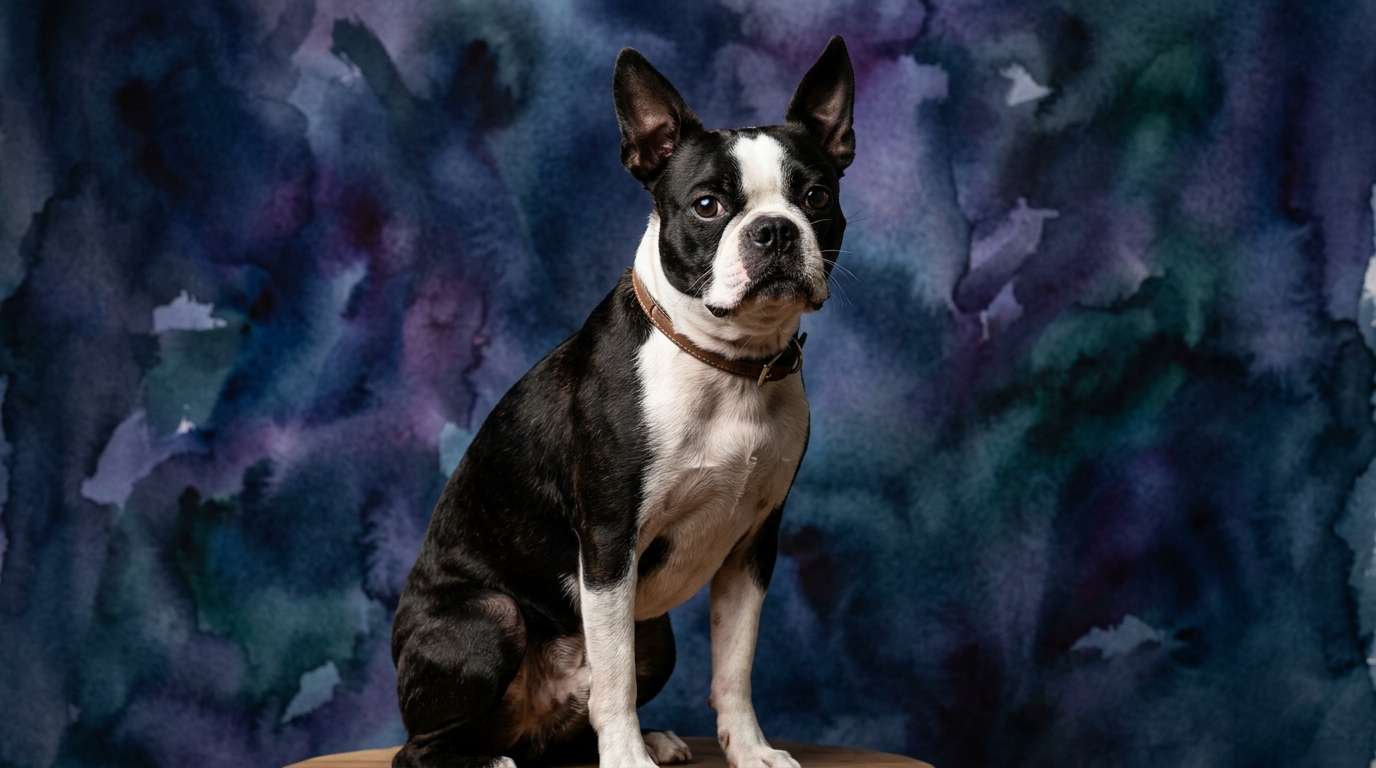
The Cosmic Pet Pet IQ Lab employs a five-dimensional framework to assess canine intelligence, offering a nuanced view beyond simplistic rankings. For the Boston Terrier, a Non-Sporting Group member, its profile reveals: Problem Solving at 3/5, indicating a moderate capacity to navigate novel situations and learn from environmental cues without excessive struggle. Training Speed stands at 3/5, suggesting they absorb new commands and behaviors at a steady, consistent pace. Their Social Intelligence is a notable 4/5, reflecting a pronounced ability to read and respond to human emotions and social dynamics, making them highly attuned companions. Instinctive Drive is lower at 2/5, meaning their inherent urges for activities like hunting or herding are not particularly strong. Finally, Memory scores 3/5, demonstrating an adequate ability to recall learned information and past experiences.
In contrast, the Nova Scotia Duck Tolling Retriever, a Sporting Group member, presents a slightly different cognitive fingerprint: Problem Solving is rated 3/5, similar to the Boston Terrier, indicating a moderate aptitude for understanding and overcoming practical challenges. Training Speed also registers 3/5, suggesting they learn new tasks at a comparable rate to the Boston Terrier, thriving on engagement. Their Social Intelligence is 3/5, showing they are responsive to human interaction and form strong bonds, though perhaps with less overt emotional attunement than a breed scoring higher. A key difference lies in their Instinctive Drive, rated 3/5, which reflects a robust natural inclination towards specific working behaviors like retrieving and luring. Memory for the Toller is also 3/5, signifying a solid capacity for retaining commands, routines, and location-based information.
Where the Boston Terrier Wins Cognitively
The Boston Terrier's standout cognitive advantage lies squarely in its Social Intelligence, scoring a robust 4 out of 5. This elevated capacity means Boston Terriers are exceptionally adept at reading and responding to human emotions and social cues. They often anticipate their owner's moods, offering comfort or initiating play based on subtle signals. This heightened social awareness contributes to their reputation as empathetic companions, frequently seeking proximity and interaction, and making them particularly responsive to human-centric guidance and affection. Their ability to integrate seamlessly into a family's emotional landscape, often seeking to please and connect, is a distinct cognitive strength, making them highly intuitive housemates.
Where the Nova Scotia Duck Tolling Retriever Wins Cognitively
The Nova Scotia Duck Tolling Retriever's distinctive cognitive edge emerges from its Instinctive Drive, rated at 3 out of 5, a point higher than the Boston Terrier. This score reflects a pronounced natural inclination towards specific working behaviors, particularly those involving retrieving and enticement. Tollers possess an inherent drive to engage with tasks that mimic their historical role of luring and retrieving waterfowl, showcasing a focused persistence and enthusiasm for activity-based challenges. While their problem-solving and training speed scores are comparable, this elevated instinctive drive means they excel in situations where their natural predispositions can be harnessed, often displaying a self-starting motivation for engaging in their 'work,' especially in outdoor environments.
Which is Easier to Train and Why
Both the Boston Terrier and the Nova Scotia Duck Tolling Retriever share a Training Speed score of 3 out of 5, suggesting neither breed is inherently 'easier' in terms of raw learning pace. However, their differing cognitive profiles influence the *experience* of training. The Boston Terrier's superior Social Intelligence (4/5) often translates into a keen desire to please its human, making them highly motivated by positive reinforcement rooted in social praise and interaction. They are generally eager to comply to maintain harmony and receive attention, meaning they respond well to consistent, gentle methods and thrive on a strong human-canine bond for motivation. Their focus is often on their person.
Conversely, the Toller's higher Instinctive Drive (3/5) means their training success is often amplified when activities tap into their natural retrieving and working instincts. While they learn commands readily, their independent drive can sometimes present a challenge if training isn't engaging or if they perceive a more stimulating activity elsewhere, requiring trainers to keep sessions varied and purposeful. They are driven by tasks and rewards that mimic their natural drives. Therefore, Boston Terriers might appear more compliant in general obedience due to their social inclination, while Tollers excel when training incorporates their inherent drives and offers a clear, stimulating purpose.
Which Suits Active Owners vs. Relaxed Owners
The choice between these two breeds for active versus relaxed owners hinges significantly on their overall cognitive and physical profiles. The Nova Scotia Duck Tolling Retriever, with its higher Instinctive Drive (3/5) and historical working background, is undoubtedly better suited for active owners. These dogs thrive on consistent physical exercise combined with mental stimulation that taps into their retrieving and problem-solving capabilities, making them ideal for hiking, swimming, dog sports, and structured training. Their inherent drive means they require an outlet for their energy and focus, and without it, they can become restless or engage in self-directed activities. They are partners for adventure.
In contrast, the Boston Terrier, possessing a lower Instinctive Drive (2/5) and a stronger leaning towards social interaction, generally suits more relaxed owners. While they enjoy walks and playtime, their primary need is for companionship and mental engagement within the home environment. They are content with moderate daily activity, such as short walks and indoor games, and thrive on being an integral part of family life, often preferring to be near their people. Their high social intelligence makes them excellent companions for those who prefer a less demanding exercise routine but appreciate a deeply perceptive and affectionate presence.
The Verdict
Choose a Boston Terrier if you prioritize a deeply socially intelligent companion who thrives on human interaction and moderate activity, fitting seamlessly into a relaxed home environment.
Opt for a Nova Scotia Duck Tolling Retriever if you seek an active, driven partner for outdoor adventures and dog sports, offering mental engagement through purposeful tasks and requiring consistent physical outlets.
🧠 Find Your Pet's IQ Score
Our Pet IQ Lab assessment covers 25+ tests across 5 cognitive dimensions — personalized to your breed.
Take the Full IQ Test →Frequently Asked Questions
Do Boston Terriers need a lot of mental stimulation?
While their instinctive drive is lower, Boston Terriers' high social intelligence means they thrive on mental engagement through interaction with their family, learning new tricks, and participating in household routines. They enjoy puzzle toys and interactive play that involves their human companions, focusing on connection rather than independent tasks.
Can a Nova Scotia Duck Tolling Retriever live in an apartment?
A Toller can potentially adapt to apartment living if their significant exercise and mental stimulation requirements are consistently met through daily outdoor activities, training, and engaging play sessions. Their moderate problem-solving and training speed mean they need purposeful outlets for their energy, which an apartment alone cannot provide.
How do their memory scores impact daily life?
Both breeds share a moderate memory score (3/5), indicating they can reliably remember commands, routines, and past experiences. This means they are capable of retaining complex learned behaviors over time, provided there is consistent reinforcement, and they will remember familiar faces and places, contributing to a stable home life.