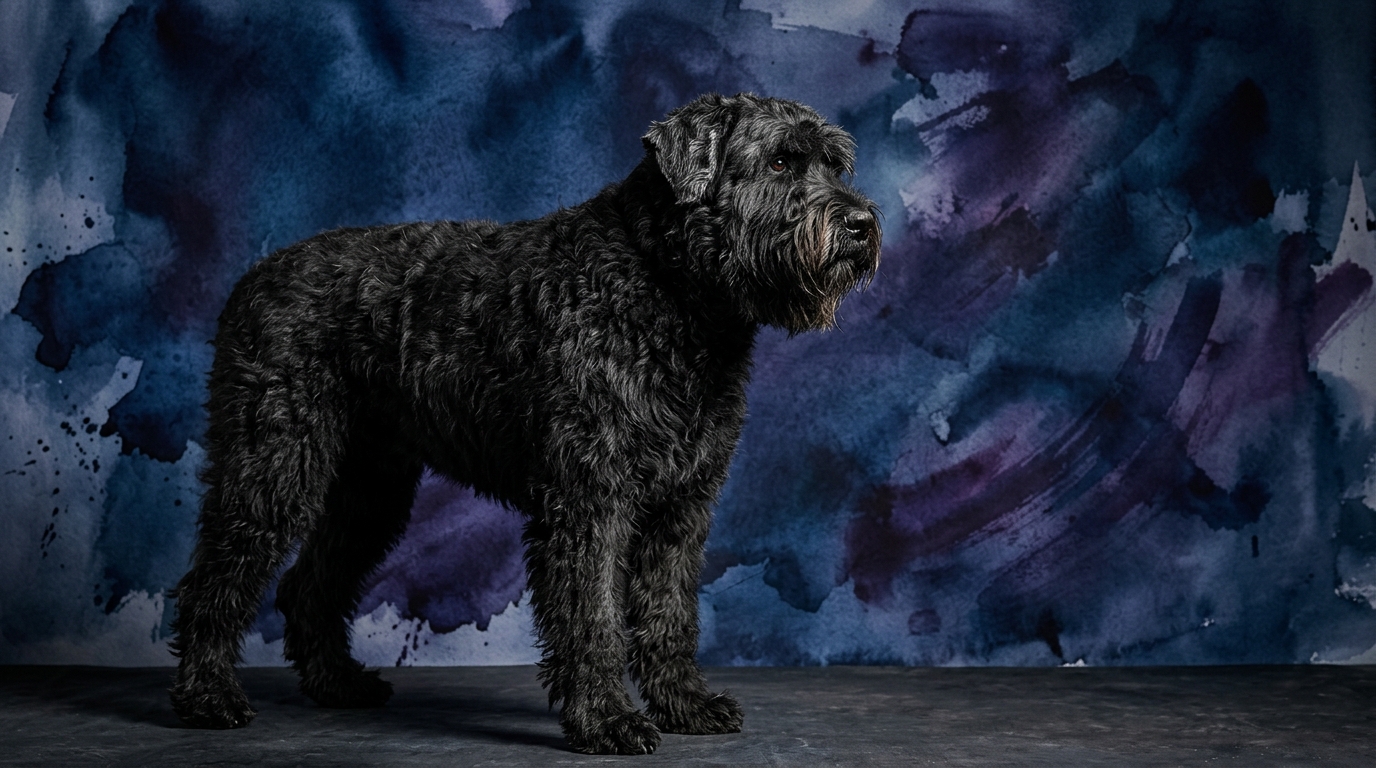
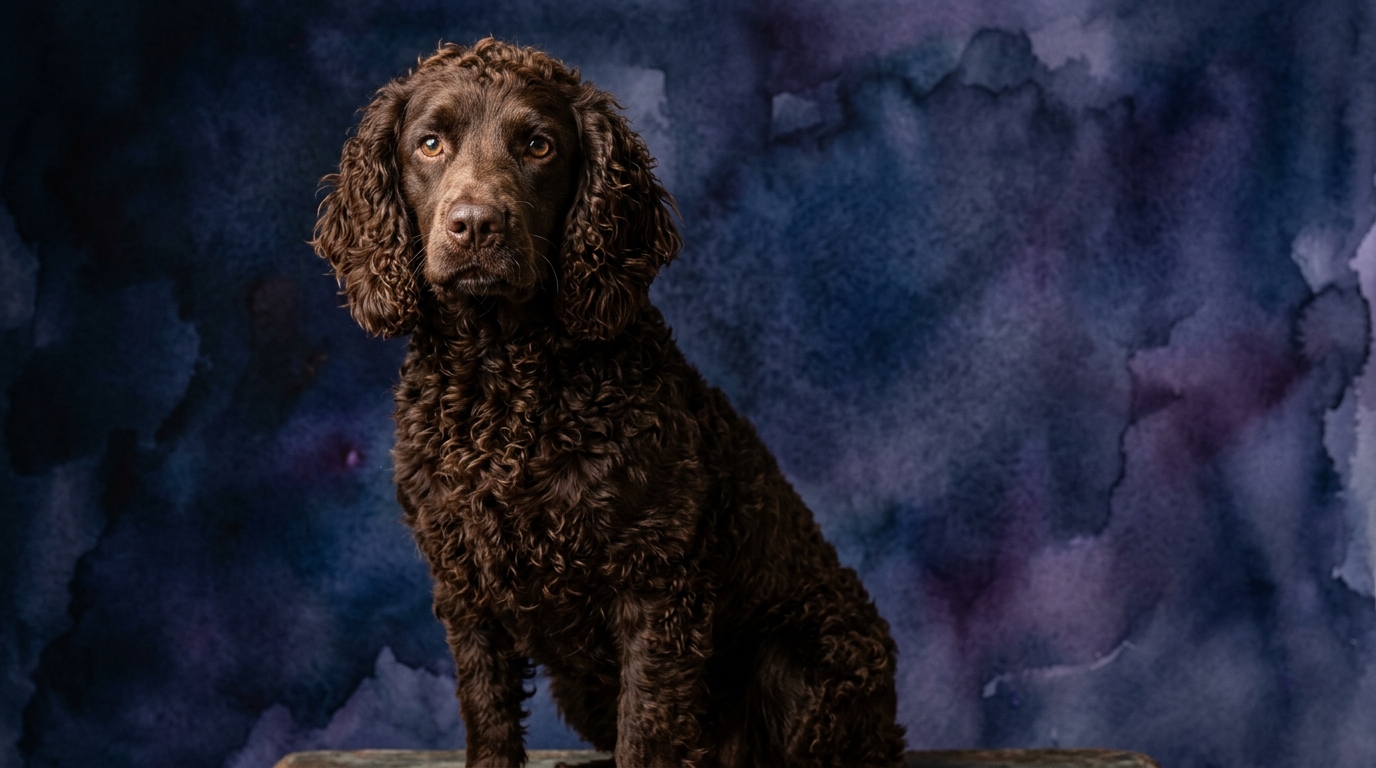
Side-by-Side IQ Profile: Bouvier des Flandres vs. American Water Spaniel
The Cosmic Pet Pet IQ Lab employs five dimensions to map a breed's cognitive landscape. Here’s how the Bouvier des Flandres and American Water Spaniel compare, offering a window into their mental strengths and how these align with their historical roles.
Problem Solving (3/5 for both) assesses a dog's capacity to navigate novel situations or overcome obstacles independently. The Bouvier des Flandres applies a practical, methodical approach, rooted in its history of independent livestock management, like guiding a herd. The American Water Spaniel, also at 3/5, demonstrates similar moderate aptitude, often strategizing retrieves from challenging environments, such as navigating reeds.
Training Speed (3/5 for both) indicates how quickly a dog grasps new commands and behaviors. Both breeds learn at a moderate pace, neither instant learners nor particularly slow. The Bouvier often requires consistency and clear communication, valuing a confident handler. The American Water Spaniel learns steadily, motivated by positive reinforcement and opportunities for activity.
Social Intelligence (3/5 for both) measures a dog's ability to understand human cues and social dynamics. A 3/5 rating for both suggests they are adequately attuned to their human companions. The Bouvier's manifests as watchful loyalty and understanding family routines, sometimes with protective instincts. The American Water Spaniel displays its acumen through eagerness to please and participation in family life, often sensing owner moods.
Instinctive Drive (3/5 for both) refers to inherent, genetically programmed behaviors. For the Bouvier des Flandres, a 3/5 drive points to a moderate but persistent herding instinct, manifesting as a desire to gather or protect. The American Water Spaniel, also at 3/5, possesses a moderate but clear retrieving and hunting drive, expressed through its love for fetching, swimming, and exploring scents.
Memory (Bouvier 3/5, AWS 4/5) is the capacity to recall commands, past experiences, and learned behaviors. Here, the American Water Spaniel pulls ahead with a 4/5, indicating superior retention compared to the Bouvier's 3/5. This enhanced memory in the AWS is crucial for complex retrieving patterns or sequences of commands. The Bouvier's 3/5 memory is solid for routines, but might need more consistent reinforcement for less frequent tasks.
Where Bouvier des Flandres Wins Cognitively
The Bouvier des Flandres demonstrates a unique cognitive strength in its balanced and practical application of its 3/5 ratings across the board. Its Herding lineage means its problem-solving and social intelligence are finely tuned for independent decision-making within dynamic environments. A Bouvier excels at assessing situations and acting with measured judgment, for instance, discerning a potential threat to its flock (or family) and responding appropriately without constant human direction. This isn't about rapid-fire learning, but rather a steady, thoughtful processing of information to maintain order and security, a cognitive win for owners seeking a self-reliant, watchful companion. Its instinctive drive, while moderate, is channeled into purposeful action, making it adept at understanding and fulfilling a protective or guiding role.
Where American Water Spaniel Wins Cognitively
The American Water Spaniel's cognitive edge lies prominently in its superior memory, scoring a 4/5 compared to the Bouvier's 3/5. This enhanced recall is a significant advantage, particularly in tasks requiring complex sequences or remembering specific locations over time, such as retrieving multiple birds in a hunting scenario or excelling in advanced obedience work where a long chain of commands is expected. Furthermore, its Coren ranking of #44 among working breeds suggests a high degree of general trainability and understanding of human communication. This implies an overall cognitive nimbleness. This breed's sporting background means its problem-solving and instinctive drive are often directed towards energetic, goal-oriented tasks, giving it an advantage in activities that require sustained focus and recollection of learned patterns.
Which is Easier to Train and Why
While both breeds share a 3/5 rating for training speed, the American Water Spaniel generally presents as the easier breed to train due to its superior memory (4/5). Once a command is learned, it tends to stick more readily, requiring less frequent refreshers compared to the Bouvier (3/5 memory). This translates to faster mastery of complex behaviors and more reliable recall. Furthermore, the AWS's strong instinctive drive for retrieving and pleasing its owner, coupled with its generally more ebullient temperament, makes it highly motivated by positive reinforcement and activity-based rewards.
A Bouvier, while equally capable of learning at a 3/5 pace, often approaches training with a more thoughtful, sometimes independent, mindset. Its herding instinct may lead it to question or analyze commands rather than simply execute them instantly. Training a Bouvier often requires a handler who can establish clear leadership and provide consistent, logical instruction, whereas the AWS thrives on engaging partnership and immediate feedback, often appearing more eager to comply.
Which Suits Active Owners vs. Relaxed Owners
For active owners seeking a canine partner for adventures, the American Water Spaniel is often the more suitable choice. Its robust instinctive drive (3/5), combined with its sporting heritage, means it thrives on regular, vigorous exercise, including swimming, retrieving, and exploring. This breed requires consistent mental and physical stimulation to prevent boredom and channel its energy constructively. Its moderate problem-solving and social intelligence make it an engaging companion for activities like dock diving, agility, or extensive hikes.
In contrast, while the Bouvier des Flandres also requires regular exercise, it aligns better with active owners who appreciate a more measured pace and a dog with a strong sense of purpose. Its herding background and balanced IQ profile (all 3/5) mean it excels in activities that involve thoughtful work, such as obedience, protection sports, or simply accompanying its owner on long, purposeful walks where it can "patrol" its surroundings. Its social intelligence and protective instincts make it a loyal family guardian, but it may not always possess the boundless, effervescent energy of a spaniel. Neither breed is suited for a sedentary lifestyle; both require committed owners who understand their working heritage.
The Verdict
Opt for the Bouvier des Flandres if you seek a thoughtful, watchful companion who excels at independent problem-solving and guardianship, thriving on purposeful work and a stable routine.
Select the American Water Spaniel if you desire an enthusiastic, highly trainable partner for active adventures, valuing its superior memory for complex tasks and its eager-to-please nature.
🧠 Find Your Pet's IQ Score
Our Pet IQ Lab assessment covers 25+ tests across 5 cognitive dimensions — personalized to your breed.
Take the Full IQ Test →Frequently Asked Questions
Is the Bouvier des Flandres difficult to train?
No, the Bouvier is not difficult to train, scoring 3/5 for training speed, but it requires consistency and a clear, confident handler. Its thoughtful nature means it processes commands methodically, often needing to understand the "why" before committing.
How much exercise does an American Water Spaniel need?
An American Water Spaniel requires a significant amount of daily exercise, including vigorous activity like swimming, fetching, or running, due to its strong sporting drive. Owners should plan for at least 60-90 minutes of dedicated activity each day to keep it mentally and physically satisfied.
Which breed is better with children?
Both breeds can be excellent with children when properly socialized and trained, scoring 3/5 in social intelligence. The Bouvier's protective instincts can make it a vigilant guardian, while the American Water Spaniel's playful and eager nature makes it a joyful family participant, though supervision is always recommended.