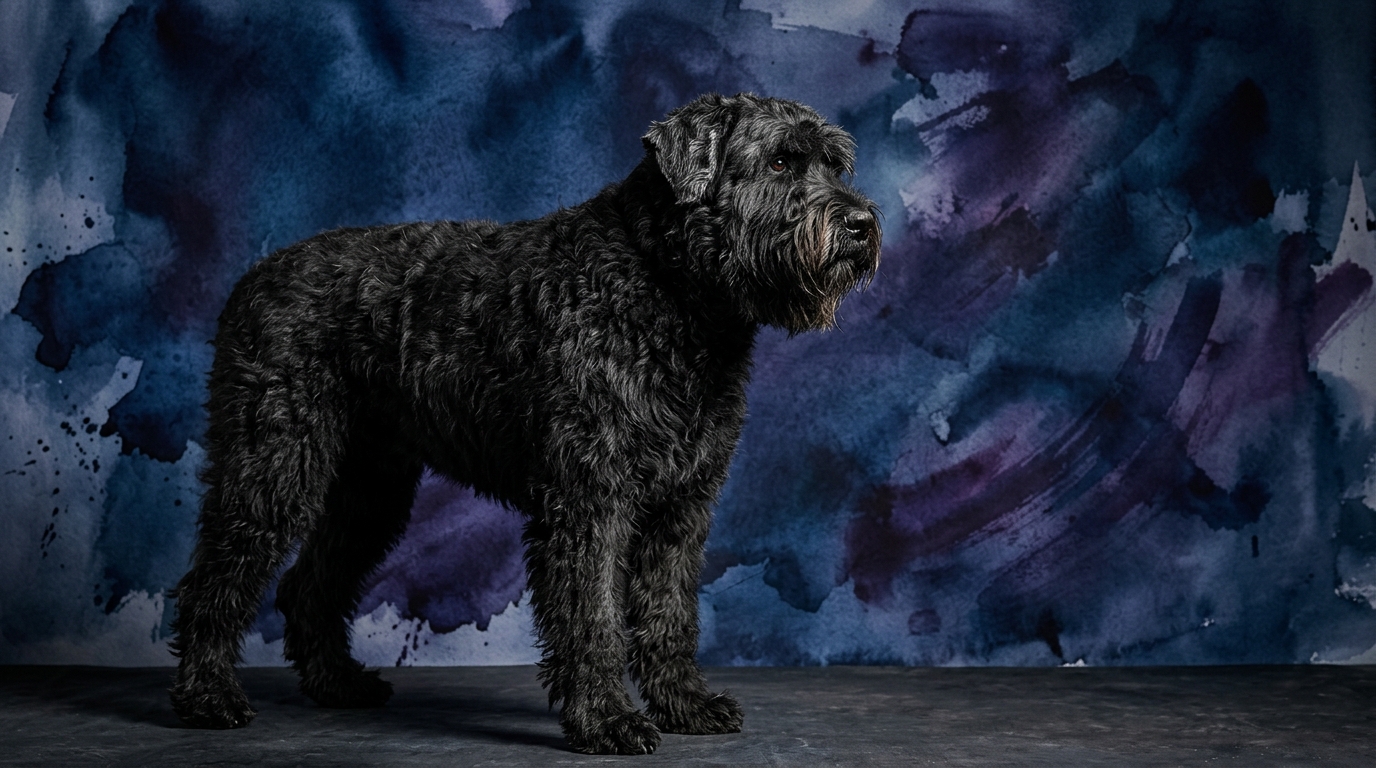
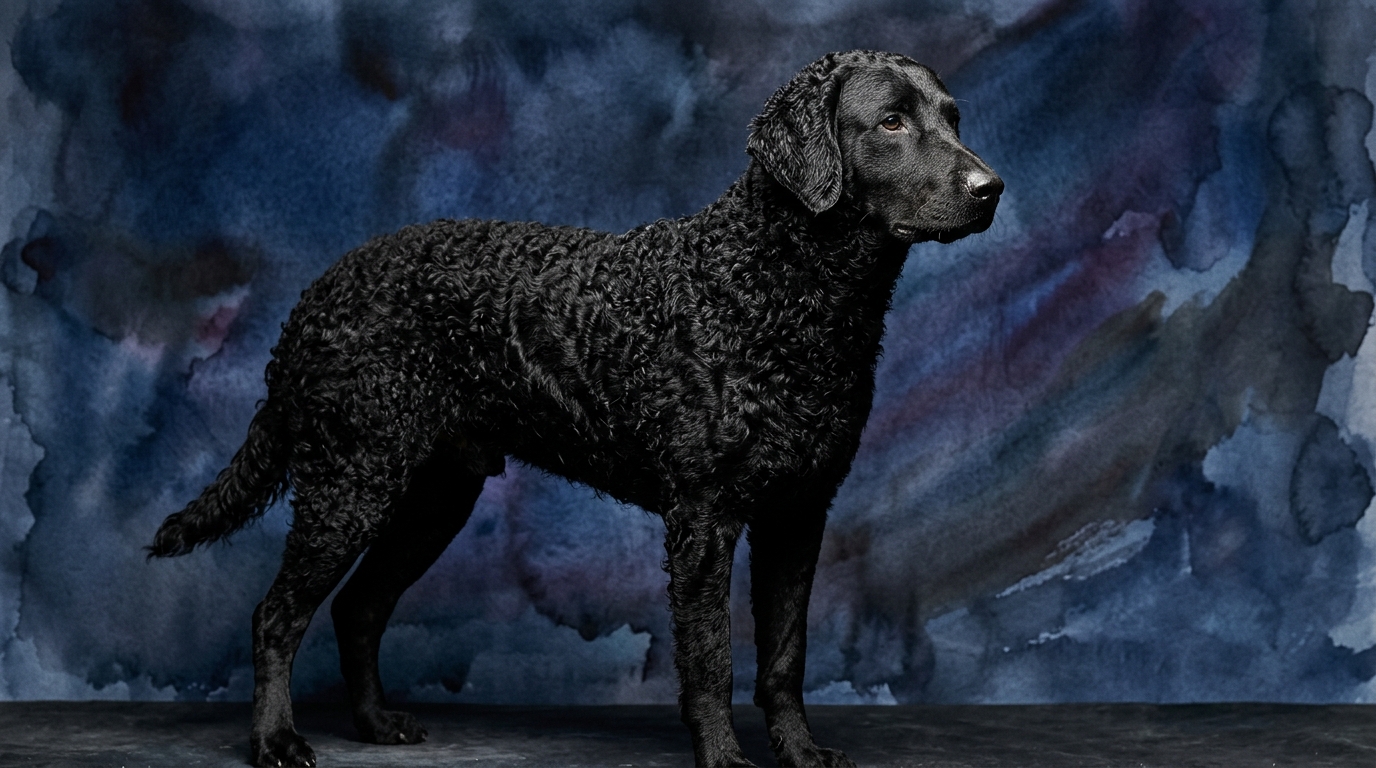
Side-by-Side Cognitive Profile
The Bouvier des Flandres, a Herding group dog, presents a well-rounded and consistent cognitive profile, with a 3/5 rating across all five evaluated dimensions. Its Problem Solving at 3/5 indicates a solid capacity for independent thought, often assessing situations and finding solutions in a practical, methodical manner, typical of a livestock guardian or herder. The breed’s Training Speed, also at 3/5, suggests it responds well to consistent, clear instruction, learning new commands at a steady pace, though they may require motivation that appeals to their working drive rather than mere repetition.
Social Intelligence in the Bouvier des Flandres, rated 3/5, signifies a good understanding of human cues and social dynamics within their family unit, capable of forming strong bonds and interpreting intentions, which is crucial for managing livestock effectively. Its Instinctive Drive, similarly 3/5, exhibits a moderate but persistent drive rooted in its herding heritage, showing inclination towards controlling movement, protecting its charges, and surveying its environment. Finally, the Bouvier’s Memory, also 3/5, maintains a reliable recall for learned behaviors and routines, remembering familiar people, places, and commands effectively over time.
The Curly-Coated Retriever, a Sporting group dog with a Coren rank of #41, shares many cognitive scores with the Bouvier but distinguishes itself in a key area. Its Problem Solving capability is rated 3/5, showing a comparable ability to navigate challenges and figure out tasks, often approaching problems with a pragmatic, goal-oriented mindset, useful for retrieving in varied terrains. With a Training Speed of 3/5, the Curly learns new tasks at a steady pace, often eager to please and responsive to positive reinforcement, making them generally agreeable students in structured environments.
The Curly-Coated Retriever’s Social Intelligence is also 3/5, displaying a good grasp of social cues and interactions, capable of bonding deeply with its family and adapting to different social situations with appropriate guidance. Its Instinctive Drive, rated 3/5, possesses a strong, inherent drive for retrieving, water work, and tracking, often demonstrating persistent focus when engaged in activities that tap into these natural inclinations. The most notable difference lies in its Memory, which stands out with a superior 4/5, excelling at remembering complex sequences, multiple retrieve locations, and a broad vocabulary of commands, making them highly retentive learners.
Where Bouvier des Flandres Wins Cognitively
The Bouvier des Flandres excels in the realm of independent decision-making, a direct reflection of its herding and protective heritage. With a consistent 3/5 across Problem Solving, Social Intelligence, and Instinctive Drive, the Bouvier is engineered to assess dynamic situations and act with a degree of autonomy. While not scoring higher than the Curly in any single category, its balanced profile suggests a robust, all-around cognitive function that prioritizes practical application over rote memorization. This breed's social intelligence, combined with its problem-solving acumen, allows it to interpret nuanced human intentions and environmental changes, making it adept at tasks requiring judgment, such as supervising children or understanding the subtle shifts in livestock behavior. Its instinctive drive encompasses a mental alertness for identifying and responding to potential threats or deviations from order, a trait invaluable for a working farm dog. This cognitive strength lies in its capacity to be a thinking partner, capable of making sound judgments within its defined role, rather than simply executing commands.
Where Curly-Coated Retriever Wins Cognitively
The Curly-Coated Retriever’s cognitive edge undeniably lies in its superior memory, rated at 4/5. This enhanced ability for recall significantly impacts its capacity for learning and performance, particularly in tasks requiring sequential commands or remembering specific locations. For a retriever, this means accurately marking where multiple birds have fallen, navigating complex terrain to retrieve them, and recalling the order of operations in a field trial. This heightened memory also contributes to its Coren ranking of #41, placing it well within the category of breeds demonstrating above-average working and obedience intelligence. While its problem-solving, training speed, social intelligence, and instinctive drive all align with the Bouvier at 3/5, the Curly's memory acts as a force multiplier, allowing it to build a larger repertoire of learned behaviors and retain them with greater precision over time. This makes the Curly particularly adept at advanced obedience, agility, or any activity where a vast lexicon of commands and a precise understanding of spatial relationships are paramount.
Which is Easier to Train and Why
When considering ease of training, the Curly-Coated Retriever generally holds an advantage due to its Coren ranking of #41 and its standout 4/5 memory score. While both breeds show a 3/5 for training speed, the Curly’s superior memory means it retains learned commands and sequences more effectively, often requiring fewer repetitions to solidify a behavior and recalling it more reliably over time. This makes the process of building a complex obedience foundation or teaching intricate tasks more efficient. Furthermore, the Curly’s sporting background often imbues it with a strong desire to work collaboratively and a natural inclination towards directed tasks like fetching and retrieving, which can be leveraged in positive reinforcement training methods.
In contrast, the Bouvier des Flandres, with its 3/5 training speed and memory, is certainly trainable, but its herding roots mean its motivation might be more tied to purposeful work and partnership rather than mere compliance. While capable of learning, a Bouvier might question the utility of a command or require a handler to demonstrate the 'why' behind an action, especially if it doesn't align with its innate drive to manage or protect its environment. This isn't a sign of lower intelligence, but rather a different cognitive approach – one that favors independent assessment and practical application. Therefore, while both breeds can achieve high levels of training, the Curly's inherent retentiveness and often more eager-to-please disposition can make the journey feel smoother and faster for the average owner.
Which Suits Active Owners vs. Relaxed Owners
Neither the Bouvier des Flandres nor the Curly-Coated Retriever is suited for a truly relaxed, sedentary owner; both breeds demand significant mental and physical engagement. However, their specific cognitive strengths and historical roles dictate different types of activity. The Bouvier des Flandres, with its balanced 3/5 in problem-solving, social intelligence, and instinctive drive, thrives with owners who can provide purposeful work and appreciate a thinking partner. Its herding background means it needs tasks that engage its mind – supervising, organizing, and problem-solving in real-world scenarios. This might involve advanced obedience, protection work, farm duties, or even complex scent work that allows it to use its judgment. An owner who enjoys varied, intellectually stimulating activities and is willing to engage in a collaborative partnership, allowing the Bouvier to make some independent decisions within boundaries, will find this breed a rewarding companion. They are not content with just a walk around the block; they need a job or a puzzle to solve regularly.
The Curly-Coated Retriever, with its exceptional 4/5 memory and strong instinctive drive for retrieving, is an ideal fit for active owners who enjoy structured outdoor activities, especially those involving water or field work. These dogs excel in activities like dock diving, field trials, advanced agility, or competitive obedience where remembering complex sequences, multiple targets, and a vast array of commands is crucial. Their desire to work and their high retention make them excellent partners for those dedicated to canine sports or consistent outdoor adventures like hiking, swimming, and extensive fetching sessions. While also needing mental stimulation, the Curly often finds it in the context of learning and executing specific, repeatable tasks. A relaxed owner would quickly find themselves with a bored, potentially destructive Curly-Coated Retriever.
The Verdict
Choose the Bouvier des Flandres if you seek a versatile, thinking partner for varied, purposeful tasks, appreciating a dog capable of independent judgment and collaborative problem-solving within a dynamic environment.
Choose the Curly-Coated Retriever if you prioritize a highly retentive companion for structured, active pursuits, especially those involving complex sequences, retrieving, or advanced obedience, where superior memory is a distinct asset.
🧠 Find Your Pet's IQ Score
Our Pet IQ Lab assessment covers 25+ tests across 5 cognitive dimensions — personalized to your breed.
Take the Full IQ Test →Frequently Asked Questions
Is the Bouvier des Flandres difficult to train?
No, the Bouvier des Flandres is not difficult to train, scoring 3/5 for training speed. They respond well to consistent, fair methods and learn at a steady pace, often excelling when tasks align with their natural herding and protective instincts.
Does a higher Coren rank mean a dog is 'smarter'?
A higher Coren rank primarily indicates a breed's ability to understand and obey new commands on the first or second attempt, reflecting working and obedience intelligence. It doesn't encompass all aspects of canine cognition, such as problem-solving or social intelligence, where other breeds may excel.
How important is memory in dog intelligence?
Memory is crucial for a dog's intelligence, impacting its ability to retain learned commands, recall routines, and remember important locations or individuals. A strong memory facilitates efficient training and allows a dog to build a larger, more reliable repertoire of behaviors over time.