Side-by-Side IQ Profile: Deconstructing Canine Cognition
The Cosmic Pet Pet IQ Lab evaluates canine intelligence across five crucial dimensions: Problem Solving, Training Speed, Social Intelligence, Instinctive Drive, and Memory. These metrics provide a nuanced understanding of how each breed processes information and interacts with its environment.
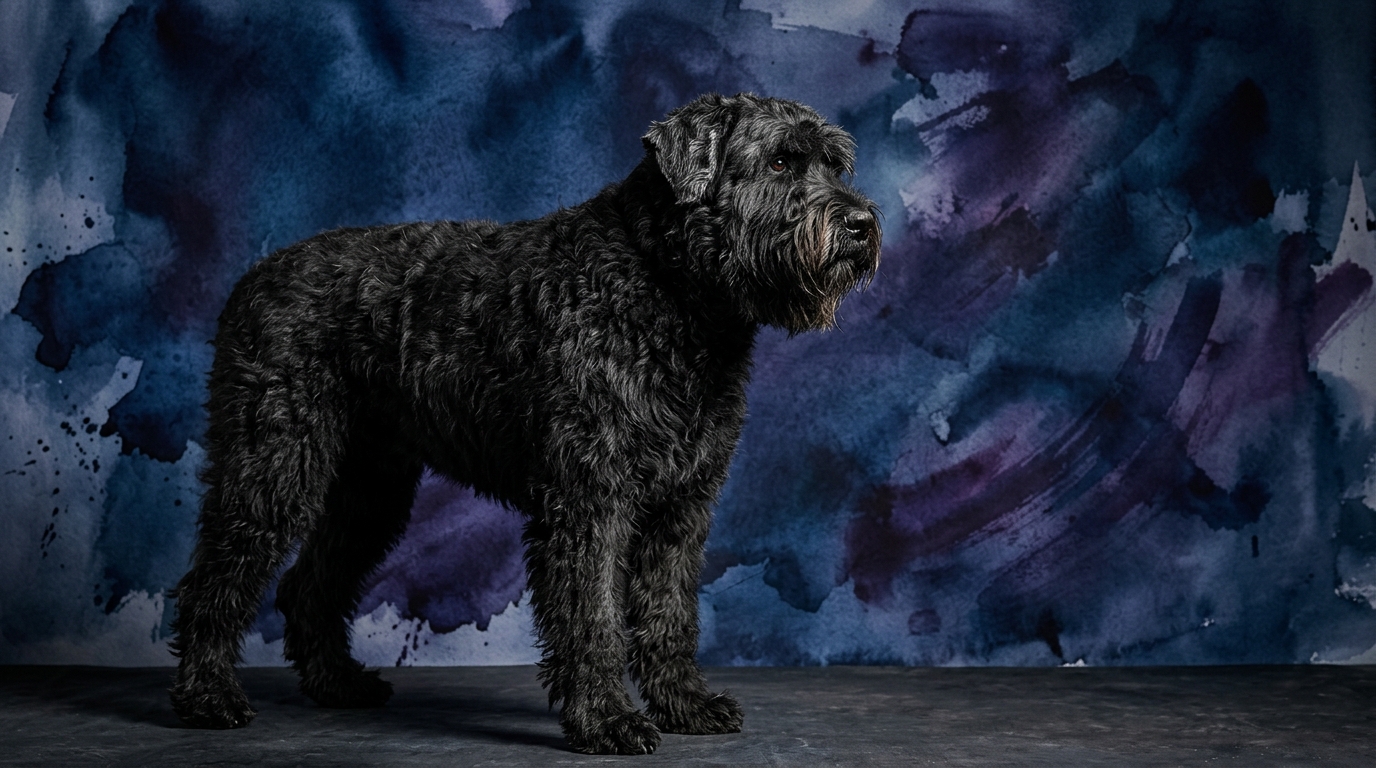
The Bouvier des Flandres demonstrates a consistent cognitive profile, scoring 3/5 in both Problem Solving and Training Speed. This suggests a dog capable of understanding and navigating moderate challenges, learning new commands and routines with steady effort, rather than rapid-fire acquisition. They are reliable learners who benefit from clear, consistent instruction.
Further, the Bouvier des Flandres registers a 3/5 in Social Intelligence, Instinctive Drive, and Memory. This indicates a solid ability to interpret human cues and form bonds, a moderate innate motivation for work, and a commendable capacity to retain learned information over time, reinforcing their dependable nature.
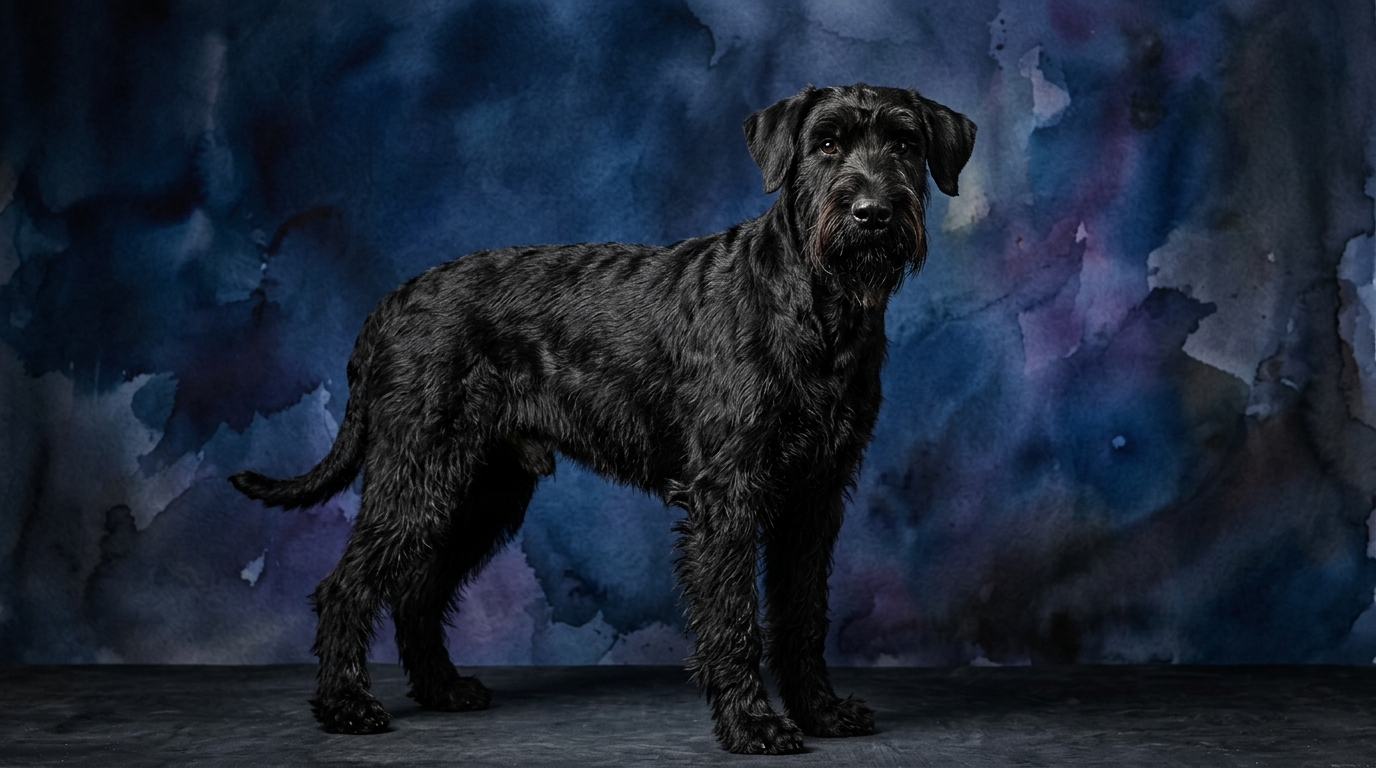
In contrast, the Giant Schnauzer presents a more accelerated cognitive blueprint, achieving a 4/5 in Problem Solving and Training Speed. This breed, recognized for its resourcefulness and quick uptake, grasps new concepts and figures out solutions to complex puzzles with notable efficiency. Their Coren rank of #28 underscores their capacity for rapid learning and obedience.
The Giant Schnauzer shares the Bouvier's 3/5 in Social Intelligence and Instinctive Drive, meaning they possess similar foundational abilities in understanding social dynamics and innate motivation. However, they boast a superior 4/5 in Memory, allowing them to recall a broader range of commands and experiences with greater precision and longevity.
Where the Bouvier des Flandres Shines Cognitively
The Bouvier des Flandres' cognitive strength lies in its balanced and consistent 3/5 profile across all IQ dimensions. This isn't a deficiency but rather an indicator of a dog that approaches learning and problem-solving with a steady, deliberate methodology. Their problem-solving ability, while not the most rapid, is practical and often involves a methodical approach to obstacles.
This consistent cognitive pace means that once a Bouvier learns a task or command, it is typically deeply ingrained and reliably executed. Their 3/5 social intelligence fosters a loyal partnership built on mutual understanding and clear communication, enabling them to comprehend their handler's intent without overthinking. This steadfastness makes them excellent candidates for roles requiring dependable, unwavering performance in familiar situations, where consistency is valued above spontaneous innovation.
Where the Giant Schnauzer Excels in Cognitive Function
The Giant Schnauzer's cognitive advantages are evident in their 4/5 scores for Problem Solving, Training Speed, and Memory. This breed demonstrates a pronounced ability to quickly analyze new situations and devise effective solutions, often showing a proactive, independent streak in their approach. Their accelerated training speed means they pick up new commands with remarkable swiftness, requiring fewer repetitions to achieve mastery.
Their superior memory (4/5) further enhances their learning capacity, enabling them to build an extensive repertoire of skills and recall them accurately, even after extended periods. This cognitive agility allows Giant Schnauzers to excel in complex, multi-stage tasks and adapt rapidly to changing environments. Their quick wit and ability to 'figure things out' make them adept at advanced obedience, protection work, and dog sports that demand intellectual engagement and precision.
Training Dynamics: Bouvier des Flandres vs. Giant Schnauzer
When considering ease of training, the Giant Schnauzer generally holds an edge due to its 4/5 Training Speed. They tend to grasp new concepts quickly, often requiring fewer repetitions to learn a new command or behavior. This makes them a rewarding partner for experienced handlers who enjoy advancing through training levels efficiently and introducing varied, complex tasks.
Conversely, the Bouvier des Flandres, with its 3/5 Training Speed, requires a more patient and consistent approach. While not slow, they learn at a steadier pace, needing more repetition to solidify new behaviors. However, once a concept is understood, their 3/5 memory ensures good retention, leading to a deeply ingrained and reliable understanding that endures.
The Giant Schnauzer's higher problem-solving score means they can be more inclined to independent thought, sometimes testing boundaries or finding creative solutions that aren't always in line with a handler's wishes, requiring consistent guidance. The Bouvier, while still capable, might be more inclined to follow established routines once learned, potentially leading to a more predictable training journey. Both breeds, sharing a 3/5 instinctive drive, thrive when training is framed as a purposeful activity.
Ideal Owners: Active Engagement vs. Steady Partnership
For active owners seeking a highly engaged and mentally agile companion, the Giant Schnauzer is often the preferred choice. Their superior problem-solving and training speed mean they thrive on continuous mental stimulation and varied activities such as advanced obedience, agility, or protection sports. An owner prepared to provide consistent challenges and channel their sharp intellect will find a highly responsive and capable partner.
While neither breed suits a truly 'relaxed' owner given their working heritage, the Bouvier des Flandres might be better suited for owners who appreciate a steady, predictable routine and are committed to patient, consistent training. They excel with handlers who value a dependable, unflappable presence and are willing to invest the time in fostering a deep, unhurried bond through clear leadership and consistent expectations, ensuring their needs for purpose are met.
The Verdict
Choose the Bouvier des Flandres if you appreciate a consistently dependable companion who thrives on routine, and you are prepared for patient, repetitive training to foster deep-seated understanding. They are an excellent choice for handlers seeking a steadfast partner who values clear structure and a strong, unhurried bond.
Opt for the Giant Schnauzer if you are an experienced, active owner ready to engage with a quick-witted, problem-solving dog that thrives on advanced training, complex tasks, and consistent mental challenges. They suit individuals who can channel their sharp intellect and independent streak into productive activities.
🧠 Find Your Pet's IQ Score
Our Pet IQ Lab assessment covers 25+ tests across 5 cognitive dimensions — personalized to your breed.
Take the Full IQ Test →Frequently Asked Questions
Are Bouvier des Flandres dogs difficult to train?
Bouviers are not inherently difficult to train, but their 3/5 training speed means they require more patience and consistent repetition than some faster-learning breeds. Once they grasp a concept, their 3/5 memory ensures good retention, making them reliable partners with dedicated effort.
Do Giant Schnauzers need a lot of mental stimulation?
Yes, Giant Schnauzers, with their 4/5 problem-solving and training speed, absolutely thrive on mental stimulation. They need consistent challenges through advanced training, puzzle toys, and dog sports to prevent boredom and channel their sharp intellect constructively.
How do the social intelligence scores compare for these breeds?
Both the Bouvier des Flandres and the Giant Schnauzer register a 3/5 in social intelligence, indicating a moderate ability to understand human emotions and social cues. They are capable of forming strong bonds and interpreting their handler's intent, though they may not possess the extreme sensitivity or nuanced communication of some other breeds.