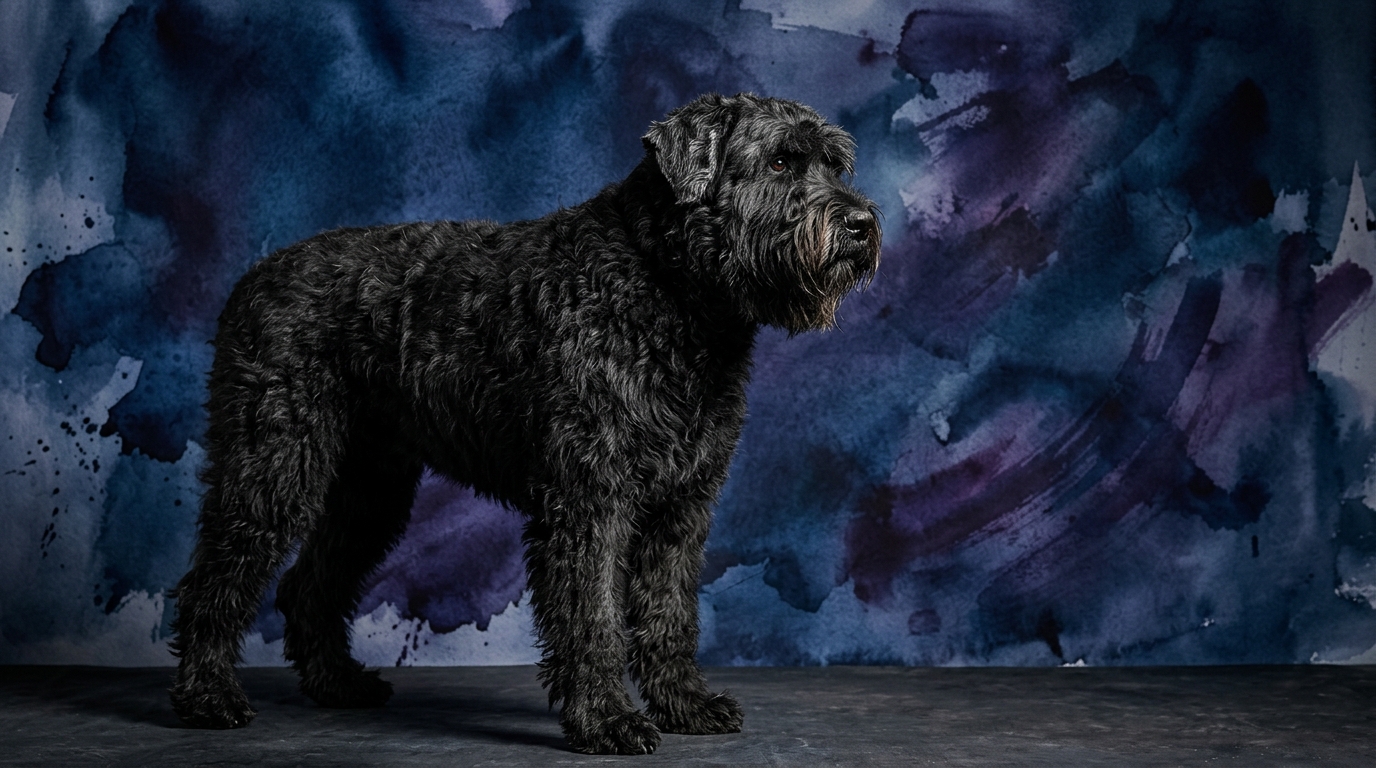
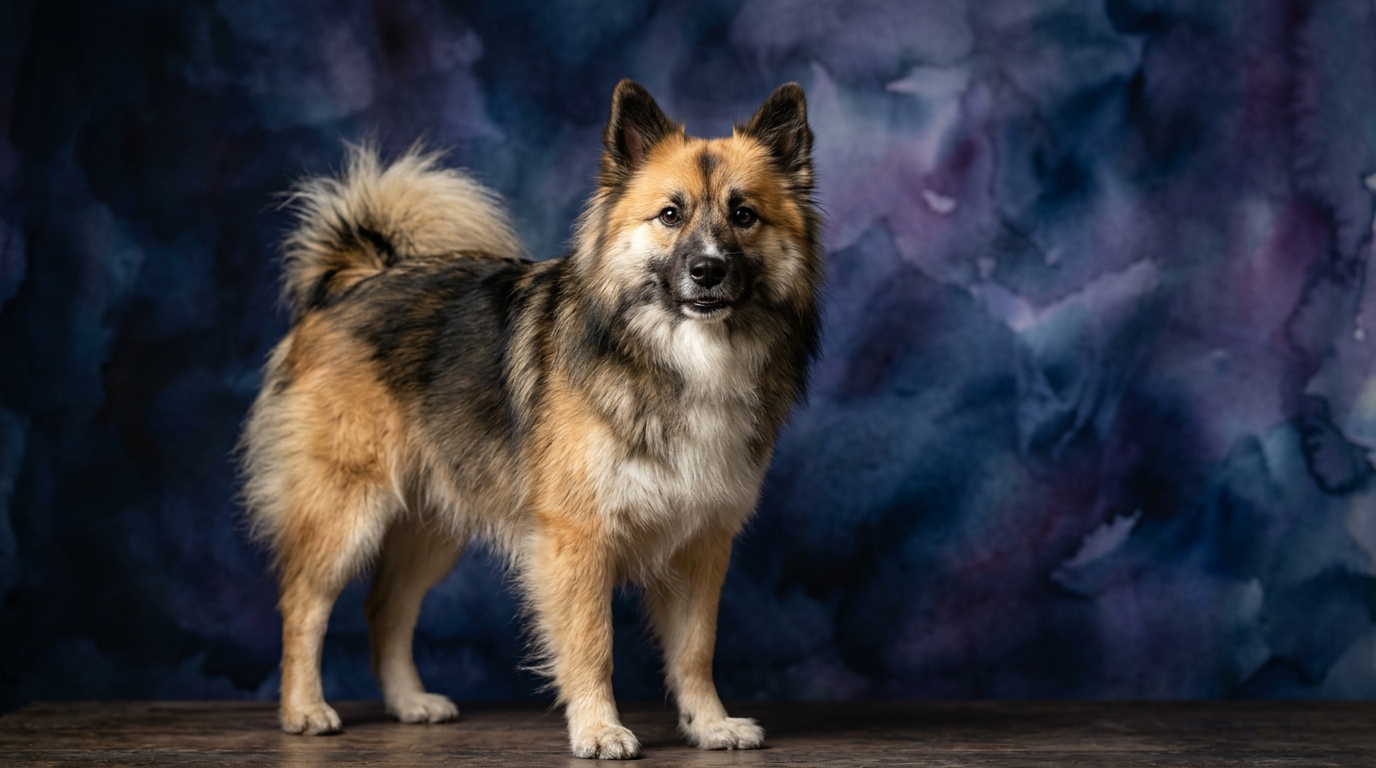
Side-by-Side IQ Profile: Identical Scores, Distinct Interpretations
At first glance, the Bouvier des Flandres and the Icelandic Sheepdog appear to be cognitive twins, each scoring a solid 3 out of 5 across all measured IQ dimensions. However, these identical numerical ratings mask significant differences in how their intelligence manifests, shaped by centuries of distinct working roles and environmental pressures. A score of 3/5 signifies a capable and adaptable intellect, but the 'flavor' of that intellect varies profoundly between these two herding specialists.
For Problem Solving (3/5), the Bouvier des Flandres often approaches challenges with a deliberate, physically oriented persistence, reflecting its history of moving large, stubborn livestock and guarding property. Its solutions might involve powerful physical intervention or methodical perseverance. The Icelandic Sheepdog, conversely, might employ more agile, vocal, and exploratory problem-solving tactics, typical of a breed navigating diverse terrain to gather smaller, faster-moving sheep, often relying on quick assessments and communication with its handler. Their 3/5 in this dimension points to efficiency, but through different means.
Regarding Training Speed (3/5), both breeds demonstrate a capacity for learning, yet their intrinsic motivations differ. The Bouvier, with its independent and often self-assured nature, learns effectively but might require consistent, patient guidance to ensure compliance rather than mere understanding. Its learning curve is steady, but not necessarily driven by an overwhelming desire to please. The Icelandic Sheepdog, being more people-oriented and eager to engage, often picks up new commands quickly due to its enthusiasm and desire for interaction, though its high curiosity and vocal tendencies can introduce distractions that require focused management.
Social Intelligence (3/5) in the Bouvier des Flandres is typically directed inward towards its immediate family and perceived territory. It possesses a keen understanding of its household dynamics and human cues within that trusted circle, often exhibiting a reserved, watchful demeanor towards strangers, processing their presence with careful observation. The Icelandic Sheepdog, however, displays a more outward, effusive social intelligence, quickly forming bonds and reading a broader spectrum of human emotions and intentions, often seeking out companionship and interaction with a friendly, inquisitive approach.
Instinctive Drive (3/5) for the Bouvier is rooted deeply in its heritage as a powerful cattle drover and guard dog. Its drive is for purposeful, often physically demanding work, involving control, protection, and a strong sense of responsibility for its 'flock' or territory. This often manifests as a calm, watchful intensity. The Icelandic Sheepdog's drive is primarily for herding, expressed through agile movements, persistent circling, and characteristic vocalizations (barking) to manage livestock. Its drive is often more playful and less confrontational, focused on gathering and communicating.
Finally, Memory (3/5) in both breeds is robust enough for their complex tasks. The Bouvier's memory is excellent for routines, learned tasks, and the layout of its territory, retaining complex command sequences and past experiences that inform its protective instincts. The Icelandic Sheepdog also possesses a strong memory, particularly for social interactions, its handler's preferences, and the specific nuances of herding patterns, quickly recalling positive reinforcement cues and environmental details relevant to its work.
Where Bouvier des Flandres Wins Cognitively
While their IQ scores are numerically identical, the Bouvier des Flandres excels in cognitive applications demanding robust independence and unwavering resolve. Its 3/5 in problem-solving manifests as a remarkable ability to assess and react to situations without constant human direction, making it exceptionally adept at tasks requiring self-sufficiency, such as patrolling a large property or making on-the-spot decisions to manage livestock. This breed's cognitive strength lies in its capacity for autonomous, reasoned action, often involving physical assertion.
The Bouvier's social intelligence, while reserved, gives it an edge in discerning genuine threats or unusual circumstances within its protected sphere. Its memory for past interactions and its discerning nature mean it learns quickly who belongs and who does not, retaining a precise internal registry of its social environment. This makes it particularly effective as a discerning guardian, capable of interpreting subtle shifts in human behavior or environmental cues that might signal a need for its protective intervention. Its instinctive drive for protection and control is finely tuned, allowing it to apply its intellect to maintain order and security with a quiet, powerful authority.
Where Icelandic Sheepdog Wins Cognitively
The Icelandic Sheepdog, with its identical 3/5 scores, shines in cognitive areas requiring high adaptability, social engagement, and agile resourcefulness. Its problem-solving skills, while equally rated, lean towards creative and flexible solutions, often involving quick maneuvers and vocal communication rather than sheer force. This makes it particularly adept at navigating complex, changing environments or managing scattered livestock with ingenuity.
Its strong outward social intelligence allows it to excel in roles where constant human interaction and nuanced communication are paramount. The Icelandic Sheepdog is a master at reading human emotions and intentions, often anticipating needs and responding with enthusiastic engagement. This breed's memory is particularly strong for social cues and positive reinforcement, making it highly responsive to training methods that emphasize collaboration and reward. Its instinctive drive, while herding-focused, is often expressed with a joyful exuberance, making it a highly engaging and responsive partner in activities requiring cooperative effort and quick thinking.
Which Is Easier to Train and Why
Determining which breed is 'easier' to train when both score 3/5 in training speed hinges on the owner's approach and understanding of breed-specific motivations. The Icelandic Sheepdog, with its inherent people-pleasing nature and strong desire for companionship, often appears to learn commands more readily due to its eagerness to engage and its positive response to praise and interaction. Its responsiveness makes initial training feel quite fluid, though its distractibility and vocal tendencies require consistent focus on the handler and environmental management to maintain attention.
The Bouvier des Flandres, while equally capable of learning at a 3/5 speed, presents a different training dynamic. Its independence and self-assured temperament mean it will learn commands, but it often needs clear, consistent, and confident leadership to ensure compliance. It's not that it doesn't understand, but rather that it evaluates the command and the commander before acting. Training a Bouvier requires patience, firmness, and a deep understanding of its working dog mindset, where consistency and respect are paramount. While the Icelandic might be quicker to offer a behavior, the Bouvier, once committed, often performs with a deeper, more steadfast understanding of its purpose.
Which Suits Active Owners vs. Relaxed Owners
For the truly active owner seeking a powerful, purposeful partner, the Bouvier des Flandres is an exceptional choice. Its high instinctive drive and need for mental and physical engagement make it well-suited for activities like advanced obedience, protection sports, carting, or extensive hiking. This breed thrives with owners who can provide structured work, consistent training, and ample opportunities to utilize its robust problem-solving skills and protective instincts. A relaxed owner may find the Bouvier's independent nature and strong drives challenging to manage, potentially leading to boredom or destructive behaviors.
The Icelandic Sheepdog, while also an active breed, suits a different kind of active owner – one who values companionship, agility, and a more interactive, playful energy. This breed excels in activities like agility, flyball, or long, varied walks that engage its curiosity and social intelligence. Its adaptability and strong desire for human company make it an excellent fit for families or individuals who are active and want their dog to be an integral, highly engaged part of their daily lives. A truly relaxed owner might struggle with the Icelandic's need for consistent mental stimulation and physical activity, as well as its propensity for vocalization, but it is generally more forgiving of varied activity levels than the Bouvier, provided its social needs are met.
The Verdict: When to Choose Each
The Verdict
Choose the Bouvier des Flandres if you are an experienced owner seeking a powerful, independent, and protective working partner who thrives on structured tasks and confident leadership, valuing its steadfast resolve and discerning nature.
Opt for the Icelandic Sheepdog if you desire an agile, highly social, and communicative companion who excels in interactive activities and thrives on close human connection, appreciating its cheerful adaptability and enthusiastic engagement.
🧠 Find Your Pet's IQ Score
Our Pet IQ Lab assessment covers 25+ tests across 5 cognitive dimensions — personalized to your breed.
Take the Full IQ Test →Frequently Asked Questions
Do Bouvier des Flandres make good family dogs?
Yes, Bouviers can be excellent family dogs, forming deep bonds with their immediate household. They are often calm and protective with children they've grown up with, though their size and strength necessitate supervision with very young children and consistent training to ensure respectful interactions.
Are Icelandic Sheepdogs good for first-time dog owners?
Icelandic Sheepdogs can be suitable for first-time owners who are committed to consistent positive reinforcement training, providing ample physical and mental stimulation, and managing their vocal tendencies. Their eagerness to please and social nature can make them responsive, but their energy and need for engagement require dedication.
How do their grooming needs compare?
The Bouvier des Flandres has a dense, harsh double coat that requires regular brushing (2-3 times a week) and professional grooming or stripping every few months to prevent matting. The Icelandic Sheepdog has a thick double coat that sheds seasonally and needs weekly brushing, with more frequent brushing during shedding periods to manage loose fur.