Side-by-Side Cognitive Profiles: Herder vs. Guardian
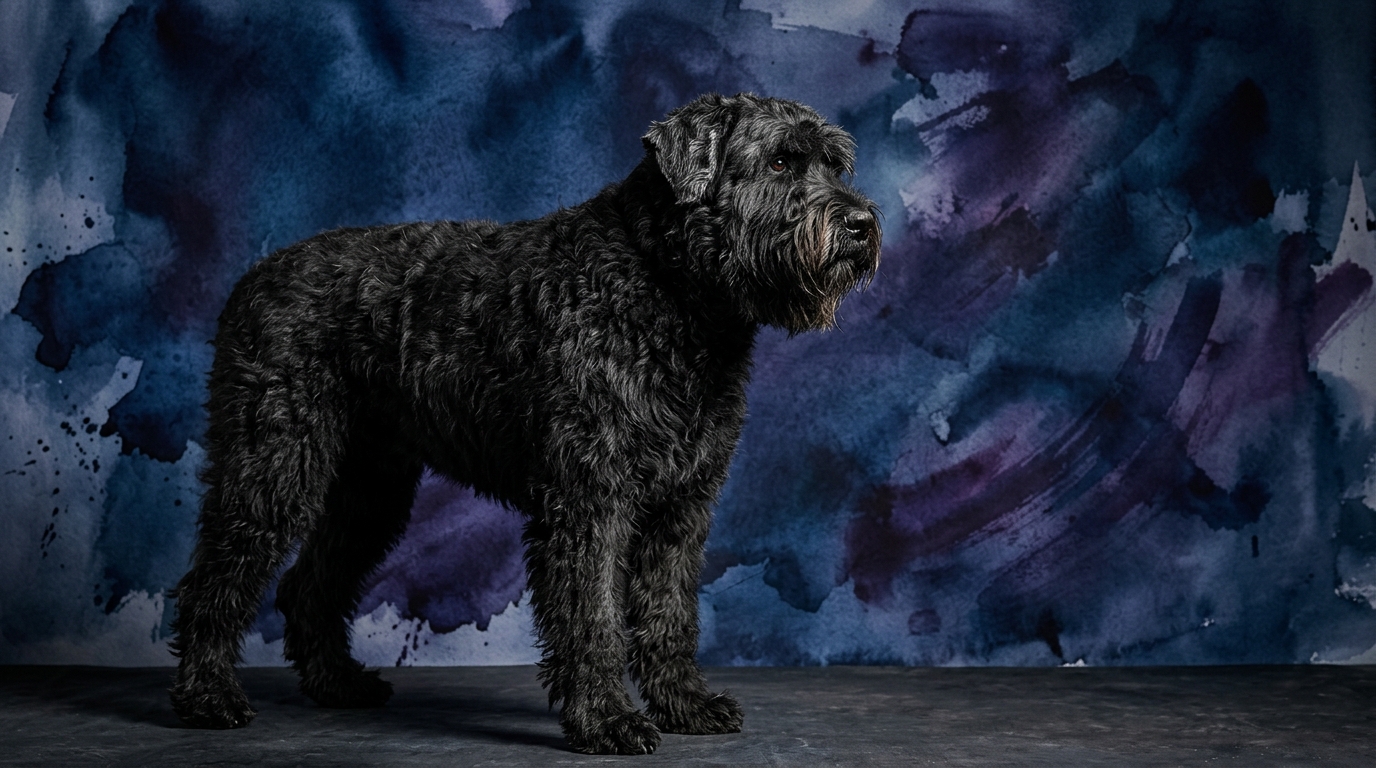
While both the Bouvier des Flandres and the Komondor share identical scores across The Cosmic Pet Pet IQ Lab's five cognitive dimensions, their application of these traits is profoundly shaped by their historical roles. The Bouvier, originating as a cattle herder and drover from Flanders, developed its intellect for active management and problem-solving within a dynamic, often challenging, agricultural environment. Its cognitive strengths are geared towards direct interaction and response to changing conditions.
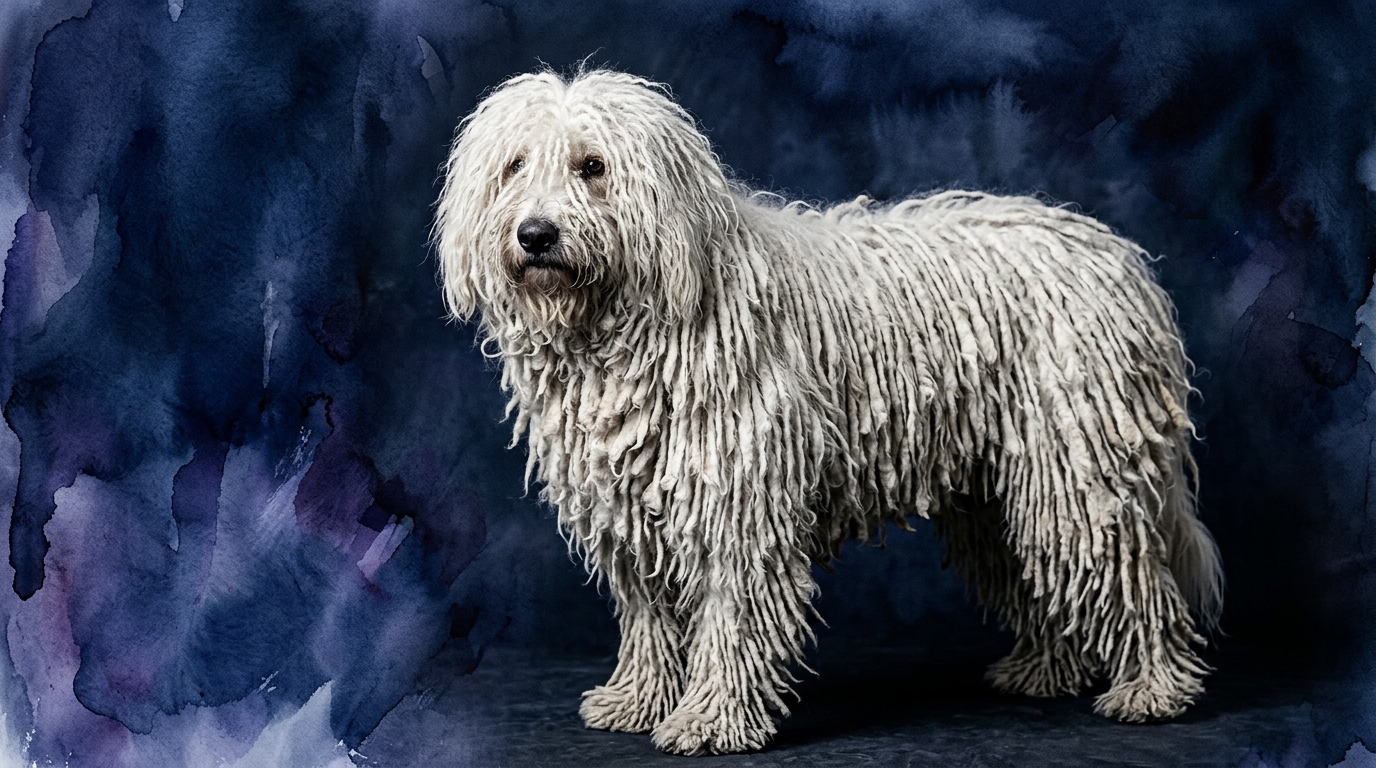
Conversely, the Komondor, a Hungarian livestock guardian, honed its intellectual abilities for independent vigilance and strategic defense. Its cognitive framework emphasizes observation, assessment, and autonomous decision-making over extended periods, often with minimal human intervention. Understanding these foundational differences is key to appreciating how their shared 3/5 scores play out in real-world scenarios.
For Problem Solving, both breeds demonstrate a solid capacity to navigate challenges. The Bouvier applies this by figuring out how to direct a wayward cow or locate a lost lamb, requiring quick, practical solutions within a moving 'flock.' The Komondor's problem-solving manifests in identifying potential threats to its charge, determining the best defensive posture, or strategically patrolling its territory to deter predators. Both are capable thinkers, but their 'problems' are intrinsically different.
Training Speed at 3/5 suggests both breeds are capable learners, though their internal motivations differ. A Bouvier, often eager to partner in tasks, can grasp complex commands and sequences, especially when linked to a job. The Komondor learns commands effectively, but its independent nature means it might weigh a directive against its primary guarding instincts. Social Intelligence for the Bouvier involves understanding handler cues and the dynamics of its 'herd,' whether livestock or family, fostering a cooperative working relationship. The Komondor's social intelligence is deeply rooted in its protective role, keenly observing its human family (its flock) for signs of distress and assessing strangers with a discerning, watchful eye, prioritizing the safety of its charges.
Instinctive Drive, also at 3/5, is a core differentiator. The Bouvier possesses a strong herding drive, expressed through gathering, moving, and protecting. This translates into a need for purposeful activity and a desire to manage its environment. The Komondor's instinctive drive is overwhelmingly geared towards guarding – a deep-seated need to protect its territory and family, manifesting as constant vigilance and readiness to defend. Finally, Memory at 3/5 for both ensures they retain learned behaviors, routines, and experiences. A Bouvier remembers complex herding patterns and the layout of fields, while a Komondor retains knowledge of its territory, identified threats, and the routines of its family, essential for effective, long-term guardianship.
Where Bouvier des Flandres Excels Cognitively
The Bouvier des Flandres, with its herding heritage, often demonstrates a cognitive edge in tasks requiring dynamic partnership and adaptability. Its 3/5 in Problem Solving is typically expressed in active, hands-on situations where quick decisions are needed to manage moving elements or overcome immediate obstacles. For instance, a Bouvier might more readily adjust its strategy mid-task if a gate is unexpectedly closed or if livestock scatter in an unforeseen direction, showcasing a flexible application of its intellect.
Its Social Intelligence, while also 3/5, tends to be more outwardly communicative and responsive to human direction within a working context. A Bouvier often reads its handler's subtle body language and vocal cues with precision, allowing for seamless collaboration in complex activities like advanced obedience or dog sports. This cooperative intelligence, combined with its strong Memory, allows it to master intricate routines and recall them reliably, making it particularly apt for structured, multi-step tasks where human-dog synchronicity is paramount. The Bouvier's Instinctive Drive, channeled towards controlled herding, makes it naturally inclined to engage in activities that mimic its original purpose, providing a strong internal motivation for learning and participation when guided by a handler.
Where Komondor Excels Cognitively
The Komondor's cognitive strengths lie in its profound independence, observational prowess, and strategic, long-term vigilance. Its 3/5 in Problem Solving is geared towards autonomous decision-making in the absence of direct human command, such as determining the most effective patrol route for a property or assessing the level of threat posed by an approaching stranger. This self-reliant problem-solving is a hallmark of its guardian role, where immediate human input isn't always available.
The Komondor's Social Intelligence, while scoring the same, is acutely tuned to its 'flock' and potential external threats. It excels at discerning subtle changes in its environment and the demeanor of unfamiliar individuals, often making protective judgments based on these nuanced observations. Its powerful Instinctive Drive for guarding means it inherently understands the boundaries of its territory and the need to protect its family, requiring less direct instruction to fulfill this role. Coupled with its Memory, a Komondor effectively maps its territory, remembers potential vulnerabilities, and recalls previous encounters, building a comprehensive mental database for its protective duties, making it exceptionally effective in roles demanding unwavering, self-directed guardianship.
Training Dynamics: Bouvier's Partnership vs. Komondor's Independence
Despite both breeds scoring 3/5 in Training Speed, their approaches to learning and their handler's experience will significantly differ. The Bouvier des Flandres, bred to work closely with humans in managing livestock, generally responds well to positive reinforcement and consistent, clear commands. Its desire to engage in purposeful activity and its cooperative Social Intelligence mean it often views training as a shared task. While it possesses an independent spirit characteristic of herding breeds, it typically seeks to understand what is expected and enjoys the process of working alongside its owner, making it generally more amenable to structured training sessions and varied disciplines.
The Komondor, on the other hand, approaches training with a deep sense of self-reliance ingrained by centuries of solitary guardianship. Its 3/5 in Training Speed means it can learn, but its independent Instinctive Drive often leads it to question commands that don't align with its perceived duty or its assessment of a situation. Training a Komondor requires immense patience, understanding of its protective temperament, and a willingness to build a relationship based on mutual respect rather than absolute obedience. It's less about eager compliance and more about convincing the Komondor that a command is logical and beneficial. This distinct behavioral difference means that while both can learn, the Bouvier is generally considered 'easier' to train for a wider range of tasks, particularly for owners seeking a highly biddable companion, due to its inherent cooperative nature.
Lifestyle Suitability: Active Engagement vs. Watchful Serenity
The cognitive profiles of these two breeds directly influence their suitability for different owner lifestyles. The Bouvier des Flandres thrives with active owners who can provide consistent engagement and outlets for its considerable energy and cognitive drive. Its Herding group classification demands mental stimulation through training, dog sports, or a 'job' that allows it to utilize its Problem Solving and Instinctive Drive. Owners who enjoy agility, obedience, tracking, or even herding activities will find the Bouvier to be an eager and capable partner. Its cooperative Social Intelligence means it integrates well into a family that provides structure and includes it in daily activities, making it ideal for those seeking an involved, working companion.
Conversely, the Komondor is better suited for owners who appreciate a more relaxed, yet vigilant, companion. While it requires adequate exercise to maintain physical health, its cognitive strengths are focused on observation and protection rather than constant physical activity. Owners who have a property to guard, or who appreciate a dog that is content to survey its surroundings and act as a watchful presence, will find the Komondor a superb fit. Its independent nature and strong Instinctive Drive for guarding mean it doesn't constantly seek human interaction or command-based tasks. It's an ideal match for owners who understand and respect its self-sufficient temperament, offering a calm, protective presence rather than an always-on activity partner.
The Verdict
Choose the Bouvier des Flandres if you seek an active, cooperative partner for various dog sports and structured training, valuing its adaptable problem-solving and eagerness to work alongside you. Its cognitive profile aligns with owners who provide consistent mental and physical engagement, integrating it into a dynamic family life.
Opt for the Komondor if you desire a steadfast, independent guardian that excels in autonomous decision-making and property protection, appreciating its watchful serenity and profound sense of duty. This breed is best for owners who respect its self-sufficient nature and provide a calm, secure environment for its protective instincts to flourish.
🧠 Find Your Pet's IQ Score
Our Pet IQ Lab assessment covers 25+ tests across 5 cognitive dimensions — personalized to your breed.
Take the Full IQ Test →Frequently Asked Questions
Do Bouvier des Flandres and Komondors require similar amounts of exercise?
While both breeds benefit from regular exercise, the Bouvier typically requires more structured, active engagement to satisfy its herding drive and cooperative nature. The Komondor, though large, is often content with patrolling its territory and moderate activity, prioritizing vigilance over constant exertion.
How do their protective instincts differ based on their cognitive profiles?
The Bouvier's protection stems from its Herding group instinct to gather and guard its 'flock' (family) under human direction, acting as an alert and capable deterrent. The Komondor's protection is rooted in its independent guardian Instinctive Drive, leading to autonomous, self-directed vigilance and defense based on its own assessment of threats, often with less immediate human input.
Can either breed live successfully in an apartment?
Neither breed is ideally suited for apartment living due to their size, energy levels, and inherent drives. The Bouvier requires space for its active lifestyle and herding instincts, while the Komondor needs a secure yard to fulfill its guarding duties and patrol its territory effectively.