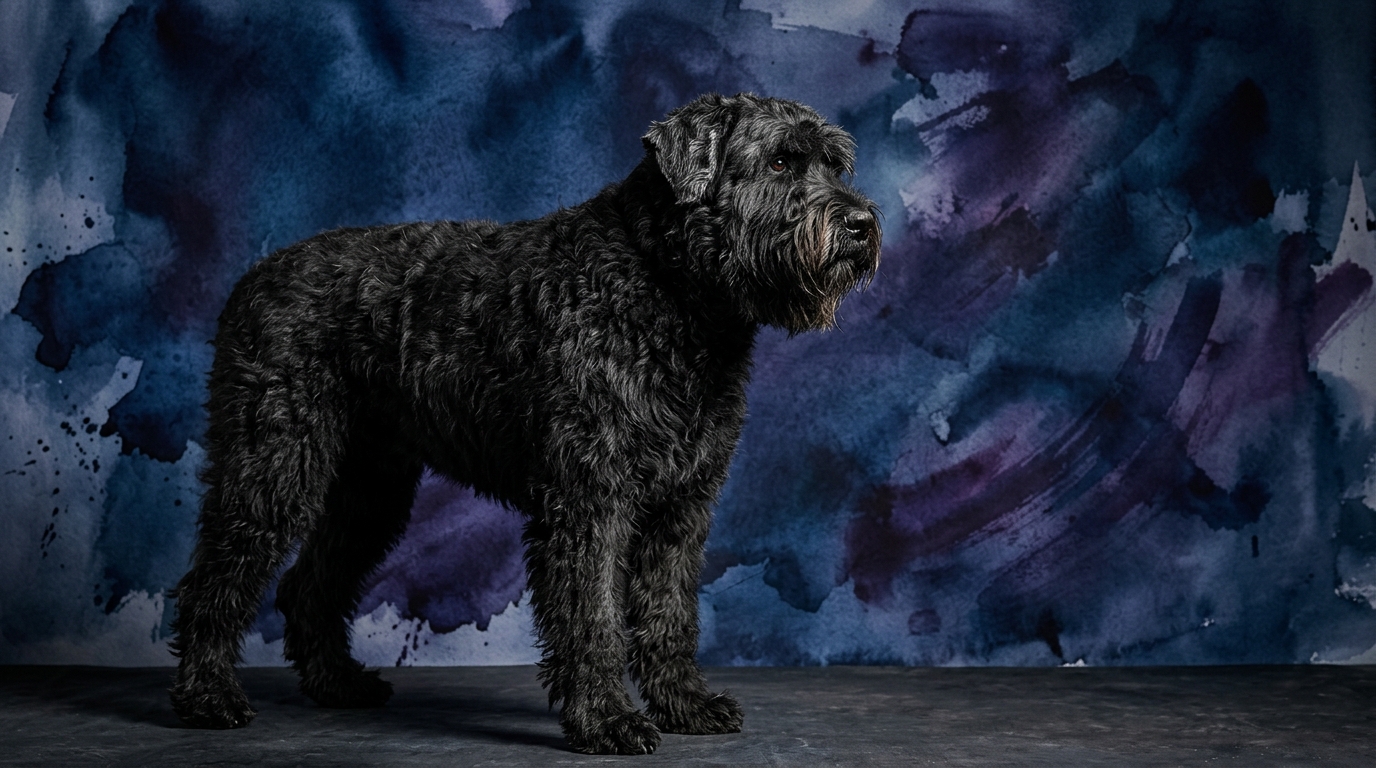

Side-by-Side IQ Profile: Unpacking Identical Scores
When we examine the intelligence profiles of the Bouvier des Flandres and the Lhasa Apso, we find a curious numerical symmetry: both breeds score a 3 out of 5 in Problem Solving, Training Speed, Social Intelligence, Instinctive Drive, and Memory. This isn't to say their minds operate identically, but rather that their cognitive capabilities fall within a comparable moderate range, expressed through the lens of their unique breed purposes. The Bouvier des Flandres, a robust herding dog, applies its intellect to practical, often physically demanding tasks, while the Lhasa Apso, a vigilant sentinel, utilizes its cognitive abilities for observation, communication within its immediate social circle, and territorial defense.
For the Bouvier des Flandres, a 'Problem Solving' score of 3/5 indicates a capacity to independently navigate complex situations, such as separating livestock or finding a lost item, often relying on their keen observation and environmental awareness. Their 'Training Speed' at 3/5 suggests they grasp new commands and routines at a moderate pace, thriving when tasks are presented with purpose and consistency. A 'Social Intelligence' of 3/5 reflects their ability to read human cues within a working partnership and discern intentions, while their 'Instinctive Drive' at 3/5 highlights a strong, inherent desire to herd, guard, and protect. Finally, their 'Memory' at 3/5 means they retain complex routines, learned tasks, and past experiences with a good degree of reliability, crucial for their historical roles.
The Lhasa Apso, conversely, also earns a 3/5 in 'Problem Solving,' which for them often translates to clever ways of achieving comfort, alerting to perceived threats, or even subtly manipulating their human companions for attention. Despite being ranked #68 in Stanley Coren's hierarchy for working and obedience intelligence, their 'Training Speed' of 3/5 in our model indicates they learn commands at a moderate pace, though their independent nature means compliance can be selective and requires motivational finesse. Their 'Social Intelligence' at 3/5 is keenly focused on understanding their immediate family dynamics and discerning the intentions of strangers, a vital trait for their role as watchdogs. An 'Instinctive Drive' of 3/5 in a Lhasa Apso manifests as strong territoriality, vigilance, and an unwavering loyalty to their inner circle. Their 'Memory' at 3/5 ensures they recall routines, familiar faces, and past events with accuracy, supporting their consistent watchdog duties and companionship.
Where Bouvier des Flandres Wins Cognitively
The Bouvier des Flandres’ cognitive strengths particularly shine in scenarios demanding practical application and sustained engagement with multi-faceted tasks. Their 3/5 Problem Solving score, when combined with their strong Instinctive Drive, allows them to excel at navigating dynamic environments and making independent decisions in the field, whether it's managing a flock or patrolling property. They possess a robust capacity for learning and executing complex sequences of actions, a testament to their memory for intricate patterns and their ability to generalize learned behaviors across different contexts. This makes them adept at advanced obedience, protection work, or even search and rescue, where their mental stamina and ability to process varied sensory input are paramount. While their training speed is moderate, their retention of complex, purposeful tasks is a distinct advantage, making them exceptionally reliable once a skill is truly ingrained and understood.
Where Lhasa Apso Wins Cognitively
The Lhasa Apso, despite its smaller stature, demonstrates a compelling cognitive edge in areas requiring acute environmental awareness and nuanced social interaction within the home. Their 3/5 Problem Solving score often manifests as a shrewd understanding of their surroundings, enabling them to identify and alert to the slightest anomaly, a critical trait for a sentinel dog. Their Social Intelligence, also rated 3/5, is particularly refined in discerning subtle shifts in human mood and household routines, allowing them to adapt their behavior to maintain their cherished position within the family. They possess an exceptional memory for who belongs and who doesn’t, and for the specific habits of their human companions, leveraging this knowledge to their advantage. This breed's unique blend of independence and social perceptiveness allows them to be highly effective communicators of their needs and observations, often through a surprisingly diverse vocal repertoire, making them remarkably adept at managing their domestic world.
Which is Easier to Train and Why
While both breeds share a 3/5 Training Speed score, the *nature* of their trainability differs significantly due to their inherent motivations and breed characteristics. The Bouvier des Flandres, with its strong working heritage and instinctive drive, tends to be more receptive to training that offers a clear purpose or task. They learn commands at a moderate pace, but their willingness to comply is often tied to the perceived utility of the action or the strength of their bond with a confident, consistent handler. They thrive on challenges and structure, and once they understand 'why' they are doing something, their powerful memory ensures retention. Training a Bouvier means channeling their natural drive into productive outlets.
The Lhasa Apso, conversely, also learns at a moderate pace, but their independent and self-assured temperament means they often require more creative motivation and patience. Their training success hinges on making the process enjoyable and rewarding, as they are less inclined to perform simply to please. A Lhasa Apso might learn a command quickly but choose to ignore it if they don't see the immediate benefit or are otherwise occupied. Their social intelligence allows them to understand what is being asked, but their strong will means consistent, positive reinforcement is crucial to overcome their inherent 'what's in it for me?' attitude. Therefore, while both learn at a similar rate, the Bouvier's natural inclination towards work can make task-oriented training feel more straightforward, whereas the Lhasa requires a more nuanced approach to achieve consistent obedience.
Which Suits Active Owners vs. Relaxed Owners
For owners with an active lifestyle and a desire for a canine partner in various endeavors, the Bouvier des Flandres is often the more suitable choice. Their robust physique and their 3/5 Instinctive Drive for herding and guarding mean they require substantial physical exercise and mental stimulation. They are happiest when they have a job to do, whether it's advanced obedience, agility, hiking, or even just patrolling a large yard. Owners who can provide consistent training, engage them in purposeful activities, and appreciate a strong-willed, intelligent companion will find the Bouvier a rewarding partner. Their energy levels and need for engagement align well with individuals or families who are regularly on the move and can dedicate time to their dog's development and fulfillment.
The Lhasa Apso, while not a couch potato, is generally a better fit for more relaxed owners who appreciate a vigilant, independent, and affectionate companion within the home environment. Their physical exercise needs are moderate, consisting of daily walks and indoor play, but their mental stimulation requirements are significant. They thrive on being involved in family life, observing their surroundings, and having their social intelligence engaged. Owners who enjoy a dog with a distinct personality, are prepared for their territorial instincts, and can provide consistent, positive training to manage their independence will find a loyal and entertaining companion. They are well-suited to individuals or families who prefer indoor activities but still ensure their dog receives adequate mental enrichment and social interaction without the demands of a high-energy working breed.
The Verdict
Choose the Bouvier des Flandres if you seek a robust, intelligent working partner for an active lifestyle, capable of complex tasks and thriving with purpose-driven engagement.
Opt for the Lhasa Apso if you desire a vigilant, independent, and astute companion whose cognitive strengths lie in acute environmental awareness and nuanced social dynamics within a relaxed home setting.
🧠 Find Your Pet's IQ Score
Our Pet IQ Lab assessment covers 25+ tests across 5 cognitive dimensions — personalized to your breed.
Take the Full IQ Test →Frequently Asked Questions
Do Bouvier des Flandres dogs bark a lot?
Bouvier des Flandres can be vocal, often barking to alert their owners to strangers or perceived threats, reflecting their strong guarding instincts. With proper training and socialization, excessive barking can be managed, but their protective nature means they are naturally inclined to vocalize warnings.
Are Lhasa Apsos good with children?
Lhasa Apsos can be good with older, respectful children who understand how to interact with dogs. Their independent and sometimes reserved nature means they prefer calm interactions and may not tolerate rough play, so supervision and early socialization are key for harmonious family living.
Which breed is more prone to separation anxiety?
Neither breed is inherently more prone to separation anxiety than the other, as it often depends on individual temperament and upbringing. However, both breeds, being very attached to their families, can develop anxiety if left alone for extended periods without proper training and mental stimulation, highlighting the importance of early intervention and routine.