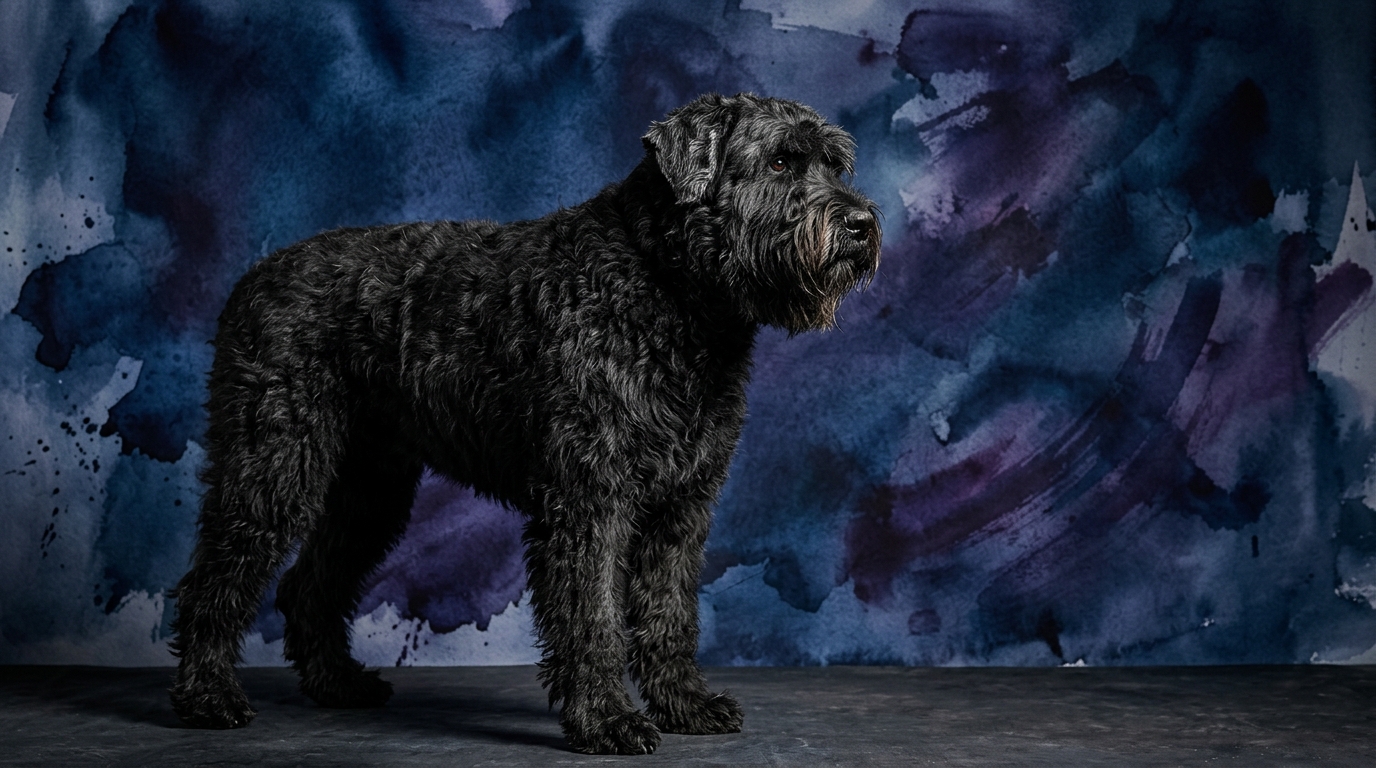
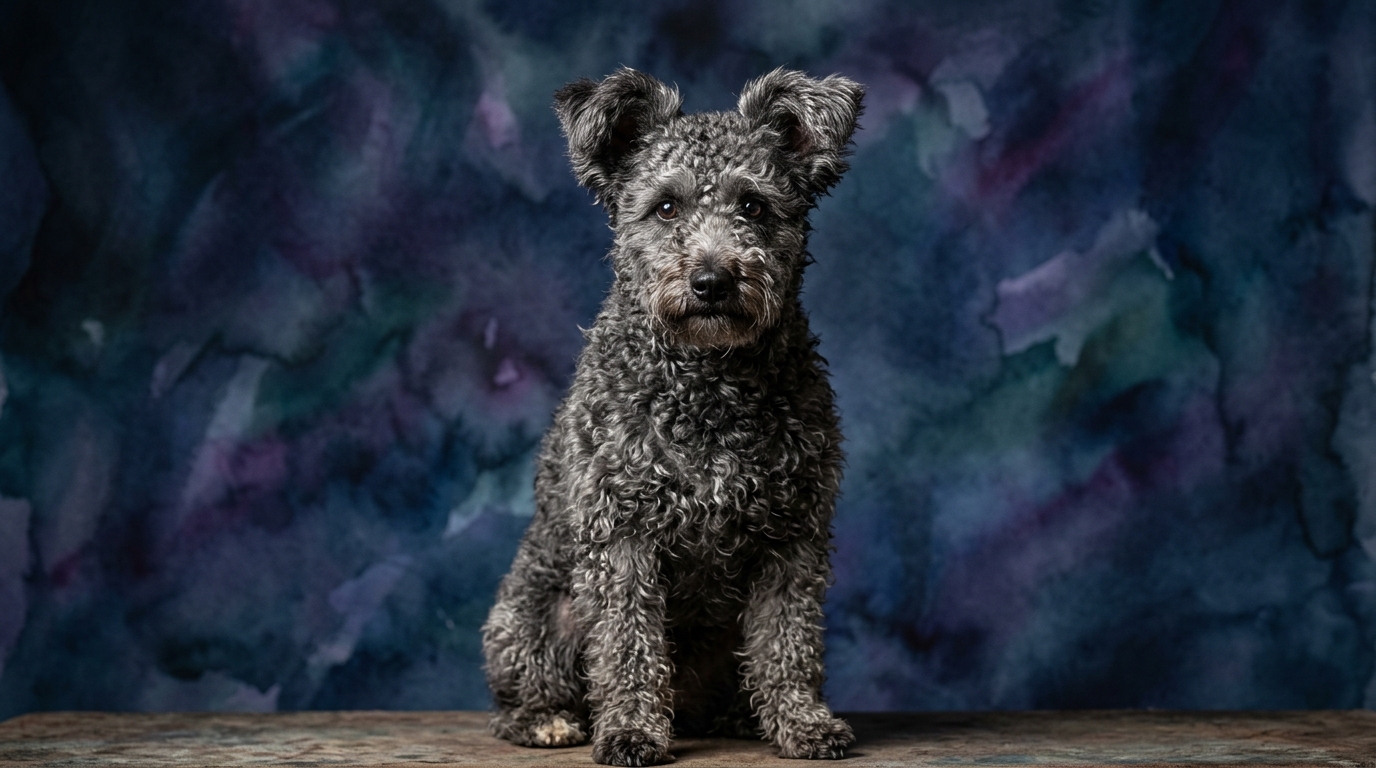
Side-by-Side IQ Profile: Bouvier des Flandres vs. Pumi
When examining the Cosmic Pet Pet IQ Lab's five cognitive dimensions, both the Bouvier des Flandres and the Pumi consistently score 3 out of 5, suggesting a baseline of solid, adaptable intellect. However, the application of these scores varies dramatically based on their historical roles and inherent breed characteristics.
For **Problem Solving (3/5)**, the Bouvier des Flandres exhibits a deliberate, often physically imposing approach, suited for managing large livestock or navigating complex terrain, favoring strategic positioning and sustained effort. The Pumi's problem-solving, conversely, is characterized by quick, agile responses to dynamic situations, utilizing rapid assessment and vocal cues to redirect and control, often in a more fluid, interactive manner.
In **Training Speed (3/5)**, Bouviers learn efficiently but can exhibit an independent streak, requiring consistent, clear guidance and a strong understanding of their motivation to comply with commands. Pumis are eager learners, quick to grasp new tasks, but their high energy and vocal nature demand engaging, varied sessions to maintain focus and prevent boredom.
Regarding **Social Intelligence (3/5)**, a Bouvier expresses this through a reserved, watchful demeanor, forming deep bonds with its family and carefully assessing strangers, communicating through subtle cues and a protective presence. Pumis demonstrate a more overt social style, readily engaging with humans through expressive body language and vocalizations, attuned to interaction and collaboration.
The **Instinctive Drive (3/5)** in a Bouvier manifests as a calm yet resolute protective instinct, a desire to keep its 'flock' (family) safe and contained, often through a strong physical presence. The Pumi's drive is energetic and persistent, characterized by rapid movements, circling, and vocal encouragement, channeling its herding energy into continuous activity.
Finally, for **Memory (3/5)**, Bouviers possess excellent recall for routines, commands, and past experiences, contributing to their reliability and ability to anticipate events within their established environment. Pumis exhibit strong memory for tasks, people, and places, quickly recalling learned sequences and adapting well to new situations based on prior knowledge.
Where the Bouvier des Flandres Wins Cognitively
The Bouvier des Flandres excels in cognitive domains requiring sustained, methodical application of intellect, particularly in scenarios demanding strategic oversight and unwavering presence. Their problem-solving (3/5) is uniquely suited to managing large, strong-willed livestock, where solutions rely on foresight, calculated positioning, and sheer physical authority, rather than just speed. This involves a cognitive patience and a systematic approach to maintaining order over extended periods.
Their social intelligence (3/5) manifests as a deep, discerning understanding of their family's needs for security, enabling them to act as a watchful, often silent, guardian. This demands a sophisticated interpretation of environmental cues and subtle human communication to anticipate and mitigate potential threats, leading to composed, deliberate responses. The Bouvier's memory (3/5) underpins this reliability, allowing them to recall complex patterns of movement and established boundaries with precision, making them exceptionally consistent in their duties.
Where the Pumi Wins Cognitively
The Pumi's cognitive strengths are most apparent in environments demanding rapid adaptation, agility, and dynamic interaction. Their problem-solving (3/5) is geared towards quick, fluid responses to fast-moving and unpredictable flocks, often incorporating intricate footwork, vocal commands, and quick changes in direction to guide animals effectively. This requires split-second decision-making and continuous tactical adjustments.
Their social intelligence (3/5) is expressed through a highly communicative and collaborative style, demonstrating an eagerness to work in partnership with their handler, readily interpreting and responding to human cues with enthusiasm. The Pumi's instinctive drive (3/5) is channeled into a persistent, high-energy effort to maintain control, utilizing their vocalizations and nimble movements as primary tools, demanding continuous mental processing of feedback from both flock and handler, making them highly responsive and engaging working partners.
Which Is Easier to Train and Why?
While both breeds score 3/5 in Training Speed, their learning styles diverge significantly. The Bouvier des Flandres, with its independent nature and history of autonomous decision-making in herding, requires a trainer who is exceptionally consistent, patient, and clear. They learn quickly but may challenge commands, needing to understand the 'purpose' before full compliance; their methodical problem-solving means they often process a command rather than reacting instantly, which can be mistaken for stubbornness.
The Pumi, conversely, is typically more eager to please and possesses a zest for activity, often picking up new commands with enthusiasm. Their quick problem-solving and social engagement make them highly responsive to positive reinforcement. However, their boundless energy and tendency for vocalization can lead to a shorter attention span or over-arousal during training. Effective Pumi training necessitates short, engaging, and varied sessions with ample mental challenges to channel their quick minds, preventing boredom which can manifest as barking or mischievousness. Therefore, while Pumis might appear to learn faster initially, both require dedicated, understanding trainers.
Which Suits Active Owners vs. Relaxed Owners
The choice between these two breeds depends significantly on an owner's lifestyle and capacity for canine engagement. The Bouvier, despite its substantial size, can be relatively calm indoors after its exercise and mental stimulation needs are met. It suits active owners who enjoy structured activities like long walks, advanced obedience, or protection work, valuing a steadfast and protective companion. They require an owner who provides consistent leadership and purpose but are generally content to relax by their family's side once their daily requirements are fulfilled.
The Pumi is unequivocally a breed for highly active owners. Their boundless energy, quick minds, and vocal nature demand constant engagement. They thrive in homes where they can participate in daily vigorous exercise, such as running, hiking, and especially dog sports like agility, flyball, or advanced obedience. A relaxed owner who cannot commit to extensive physical and mental stimulation will likely find a Pumi overwhelming, as boredom quickly leads to destructive behaviors, excessive barking, or neurotic tendencies. They need an owner who is as energetic and enthusiastic about interaction as they are.
The Verdict
Choose the Bouvier des Flandres if you seek a formidable yet reserved guardian, a methodical problem-solver, and a deeply loyal companion who appreciates structure and a calm, watchful presence after exercise.
Opt for the Pumi if you thrive on high energy, seek a dynamic and vocal partner for dog sports, and are prepared for constant mental and physical engagement from an agile, quick-witted herder.
🧠 Find Your Pet's IQ Score
Our Pet IQ Lab assessment covers 25+ tests across 5 cognitive dimensions — personalized to your breed.
Take the Full IQ Test →Frequently Asked Questions
Do Bouvier des Flandres and Pumi get along with other pets?
The Bouvier, with proper socialization, can coexist peacefully with other pets, often adopting them into their 'flock' to guard, though their strong prey drive requires management with smaller, fast-moving animals. Pumis, while generally friendly, possess a strong herding instinct that may lead them to 'herd' other pets, necessitating supervision and training to ensure harmonious multi-pet households.
Are either of these breeds good for first-time dog owners?
Neither breed is typically recommended for first-time dog owners due to their strong herding instincts, need for consistent training, and substantial exercise requirements. Both benefit from owners experienced in handling strong-willed or high-energy working breeds who understand canine behavior and training principles.
How much grooming do Bouvier des Flandres and Pumi require?
The Bouvier des Flandres has a rough, shaggy double coat that requires regular brushing (2-3 times a week) and professional grooming (stripping or clipping) every 6-8 weeks to prevent matting. The Pumi's distinctive curly coat also requires weekly brushing and professional trimming every 2-4 months to maintain its characteristic appearance and prevent felting.