
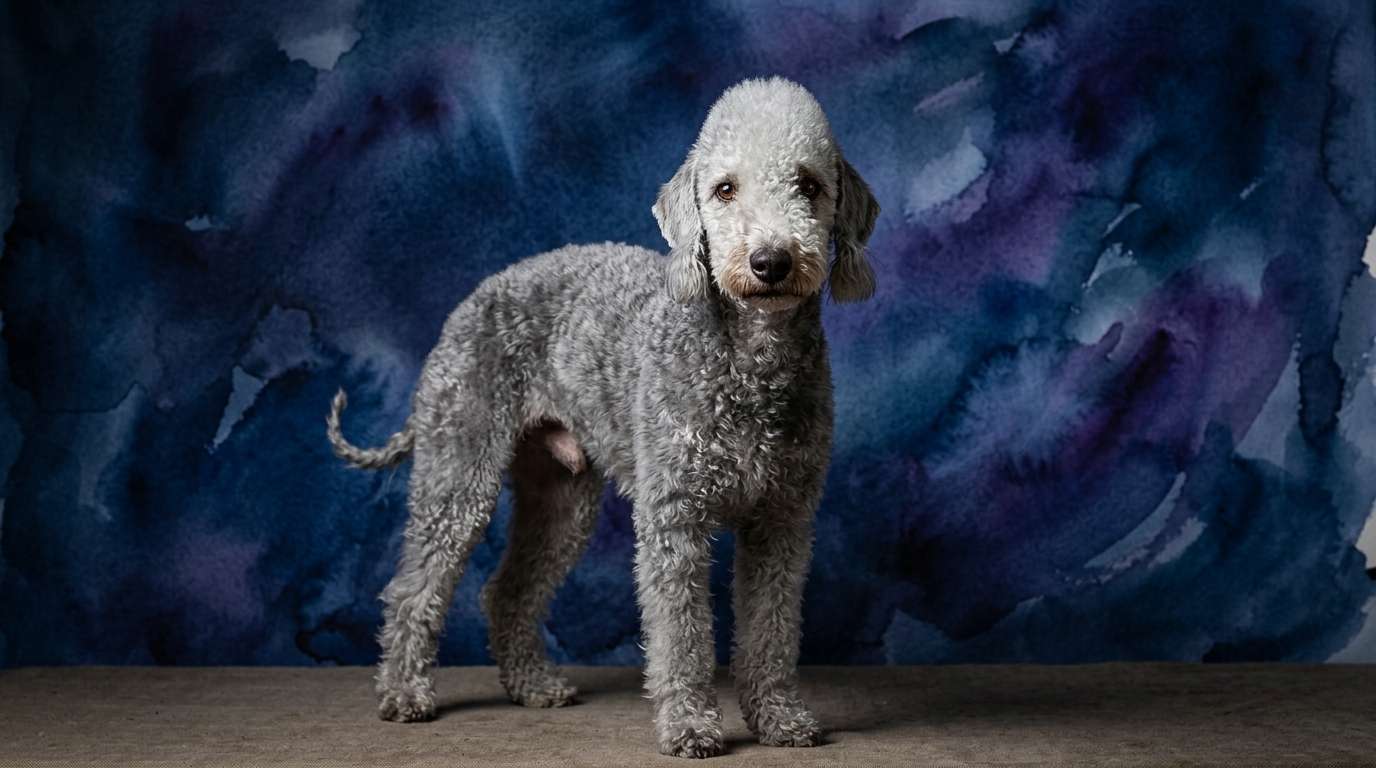
Side-by-Side IQ Profile: Boxer vs. Bedlington Terrier
At The Cosmic Pet Pet IQ Lab, we break down canine cognition into five key dimensions. For the Boxer, a Working group dog, we see a Coren rank of #48, indicating a solid foundation in working intelligence.
The Boxer’s Problem Solving (3/5) score reflects their capability to navigate complex environments, often seeking practical solutions with a direct and persistent approach rather than deep, analytical thought. Their Training Speed (3/5) is moderate, meaning they learn new commands effectively but thrive with consistent repetition and engaging sessions that harness their enthusiasm. Social Intelligence (5/5) is a Boxer’s standout trait; they possess an exceptional capacity for understanding human emotions and intentions, forming deep, empathetic bonds and being highly attuned to family dynamics. Their Instinctive Drive (4/5), stemming from their working heritage, manifests as a strong desire for guarding, retrieving, and physical activity, making them eager participants. Finally, their Memory (3/5) allows them to retain learned commands and experiences adequately, remembering routines and familiar faces with ease.
The Bedlington Terrier, a member of the Terrier group and not Coren-ranked, presents a unique cognitive profile shaped by its distinct purpose.
The Bedlington’s Problem Solving (3/5) demonstrates a practical ability, particularly in navigating their environment or achieving a desired outcome, often leveraging their hunting instincts for pragmatic solutions. Their Training Speed (3/5) is also moderate, but their independent terrier spirit means they require patient, consistent training and can exhibit selective hearing if not properly motivated. Social Intelligence (3/5) for a Bedlington is more reserved; they are affectionate with their chosen family but tend to be discerning with strangers, focusing their social understanding on their immediate pack rather than widespread interaction. Their Instinctive Drive (3/5) is characterized by a strong prey drive and an inclination for digging and exploration, often focused on specific tasks. Their Memory (3/5) is competent for routines, commands, and people within their inner circle, remembering associations without necessarily dwelling on past events with deep emotional recall.
Where the Boxer Wins Cognitively
The Boxer's distinct cognitive advantage lies primarily in their exceptional social intelligence (5/5). This goes beyond mere friendliness; it's a profound capacity to interpret human cues, emotional states, and social hierarchies. A Boxer often anticipates a family member's mood or needs, offering comfort or initiating play with remarkable accuracy. Their ability to form deep, empathetic bonds means they are acutely aware of their human companions, making them highly responsive to subtle changes in tone or body language. This strong social attunement also fuels their instinctive drive (4/5) to participate and protect, translating into a dedicated companion who actively seeks interaction. While both breeds show similar scores in problem-solving and training speed, the Boxer's social acumen often makes their learning process more collaborative and their problem-solving efforts more geared towards achieving a shared goal with their human.
Where the Bedlington Terrier Wins Cognitively
While the data suggests similar scores across most dimensions, the Bedlington Terrier’s cognitive strengths are subtly different, rooted in its terrier heritage. Their problem-solving (3/5) and instinctive drive (3/5) are channeled through a tenacious, independent spirit. Where a Boxer might seek human guidance to solve a puzzle, a Bedlington is more likely to methodically work through it independently, driven by inherent curiosity and persistence. Their problem-solving is often practical and self-reliant, focused on achieving their own objectives, like finding a hidden toy or navigating a scent trail. This independence means they don't rely as heavily on human social cues for motivation or direction, giving them unique resilience in self-directed tasks. While their social intelligence (3/5) is lower, it's focused and discerning, leading to deep, loyal bonds with their immediate family, characterized by quiet devotion. This self-contained nature can be seen as a cognitive advantage in situations requiring singular focus without constant external validation.
Training Dynamics: Boxer vs. Bedlington Terrier
Assessing ease of training between the Boxer and Bedlington Terrier reveals nuances beyond their identical training speed scores (3/5). The Boxer, with its superior social intelligence (5/5), often presents as easier to train for a consistent owner. Their deep desire to please and connect means they are highly motivated by positive reinforcement and social praise, actively seeking to understand expectations. However, their high energy can lead to distractibility, requiring patient, engaging sessions. In contrast, the Bedlington Terrier's training speed (3/5) is tempered by its independent terrier nature. While capable, their problem-solving (3/5) and instinctive drive (3/5) are often self-directed. This means they are less inherently driven by pure human approval, often requiring more creative motivation and a firm, consistent approach to overcome their stubborn streak. They excel in tasks appealing to natural instincts, but rote obedience might be a longer journey. For an owner prioritizing collaborative learning, the Boxer might feel more 'trainable' due to its inherent social drive, despite comparable learning paces.
Lifestyle Match: Active vs. Relaxed Owners
For active owners, the Boxer is often the more fitting companion. Their substantial instinctive drive (4/5) for physical activity, coupled with robust energy, means they thrive on regular exercise, vigorous play, and structured activities. They genuinely enjoy being an active participant in family adventures, like hiking or jogging. Their social intelligence (5/5) also means they appreciate deep involvement in family life, making them ideal for owners wanting a constant, interactive companion. Conversely, while Bedlington Terriers are not sedentary, their energy profile is generally more moderate. Their instinctive drive (3/5) leans towards focused bursts of activity, like chasing a ball, rather than sustained, high-intensity exertion. For a relaxed owner, or one who enjoys shorter, purposeful walks and mental stimulation games, the Bedlington can be an excellent fit. They are content with a comfortable home life, provided their needs for regular, less demanding, physical and mental engagement are met. Their more reserved social intelligence (3/5) means they might not constantly demand attention, suiting owners who appreciate an affectionate dog comfortable with independent activity.
The Verdict
Choose a Boxer if you seek an exceptionally socially attuned companion who thrives on deep interaction, collaborative activities, and vigorous daily exercise, bringing an enthusiastic presence to an active family life.
Opt for a Bedlington Terrier if you appreciate a discerningly affectionate, independent companion who enjoys focused activities, moderate exercise, and a quiet devotion within a consistent home environment.
🧠 Find Your Pet's IQ Score
Our Pet IQ Lab assessment covers 25+ tests across 5 cognitive dimensions — personalized to your breed.
Take the Full IQ Test →Frequently Asked Questions
Is a Boxer 'smarter' than a Bedlington Terrier?
While both breeds score similarly in problem-solving and training speed, the Boxer's exceptional social intelligence gives it an edge in understanding human cues and forming collaborative bonds. The Bedlington Terrier's strengths lie in independent, tenacious problem-solving rooted in its terrier instincts.
How do their training challenges compare?
Both learn at a moderate pace, but Boxers are often perceived as easier to train due to their strong desire to please and social motivation. Bedlingtons, with their independent streak, require more consistent, creative, and patient training to overcome their self-directed nature.
Which breed is better for a first-time dog owner?
For a first-time owner seeking a highly interactive and eager-to-please companion, a Boxer might be a good fit, provided they can meet its substantial exercise needs. A Bedlington Terrier, while affectionate, might require an owner who understands and can patiently work with a terrier's independent and sometimes stubborn temperament.