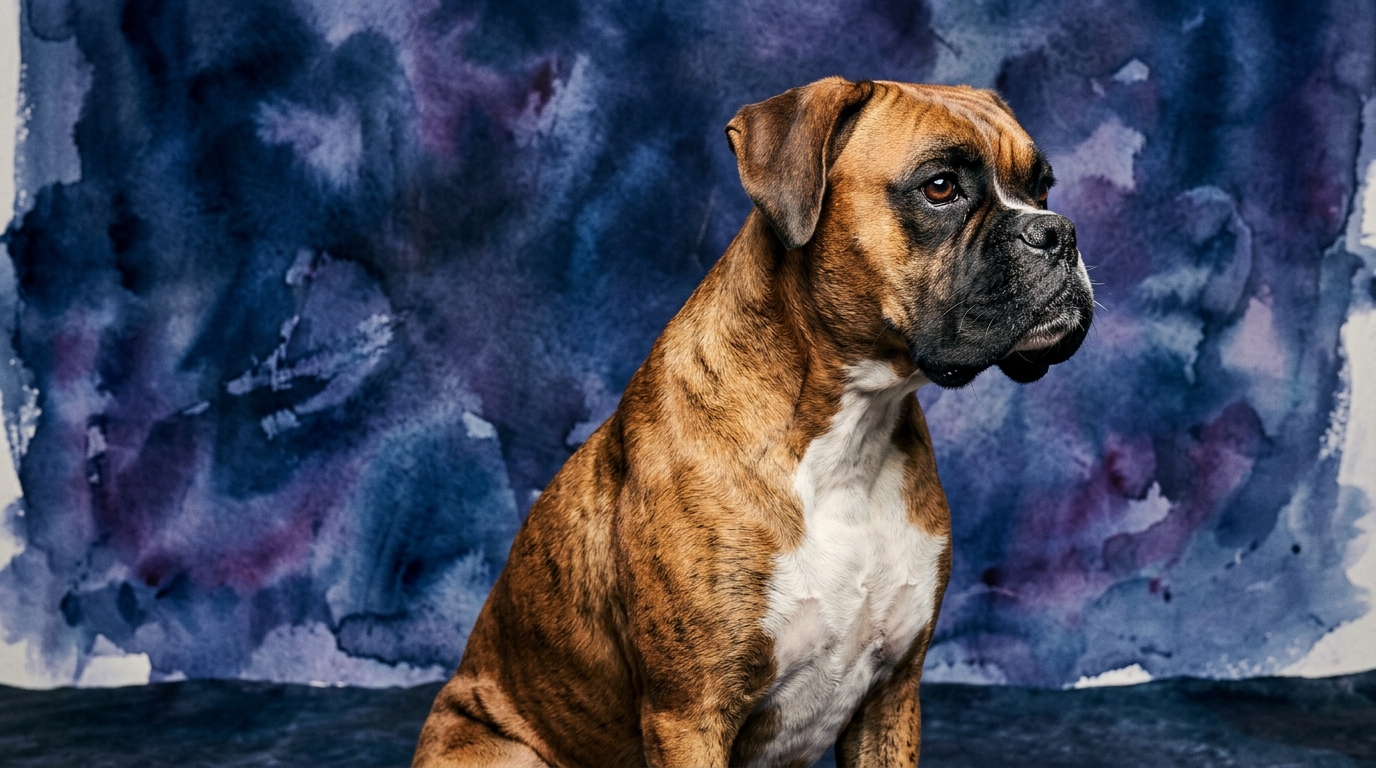
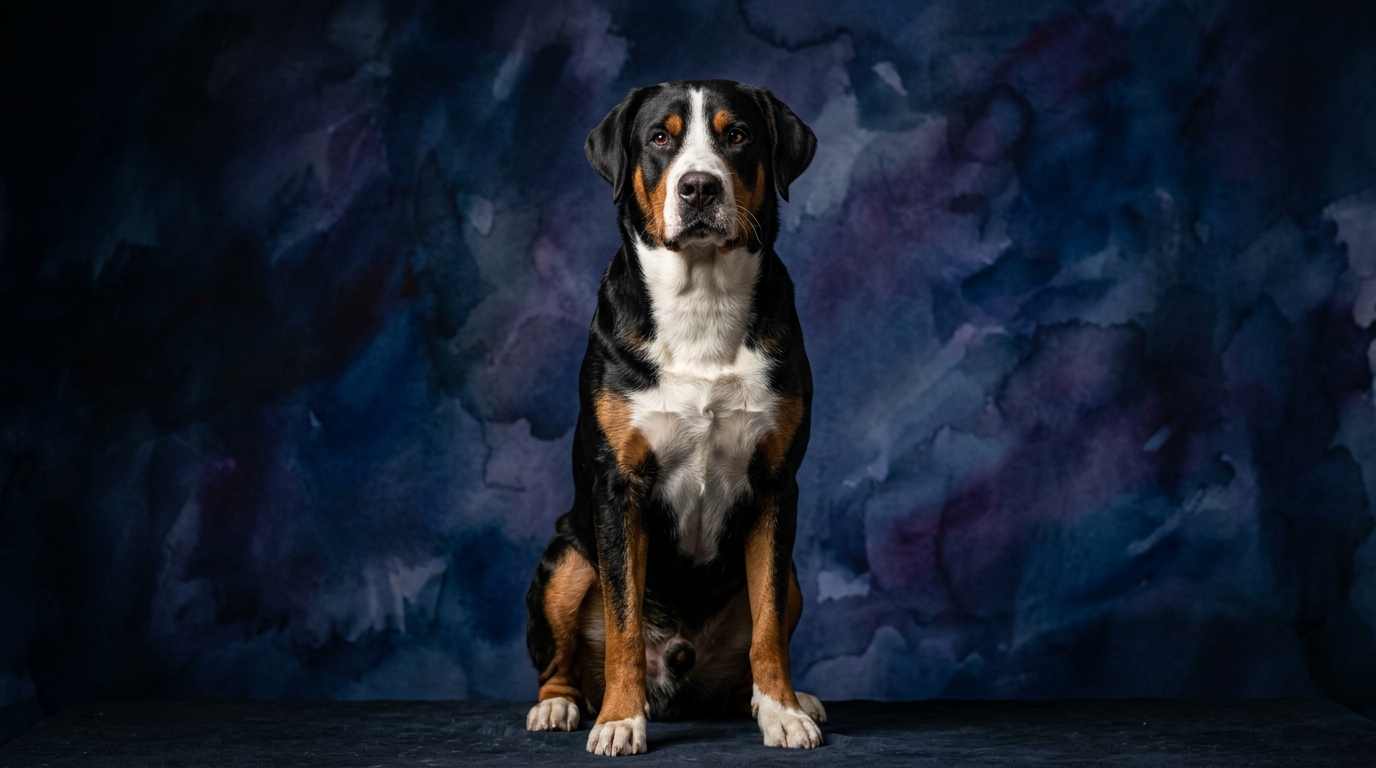
Side-by-Side Cognitive Profiles: Boxer vs. Greater Swiss Mountain Dog
At The Cosmic Pet Pet IQ Lab, we analyze canine cognition across five key dimensions, offering a detailed look at how different breeds process and interact with their world. For the Boxer, a breed with a Coren rank of #48, we observe a nuanced profile: Problem Solving at 3/5, Training Speed at 3/5, an outstanding Social Intelligence at 5/5, Instinctive Drive at 4/5, and Memory at 3/5. This suggests a dog that is adequately capable of navigating challenges, learns at a steady pace, deeply connects with humans, possesses a strong inherent motivation, and retains information reliably.
The Greater Swiss Mountain Dog, while not Coren-ranked, presents a consistent and balanced cognitive profile across our metrics: Problem Solving at 3/5, Training Speed at 3/5, Social Intelligence at 3/5, Instinctive Drive at 3/5, and Memory also at 3/5. This breed demonstrates a practical approach to problems, learns consistently without exceptional speed, exhibits solid but perhaps less complex social interactions, possesses a moderate inherent drive, and maintains a functional memory. The uniformity in their scores points to a steady, predictable cognitive style.
Where the Boxer's Cognition Shines Brighter
The Boxer's most pronounced cognitive advantage lies in its exceptional Social Intelligence, scoring a perfect 5/5 compared to the Greater Swiss Mountain Dog's 3/5. This isn't merely about friendliness; it signifies a profound ability to interpret human cues, emotional states, and intentions. A Boxer is highly attuned to its owner's mood shifts, subtle body language, and vocal inflections, often anticipating desires or reacting with empathetic responses. This deep social awareness fosters an incredibly strong bond, making them highly responsive to praise and connection, and adept at integrated family life where nuanced communication is key. They often seem to 'understand' what you're thinking before you even speak.
Furthermore, the Boxer's Instinctive Drive at 4/5 surpasses the Greater Swiss Mountain Dog's 3/5. This elevated drive translates into a more pronounced enthusiasm for engaging in tasks, games, and protective roles. While both are working breeds, the Boxer often brings a more intense and focused energy to activities, especially those involving interaction with their human counterparts. This stronger drive, when appropriately channeled through training and enrichment, means a Boxer is often more motivated to participate in structured activities, making them particularly suited for roles requiring sustained effort and engagement, such as dog sports or alert guardianship, where their inherent vigilance is a clear asset.
Cognitive Advantages of the Greater Swiss Mountain Dog
While the Greater Swiss Mountain Dog's individual scores might not reach the Boxer's peaks in certain areas, its cognitive strength lies in its remarkable consistency and balance across all dimensions, with every score at 3/5. This uniformity offers a distinct advantage in predictability and steadiness. Unlike breeds with higher peaks and valleys in their cognitive profiles, the Greater Swiss Mountain Dog provides a reliable and even-keeled mental approach. Their moderate social intelligence, for example, means they are affable and pleasant but perhaps less prone to the intense emotional demands or hyper-attunement that can sometimes accompany higher social intelligence in other breeds. They offer a robust, dependable presence without requiring constant, complex emotional reciprocation.
The Greater Swiss Mountain Dog's moderate Instinctive Drive (3/5) can also be seen as a cognitive advantage for owners seeking a less intense working companion. While still capable of performing tasks, their drive is less likely to manifest as restless energy or a constant need for high-octane engagement. This allows them to transition smoothly between periods of activity and calm, making them well-suited for a home environment that values a composed presence. Their cognitive profile suggests a dog that is thoughtful and deliberate, processing information and situations at a consistent pace rather than reacting impulsively, which contributes to their reputation as a stable and reliable companion.
Ease of Training: Responsiveness vs. Steadiness
When it comes to ease of training, the Boxer generally holds an edge, primarily due to its superior Social Intelligence (5/5) and a stronger Instinctive Drive (4/5). A Boxer's profound ability to understand human intentions and their innate desire to engage with their people make them exceptionally responsive to positive reinforcement and praise. They thrive on interaction and seek to please, which significantly accelerates the learning process even with a Training Speed of 3/5. Their high social attunement means they are often more forgiving of handler errors and more eager to re-engage, making training sessions feel more collaborative and less like a chore.
The Greater Swiss Mountain Dog, with 3/5 in Training Speed, Social Intelligence, and Instinctive Drive, is certainly trainable but requires a more methodical and patient approach. They are not as inherently driven by social validation or intense task engagement as the Boxer. Training a Greater Swiss Mountain Dog often involves clear, consistent commands and a focus on building a strong routine. While they may not pick up new cues with the same rapid enthusiasm as a Boxer, their steady nature means that once a concept is learned, it is typically deeply ingrained. Their training journey might be slower, but the results are often very reliable and enduring, provided the owner is consistent and firm yet fair in their methods.
Matching Cognitive Profiles to Owner Lifestyles
For active owners who thrive on deep interaction and consistent engagement, the Boxer's cognitive profile is often a perfect match. Their high social intelligence means they genuinely desire to be a central part of family activities, whether it's an energetic play session, a long hike, or simply cuddling on the couch. Their elevated instinctive drive means they appreciate having a 'job' or regular structured activities that challenge them mentally and physically. Owners who enjoy dog sports, advanced obedience, or simply a dog that is always 'on' and attentive to their presence will find the Boxer's cognitive makeup highly rewarding. They need an owner who can consistently meet their social and drive-related needs, preventing potential behavioral issues arising from boredom or lack of connection.
Conversely, the Greater Swiss Mountain Dog's more balanced and consistent cognitive profile makes them an excellent fit for owners who appreciate a robust companion but perhaps prefer a slightly more relaxed pace of life. While they still require regular exercise and mental stimulation, their moderate social intelligence and instinctive drive mean they might be less demanding of constant, intense interaction. They are content with a steady routine, enjoying family time and outdoor adventures without the same level of exuberant intensity as a Boxer. Owners who value a predictable, composed, and dependable companion that integrates smoothly into a moderately active household will find the Greater Swiss Mountain Dog's cognitive temperament highly appealing. They are less likely to be 'velcro dogs' and can handle periods of independent activity more readily.
The Verdict
Choose the Boxer if you seek a highly socially astute, energetic, and deeply connected companion who thrives on intense interaction and engaging tasks.
Opt for the Greater Swiss Mountain Dog if you prefer a steady, predictable, and robust companion that offers consistent temperament and reliable, if less effusive, interaction.
🧠 Find Your Pet's IQ Score
Our Pet IQ Lab assessment covers 25+ tests across 5 cognitive dimensions — personalized to your breed.
Take the Full IQ Test →Frequently Asked Questions
Are Boxers difficult to train due to their energy?
While Boxers possess significant energy and a strong instinctive drive, their exceptional social intelligence makes them highly responsive to human cues and eager to please. This often makes them quite trainable, especially with consistent positive reinforcement and engaging methods that channel their enthusiasm effectively.
Do Greater Swiss Mountain Dogs need a lot of mental stimulation?
Greater Swiss Mountain Dogs benefit from regular mental stimulation, scoring 3/5 in problem solving and memory, but their needs are typically more moderate than some other working breeds. Consistent training, puzzle toys, and exploring new environments will keep them content, without requiring constant high-intensity challenges.
Which breed is better with children?
Both breeds can be excellent with children when properly socialized and trained. The Boxer's high social intelligence often means they are very attuned to family dynamics, while the Greater Swiss Mountain Dog's steady temperament provides a calm presence. Supervision is always key with any dog and children.