
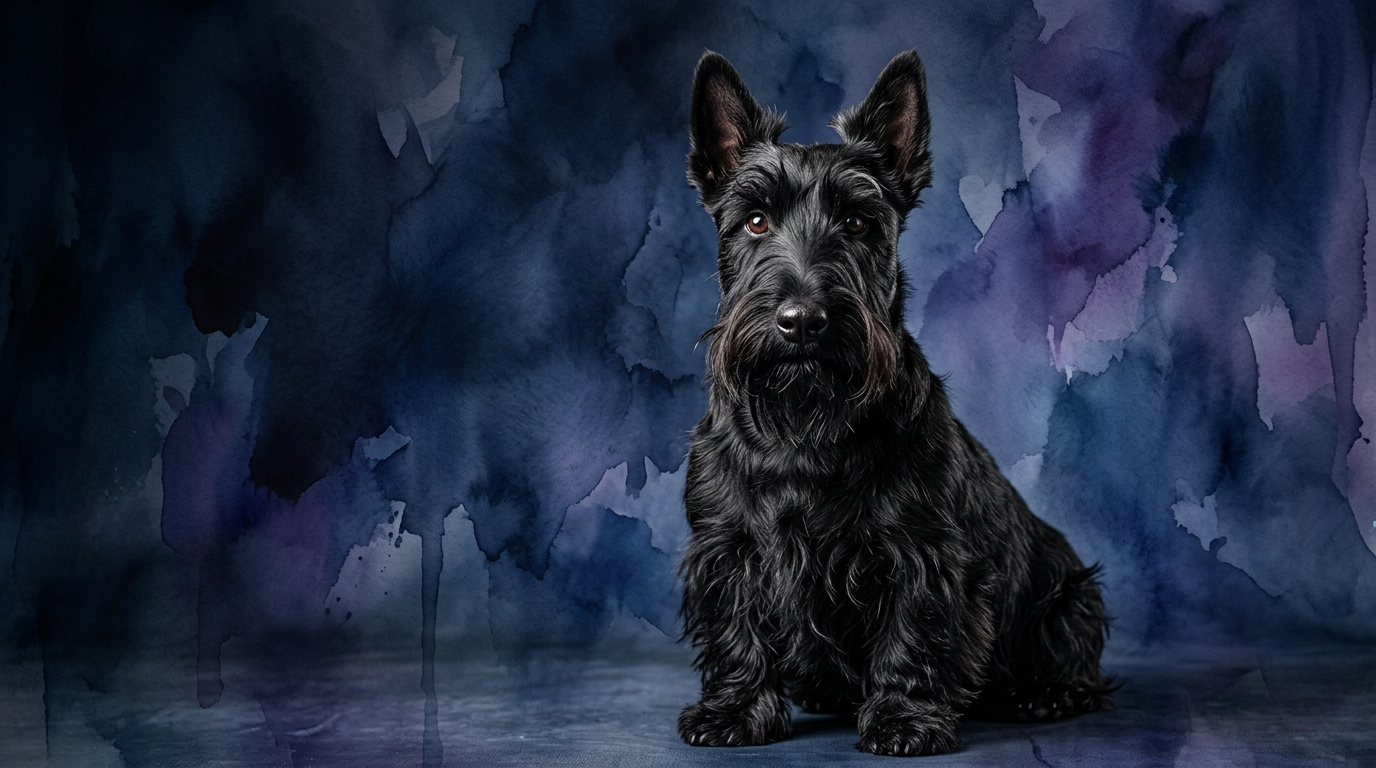
Side-by-Side Cognitive Profiles
The Cosmic Pet Pet IQ Lab employs a five-dimensional framework to assess canine intelligence, providing a detailed look at each breed's cognitive make-up. For the Boxer, a robust member of the Working Group, their Coren rank of #48 suggests a solid capacity for understanding new commands. Their IQ profile highlights Problem Solving at 3/5, indicating an ability to work through challenges, while Training Speed also sits at 3/5, showing a moderate pace for acquiring new behaviors. A standout feature is their Social Intelligence at 5/5, reflecting exceptional attunement to human cues and group dynamics. Their Instinctive Drive is strong at 4/5, often manifesting in protective or task-oriented behaviors, and Memory is rated at 3/5, suggesting a reasonable retention of learned experiences.
In contrast, the Scottish Terrier, a tenacious member of the Terrier Group, holds a Coren rank of #65, indicating a slightly more independent learning curve. Their IQ profile shows a consistent pattern across several dimensions: Problem Solving at 3/5, Training Speed at 3/5, and Memory also at 3/5. This suggests a comparable baseline for general learning and retention as the Boxer, though perhaps applied differently. Their Social Intelligence is rated at 3/5, pointing to a more self-reliant nature compared to the highly people-oriented Boxer. Lastly, their Instinctive Drive is 3/5, which, while numerically lower than the Boxer's, is intensely focused on their breed's historical purpose, such as hunting vermin, rather than broad cooperative tasks.
Where the Boxer Cognitively Excels
The Boxer's primary cognitive advantage lies in their exceptional Social Intelligence, rated at a perfect 5/5. This isn't just about being friendly; it signifies a profound ability to read and interpret human emotions, intentions, and body language. A Boxer can often anticipate their owner's next move or understand a subtle shift in mood, making them incredibly intuitive companions. This high social acumen allows them to thrive in environments requiring close cooperation and communication with humans, whether it's participating in family activities, working as a service dog, or engaging in complex obedience routines where understanding nuanced cues is paramount. Their social intelligence also contributes to their effectiveness as guardians, as they are adept at discerning friend from stranger and reacting appropriately based on perceived threats or welcoming signals from their human counterparts.
Furthermore, the Boxer's 4/5 Instinctive Drive often synergizes with their social intelligence. This drive isn't just raw energy; it's a strong motivation to engage in purposeful activities, particularly those involving their human family. Whether it's playing fetch with unwavering enthusiasm, 'helping' with household tasks, or vigilantly monitoring their home, their drive is often directed and channeled through their bond with people. This means that while their Problem Solving and Training Speed are moderate, their willingness to engage and their deep understanding of social dynamics can make them appear more adaptable and responsive in cooperative settings. They are often 'thinking with' their people, rather than purely independently.
Where the Scottish Terrier Cognitively Shines
The Scottish Terrier’s cognitive strengths are rooted in their independent spirit and their breed's original purpose. While their Problem Solving is rated at 3/5, similar to the Boxer, a Scottie often applies this intelligence with a distinct self-sufficiency. This isn't about solving problems for human approval, but rather for their own objectives, such as figuring out how to access a hidden treat or navigate a challenging outdoor environment during a 'hunt.' Their problem-solving is often characterized by persistence and a trial-and-error approach, driven by an inner determination rather than external motivation. This tenacity is a hallmark of the terrier group, and it allows them to overcome obstacles that might deter a more socially dependent breed.
The Scottish Terrier's 3/5 Instinctive Drive, while lower than the Boxer's, is intensely focused and highly specialized. This drive manifests as an unwavering prey drive, a keen sense of territory, and a deep-seated desire to explore and investigate. A Scottie's memory (3/5) serves them well in remembering specific hunting grounds or the location of interesting scents, allowing them to return to areas of interest with precision. Their cognitive profile suggests a dog that excels at autonomous decision-making in pursuit of their instincts. They are masters of their immediate environment, often demonstrating a shrewd awareness of their surroundings and a quick wit when it comes to self-preservation or achieving a personal goal, even if it's just digging a satisfactory hole.
Training Dynamics: Boxer vs. Scottish Terrier
When it comes to training, the cognitive profiles of these two breeds lead to very different experiences. The Boxer, with their 5/5 Social Intelligence and 3/5 Training Speed, generally presents as a more eager and cooperative student. Their strong desire to please their human companions, coupled with their ability to understand subtle cues, means they often respond well to positive reinforcement and clear, consistent instruction. They thrive on interaction and view training as a joint activity. While their training speed is moderate, their willingness to engage and inherent social nature can make the process feel smoother and more rewarding for the owner. They are often quick to grasp what is expected of them in a social context and are motivated by praise and connection.
The Scottish Terrier, on the other hand, with 3/5 scores across Training Speed and Social Intelligence, requires a different approach. Their independent nature means they are less inherently motivated by the desire to please and more by what benefits them personally. Training a Scottie demands immense patience, consistency, and a deep understanding of their terrier temperament. They learn commands at a moderate pace, but their strong will and instinctive drives mean they may choose to obey only when they perceive value in it, or when it doesn't conflict with a more compelling instinct, like chasing a squirrel. Their problem-solving skills are often applied to figuring out how to get what *they* want, which can sometimes be at odds with an owner's training goals. Success with a Scottie often comes from making training fun, engaging their natural curiosity, and understanding that 'obedience' might look different than with a more biddable breed.
Matching Breeds to Lifestyles
Considering their distinct cognitive profiles, Boxers and Scottish Terriers are suited for different types of owners and lifestyles. The Boxer's high Social Intelligence and robust Instinctive Drive make them ideal for active owners who desire a highly engaged, cooperative, and protective companion. They thrive in environments where they are integral to family life, participating in daily activities, training classes, or even dog sports. Owners who enjoy consistent interaction, provide clear leadership, and can channel a Boxer's energy and social drive into constructive outlets will find an immensely rewarding partnership. Their cognitive strengths make them excellent family dogs who integrate seamlessly into a dynamic household, offering both companionship and a watchful presence.
The Scottish Terrier, with their independent problem-solving and focused instinctive drive, is better suited for owners who appreciate a dog with a strong personality and a more self-reliant nature. They are excellent companions for relaxed owners who enjoy quiet moments but are also prepared for bursts of terrier energy and a determined mindset. While they enjoy their family, they are often content to entertain themselves or patrol their territory. Owners who understand and respect a Scottie's independent streak, can provide consistent boundaries, and appreciate a dog that thinks for itself will find a charming and spirited companion. They don't demand constant attention but will offer unwavering loyalty on their own terms, making them a unique addition to a home that values a distinct canine character.
The Verdict
Choose a Boxer if you seek a highly cooperative, socially attuned companion eager to participate in family life and activities requiring close human interaction.
Opt for a Scottish Terrier if you appreciate an independent, tenacious spirit that applies its intelligence to self-directed pursuits, offering a charmingly resolute companionship.
🧠 Find Your Pet's IQ Score
Our Pet IQ Lab assessment covers 25+ tests across 5 cognitive dimensions — personalized to your breed.
Take the Full IQ Test →Frequently Asked Questions
Do Boxers need a lot of mental stimulation?
Yes, Boxers benefit greatly from mental stimulation, especially given their 5/5 Social Intelligence and 4/5 Instinctive Drive. Engaging them in training, puzzle toys, and interactive play that leverages their desire to work with you helps prevent boredom and channel their energy constructively.
Are Scottish Terriers difficult to train?
Scottish Terriers are not necessarily difficult to train, but they require a consistent and patient approach due to their independent nature and 3/5 Training Speed. Success comes from understanding their strong will and making training engaging and rewarding from their perspective, rather than relying solely on a desire to please.
Which breed is better with children, cognitively speaking?
Cognitively, the Boxer's 5/5 Social Intelligence often makes them more naturally attuned to family dynamics and gentle with children, understanding social cues well. While Scottish Terriers can be good family dogs, their more independent nature (3/5 Social Intelligence) means they may prefer less intrusive interaction and require more supervision around very young children.