Side-by-Side Cognitive Profiles: Boxer vs. Toy Poodle
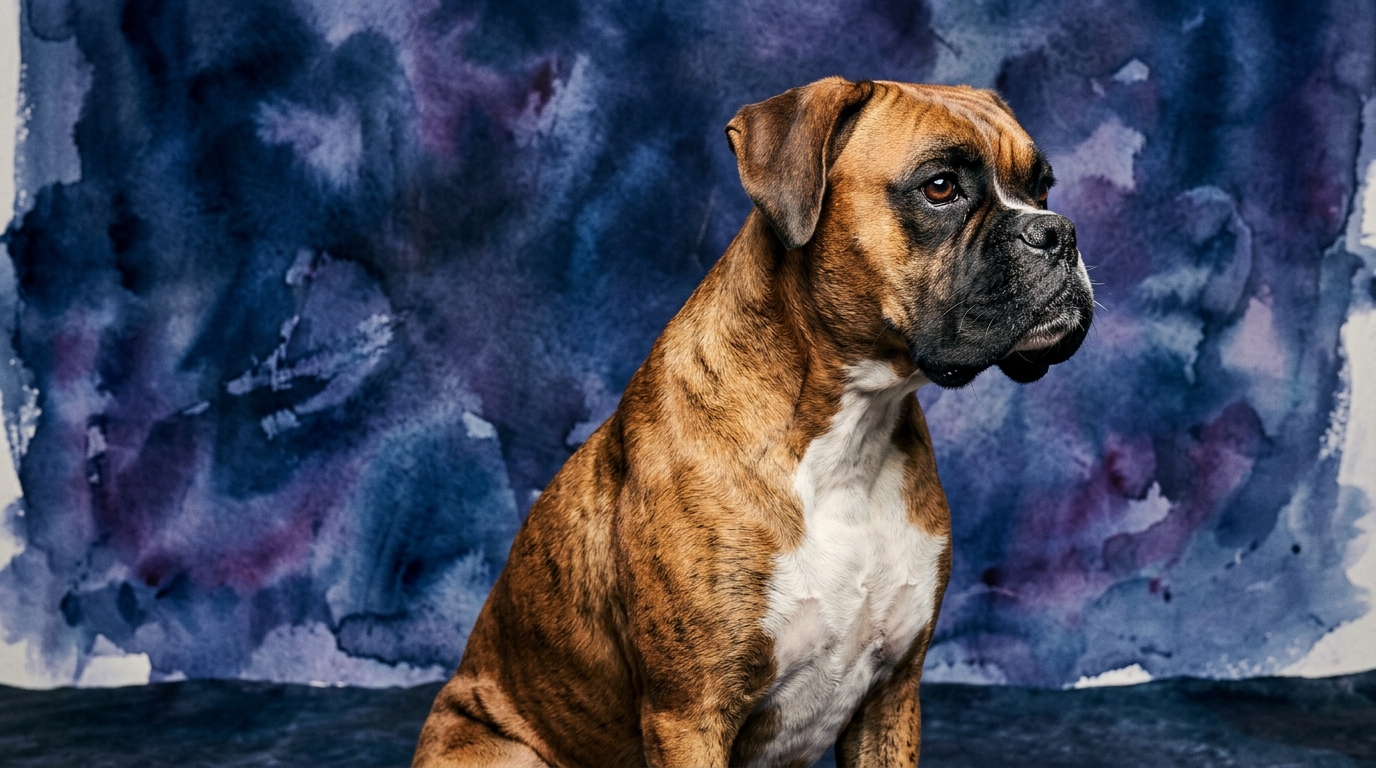
At The Cosmic Pet Pet IQ Lab, we delve into five key dimensions of canine cognition. For the Boxer, ranked #48 by Coren, these dimensions paint a picture of a socially adept and instinct-driven companion. Their Problem Solving is rated 3/5, indicating a moderate capacity for independent thought in new situations; they can tackle straightforward puzzles but might require more guidance for complex, novel challenges. Training Speed also scores 3/5, meaning they learn at a moderate pace, sometimes displaying a playful distractibility that requires consistent, engaging methods to overcome. Social Intelligence, however, is a perfect 5/5, highlighting their exceptional ability to read and respond to human emotions and cues. Their Instinctive Drive is 4/5, reflecting a strong inclination towards guarding, protection, and physical engagement rooted in their working heritage. Finally, their Memory is 3/5, allowing them to retain learned commands and experiences, especially with routine, but perhaps not with the precision of breeds with higher scores.
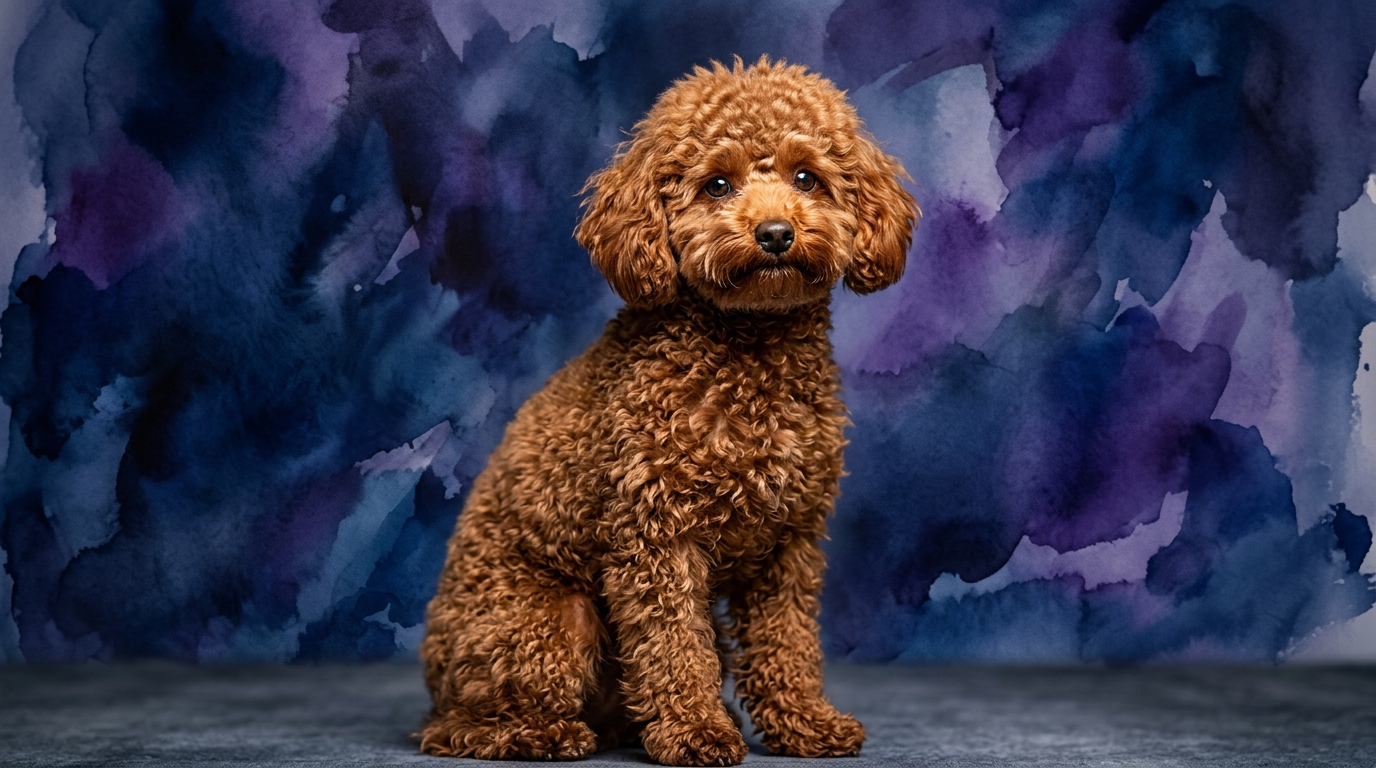
The Toy Poodle, a Coren rank #2 breed, showcases a different set of cognitive strengths. Their Problem Solving is a stellar 5/5, demonstrating a remarkable capacity for critical thinking and quickly devising creative solutions to new obstacles. Training Speed matches this at 5/5, meaning they grasp new commands and concepts with minimal repetition, often excelling in complex obedience and trick training. Social Intelligence is 3/5; while affectionate and responsive, they might not possess the same intuitive grasp of nuanced emotional states as breeds with higher scores. Their Instinctive Drive is 3/5, retaining some ancestral hunting traits but generally directed more towards intellectual engagement than intense prey pursuit. Crucially, their Memory is a perfect 5/5, allowing for impressive long-term retention of commands, names, and intricate sequences of actions, underpinning their rapid learning ability.
Where the Boxer Cognitively Excels
The Boxer distinctly outperforms the Toy Poodle in social intelligence, scoring a perfect 5 compared to the Poodle's 3. This manifests in their profound ability to understand and respond to human emotional states. A Boxer might instinctively offer a comforting nudge when sensing sadness or adjust its boisterous play to a gentler interaction when a child is present. Their cognitive strength lies in their empathetic attunement, making them exceptional emotional support companions who read subtle cues like body language and tone of voice with remarkable accuracy.
Furthermore, their higher instinctive drive (4/5 versus the Toy Poodle's 3/5) gives Boxers an edge in tasks requiring sustained physical engagement and a natural protective inclination. This isn't just about raw energy; it's a cognitive drive to engage with their environment in a purposeful, often guardian-oriented manner. They are naturally alert to their surroundings, possessing an innate sense for discerning unusual activity, making them effective, albeit gentle, family protectors. This drive also translates into a robust enthusiasm for structured physical activities and canine sports that tap into their working heritage.
Where the Toy Poodle Cognitively Shines
The Toy Poodle's cognitive strengths are particularly evident in problem-solving and memory, both scoring a perfect 5, significantly surpassing the Boxer's 3. This means a Toy Poodle is inherently more adept at navigating novel challenges independently. Faced with a complex puzzle toy, they are likely to employ various strategies, learning from each attempt until a solution is found, rather than relying on brute force or waiting for human intervention. Their minds are constantly processing and strategizing, making them quick studies in new scenarios.
Their superior memory (5/5 versus 3/5) underpins their exceptional learning capacity. A Toy Poodle can recall a vast repertoire of commands, tricks, and routines, even after long periods of inactivity. This robust memory allows them to build intricate behavioral chains and adapt learned skills to new contexts with ease. Coupled with their rapid training speed, this cognitive advantage makes them masters of intricate obedience, agility, and trick performances, where precise recall and sequential memory are paramount.
Trainability: Which Breed Learns Faster?
The Toy Poodle unequivocally presents as the easier breed to train, largely due to its perfect 5/5 scores in both Problem Solving and Training Speed, contrasted with the Boxer's 3/5 in both categories. A Toy Poodle's mind is a sponge; they absorb new information with minimal repetition, often anticipating the next step in a training sequence. Their inherent desire to engage intellectually with their handler, coupled with their rapid cognitive processing, means they can master complex commands and multi-step tasks quickly. For instance, teaching a Toy Poodle a novel trick might take only a handful of five-minute sessions, whereas a Boxer might require more consistent, longer practice periods over several days to achieve the same level of proficiency.
The Boxer, while eager to please and socially adept, can sometimes be described as having a 'bouncy' or 'clownish' temperament during training sessions. Their moderate training speed means they might be more prone to distraction or require more creative methods to maintain focus. While they certainly can learn a great deal, the process often demands more patience, consistency, and a highly engaging approach from the trainer to overcome their occasional playful stubbornness or shorter attention span compared to the Poodle's laser-like focus on learning. Realistically, a Boxer might take 10-15 repetitions to solidify a new command that a Toy Poodle might grasp in 3-5.
Matching Breeds to Lifestyles: Active vs. Relaxed Owners
For active owners seeking a dynamic partner for sports or consistent engagement, the Boxer presents an intriguing choice, especially if those activities involve social interaction or a degree of protective oversight. Their strong instinctive drive (4/5) and moderate problem-solving (3/5) mean they can excel in activities like advanced obedience, agility, or scent work where physical exertion and teamwork are paramount. They thrive on having a 'job' and appreciate owners who can channel their robust energy into structured play, long hikes, or even protection sports. These activities leverage their physical prowess and their desire for cooperative engagement.
Conversely, for owners who appreciate mental engagement and a more adaptable companion for varied indoor and outdoor activities, the Toy Poodle is an excellent fit. While they certainly enjoy activity, their perfect scores in problem-solving, training speed, and memory make them ideal for owners who enjoy teaching complex tricks, participating in canine freestyle, or even therapy work. They don't necessarily demand the same intensity of physical exertion as a Boxer but require consistent mental stimulation. A relaxed owner who enjoys puzzle toys, short training sessions throughout the day, and a dog that can quickly adapt to new environments and routines would find the Toy Poodle's cognitive profile highly rewarding.
The Verdict
Choose the Boxer if you prioritize a deeply empathetic companion with a strong social attunement, capable of intuitive emotional support and a moderate protective instinct for your family. They thrive with owners who can channel their robust energy into cooperative, physical activities and appreciate a dog that is profoundly connected to their human pack.
Opt for the Toy Poodle if you seek a highly trainable, quick-witted companion that excels at problem-solving, rapidly masters new commands, and boasts an exceptional memory for complex tasks. They are perfect for owners who enjoy advanced training, mental challenges, and a versatile dog adaptable to various lifestyles.
🧠 Find Your Pet's IQ Score
Our Pet IQ Lab assessment covers 25+ tests across 5 cognitive dimensions — personalized to your breed.
Take the Full IQ Test →Frequently Asked Questions
Do Boxers require more exercise than Toy Poodles?
Generally, yes. Boxers, being a working breed with a higher instinctive drive, typically require more vigorous and sustained physical exercise to keep them mentally and physically content. Toy Poodles, while active, often thrive on a combination of moderate physical activity and significant mental stimulation.
Are Toy Poodles good family dogs despite their lower social intelligence score?
Absolutely. While their social intelligence score (3/5) suggests they might not pick up on nuanced human emotions as intuitively as a Boxer, Toy Poodles are still affectionate, loyal, and form strong bonds with their families. Their cognitive adaptability makes them wonderful companions who can thrive in various family settings with proper socialization.
Can a Boxer excel in obedience competitions?
Yes, Boxers can certainly excel in obedience competitions, but it often requires more dedicated and patient training due to their moderate training speed and occasional distractibility. Their strong social bond with their owner can be a powerful motivator, and with consistent, positive reinforcement, they can achieve high levels of performance.