
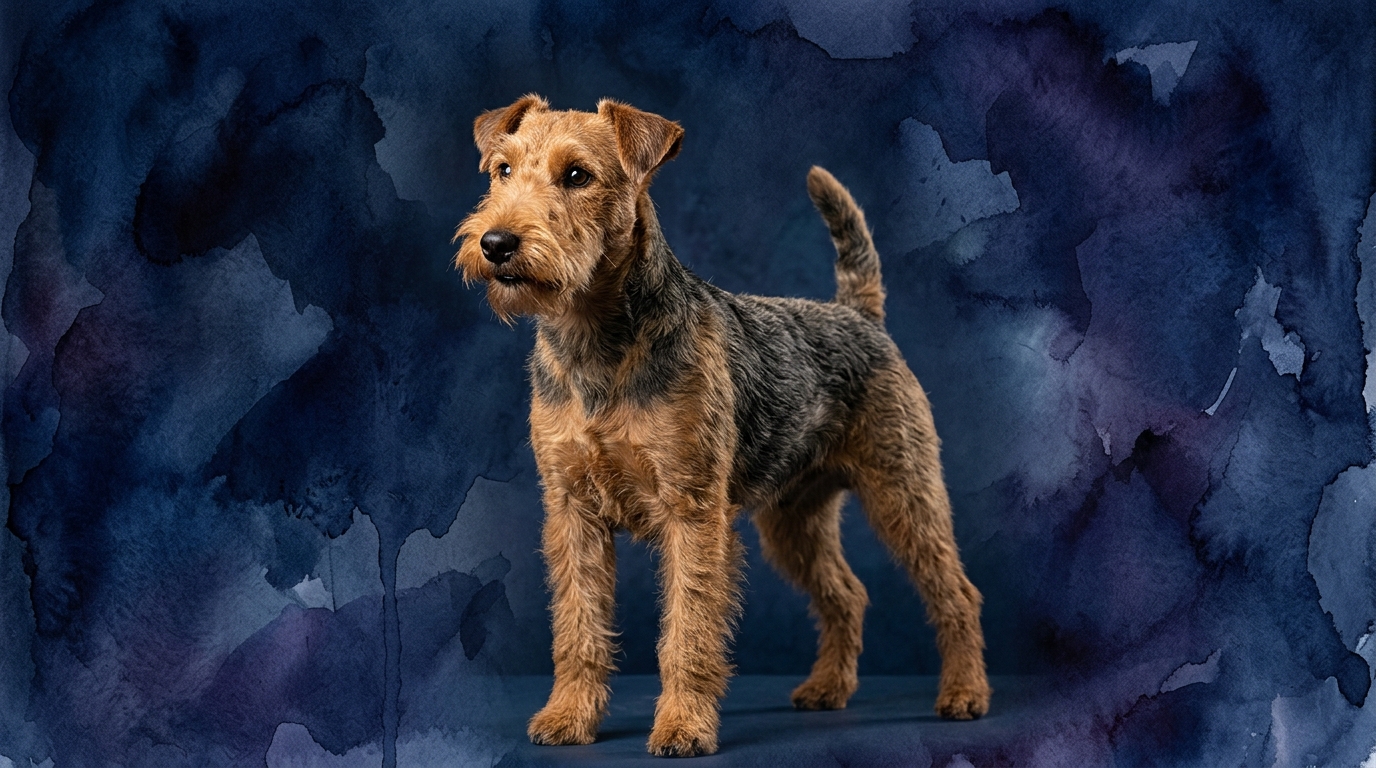
Side-by-Side IQ Profile: Boxer vs. Welsh Terrier
At The Cosmic Pet Pet IQ Lab, we evaluate canine intelligence across five key dimensions, providing a nuanced understanding beyond simple ranking. For the Boxer, a dog from the Working group, and the Welsh Terrier, a member of the Terrier group, their cognitive profiles, while similar in some aspects, reveal critical differences.
Both the Boxer and the Welsh Terrier register a **Problem Solving** score of 3/5. This indicates a moderate capacity for independent thought and figuring out novel situations. They can learn to navigate complex tasks and overcome obstacles, but often benefit from human guidance and structured learning rather than consistently devising ingenious solutions on their own. Their ability to adapt and learn from experience is present, but not exceptionally advanced.
In terms of **Training Speed**, both breeds again share a score of 3/5. This suggests they are moderately receptive to learning new commands and behaviors. Neither is exceptionally quick to pick up new cues, nor are they particularly stubborn or slow. Owners can expect a steady progression with consistent, positive reinforcement methods, but rapid mastery of complex routines might require patience.
A significant divergence appears in **Social Intelligence**. The Boxer boasts an impressive 5/5, reflecting a profound capacity to understand and respond to human emotions, cues, and social dynamics. This breed is deeply attuned to its human companions, often anticipating needs and thriving on interaction. In contrast, the Welsh Terrier scores 3/5, indicating a more independent social nature. While they form bonds, their interpretation of human social signals is less intense, and they are generally less driven by the desire to constantly please or interact.
Their **Instinctive Drive** also varies, with the Boxer at 4/5 and the Welsh Terrier at 3/5. The Boxer's higher score reflects its working heritage, often manifesting as a strong drive for protection, play, and engaging in physical activities. This inherent motivation can be channeled into various tasks. The Welsh Terrier's 3/5 drive is typical of a terrier, indicating a moderate inclination towards hunting, digging, and exploration, but perhaps less intensity than some of its terrier cousins.
Finally, for **Memory**, both breeds score 3/5. This suggests a moderate ability to retain learned behaviors, routines, and experiences over time. They will remember commands and past interactions, but their recall might not be infallible, especially if not regularly reinforced. Owners can rely on them remembering their training, but occasional refreshers will be beneficial.
Where the Boxer Excels Cognitively
The Boxer's cognitive strengths distinctly lie in its profound social intelligence, scoring 5/5. This breed possesses an exceptional ability to read and respond to human emotions and intentions, making them remarkably empathetic and intuitive companions. Their keen awareness of their human family's moods allows them to offer comfort or engage in play with uncanny timing, fostering deep, reciprocal bonds. This high social acumen also contributes to their effectiveness in roles requiring close partnership, such as therapy or assistance work, where understanding human nuances is paramount.
Another area where the Boxer's cognitive profile demonstrates an advantage is its robust instinctive drive (4/5). Originating as working dogs, Boxers possess a natural inclination towards purpose-driven activities and engaging physical tasks. This drive, combined with their social intelligence, means they are often highly motivated to participate in activities alongside their owners, whether it's obedience training, agility, or simply a spirited game of fetch. Their inherent desire to work and interact makes them highly engaging partners for active lifestyles, channeling their energy into productive and satisfying outlets.
Where the Welsh Terrier's Cognitive Profile Shines
While the Welsh Terrier shares some cognitive scores with the Boxer, its unique blend of moderate social intelligence (3/5) and instinctive drive (3/5) offers distinct advantages for specific owner preferences. Its lower social intelligence, when compared to the Boxer, translates into a more independent nature. This isn't a deficit, but rather a preference for certain owners who appreciate a dog that is less demanding of constant human attention and interaction. The Welsh Terrier is content to entertain itself or observe its surroundings without perpetually seeking direct engagement, making it an excellent choice for individuals who value a companion that is affectionate but also self-sufficient.
The Welsh Terrier's instinctive drive (3/5), while moderate, is perfectly suited to its terrier heritage. This means it possesses an inherent curiosity and a moderate prey drive, making it an engaging partner for exploring environments and engaging in games that simulate hunting or problem-solving. Owners seeking a dog with a manageable, yet present, drive for exploration and independent activity will find the Welsh Terrier's cognitive profile aligns well. Its moderate drive means it's less likely to be overwhelmingly intense in its pursuit of prey compared to some other terrier breeds, offering a balanced approach to its natural instincts.
Ease of Training: Behavioral Differences at Play
When considering ease of training, the Boxer's superior social intelligence (5/5) gives it a notable edge over the Welsh Terrier, despite both breeds sharing a 3/5 training speed. The Boxer's deep attunement to human cues means it is often more eager to please and more responsive to verbal and non-verbal commands. They are highly motivated by positive reinforcement that involves human interaction and praise, often making the training process feel like a collaborative effort. Their desire for connection translates directly into a willingness to engage in learning.
The Welsh Terrier, with its 3/5 social intelligence, tends to be more independent during training sessions. While capable of learning at a moderate pace, their motivation might stem more from the reward itself or the challenge of the task rather than an overwhelming desire to comply purely to please their owner. This independence means owners might need to be more creative with motivation, utilize higher-value treats, and maintain exceptional consistency. They are not stubborn in the sense of being defiant, but rather self-directed, requiring clear boundaries and engaging methods to maintain focus and enthusiasm. Therefore, while both require consistency, the Boxer generally offers a more fluid and socially gratifying training experience due to its innate desire for human partnership.
Matching Canine Cognition to Owner Lifestyles
The cognitive profiles of the Boxer and Welsh Terrier suggest they are suited for different owner lifestyles. The Boxer, with its high social intelligence (5/5) and strong instinctive drive (4/5), thrives with active owners who desire a highly interactive and engaged companion. These dogs excel in environments where they are integral members of the family, participating in daily activities, training, and play. Their need for connection means they are not ideal for owners who lead very relaxed, hands-off lifestyles or those who spend significant periods away from home, as their social needs would go unmet. They are excellent for families or individuals who enjoy structured activities, long walks, and consistent interaction.
Conversely, the Welsh Terrier, with its moderate social intelligence (3/5) and instinctive drive (3/5), fits well with owners who appreciate a dog with a distinct personality and a degree of independence. While they are active and enjoy engaging in outdoor adventures and games, they don't possess the same intense need for constant human interaction as the Boxer. They are suitable for active owners who understand the terrier temperament – a spirited, curious, and sometimes self-reliant companion. They can adapt to a slightly more relaxed home life, provided their need for regular exercise and mental stimulation is met, and they are given opportunities to explore and express their natural terrier instincts.
The Verdict: When to Choose Each Companion
The Verdict
Choose the Boxer if you seek a deeply empathetic, highly interactive companion eager to be a constant presence in your life, thriving on social connection and shared activities. Their strong bond with humans makes them exceptional partners for active families who enjoy consistent engagement and structured training.
Opt for the Welsh Terrier if you appreciate a spirited, independent companion that offers affection without demanding constant attention, and you are prepared for a dog with a moderate, but persistent, terrier drive for exploration and activity. They are ideal for owners who value a unique personality and can provide consistent, engaging mental and physical stimulation.
🧠 Find Your Pet's IQ Score
Our Pet IQ Lab assessment covers 25+ tests across 5 cognitive dimensions — personalized to your breed.
Take the Full IQ Test →Frequently Asked Questions
Which breed is better for first-time dog owners?
The Boxer's high social intelligence and eagerness to please can make the training journey more intuitive for first-time owners, provided they are ready for an active and highly interactive companion. The Welsh Terrier's independence might require more experience in consistent motivation and managing terrier traits.
Do Boxers or Welsh Terriers require more mental stimulation?
Both breeds benefit from mental stimulation to prevent boredom, given their moderate problem-solving and memory scores. Boxers often enjoy interactive games and training that leverages their social connection, while Welsh Terriers thrive on puzzle toys, scent work, and activities that tap into their natural curiosity and moderate instinctive drive.
Which breed is more prone to separation anxiety?
Given its 5/5 social intelligence, the Boxer is generally more prone to developing separation anxiety if left alone for extended periods, as their deep need for human connection can lead to distress. The Welsh Terrier, with its more independent 3/5 social intelligence, may handle solitude slightly better, though consistent positive reinforcement for alone time is still crucial for both.