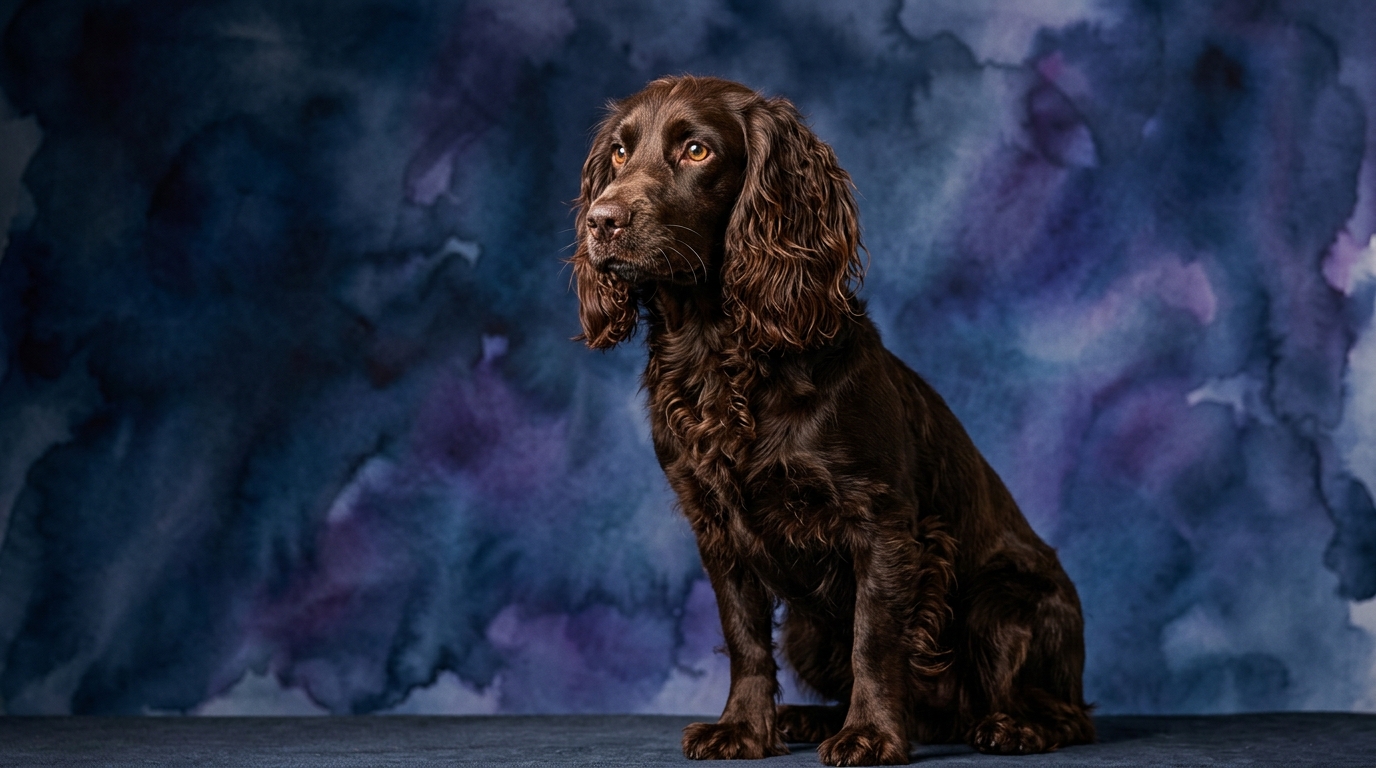

The Cosmic Pet Pet IQ Lab: Boykin Spaniel vs. Rat Terrier Cognitive Blueprint
The Boykin Spaniel, emerging from the Sporting Group, exhibits a problem-solving capacity (3/5) deeply rooted in practical hunting scenarios. Their intelligence manifests in efficiently tracking scent trails, navigating varied terrains, and adapting strategies to retrieve downed game. This isn't about abstract puzzles, but rather about effective, real-world application within a cooperative framework. Their training speed (3/5) reflects an eagerness to please a handler, absorbing commands with moderate pace, especially when tasks align with their natural retrieving instincts. While generally biddable, a strong scent can momentarily divert their focus.
Socially (3/5), Boykins are attuned to human cues, often anticipating a handler's needs in the field and forming strong family bonds. Their memory (3/5) is robust for routines, commands, and specific locations, particularly those associated with retrieving tasks, making them reliable partners. Underlying these traits is an instinctive drive (3/5) primarily focused on water work, scent tracking, and bringing objects back with a gentle mouth, a consistent impulse that requires appropriate outlets to flourish.
In contrast, the Rat Terrier, a member of the Terrier Group, showcases a problem-solving ability (3/5) geared towards independent action and cunning. Their intelligence shines in devising strategies to access confined spaces, outwit small prey, and persistently overcome obstacles. This often involves self-reliant tactical adjustments to physical barriers or evasive targets. Their training speed (3/5) is impressive when tasks are engaging and mentally stimulating, though their independent streak necessitates varied and interesting methods to maintain focus and prevent boredom.
The Rat Terrier's social intelligence (3/5) translates into keen observation of their family and environment, making them vigilant alert dogs, though they can be reserved with strangers. Their memory (3/5) is excellent for complex routines, agility courses, and locations where interesting scents or potential prey were encountered, supporting their active, exploratory lifestyle. Their instinctive drive (3/5) is an intense, ingrained impulse for chasing, digging, and eliminating vermin, a powerful force demanding consistent physical and mental outlets.
Where the Boykin Spaniel Excels Cognitively
Despite identical numerical scores, the Boykin Spaniel demonstrates particular cognitive strengths that align with their cooperative sporting heritage. Their problem-solving (3/5) is exceptionally refined for tasks requiring collaboration with a human partner, such as methodically quartering a field to locate game or executing complex blind retrieves based on handler directions. This involves not just finding a solution, but doing so in sync with human input, showcasing a specific type of applied intelligence.
Furthermore, the Boykin's social intelligence (3/5) allows for a deeper, more intuitive connection during shared activities. They are adept at reading subtle body language and vocal inflections, translating these into responsive actions in dynamic environments like a duck blind or a training session. This acute attunement fosters a seamless working relationship, where the dog anticipates commands and reacts proactively, making them exceptionally fluid partners in coordinated efforts. Their memory (3/5) supports this by recalling intricate retrieval patterns and handler-specific cues over various terrains and conditions.
Where the Rat Terrier Shines Cognitively
The Rat Terrier, conversely, exhibits cognitive strengths rooted in their independent, tenacious terrier nature. Their problem-solving (3/5) is particularly pronounced in scenarios demanding individual initiative and resourcefulness, such as figuring out how to bypass an obstacle to reach a perceived 'prey' or devising a strategy to extract a toy from a complex puzzle. This breed’s intelligence is often expressed through cunning and physical dexterity, a self-directed mental agility aimed at overcoming challenges autonomously.
The Rat Terrier's instinctive drive (3/5) for pursuit and eradication of small vermin fuels a remarkable persistence and focus, allowing them to engage with a task for extended periods without constant human direction. Their social intelligence (3/5), while family-centric, also includes an acute environmental awareness, making them quick to notice and react to novel stimuli or changes in their surroundings, demonstrating a vigilant and independent processing of information. Their memory (3/5) is excellent for spatial awareness and recalling locations of interest, serving their exploratory and hunting inclinations.
Which Is Easier to Train and Why: Behavioral Nuances
Assessing 'easier to train' with identical training speed scores (3/5) requires understanding behavioral predispositions. The Boykin Spaniel generally presents as more biddable and eager to please, a hallmark of many sporting breeds. Their cooperative nature means they often find intrinsic reward in working alongside their handler and responding to commands, which can make general obedience and structured training feel more straightforward. Positive reinforcement, coupled with consistent routines, typically yields reliable results, as their attention is often focused on the human partner.
The Rat Terrier, while possessing an equally capable training speed (3/5), can sometimes be perceived as more challenging due to their independent and often tenacious spirit. Their learning thrives on engagement that taps into their prey drive or provides mental stimulation, such as agility, scent work, or trick training. If training becomes repetitive or lacks adequate motivation, their independence might manifest as selective hearing or a tendency to follow their own compelling instincts. Therefore, while equally capable of learning, the Rat Terrier often requires more creative, varied, and higher-value reinforcement strategies to maintain their consistent engagement and focus during training sessions, channeling their innate drive rather than suppressing it.
Matching Canine Cognition with Owner Lifestyles
When considering active owners versus those preferring a more relaxed pace, both breeds, despite their 3/5 scores, demand significant engagement. For active owners seeking a true partner in outdoor pursuits, the Boykin Spaniel is an excellent match. Their instinctive drive (3/5) for retrieving and water work means they thrive on activities like swimming, hiking, dock diving, or actual field hunting. Owners who enjoy spending hours exploring nature, especially near water, will find a Boykin's cooperative problem-solving and social intelligence perfectly suited to shared adventures, where the dog works harmoniously alongside them.
Active owners who appreciate a clever, persistent, and independent companion will find the Rat Terrier equally fulfilling. Their problem-solving (3/5) and intense instinctive drive (3/5) make them excel in agility, earthdog trials, lure coursing, or advanced puzzle games. These dogs need consistent mental challenges and physical outlets that allow them to use their keen senses and quick wit. For owners who enjoy dynamic, varied activities that tap into a dog's inherent drive for exploration and 'work,' the Rat Terrier offers a spirited and engaging companion. They need an owner who can provide structured activities to prevent boredom and channel their energy constructively.
For truly 'relaxed' owners, neither breed is an ideal fit without significant commitment to enrichment. Both require daily exercise and mental stimulation to prevent boredom and potential behavioral issues. The Boykin might adapt more readily to a 'relaxed' home if their exercise needs are still met through long walks and family play, relying on their social intelligence (3/5) for companionship. However, a Rat Terrier's unfulfilled instinctive drive (3/5) for digging and chasing can quickly lead to destructive behaviors if not adequately addressed, making them less suitable for a sedentary lifestyle without robust alternative engagement strategies.
The Verdict
Choose the Boykin Spaniel if you seek a cooperative, biddable partner for shared outdoor adventures, particularly those involving water or field work, valuing a dog that works intuitively alongside you.
Opt for the Rat Terrier if you desire a tenacious, clever, and independent companion, excelling in agility or earthdog sports, and are prepared to provide consistent mental and physical challenges for their sharp terrier instincts.
🧠 Find Your Pet's IQ Score
Our Pet IQ Lab assessment covers 25+ tests across 5 cognitive dimensions — personalized to your breed.
Take the Full IQ Test →Frequently Asked Questions
Are Boykin Spaniels good with children?
Generally, yes, their amiable nature and social intelligence (3/5) allow them to integrate well into family life, often enjoying play with respectful children. However, as with any breed, supervision is always advisable to ensure positive interactions.
Do Rat Terriers dig a lot?
Yes, their strong instinctive drive (3/5) for vermin control often translates into a natural inclination to dig, which owners need to manage with designated digging areas or appropriate training to redirect this behavior.
Which breed is more vocal?
Rat Terriers tend to be more vocal, using barks to alert or express excitement, a trait tied to their vigilant nature and independent problem-solving (3/5). Boykin Spaniels are typically quieter unless actively working or excited, relying more on their social intelligence (3/5) for communication with their handler.