
Side-by-Side IQ Profile: Briard vs. Coton de Tuléar
The Cosmic Pet Pet IQ Lab employs a five-dimensional framework to assess canine intelligence, providing a nuanced view beyond simple obedience. For the Briard, a Herding dog ranked #30 by Coren, its profile shows Problem Solving at 4/5, Training Speed at 4/5, Social Intelligence at 3/5, Instinctive Drive at 3/5, and Memory at 4/5. This suggests a dog with significant mental agility and retention, rooted in its working heritage.
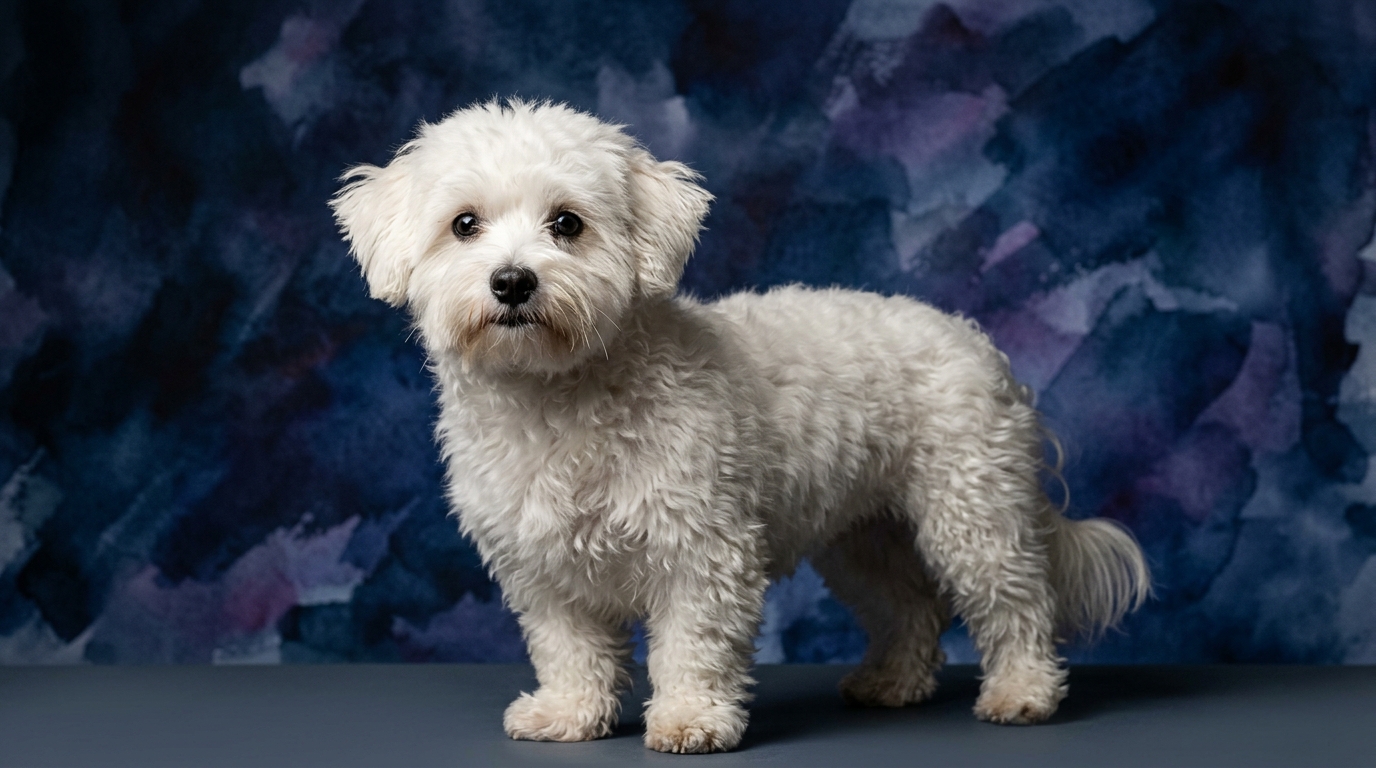
In contrast, the Coton de Tuléar, a Non-Sporting companion breed not Coren-ranked, presents a balanced profile across the board: Problem Solving at 3/5, Training Speed at 3/5, Social Intelligence at 3/5, Instinctive Drive at 3/5, and Memory at 3/5. This indicates a capable and adaptable mind, though perhaps less geared towards independent problem-solving tasks than the Briard, with its intelligence channeled more towards companionship.
Where the Briard Wins Cognitively
The Briard's cognitive strengths distinctly shine in areas requiring independent thought and rapid acquisition of skills. With a 4/5 in Problem Solving, Briards often demonstrate a proactive approach to challenges, frequently devising their own solutions without constant human intervention. Their herding lineage demanded this strategic thinking, as they needed to manage livestock effectively, sometimes at a distance from a handler, which translates into a dog that can logically navigate complex situations.
Furthermore, their 4/5 scores in both Training Speed and Memory underscore their capacity for efficient learning and retention. Briards typically grasp new commands and multi-step sequences quickly, requiring fewer repetitions to solidify the behavior. Once a lesson is embedded, it tends to remain, allowing for the rapid accumulation of a broad repertoire of skills and making them particularly adept at advanced obedience or specialized tasks.
Where the Coton de Tuléar Wins Cognitively
While the Coton de Tuléar's scores are consistently moderate, its cognitive profile is exceptionally well-suited for dedicated companionship, which is a distinct form of intelligence. Their 3/5 in Social Intelligence combined with a 3/5 in Instinctive Drive means their mental energy is primarily directed towards engaging with their human family and adapting seamlessly to domestic life. Their problem-solving (3/5) often manifests as clever ways to secure attention or comfort, rather than managing complex external tasks.
Cotons excel in emotional responsiveness and fine-tuned attention-seeking, demonstrating a nuanced understanding of household dynamics and human moods. Their intelligence is channeled into maintaining close bonds, ensuring their needs for interaction are met, and becoming a deeply integrated family member. This aptitude for social connection and adaptability within a companion role represents a significant cognitive advantage for those seeking a devoted, present, and charming canine friend.
Which is Easier to Train and Why
For owners aiming for advanced obedience, complex commands, or specific working tasks, the Briard generally presents as easier to train due to its 4/5 Training Speed and 4/5 Memory. They process and retain information quickly, allowing for rapid progression through training levels. However, their 4/5 Problem Solving also means they can be independently minded; if direction is inconsistent or leadership unclear, they might choose to implement their own solutions, requiring an owner who can channel their mental prowess effectively. Their moderate herding drive might also necessitate specific training to manage behaviors like 'gathering' family members.
The Coton de Tuléar, with its 3/5 Training Speed and 3/5 Memory, is certainly trainable for basic obedience and house manners, responding very well to positive reinforcement and consistency. They thrive on the interactive aspects of training, often motivated by the desire to please and be close to their people. While they might require a few more repetitions for certain commands compared to a Briard, their lower instinctive drive (3/5) means they are less likely to challenge commands with an independent agenda. Their primary motivation is companionship, simplifying their training motivations and making them a rewarding learner for most household routines.
Which Suits Active Owners vs. Relaxed Owners
The Briard's robust cognitive profile, characterized by its 4/5 Problem Solving and 4/5 Memory, thrives with active owners capable of providing consistent mental and physical challenges. Owners who engage in dog sports such as agility, obedience trials, or herding activities will find the Briard's intelligence and work ethic profoundly rewarding. Their inherent need for structure, engagement, and a 'job' means they are not content with passive companionship; they require intellectual stimulation and purposeful activity to truly flourish and avoid boredom-induced behaviors. An active owner can fully tap into their cognitive potential.
Conversely, the Coton de Tuléar's balanced cognitive scores, particularly its 3/5 Instinctive Drive and 3/5 Problem Solving, make them exceptionally well-suited for more relaxed owners who prioritize companionship and gentle interaction. While they enjoy playful sessions and regular walks, their cognitive needs are largely met through daily family life, interactive toys, and moderate, consistent training sessions. Their intelligence is channeled into being an attentive, adaptable, and affectionate family member, perfectly content with a cozy spot nearby and abundant affection, making them an ideal companion for a quieter household.
The Verdict: When to Choose Each Breed
The Verdict
Opt for a Briard if you are an experienced owner seeking a mentally agile companion for advanced training, dog sports, or a working role, capable of independent thought and quick learning.
Select a Coton de Tuléar if you desire a charming, adaptable companion whose intelligence is geared towards devoted family life and gentle interaction, thriving on affection and moderate mental engagement.
🧠 Find Your Pet's IQ Score
Our Pet IQ Lab assessment covers 25+ tests across 5 cognitive dimensions — personalized to your breed.
Take the Full IQ Test →Frequently Asked Questions
Does a Coton de Tuléar's lack of Coren ranking mean it's not intelligent?
Not at all. Coren's ranking primarily focused on working obedience and command following, which doesn't fully capture the breadth of canine cognition, especially for companion breeds. The Coton de Tuléar demonstrates intelligence through its adaptability, social awareness, and problem-solving within a domestic setting, which are different facets of mental aptitude.
How does the Briard's herding background influence its problem-solving abilities?
The Briard's history of managing livestock, often out of direct sight of a shepherd, necessitated independent decision-making and strategic thinking to re-gather animals or navigate obstacles. This heritage instilled a strong capacity for assessing situations and formulating solutions, contributing to its higher problem-solving score.
Are there specific training challenges for either breed due to their cognitive profiles?
Briards may present challenges if their independent thinking isn't channeled, potentially leading to them making their own (unwanted) decisions if not consistently guided. Cotons, while eager to please, might require more patience and positive reinforcement for complex tasks, as their focus is less on task performance and more on social interaction.