
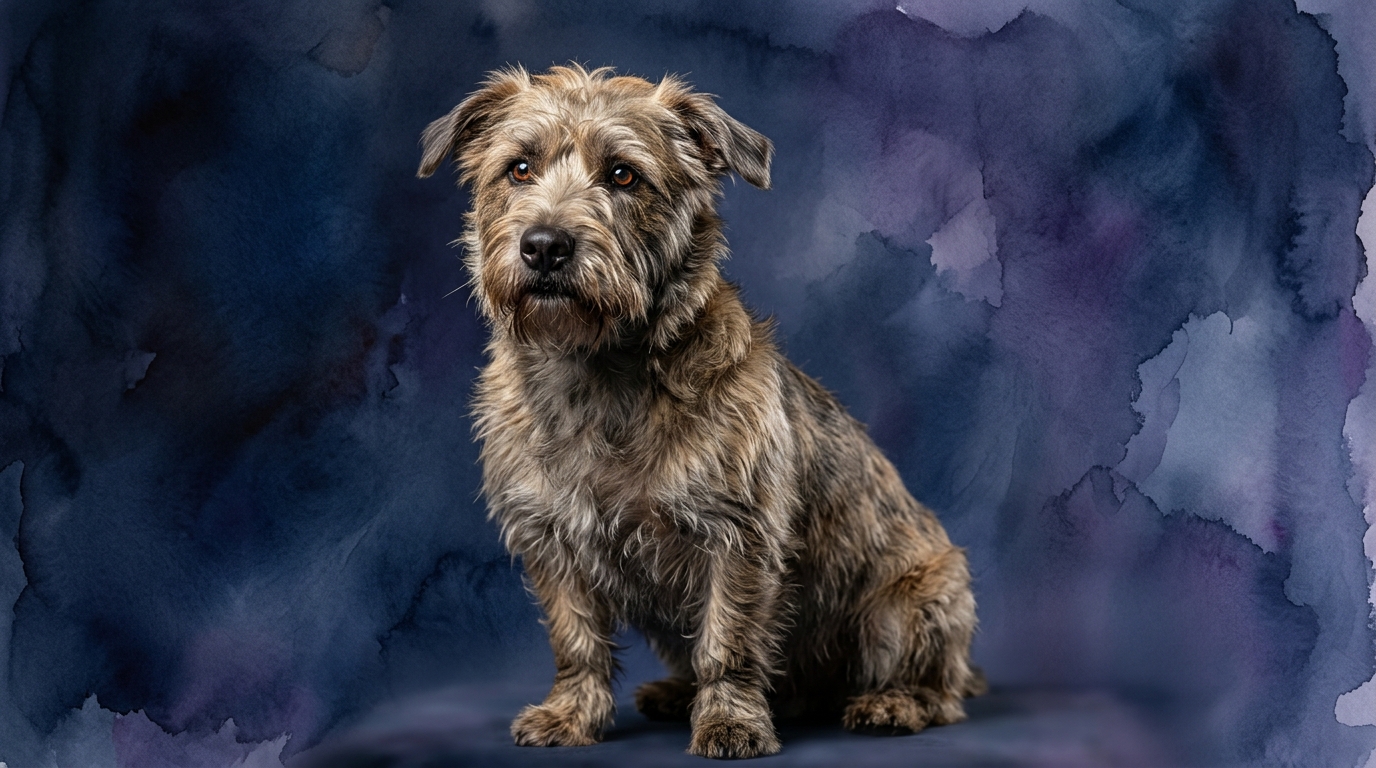
Side-by-Side Cognitive Profiles
The Cosmic Pet Pet IQ Lab employs five dimensions to assess canine cognitive abilities, offering a nuanced view beyond simplistic labels. Here's how the Briard and Glen of Imaal Terrier stack up:
**Briard:** Problem Solving (4/5): This breed exhibits strong independent thought, capable of assessing complex situations and adapting to find solutions, reflecting their historical need for autonomous decision-making in herding. Training Speed (4/5): Briards absorb and retain new commands with commendable efficiency, demonstrating attentiveness and responsiveness in structured training, a trait honed by their working dog heritage. Social Intelligence (3/5): They show moderate social perceptiveness, understanding human cues within their established family unit, though their social acumen is focused on their immediate group. Instinctive Drive (3/5): Their herding heritage contributes to a moderate desire to gather and control, which can manifest as "herding" family members or pets, generally manageable. Memory (4/5): Briards possess a commendable memory for learned behaviors, routines, and specific people, supporting their training speed and effective navigation.
**Glen of Imaal Terrier:** Problem Solving (3/5): Glens show a solid aptitude for problem-solving, often using persistence and ingenuity, particularly when motivated by terrier instincts, though their approach is more trial-and-error. Training Speed (3/5): They learn at a steady pace, mastering commands with consistent, engaging methods; their independent terrier nature sometimes requires patience and creative reinforcement. Social Intelligence (3/5): Glens display moderate social intelligence, understanding family dynamics and responding to owners' moods, but can be reserved towards outsiders. Instinctive Drive (3/5): Their lineage means a moderate instinctive drive focused on hunting and digging, manifesting as a strong desire to explore scents or excavate, reflecting their original purpose. Memory (3/5): Glens demonstrate reliable memory for learned commands and familiar situations, though recall might be more context-dependent or require occasional refreshing.
Where the Briard Wins Cognitively
The Briard's cognitive profile showcases distinct advantages in strategic thinking and information retention. Their problem-solving rating of 4/5, compared to the Glen's 3/5, indicates a more sophisticated capacity for assessing complex situations and formulating solutions, rooted in their herding background where autonomous decisions were crucial. Furthermore, the Briard's 4/5 training speed and 4/5 memory ratings point to a more efficient learning process and superior retention. They generally grasp new commands quickly and retain them over time, making advanced obedience or intricate task learning potentially smoother. Their capacity for sustained focus on tasks, driven by their herding purpose, allows them to process and store information more effectively, leading to a robust understanding.
Where the Glen of Imaal Terrier Wins Cognitively
While not outscoring the Briard in raw IQ metrics, the Glen of Imaal Terrier's cognitive strengths lie in their tenacious and independent application of abilities, particularly in contexts requiring grit. Their 3/5 problem-solving, though lower, is applied with characteristic terrier tenacity, often finding innovative solutions through sheer will, especially involving digging or scent work. Their instinctive drive (3/5) is keenly tuned for independent hunting, translating into an acute environmental awareness for interesting smells or movements – a specialized cognitive focus. This breed excels in situations demanding self-reliance and persistent drive, demonstrating a practical and resilient form of intelligence in exploring surroundings and achieving goals.
Which is Easier to Train, and Why
Based on their IQ profiles, the Briard generally presents as an easier dog to train, primarily due to their superior training speed (4/5) and memory (4/5). Bred to work closely with humans, Briards exhibit a strong desire to please and high receptivity to instruction, picking up cues quickly and retaining them. Their problem-solving ability (4/5) further aids their understanding of commands and application of principles. In contrast, the Glen of Imaal Terrier, with 3/5 for training speed and memory, requires a more patient approach. Terriers are independent thinkers, bred for solitary work, which translates into a "what's in it for me?" attitude. While capable, Glens may need more repetition, varied motivation, and creative engagement to focus their innate tenacity towards desired behaviors.
Suitability for Active vs. Relaxed Owners
The choice between these breeds depends on an owner's lifestyle and capacity to meet specific cognitive and physical needs. The Briard, with its herding background, generally suits active owners. Their 3/5 instinctive drive manifests as a need for purpose and mental engagement, thriving on activities like advanced obedience, agility, or structured hikes. An owner enjoying regular, stimulating outdoor activities and consistent training will find a compatible partner. The Glen of Imaal Terrier, though smaller, also isn't for entirely relaxed owners. Their 3/5 instinctive drive is geared towards focused, independent work like digging and hunting, with energy in bursts. An owner appreciating an independent spirit, enjoying moderate daily walks, and providing outlets for digging/scent-seeking will match well. They can relax indoors once their needs are met, suitable for owners less inclined towards marathon physical activities but prepared for engaging mental games.
The Verdict
Opt for a Briard if you're an active owner seeking a highly trainable, strategically minded companion for advanced obedience, canine sports, or a vigilant family guardian who thrives on consistent mental and physical engagement.
Select a Glen of Imaal Terrier if you appreciate an independent, tenacious spirit in a dog, are prepared for creative, patient training, and can provide outlets for their digging and scent-driven instincts in a moderately active household.
🧠 Find Your Pet's IQ Score
Our Pet IQ Lab assessment covers 25+ tests across 5 cognitive dimensions — personalized to your breed.
Take the Full IQ Test →Frequently Asked Questions
Do Briards require extensive grooming due to their coat?
Yes, Briards have a long, double coat that requires regular grooming, typically several times a week, to prevent mats and keep it healthy. This is a significant time commitment for owners.
Are Glen of Imaal Terriers good with children and other pets?
Glens can be good with children when raised with them and properly socialized, but their terrier instincts might make them less tolerant of rough play or small, fast-moving pets. Supervision is always recommended.
What kind of mental stimulation do Briards need to thrive?
Briards benefit from activities that engage their problem-solving and memory, such as puzzle toys, scent work, advanced obedience training, or learning complex tricks, to keep their active minds engaged.