Side-by-Side Cognitive Profiles
To truly understand the cognitive landscape of these two distinct breeds, The Cosmic Pet Pet IQ Lab employs five key dimensions: Problem Solving, Training Speed, Social Intelligence, Instinctive Drive, and Memory. Each dimension is scored on a scale of 1 to 5, providing a nuanced view beyond simple labels.
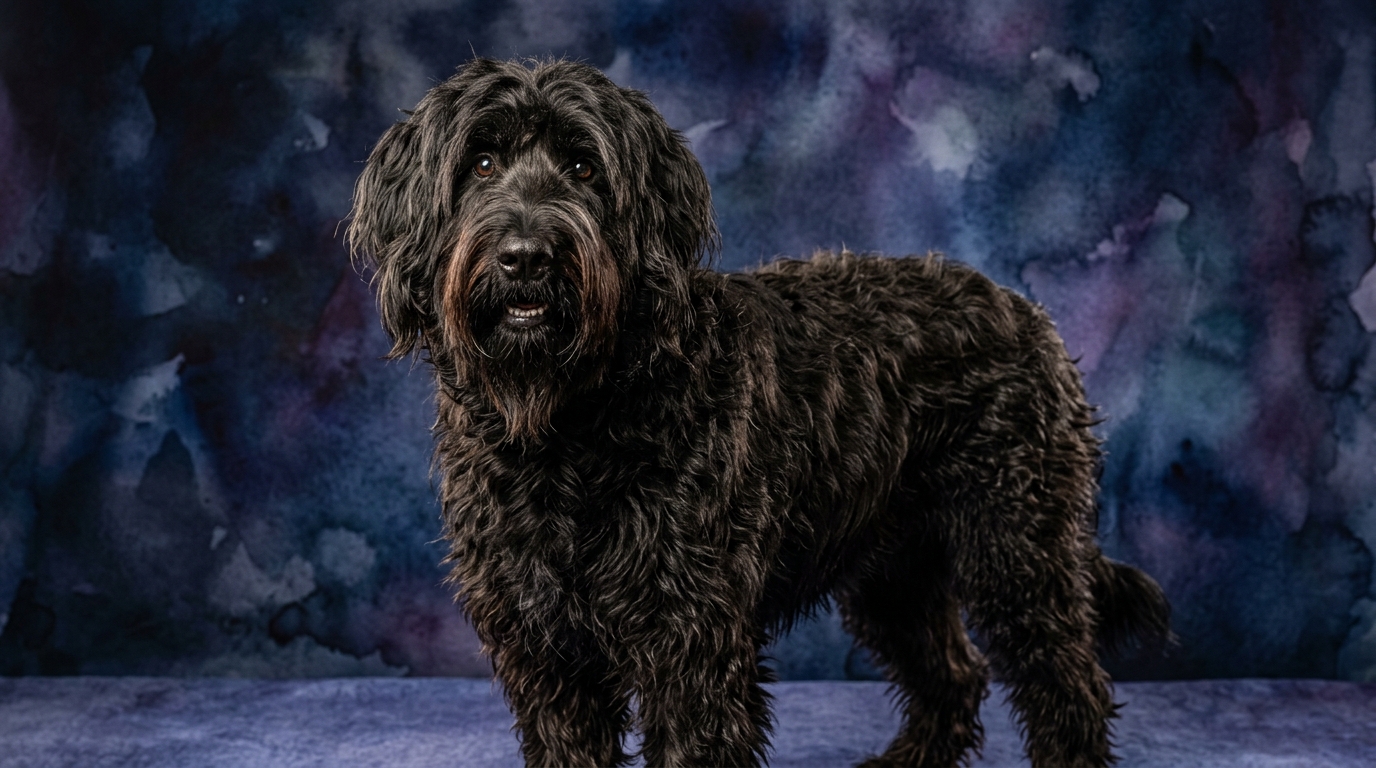
The Briard, a proud Herding dog, exhibits a cognitive profile reflecting its need for independent thought and quick reactions in the field. It scores an impressive 4/5 in Problem Solving, indicating an aptitude for navigating complex situations and devising solutions. Its Training Speed also stands at 4/5, suggesting a rapid ability to grasp and execute new commands. Social Intelligence and Instinctive Drive are both rated at 3/5, pointing to a balanced connection with its handler and a moderate inherent urge to perform its breed-specific tasks. Finally, its Memory scores a strong 4/5, signifying an excellent capacity for retaining learned behaviors and experiences over time.
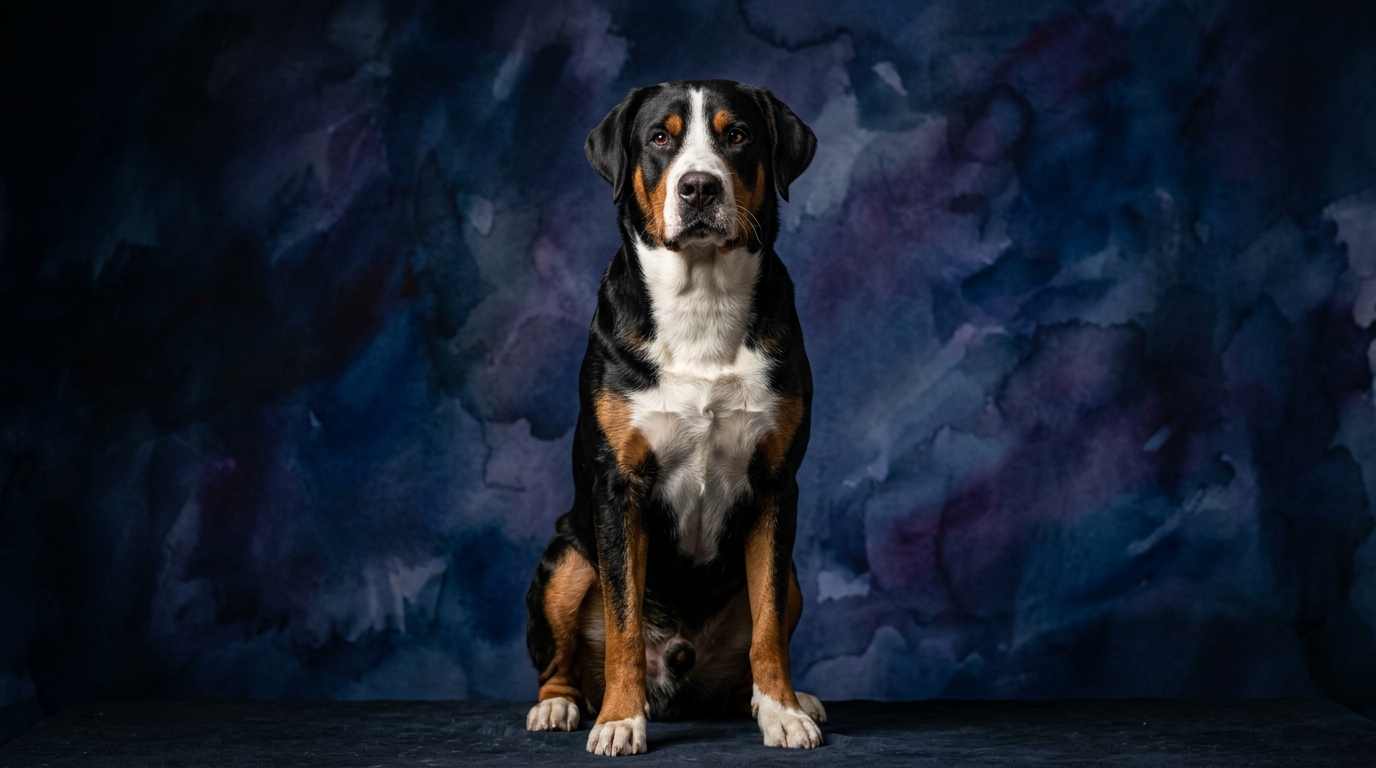
In contrast, the Greater Swiss Mountain Dog, a steadfast Working breed, presents a profile of consistent, reliable cognitive abilities. While not Coren-ranked, its scores across the board are a solid 3/5. This means its Problem Solving, Training Speed, Social Intelligence, Instinctive Drive, and Memory all demonstrate a competent, dependable level. This balanced profile indicates a dog that is neither overly impulsive nor exceptionally quick to learn new tricks, but rather a steady, capable companion and worker who applies its faculties with consistency and perseverance.
Where the Briard Wins Cognitively
The Briard's cognitive advantages are evident in its superior scores for Problem Solving (4/5), Training Speed (4/5), and Memory (4/5). Its herding heritage demands an animal that can think independently, often at a distance from the handler, to manage livestock. This translates into a dog adept at figuring out puzzles, navigating new environments, and adapting to changing circumstances with minimal guidance. Their rapid Training Speed means they absorb new commands, routines, and complex sequences with remarkable efficiency, making them a joy for experienced trainers to work with. Furthermore, their excellent Memory ensures that once a lesson is learned, it is retained for the long term, allowing for the building of an extensive repertoire of skills and behaviors. This breed thrives on mental engagement and complex tasks, showcasing a mental agility that sets it apart.
Where the Greater Swiss Mountain Dog Wins Cognitively
While the Greater Swiss Mountain Dog doesn't boast higher individual scores than the Briard in any specific cognitive dimension, its strength lies in the balanced and consistent application of its abilities. Its steady 3/5 across all categories – Problem Solving, Training Speed, Social Intelligence, Instinctive Drive, and Memory – signifies a robust and dependable cognitive framework. This consistency means a GSMD is less prone to the rapid shifts in focus or independent tangents that a higher-scoring, more mercurial mind might exhibit. Their 3/5 Social Intelligence manifests as a deep, unwavering loyalty and a steady, watchful presence within the family unit, making them exceptionally reliable companions and guardians. Their Instinctive Drive, also at 3/5, empowers them with the perseverance and physical will to excel in tasks requiring sustained effort, such as drafting or carting, rather than quick, intricate maneuvers. This breed excels in roles demanding steadfastness and the consistent application of strength, both mental and physical, providing a predictable and deeply reassuring presence.
Which is Easier to Train and Why
Based on our IQ Lab scores, the Briard generally presents as the easier breed to train in terms of initial acquisition speed and the ability to tackle complex tasks. With a 4/5 in Training Speed and Problem Solving, Briards quickly grasp new commands and enjoy the mental stimulation that training provides. Their superior memory (4/5) ensures that once a concept is understood, it's retained effectively. However, their herding drive and independent problem-solving nature mean that they can sometimes be willful, requiring a trainer who is consistent, engaging, and able to channel their substantial mental energy constructively.
The Greater Swiss Mountain Dog, with 3/5 in Training Speed and Problem Solving, requires a more patient and methodical approach. They are capable learners, but they benefit significantly from repetition and clear, consistent instruction. While they may not pick up new tricks as rapidly as a Briard, their steady temperament and solid memory (3/5) mean that once a lesson is learned, it is deeply ingrained. Their training success often hinges on positive reinforcement and building a strong, trusting relationship, leveraging their social intelligence and instinctive drive for purpose-driven work. They are less likely to "outthink" their trainer but will respond best to a calm, confident leader.
Which Suits Active Owners vs. Relaxed Owners
For owners seeking a highly active and mentally stimulating companion, the Briard is an ideal match. Their strong herding lineage and high cognitive scores across Problem Solving (4/5) and Training Speed (4/5) mean they require substantial daily exercise and consistent mental challenges. They thrive in environments where they have a "job" to do, whether it's participating in dog sports like agility, obedience, or protection work, or engaging in complex puzzle toys and training sessions. A Briard will not be content with just a casual stroll; they need purposeful activity to channel their energy and intelligence.
The Greater Swiss Mountain Dog, while certainly a working breed, generally suits owners who appreciate a balance of activity and calm companionship. While they need regular exercise to maintain their robust physique and mental well-being—including walks, hikes, and outdoor play—their energy levels are often more moderate than a high-drive herding dog once they mature. They enjoy being active with their family but are also quite content to relax indoors, providing a steady, comforting presence. They are well-suited for owners who enjoy consistent outdoor activities but don't necessarily seek a dog with a demanding need for constant, intricate mental work.
The Verdict
Opt for the Briard if you are an experienced, active owner seeking a mentally agile companion for dog sports, advanced training, or a 'thinking' job, capable of independent problem-solving and rapid learning.
Choose the Greater Swiss Mountain Dog if you desire a steadfast, reliable family guardian with a balanced temperament, who appreciates consistent exercise and a calm, loyal presence in the home.
🧠 Find Your Pet's IQ Score
Our Pet IQ Lab assessment covers 25+ tests across 5 cognitive dimensions — personalized to your breed.
Take the Full IQ Test →Frequently Asked Questions
Are Briards prone to independent thinking during training?
Yes, their strong problem-solving skills and herding background mean Briards can sometimes make their own decisions, requiring a consistent, assertive trainer who can channel their mental prowess effectively.
Do Greater Swiss Mountain Dogs require a lot of physical exercise?
Greater Swiss Mountain Dogs need regular exercise to maintain their muscular build and overall well-being, but their activity needs are generally more moderate than a high-energy herding breed, balancing outdoor adventures with calm indoor companionship.
How does the lack of Coren ranking for the GSMD affect its perceived intelligence?
The absence of a Coren rank doesn't diminish the Greater Swiss Mountain Dog's cognitive capacity; rather, it indicates a different focus of study or a cognitive profile that excels in practical, steady working roles over specific obedience-trial metrics.