
Side-by-Side IQ Profile: The Cognitive Blueprint
At The Cosmic Pet Pet IQ Lab, we analyze canine cognition across five key dimensions to understand how different breeds process information and interact with their world. The Briard, a venerable Herding breed, presents a profile reflecting its historical role as a flock guardian and manager. Its problem-solving score of 4/5 indicates a capacity for complex, adaptive thinking, crucial for anticipating and reacting to flock movements or potential threats. Coupled with a training speed of 4/5, Briards typically grasp new commands and routines with impressive alacrity, eager to engage in structured learning. Their social intelligence, rated 3/5, speaks to a deep bond with their immediate family unit, often exhibiting a discerning reservation towards strangers, while their instinctive drive, also 3/5, is largely channeled into protective and herding behaviors rather than pure prey pursuit. A memory score of 4/5 ensures they retain learned behaviors and social cues over extended periods, making them reliable partners.
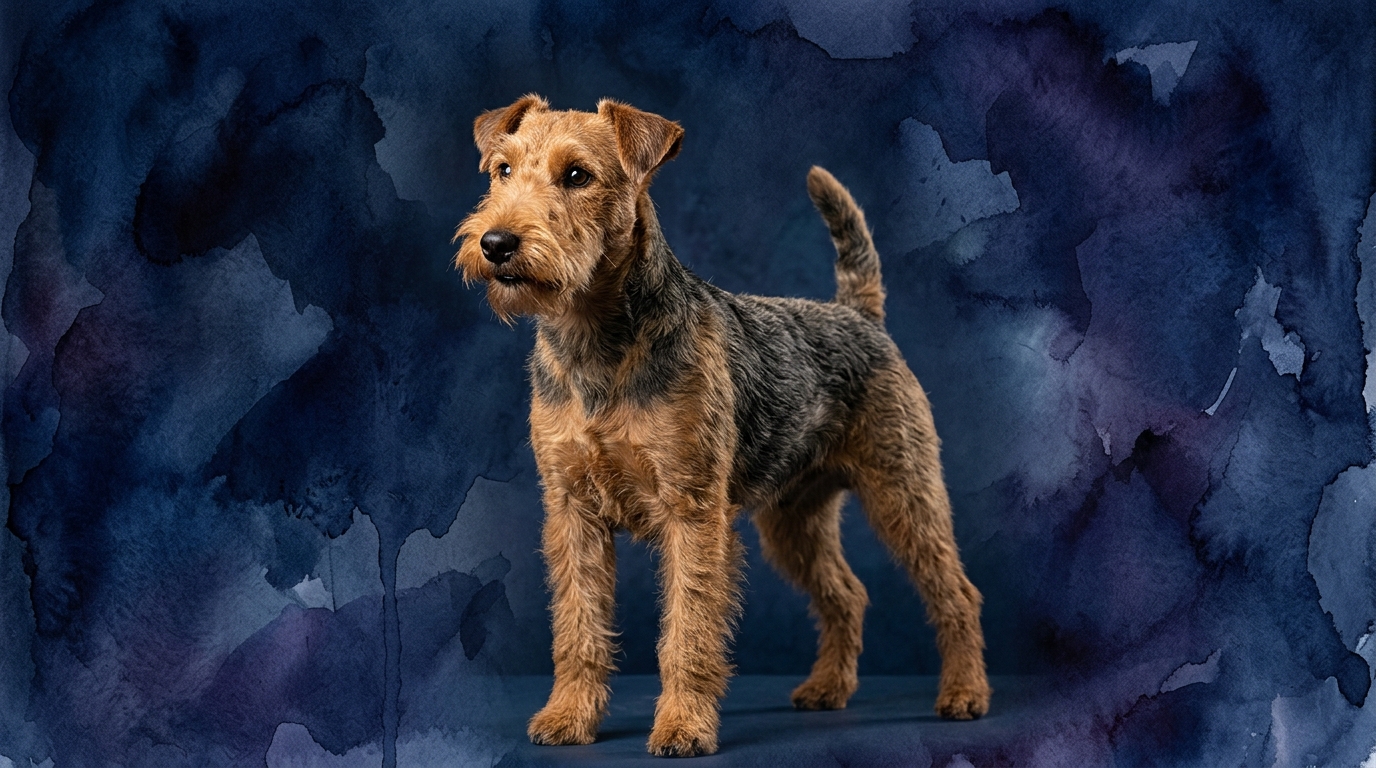
In contrast, the Welsh Terrier, a spirited member of the Terrier group, showcases a cognitive pattern optimized for independent hunting and tenacity. With a problem-solving score of 3/5, their intelligence is often directed towards overcoming physical obstacles or strategizing to locate prey, rather than managing dynamic groups. Their training speed, also 3/5, suggests they are capable learners but may require more consistent, engaging methods to maintain focus, as their independent streak can sometimes overshadow a desire for strict obedience. A social intelligence score of 3/5 means they are generally affable with their family but possess a robust self-assurance that can lead to spirited interactions with other dogs or unfamiliar people. Their instinctive drive, 3/5, is strongly rooted in their terrier heritage, manifesting as a persistent urge to dig, chase, and explore, a drive that can be both a strength and a challenge. Finally, their memory, rated 3/5, is sufficient for retaining commands and routines, though perhaps less inclined towards intricate, multi-step sequences compared to their herding counterparts.
Where the Briard Wins Cognitively: The Strategic Guardian
The Briard's cognitive strengths distinctly align with its historical purpose, offering a nuanced approach to problem-solving that sets it apart. Its 4/5 rating in this dimension reflects an ability to assess dynamic situations, such as a scattering flock or an unfamiliar person approaching, and formulate adaptive responses. This isn't merely reactive behavior but often involves foresight and strategic thinking, a hallmark of breeds developed to manage complex, living systems. Furthermore, the Briard's superior training speed (4/5) and memory (4/5) collectively contribute to its remarkable capacity for learning intricate multi-step commands and maintaining consistency over time, making it adept at advanced obedience, agility, or even service work. This combination allows them to internalize vast repertoires of cues and respond reliably, even under novel circumstances, a true testament to their cognitive flexibility and retention.
Their social intelligence, while rated 3/5, is often expressed through a profound loyalty and protective instinct towards their family, requiring them to read subtle human cues and anticipate needs or threats within their established social structure. This depth of understanding within their 'pack' is a distinct cognitive advantage for a guardian breed, allowing them to form strong, communicative bonds. The Briard's intelligence is thus not just about raw processing power but about the application of that power to maintain order, protect, and cooperate within a complex social and environmental context.
Where the Welsh Terrier Wins Cognitively: The Tenacious Hunter
While the Welsh Terrier's raw IQ scores might appear numerically lower in some categories compared to the Briard, their cognitive profile represents a specialized form of intelligence that excels in its own right. Their problem-solving score of 3/5, for instance, reflects a tenacity and resourcefulness in overcoming physical obstacles or outsmarting small prey, a specific type of cognitive agility crucial for a hunting terrier. They demonstrate a persistent, independent focus when faced with a 'problem' related to their instinctive drives, often exhibiting creative solutions to reach a goal, even if it involves digging under a fence or navigating a complex scent trail. This is not the broad, adaptive problem-solving of a herder, but rather a sharp, goal-oriented determination.
The Welsh Terrier's instinctive drive, also 3/5, is a powerful cognitive engine. This drive fuels their persistent exploration and engagement with their environment, prompting them to learn through discovery and direct interaction. While it can sometimes make training more challenging due to self-direction, it also means they are profoundly engaged with their surroundings, constantly processing sensory information and forming associations. Their social intelligence, a solid 3/5, is expressed through a bold self-assurance and an ability to hold their own, qualities that are cognitively beneficial for a breed bred to work independently and fearlessly confront quarry. This unique blend of independence, tenacity, and focused drive defines the Welsh Terrier's distinctive cognitive strengths.
Which is Easier to Train and Why: A Tale of Cooperation vs. Independence
When evaluating ease of training, the Briard generally presents a more straightforward path for the average owner, largely due to its superior training speed (4/5) and memory (4/5). These dogs were bred to work in close partnership with humans, responding to complex commands to manage livestock. This inherent desire to cooperate and please, combined with their capacity to quickly understand and retain new information, makes them highly receptive to positive reinforcement training. They thrive on structured learning environments and often find mental stimulation in mastering new tasks, exhibiting a focus and consistency that streamlines the training process. Their higher problem-solving score also means they can generalize learned behaviors to new situations more readily.
The Welsh Terrier, conversely, often requires a more patient, creative, and consistent approach to training. With a training speed of 3/5 and a strong instinctive drive (3/5), their independent spirit and innate focus on terrier-specific pursuits can sometimes make them appear less compliant. They are intelligent, but their problem-solving (3/5) is often directed towards self-serving goals like exploring a scent or digging, rather than anticipating human commands. Training a Welsh Terrier means working *with* their natural instincts, finding ways to channel their tenacity and prey drive into acceptable behaviors. Consistency is paramount, as is making training fun and rewarding enough to capture their attention and motivate their often-independent minds. They will learn, but often at their own pace and with a healthy dose of their characteristic terrier stubbornness.
Which Suits Active Owners vs. Relaxed Owners: Energy and Engagement
Neither the Briard nor the Welsh Terrier are ideal companions for truly 'relaxed' owners in the sense of minimal engagement. Both breeds demand an active lifestyle, but the *nature* of that activity differs significantly, stemming directly from their cognitive profiles. The Briard, with its substantial physical presence and mental capacity for complex tasks, thrives with owners who can provide consistent, structured mental stimulation alongside vigorous physical exercise. This might involve advanced obedience, herding trials, agility, or long, engaging hikes where they can 'work' alongside their human. Their higher problem-solving and memory scores mean they benefit immensely from learning new skills and maintaining a varied routine, needing an owner committed to harnessing their cognitive potential.
The Welsh Terrier, while smaller, possesses an equally robust energy level and a keen need for engagement, driven by its powerful instinctive drives. Owners must be prepared for regular physical activity that allows them to burn off energy, such as brisk walks, runs, or vigorous play sessions. Crucially, they also need outlets for their terrier instincts, which could include earthdog trials, scent work, or engaging puzzle toys that challenge their problem-solving skills in a way that satisfies their innate drive to 'hunt.' Owners who appreciate a lively, tenacious companion and are prepared to provide consistent boundaries and stimulating activities will find the Welsh Terrier a rewarding partner, but a sedentary lifestyle will lead to frustration for both dog and owner.
The Verdict
Choose a Briard if you seek a highly trainable, cooperative companion capable of complex tasks and nuanced communication, and are ready to commit to consistent training and ample mental and physical engagement for a protective, larger breed.
Choose a Welsh Terrier if you appreciate a tenacious, independent spirit in a smaller package, are ready to engage in vigorous play and training that channels their strong prey drive, and can provide firm yet fair guidance.
🧠 Find Your Pet's IQ Score
Our Pet IQ Lab assessment covers 25+ tests across 5 cognitive dimensions — personalized to your breed.
Take the Full IQ Test →Frequently Asked Questions
Are Briards good family dogs?
Briards are deeply loyal to their families, often forming strong bonds and acting as protective guardians. Their social intelligence (3/5) means they thrive in an established family unit, though they can be reserved with strangers and benefit from early socialization to ensure they are well-adjusted.
Do Welsh Terriers get along with other pets?
Welsh Terriers possess a strong prey drive (3/5), which means they may not always be suitable for homes with smaller pets like cats or rodents unless extensively socialized from a young age. They can coexist with other dogs, but their bold social intelligence (3/5) may lead to spirited interactions, requiring careful introductions and supervision.
What kind of mental stimulation do these breeds need?
Briards require consistent mental challenges like advanced obedience, agility, or puzzle toys that leverage their problem-solving (4/5) and memory (4/5) skills. Welsh Terriers benefit from activities that engage their instinctive drive (3/5) and focused problem-solving (3/5), such as scent work, earthdog trials, or interactive games that mimic hunting behaviors.