
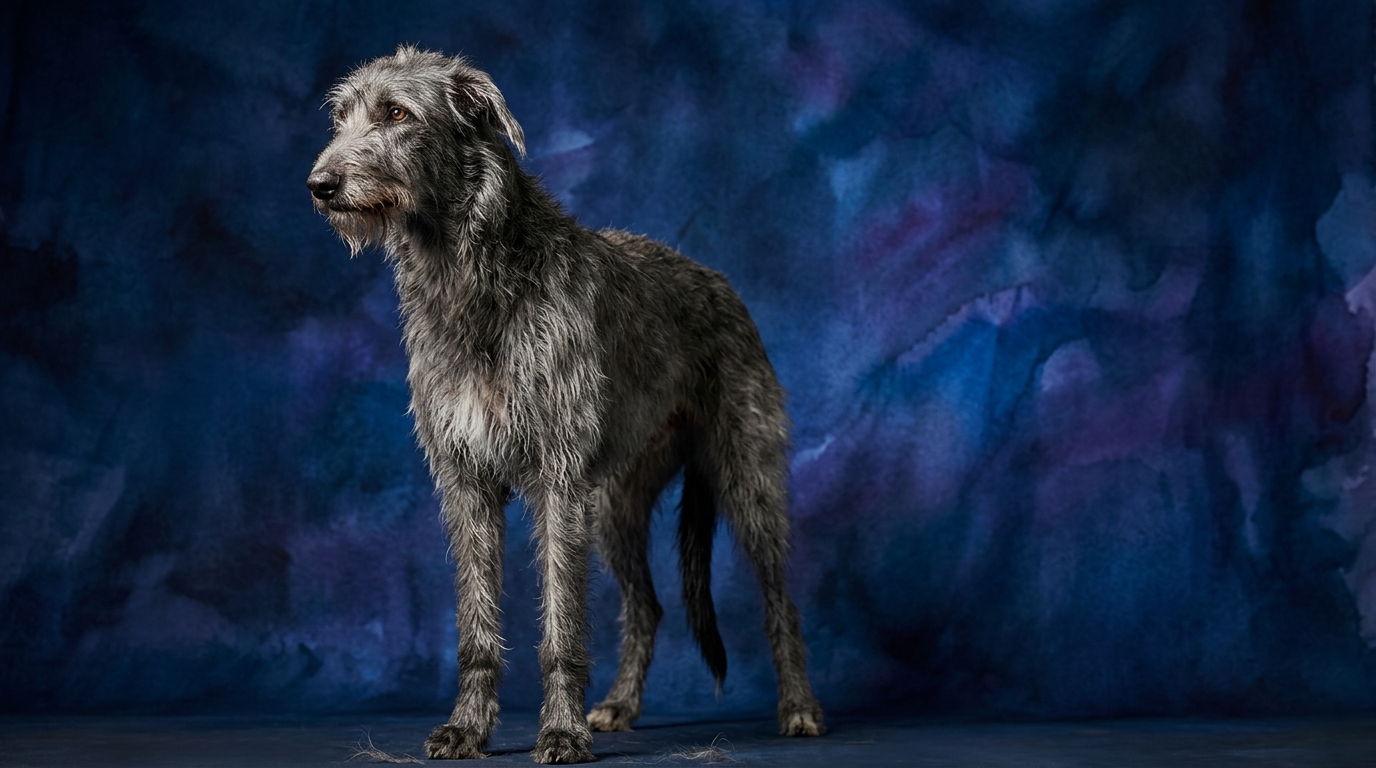
Side-by-Side IQ Profile: Brittany vs. Scottish Deerhound
The Cosmic Pet Pet IQ Lab employs a comprehensive five-dimensional framework to assess canine cognitive abilities, offering a nuanced perspective beyond simple obedience scores. For the Brittany, a Sporting group breed ranked #19 by Coren, and the Scottish Deerhound, a majestic Hound breed not Coren-ranked, these dimensions paint distinct pictures of their inner workings.
**Brittany IQ Profile:**
**Problem Solving (4/5):** Brittanys exhibit a resourceful approach to challenges, quickly analyzing situations in the field to locate game or navigate obstacles. Their cognitive flexibility allows them to adapt strategies when faced with novel tasks, making them adept at figuring things out independently or through trial and error. This skill is evident in their ability to retrieve fallen birds from complex terrain or to master intricate agility courses.
**Training Speed (4/5):** These dogs are generally quick studies, absorbing new commands and routines with impressive alacrity. Their eagerness to please and focused attention contribute to rapid learning, often requiring fewer repetitions to solidify a new behavior. This swift uptake makes them a rewarding breed for owners dedicated to consistent, positive reinforcement training.
**Social Intelligence (3/5):** Brittanys are responsive to human social cues and form strong bonds with their families, demonstrating an understanding of their owners' moods and intentions. While not overly demonstrative with strangers, they are generally amicable and capable of navigating basic social interactions, prioritizing cooperative engagement within their trusted circle.
**Instinctive Drive (3/5):** Their inherent drive is strongly geared towards hunting and retrieving, with a keen sense of smell and a focused intensity when tracking. This natural predisposition means they are highly motivated by tasks that tap into their prey drive, such as scent work or retrieving games, making these activities excellent outlets for their energy.
**Memory (5/5):** The Brittany's memory is a standout trait, allowing them to recall a vast repertoire of commands, past experiences, and locations with remarkable accuracy. This exceptional retention is crucial for sustained performance in the field, enabling them to remember complex patterns, retrieve specific items, or follow multi-step instructions reliably over time.
**Scottish Deerhound IQ Profile:**
**Problem Solving (3/5):** Scottish Deerhounds possess a distinct type of problem-solving ability, often characterized by independent thought rather than a desire to perform for human approval. They can creatively find solutions to achieve their own objectives, such as finding a comfortable napping spot or navigating a fence line, but may be less inclined to solve puzzles designed purely for human entertainment.
**Training Speed (3/5):** While capable of learning, the Scottish Deerhound’s training speed is more moderate, requiring patience and a deep understanding of their sighthound nature. They learn best with positive reinforcement and may take longer to master commands, especially if they perceive the task as repetitive or lacking intrinsic reward. Their independent streak means they may not always be eager to repeat a command simply because it was given.
**Social Intelligence (3/5):** Deerhounds are typically gentle and reserved, forming deep, quiet bonds with their immediate family. They are perceptive of human emotions and reliable companions, though they may appear aloof or discerning with strangers. Their social intelligence is more about quiet observation and selective interaction rather than boisterous engagement.
**Instinctive Drive (3/5):** The Deerhound's instinctive drive is powerfully rooted in their sighthound heritage: a primal urge to chase. This drive is ignited by movement and speed, making them formidable pursuers of anything that runs. Unlike the Brittany's retrieving focus, their drive is primarily about the thrill of the chase itself, requiring secure environments for off-leash exercise.
**Memory (3/5):** Scottish Deerhounds remember routines and basic commands, especially those that are consistent and meaningful to them. However, their memory might not be as expansive or as readily applied to complex, multi-step tasks as breeds with higher scores. They retain what serves their purpose, but might not hold onto every detail of a long training sequence if it doesn't resonate with their independent nature.
Where the Brittany Wins Cognitively
The Brittany clearly excels in areas requiring focused cooperation and consistent performance. Their problem-solving score of 4/5 indicates a resourceful mind, adept at navigating complex scenarios and adapting quickly, a trait invaluable in field sports where conditions are ever-changing. This cognitive flexibility, combined with their 4/5 training speed, allows them to acquire and refine new skills with impressive efficiency, making them highly responsive to instruction. Furthermore, their exceptional memory (5/5) ensures that once a lesson is learned, it is retained with remarkable fidelity, contributing to their reliability and consistency in demanding tasks. This blend of quick learning, problem-solving, and superior retention positions the Brittany as a highly capable and biddable cognitive partner.
Where the Scottish Deerhound Wins Cognitively
While not achieving higher scores in traditional metrics, the Scottish Deerhound's cognitive strengths lie in their unique independent thought and self-sufficiency. Their problem-solving score of 3/5, though lower than the Brittany's, reflects a capacity for finding solutions on their own terms, often driven by intrinsic motivation rather than external reward. This breed possesses a quiet observational intelligence, learning through careful watching rather than direct command, which can lead to surprisingly clever solutions to personal goals. Their social intelligence, also rated 3/5, is characterized by a discerning nature and deep, subtle bonds with their trusted few, suggesting a perceptive understanding of their inner circle's emotional landscape, even if not overtly demonstrative. This self-reliant cognitive style allows them to make independent decisions, particularly when engaging their instinctive drive for the chase, showcasing a different, equally valid form of canine acumen.
Which is Easier to Train, and Why?
The Brittany is generally easier to train, primarily due to their superior scores in Training Speed (4/5) and Memory (5/5), coupled with their eager-to-please disposition. They absorb new commands rapidly and retain them reliably, meaning fewer repetitions are needed for a behavior to become ingrained. Their problem-solving ability (4/5) also contributes, as they can often figure out what's expected of them, especially when tasks align with their natural retrieving and scenting instincts. This makes them highly responsive to positive reinforcement and a joy to work with in structured training environments. In contrast, the Scottish Deerhound, with a training speed and memory score of 3/5, presents a more nuanced training experience. Their independent sighthound nature means they may not always see the immediate value in performing a command, especially if it feels repetitive or conflicts with their inherent desire to chase. Training a Deerhound requires immense patience, consistency, and an understanding that motivation might need to be more intrinsically rewarding for the dog, rather than simply pleasing their human. Their cognitive process often involves weighing the request against their own agenda, which can make training a slower, more deliberate process.
Cognitive Fit: Active Owners vs. Relaxed Owners
For active owners seeking a highly engaged and cooperative canine partner, the Brittany is an exceptional match. Their high energy levels, combined with their impressive problem-solving (4/5) and instinctive drive (3/5) for fieldwork, mean they thrive when given ample opportunities for physical and mental stimulation. Owners who enjoy hunting, agility, competitive obedience, or long, exploratory hikes will find the Brittany a tireless and enthusiastic companion, eager to participate in demanding activities and consistently perform. Conversely, the Scottish Deerhound is better suited for owners who appreciate a more relaxed, dignified companion, while still providing outlets for their specific energy requirements. While Deerhounds need vigorous bursts of exercise—preferably in a securely fenced area where they can sprint—they are typically very calm and serene indoors. Their independent cognitive style means they don't constantly demand interaction or complex tasks, making them ideal for owners who enjoy quiet companionship and are content with a dog that balances periods of intense outdoor activity with long, comfortable indoor lounging sessions. They thrive with owners who understand their sighthound nature and provide appropriate outlets for their chase drive without expecting constant biddability.
The Verdict
Opt for a Brittany if you seek a highly cooperative, biddable companion eager for active engagement, excelling in structured training, field work, and consistent performance across various canine sports.
Select a Scottish Deerhound if you appreciate an independent, calm, and dignified companion, willing to invest patience in training, and enjoy a dog that balances bursts of outdoor energy with serene indoor companionship.
🧠 Find Your Pet's IQ Score
Our Pet IQ Lab assessment covers 25+ tests across 5 cognitive dimensions — personalized to your breed.
Take the Full IQ Test →Frequently Asked Questions
Are Scottish Deerhounds difficult to train?
Scottish Deerhounds are not inherently difficult, but their independent sighthound nature means they learn differently. They require patience, positive reinforcement, and understanding that they may prioritize their own interests, making training a slower, more deliberate process focused on building a strong relationship.
Do Brittanys need a lot of mental stimulation?
Absolutely. With their high problem-solving and exceptional memory, Brittanys require significant mental engagement beyond just physical exercise. Activities like puzzle toys, scent work, and advanced obedience training are essential to keep their sharp minds stimulated and prevent boredom.
How do their social skills compare?
Both breeds scored 3/5 in social intelligence, but manifest it differently. Brittanys are generally more outwardly engaging and cooperative with their family, while Scottish Deerhounds are often more reserved, forming deep, quiet bonds with their trusted few and being discerning with strangers.