
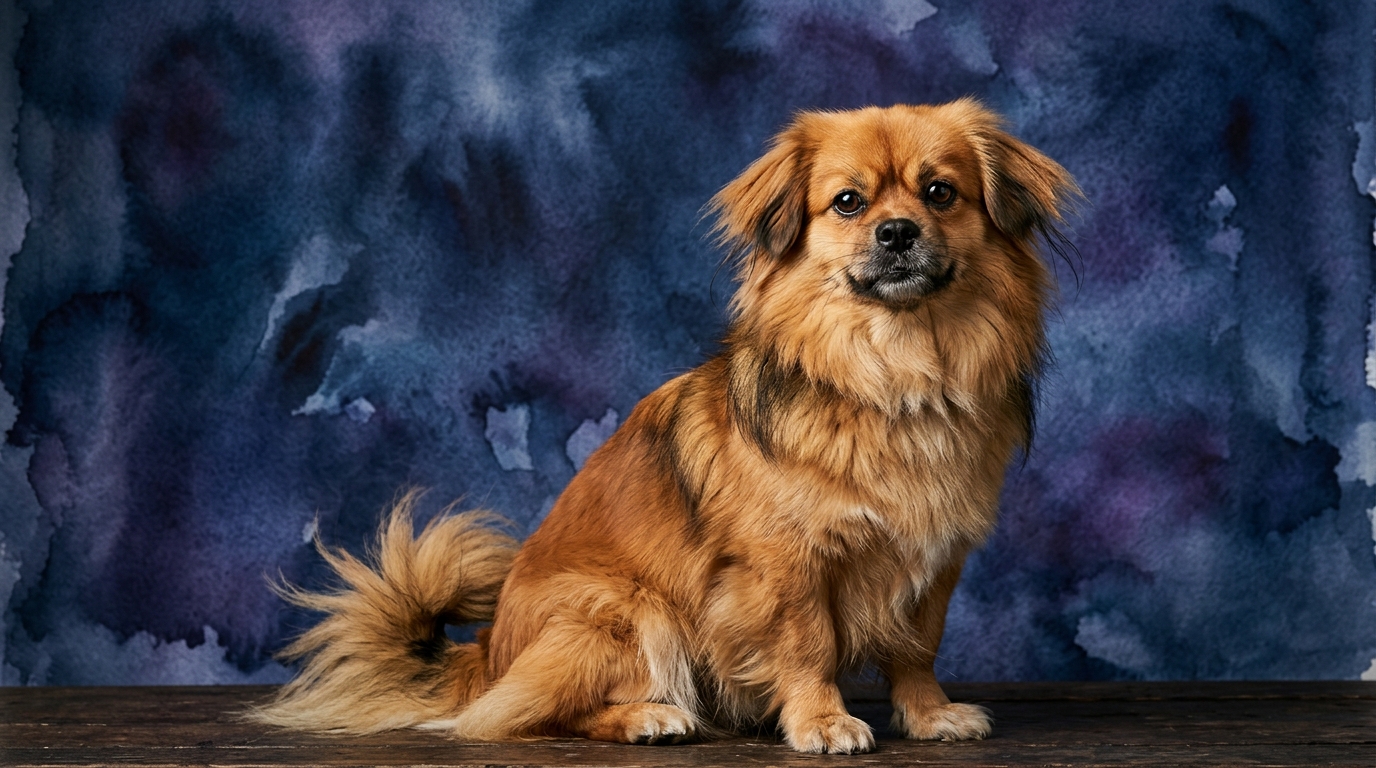
Side-by-Side Cognitive Profiles: Brittany vs. Tibetan Spaniel
The Brittany, a Sporting group dog with a Coren ranking of #19, presents a cognitive profile indicating a keen aptitude for learning and retention. Their Problem Solving is rated at a robust 4/5, suggesting a quick grasp of new challenges and an ability to devise effective solutions. Training Speed also sits at a 4/5, reflecting their eagerness and capacity to absorb commands efficiently. Social Intelligence is a balanced 3/5, meaning they understand human cues reasonably well without being overly dependent. Their Instinctive Drive, at 3/5, is present but manageable, often manifesting as a desire to explore or retrieve. A standout trait is their Memory, earning a perfect 5/5, indicating an exceptional ability to recall learned behaviors and past experiences.
In contrast, the Tibetan Spaniel, a Non-Sporting breed not listed in Coren's ranking, offers a different, yet equally engaging, cognitive makeup. Their Problem Solving is rated 3/5, suggesting they can navigate novel situations effectively, though perhaps with a more deliberate approach than the Brittany. Training Speed is also 3/5, indicating a steady learning pace that benefits from consistency. Social Intelligence matches the Brittany at 3/5, highlighting their capacity to form strong bonds and interpret human interactions. Their Instinctive Drive, also 3/5, typically manifests in their historical role as watchful companions, observing their environment keenly. The Tibetan Spaniel's Memory is rated 3/5, a solid capability for retaining information, though not with the same tenacity as the Brittany.
Where the Brittany Shows Cognitive Edge
The Brittany distinctly shines in several cognitive domains, particularly in areas related to practical application and retention. Their Problem Solving score of 4/5, compared to the Tibetan Spaniel's 3/5, signifies a more agile mind when confronted with novel puzzles or complex tasks. This means a Brittany is often quicker to strategize and adapt, whether it's figuring out how to open a gate or navigating a new agility course. This cognitive nimbleness makes them excellent candidates for advanced obedience, scent work, or intricate trick training where rapid learning and application are key.
Furthermore, the Brittany’s exceptional Memory, rated at 5/5 against the Tibetan Spaniel’s 3/5, is a significant advantage. This superior recall means they not only learn commands swiftly but also retain them over long periods and across varying contexts. Owners will find that once a Brittany has mastered a skill, it is deeply ingrained, requiring less refreshing. This robust memory extends beyond commands to include routines, locations, and even specific training cues, making them highly dependable partners in structured activities. Their 4/5 Training Speed complements this, allowing them to absorb multi-step instructions and complex sequences with greater ease and fewer repetitions than many other breeds. This combination of swift problem-solving, efficient learning, and enduring memory positions the Brittany as a highly capable and cooperative cognitive performer.
Tibetan Spaniel's Unique Cognitive Strengths
While the Brittany excels in working intelligence, the Tibetan Spaniel’s cognitive strengths lie in areas that foster independent thought and astute observation, often linked to their historical role as monastery watchdogs and companions. Though their Problem Solving and Memory scores are 3/5, this doesn't imply a lack of cognitive ability, but rather a different approach; they often display a thoughtful deliberateness. Their equal Social Intelligence score of 3/5 with the Brittany suggests a shared capacity for understanding human emotions and cues, but the Tibbie often pairs this with a unique, self-reliant interpretation. They are adept at reading their environment and the moods of their human family, often acting as sensitive barometers of the household atmosphere.
The Tibetan Spaniel’s Instinctive Drive, also 3/5, manifests distinctly. Unlike the Brittany’s drive for active pursuit, the Tibbie’s drive leans towards vigilance and awareness. They possess an innate ability to survey their surroundings from elevated positions, processing visual and auditory information to identify anything out of the ordinary. This keen observational intelligence, coupled with their independent nature, allows them to make nuanced judgments about their environment, often alerting their owners with a discerning bark rather than a boisterous reaction. Their cognitive strength is in their self-possession and their ability to be a discerning, observant companion who processes information with a quiet confidence, making them masters of subtle communication and environmental assessment.
Trainability: Brittany's Eagerness vs. Tibbie's Independence
When considering ease of training, the Brittany generally presents a more straightforward experience due to their higher scores in Training Speed (4/5), Problem Solving (4/5), and Memory (5/5). These metrics collectively indicate a dog that is eager to learn, quick to grasp new concepts, and excellent at retaining information. Their Sporting group background means they are often inherently cooperative and possess a strong desire to work alongside their human partners. Brittanys respond very well to positive reinforcement, quickly associating commands with rewards and generalizing learned behaviors to different environments. Owners typically find they can progress through training stages rapidly, tackling more complex skills and sequences in a shorter timeframe. Their robust memory ensures that once a behavior is learned, it is not easily forgotten, reducing the need for constant re-training.
The Tibetan Spaniel, with scores of 3/5 across Training Speed, Problem Solving, and Memory, is certainly trainable but may require a more patient and nuanced approach. Their independent spirit, a remnant of their watchdog heritage, means they might evaluate a command before complying, rather than offering immediate obedience. They are not less capable of learning, but their learning process can be more deliberate, often requiring more repetition and creative motivation to keep them engaged. While they form strong bonds, their motivation isn't always solely people-pleasing; they often need to understand the 'why' or find intrinsic value in the task. Owners might experience moments where a Tibetan Spaniel appears to selectively hear commands, a trait stemming from their self-reliant cognitive style rather than a lack of understanding. Consistent, positive reinforcement and making training sessions fun and varied are crucial for success with a Tibetan Spaniel.
Matching Canine Cognition to Lifestyle
The cognitive and inherent breed traits of the Brittany make them an ideal match for active owners who thrive on outdoor adventures and structured activities. Their 4/5 problem-solving and training speed, coupled with a 5/5 memory, mean they excel in dog sports like agility, flyball, or advanced obedience. Their sporting heritage demands significant physical exercise and mental engagement to prevent boredom and channel their natural drives. Owners who enjoy hiking, running, hunting, or participating in competitive dog events will find a Brittany to be an enthusiastic and capable partner. They need consistent stimulation, both physical and intellectual, to be well-adjusted and content. A relaxed owner might find it challenging to meet the Brittany's substantial needs for activity and cognitive engagement.
Conversely, the Tibetan Spaniel is perfectly suited for more relaxed owners who appreciate a companionable presence without the demands of an intensely active dog. Their moderate energy levels, combined with a 3/5 in all cognitive aspects, mean they are content with regular walks, indoor play, and ample cuddle time. Their cognitive strengths lie in observation and companionship rather than intense physical work. They are adaptable to apartment living, provided they receive daily mental stimulation through puzzle toys and short training sessions, alongside their physical outings. A Tibetan Spaniel thrives on close family bonds and enjoys being an integral, though often quiet, part of household life. Owners who prefer a dog that is self-sufficient, observant, and primarily a warm presence will find the Tibetan Spaniel to be an excellent fit.
The Verdict
For owners seeking a cooperative, trainable partner for dog sports, hunting, or complex skill learning, who can provide ample physical and mental engagement, the Brittany is an excellent choice.
For those desiring an observant, independent, and affectionate companion who thrives on close family bonds and moderate daily activity, the Tibetan Spaniel offers a delightful partnership.
🧠 Find Your Pet's IQ Score
Our Pet IQ Lab assessment covers 25+ tests across 5 cognitive dimensions — personalized to your breed.
Take the Full IQ Test →Frequently Asked Questions
Does a higher Coren ranking directly translate to a dog being 'smarter' in all aspects?
Coren's ranking primarily assesses 'working and obedience intelligence,' focusing on how quickly a dog learns and obeys commands. It doesn't fully encompass other cognitive dimensions like social intelligence, problem-solving in novel situations, or independent thought. Therefore, a dog unranked by Coren or with a lower rank might still possess remarkable cognitive strengths in areas not measured by his specific criteria.
How does a dog's 'instinctive drive' impact its behavior and training needs?
Instinctive drive refers to a dog's inherent, hardwired behaviors, such as a Brittany's drive to hunt and retrieve, or a Tibetan Spaniel's urge to survey and alert. A strong drive means the dog will naturally seek opportunities to perform these behaviors, which can be channeled positively through training and appropriate outlets (e.g., fetch games for a retriever, puzzle toys for an observer) or become problematic if unaddressed.
Can a Tibetan Spaniel be trained for advanced tricks or tasks despite its moderate scores?
Absolutely. While a Tibetan Spaniel's scores suggest they may learn at a steadier pace than a Brittany, they are perfectly capable of mastering advanced tricks and tasks with consistent, positive, and engaging training methods. Their independent nature might mean they require more creative motivation and patience, but their ability to learn is not diminished; it's simply a matter of finding what truly motivates them.