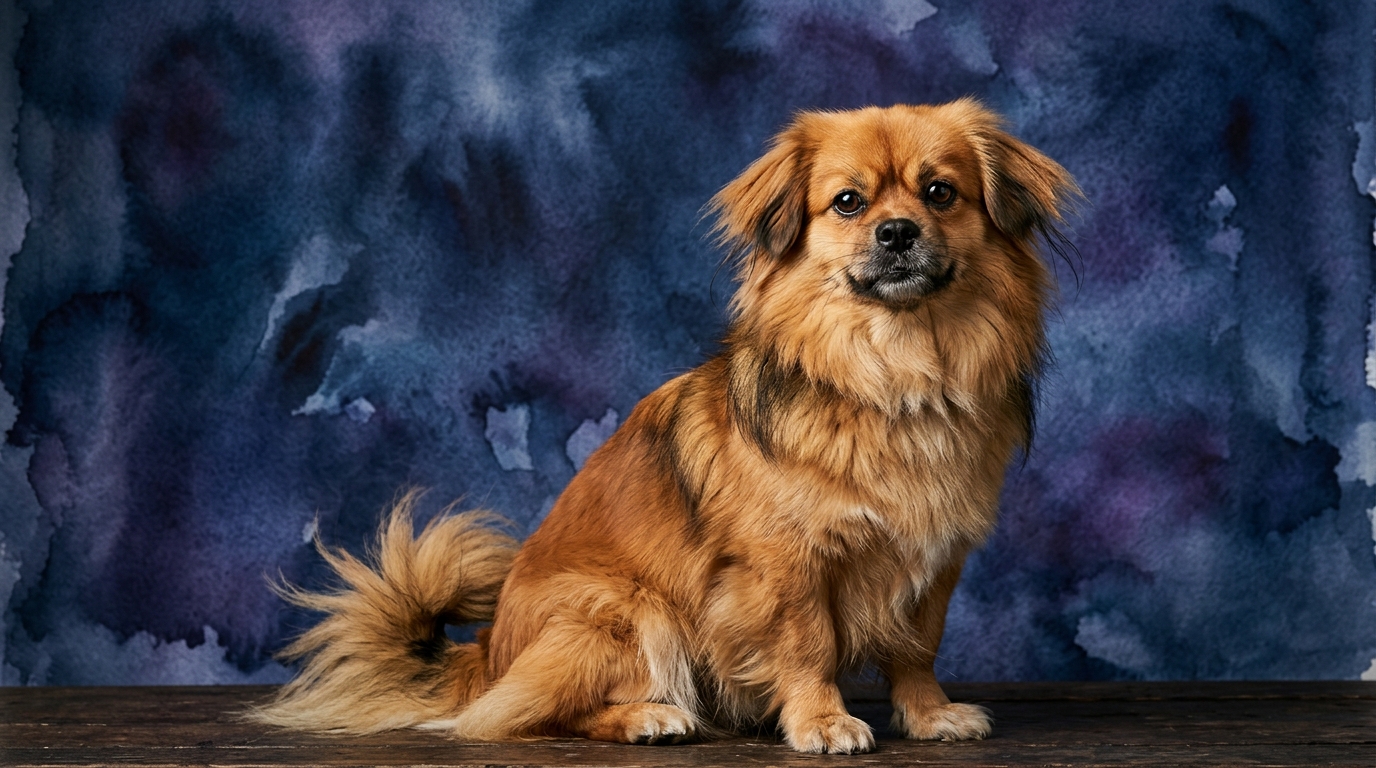
Tibetan Spaniel at a glance
| IQ Rank / Score | 15/25 |
|---|---|
| Trainability | ★★★☆☆ (3/5) |
| Social Intelligence | ★★★★☆ (4/5) |
| Lifespan | 12-16 years |
| Shedding | Low to moderate |
| Exercise Needs | Moderate (30-45 min/day) |
| Origin | Tibet |
The Primary Angle: Strategically Observant Companionship
The core of the Tibetan Spaniel's intelligence lies in their capacity for strategically observant companionship. Far from being simple lapdogs, they served as vigilant watchdogs for Tibetan monks, perching on high walls and windowsills to scan the horizon for approaching visitors, both welcome and unwelcome. This historical role has hardwired them with an acute awareness of their surroundings and a nuanced understanding of social dynamics. They don't just 'see' their environment; they 'read' it, assessing subtle changes and interpreting human cues with remarkable accuracy.
Their cognitive uniqueness stems from this blend: they are deeply devoted companions, yet they maintain an independent, discerning mind. Their intelligence isn't about rote obedience or intricate problem-solving for its own sake, but rather about effective communication, strategic information gathering, and making independent decisions that benefit their 'pack'—their human family. They possess a sophisticated emotional intelligence, often sensing their owner's mood and adjusting their behavior accordingly, acting as silent, empathetic guardians. This 'Strategically Observant Companionship' defines their cognitive prowess, blending loyalty with sharp analytical skills.
A Surprising Glimpse into Tibbie Cognition: The Prayer Dogs
Beyond their duties as vigilant watchdogs, a surprising historical aspect of Tibetan Spaniels hints at a deeper, almost spiritual integration into monastic life. These dogs, often referred to as 'little lions' (Seng-Kyis) and revered as sacred beings in Tibetan Buddhism, were believed to do more than just guard. Monks believed the presence of these 'prayer dogs' could bring good fortune and even assist in their spiritual practices. Legends suggest that Tibetan Spaniels would sit with the monks during prayers and, perhaps metaphorically or perhaps literally in their calm presence, were considered to 'help' turn prayer wheels, contributing to the spiritual energy of the monastery.
This unique historical role suggests a level of cognitive and emotional attunement far beyond that of a typical working dog. It implies that their intelligence was valued not just for practical tasks like guarding, but for their serene presence, their ability to integrate seamlessly into a meditative environment, and their perceived connection to the spiritual realm. This historical context underscores their profound social intelligence, adaptability to a specific, unique environment, and their capacity for quiet, contemplative companionship, challenging the conventional understanding of canine purpose.
Debunking the Myth: 'Tibetan Spaniels Are Stubborn and Difficult to Train'
The most pervasive myth surrounding the Tibetan Spaniel's intelligence is that they are 'stubborn' or 'difficult to train.' This often leads to frustration for owners expecting immediate, eager compliance like that of a retriever or herding dog. However, this perception fundamentally misunderstands the Tibbie's independent and discerning nature, mistaking their intelligent selectivity for outright defiance.
This myth primarily arises because Tibetan Spaniels are not inherently 'eager to please' in the way many other breeds are. They are thinkers, not robots. If a command or task doesn't make sense to them, or if they don't see a clear benefit (often a high-value treat or genuine praise from their trusted human), they may simply choose not to comply. Their independence means they weigh the options and make a choice. They learn quickly when motivated by positive reinforcement, but they will switch off if training becomes repetitive, harsh, or boring. The truth is, Tibetan Spaniels are highly intelligent and capable learners; they simply require engaging, positive training methods that respect their independent spirit and provide a compelling 'why' for their participation, rather than demanding unquestioning obedience. They are training partners, not subordinates.
Cosmic Pet IQ Lab: Tibetan Spaniel Intelligence Scores
At The Cosmic Pet's Pet IQ Lab, we evaluate canine intelligence across several key dimensions, providing a holistic view of a breed's cognitive strengths. For the Tibetan Spaniel, their unique history and temperament translate into a distinct IQ profile. These scores reflect their innate abilities and tendencies, offering insight into their potential.
Our 1-5 scale (1 being lowest, 5 being highest) provides a comparative benchmark. The Tibetan Spaniel excels in areas requiring astute observation and deep social connections, while their independent streak means their 'training speed' is often a matter of motivation and mutual understanding rather than pure ability. Understanding these scores helps tailor training and enrichment activities to best suit their unique cognitive makeup.
The Cosmic Pet IQ Lab Tests: Unlocking Tibetan Spaniel Cognition
To truly understand the Tibetan Spaniel's cognitive strengths, we've selected specific tests that highlight their unique intelligence, moving beyond generic obedience metrics. These tests are designed to reveal their strategic thinking, observational skills, and nuanced communication abilities.
Each test below is tailored to uncover specific facets of the Tibbie mind, providing practical insights for owners and enthusiasts. These are not about 'passing' but about observing how a Tibetan Spaniel approaches a novel situation, solves a challenge, or interacts with their human, reflecting their ancient heritage as observant and discerning companions.
Tibetan Spaniel vs. Similar Breeds
While the Tibetan Spaniel shares certain characteristics with other companion breeds from Asia, particularly those with watchdog roles, their unique cognitive profile sets them apart. Understanding these differences helps appreciate the distinct intelligence of the Tibbie.
Comparing them to breeds with similar geographical origins or appearances reveals their specific adaptations and the nuanced ways their intelligence manifests, highlighting their distinct blend of independence, vigilance, and affectionate companionship.
Frequently Asked Questions About Tibetan Spaniel Intelligence
Owners and prospective owners often have specific questions about the Tibetan Spaniel's intelligence and behavior. Here, we address some common inquiries to provide clarity and practical advice.
Understanding these aspects is crucial for fostering a harmonious relationship with your Tibbie and ensuring their cognitive and emotional needs are met effectively.
3 At-Home Tests to Measure Your Tibetan Spaniel's IQ
These tests are adapted from peer-reviewed ethology research. No equipment is needed beyond items you have at home. Run each test 5–10 times for reliable results.
The Myth: "Tibetan Spaniels are stubborn and difficult to train."
✅ Tibetan Spaniels are highly intelligent and quick learners, but they require positive, engaging, and varied training methods that respect their independent spirit; they respond best to rewards-based training and will excel when they feel like a valued partner, rather than simply being commanded.
Tibetan Spaniel vs. Similar Breeds
🧠 What's Your Dog's IQ Score?
Our full Pet IQ Lab assessment includes 12+ tests across 5 cognitive dimensions, calibrated for Tibetan Spaniels specifically.
Take the Full IQ Test →Frequently Asked Questions
How smart is a Tibetan Spaniel?
Our Pet IQ Lab framework scores cognition across five dimensions (max 25). The Tibetan Spaniel totals 15/25 — above-average for a domestic dog. The full article breaks down each dimension with at-home tests.
Are Tibetan Spaniels easy to train?
Tibetan Spaniels can learn most cues, but expect to repeat lessons and keep sessions short. They score 3/5 on Training Speed in our breed profile.
Are Tibetan Spaniels good with children and other pets?
Yes — their Social Intelligence rates 4/5 in our Pet IQ Lab framework. With early socialization and supervised play, most Tibetan Spaniels integrate well into families with respectful children and other pets.
Do Tibetan Spaniels need a lot of mental stimulation?
Tibetan Spaniels benefit from 10-15 minutes of focused enrichment a day: food puzzles, short training drills, or novel toys rotated weekly.
How much exercise does a Tibetan Spaniel need?
Tibetan Spaniels do well with 20-40 minutes of daily walks and play plus a few short training moments.
How good is a Tibetan Spaniel's memory?
Tibetan Spaniels score 2/5 on memory. They remember high-value associations well; less-used cues fade without refresher sessions.
What is the typical lifespan of a Tibetan Spaniel?
Tibetan Spaniels commonly live 12-16 years when kept at a healthy weight.
The Tibetan Spaniel's intelligence is a sophisticated tapestry woven from centuries of vigilant companionship and spiritual integration. Far from being merely stubborn, they are discerning, observant, and deeply attuned partners who thrive when their unique cognitive strengths are understood and nurtured.