
Side-by-Side IQ Profile
The Cosmic Pet Pet IQ Lab employs a comprehensive framework to assess canine intelligence, looking beyond mere obedience to evaluate problem-solving, training speed, social intelligence, instinctive drive, and memory. This detailed approach allows us to appreciate the nuanced cognitive strengths each breed brings, rather than assigning a singular, overarching 'intelligence' score.
The German Shepherd, a breed consistently ranked among the top working dogs, holds a prestigious Coren rank of #3. Their cognitive profile reflects centuries of selective breeding for demanding tasks. They exhibit a Problem Solving score of 5/5, indicating a profound capacity for abstract thought, strategic planning, and adapting to novel situations, often demonstrating foresight in their actions. Their Training Speed is also a perfect 5/5, meaning they grasp new commands and complex sequences with remarkable rapidity, often requiring only a handful of repetitions for mastery. Social Intelligence stands at 5/5, showcasing an exceptional ability to interpret human cues, form deep communicative bonds, and understand social hierarchies. An Instinctive Drive of 5/5 highlights their powerful inherent motivation for tasks such as herding, guarding, and protection, coupled with an unwavering focus. Finally, their Memory is a strong 5/5, allowing them to retain vast amounts of information, from complex command chains to intricate routines and spatial layouts, over long periods.
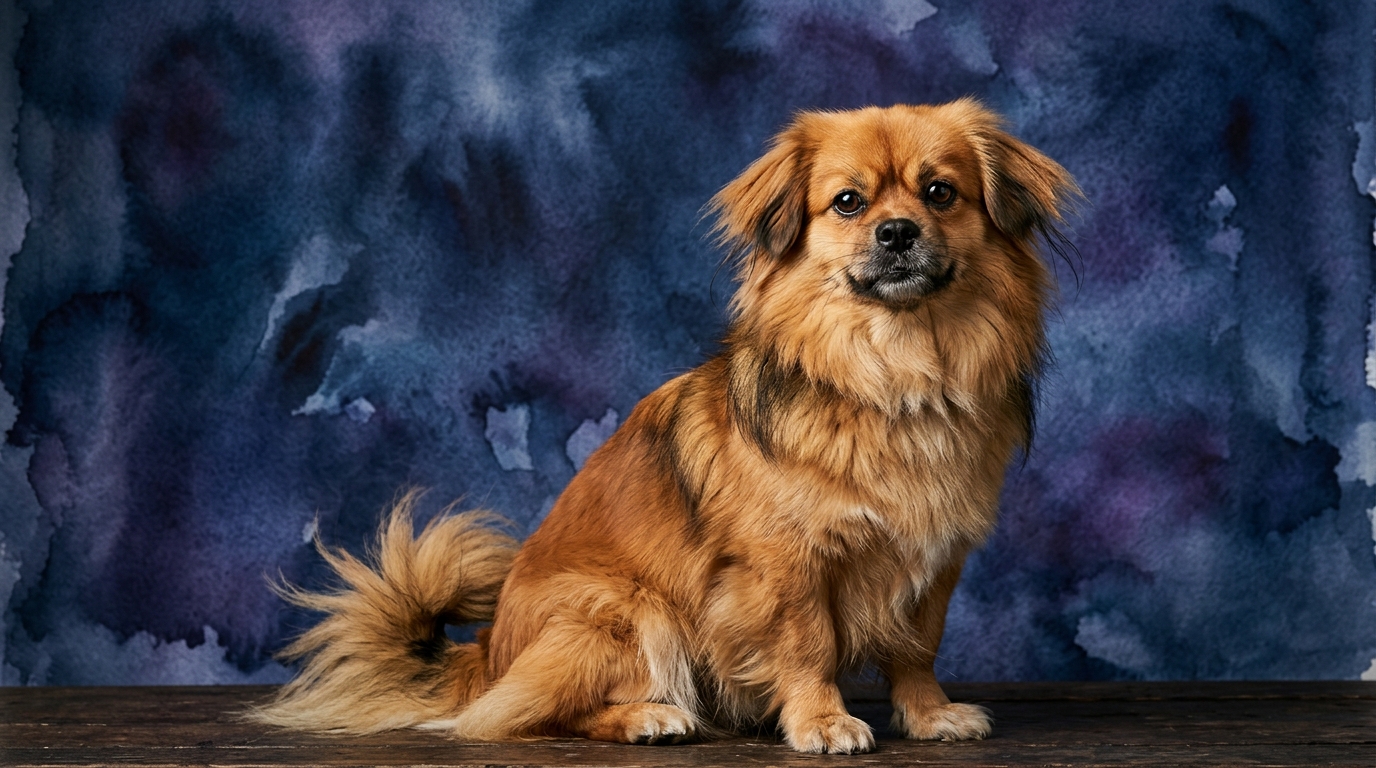
In contrast, the Tibetan Spaniel, a delightful companion breed falling into the Non-Sporting group, does not feature on Coren’s ranking, which predominantly assesses working obedience. Their cognitive scores, while not reflecting the same intensity as a working breed, paint a picture of a clever, discerning companion. They score 3/5 in Problem Solving, indicating an aptitude for practical, everyday challenges and often finding creative solutions for their own comfort or amusement, though less inclined towards abstract, human-directed tasks. Their Training Speed is 3/5, suggesting they learn at a moderate pace, requiring patience and consistent, positive reinforcement, and may choose to cooperate on their own terms rather than out of sheer eagerness to please. Social Intelligence is 3/5, meaning they are observant of family dynamics and human moods, forming strong, often selective bonds, but expressing affection and engagement with a degree of independence. An Instinctive Drive of 3/5 points to a moderate inherent motivation, primarily centered around companionship, vigilance, and self-preservation, rather than a strong desire for structured work. Their Memory, at 3/5, is sufficient for retaining important routines, recognizing familiar faces, and remembering key experiences, though perhaps not the extensive, detailed recall of a top-tier working dog.
Where the German Shepherd Excels Cognitively
The German Shepherd’s cognitive strengths are profoundly evident in their capacity for complex, multi-stage tasks. Their 5/5 Problem Solving allows them to not just follow instructions but to understand the underlying purpose, enabling them to adapt and innovate when faced with unexpected variables during a job. This is crucial in roles like search and rescue or police work, where rigid adherence to a pre-set plan is often insufficient. Their exceptional Social Intelligence (5/5) means they are adept at reading nuanced human body language and vocal tones, allowing for highly synchronized teamwork and rapid, non-verbal communication, which is invaluable in high-stakes situations. This deep understanding of human intent fosters an extraordinary partnership.
Furthermore, their perfect 5/5 in Training Speed combined with their 5/5 Instinctive Drive makes them unparalleled learners. They don't just memorize commands; they internalize them as part of their working identity, eager to engage in structured learning and demonstration of skills. This drive translates into an unwavering focus and stamina for mental exertion, allowing for prolonged training sessions and the acquisition of vast repertoires of behaviors. Their 5/5 Memory ensures that once a skill or piece of information is learned, it is retained with remarkable fidelity, contributing to their reliability and consistency in performance across various environments and over extended periods. Their ability to generalize learned behaviors to new contexts further highlights their superior cognitive flexibility.
Where the Tibetan Spaniel Excels Cognitively
While the Tibetan Spaniel's cognitive scores may not align with the benchmarks of a working breed, their strengths are perfectly tailored to their role as discerning companions and vigilant household members. Their 3/5 Problem Solving, though lower, manifests as a keen ability to navigate their domestic environment with purpose, often finding the warmest sunbeam, the most comfortable spot on the sofa, or creatively alerting their owners to perceived anomalies in their surroundings. This is a practical, self-serving problem-solving that prioritizes their own comfort and security, reflecting an independent wit rather than a desire for human-directed tasks.
Their 3/5 Social Intelligence, rather than signifying a deficit, suggests a selective and observant nature. Tibetan Spaniels are masters of their immediate social sphere, adept at reading the moods and routines of their family members. They form deep, often exclusive bonds, expressing affection on their own terms, which can lead to a uniquely profound connection with their chosen humans. This observational skill contributes to their historical role as 'little lions' on monastery walls, acting as keen sentinels who understand when to raise an alarm without needing specific training for it. Their memory, at 3/5, is robust for the things that matter most to them: the faces of their loved ones, the schedule of meals, and the locations of their favorite resting spots, contributing to their consistent and comforting presence within the home.
Training Dynamics: German Shepherd vs. Tibetan Spaniel
When it comes to training, the differences between these two breeds are substantial and directly correlate with their IQ profiles. The German Shepherd, with its 5/5 Training Speed, 5/5 Instinctive Drive, and 5/5 Social Intelligence, is an extraordinarily responsive and rewarding student. They thrive on clear structure, consistent expectations, and purposeful work. Their eagerness to please and inherent drive to perform make them absorb new commands quickly, often with just a few repetitions. They excel in advanced obedience, agility, protection sports, and service work because they possess the cognitive framework to understand complex sequences and the motivation to execute them flawlessly. Training a German Shepherd is often a partnership, where the dog actively seeks to understand and comply, making them a joy for experienced trainers.
The Tibetan Spaniel, on the other hand, presents a different training dynamic. Their 3/5 Training Speed means they will require more patience and repetition. Their 3/5 Instinctive Drive is not geared towards structured obedience in the same way, and their 3/5 Social Intelligence means they might be less inherently motivated by the desire to please and more by what benefits them personally. They are clever and capable of learning, but they often have an independent streak, sometimes described as 'cat-like' in their willingness to cooperate only when it aligns with their interests or is sufficiently rewarding. Training a Tibetan Spaniel requires positive reinforcement, short engaging sessions, and a deep understanding of their unique motivations. They are not prone to blind obedience; instead, they learn best when training is framed as a fun interaction and when they see a clear benefit, such as a favorite treat or praise, for their efforts. Consistency is key, as is making learning an enjoyable game to counter their independent nature.
Matching Breeds to Lifestyles: Active vs. Relaxed Owners
The cognitive and temperamental differences between German Shepherds and Tibetan Spaniels directly influence the type of owner and lifestyle they thrive in. The German Shepherd is an ideal companion for active owners who are prepared to provide significant mental and physical engagement daily. Their 5/5 Instinctive Drive and high cognitive scores mean they require a 'job' to feel fulfilled, whether that's advanced obedience training, dog sports like agility or protection work, regular long runs, or simply rigorous mental challenges. Owners who enjoy an active outdoor lifestyle, are committed to consistent training, and want a canine partner for demanding activities will find the German Shepherd an unparalleled match. They need structured activity and purpose to prevent boredom and potential behavioral issues.
The Tibetan Spaniel, with its moderate scores across the board, is perfectly suited for more relaxed owners seeking a charming and observant companion. While they do enjoy daily walks and playtime, their exercise needs are not as intense as a German Shepherd's. They are content to be close to their family, observing the household, and engaging in less strenuous activities. Owners who appreciate an independent spirit, a dog that is affectionate but not overly demanding of constant physical activity, and who value a watchful presence will find a wonderful match in the Tibetan Spaniel. They still benefit from mental enrichment through puzzle toys and short training sessions, but their primary fulfillment comes from companionship and being an integral, cherished part of the family unit, often from a comfortable perch.
The Verdict
Choose a German Shepherd if you seek a highly trainable, purpose-driven canine partner capable of complex tasks and demanding activities, and you are prepared to meet their significant needs for mental and physical engagement.
Opt for a Tibetan Spaniel if you desire an independent, observant, and charming companion who thrives on close family bonds and a more relaxed, yet mentally stimulating, domestic pace.
🧠 Find Your Pet's IQ Score
Our Pet IQ Lab assessment covers 25+ tests across 5 cognitive dimensions — personalized to your breed.
Take the Full IQ Test →Frequently Asked Questions
Are German Shepherds good family dogs despite their working nature?
Yes, German Shepherds can be excellent family dogs. Their 5/5 social intelligence and strong bond-forming capacity mean they are loyal and protective of their family, often forming particularly strong connections with children. Proper socialization and consistent training from a young age are crucial to channel their instinctive drives positively within a family setting.
Do Tibetan Spaniels bark a lot?
Tibetan Spaniels were historically bred as vigilant watchdogs for monasteries, and their 3/5 instinctive drive includes a strong alerting instinct. They tend to bark at perceived intruders, unusual sounds, or anything they deem noteworthy in their environment. While not excessive, they are certainly vocal about their observations, making them good alert systems.
What kind of mental stimulation do Tibetan Spaniels need?
Despite their moderate activity levels, Tibetan Spaniels benefit greatly from mental enrichment. This can include puzzle toys that dispense treats, short and fun training sessions focused on basic obedience or tricks, engaging in interactive play, and providing opportunities for them to observe their surroundings from a high vantage point. Their problem-solving (3/5) is well-suited to these types of challenges.