
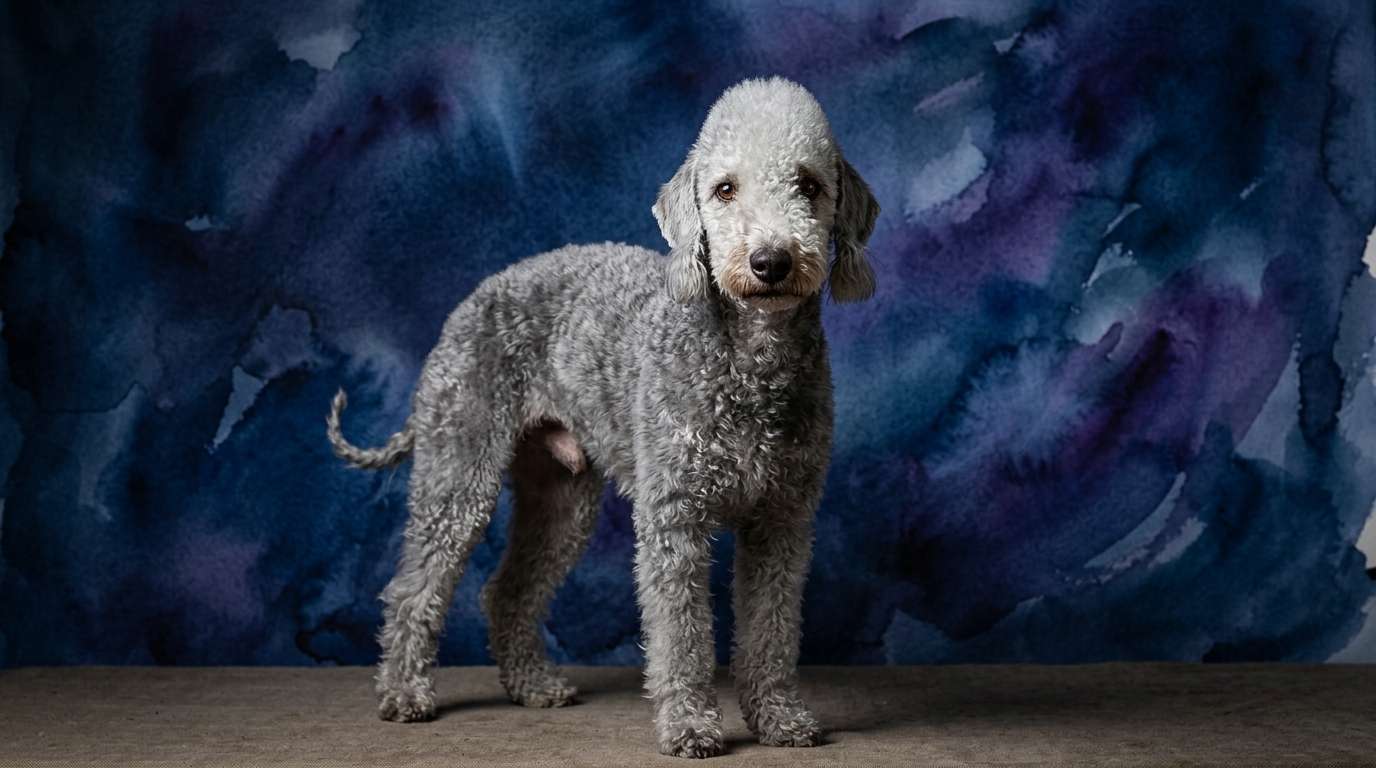
Side-by-Side IQ Profile: Deconstructing the 3/5 Score
Both the Bull Terrier and Bedlington Terrier register a consistent 3/5 across The Cosmic Pet Pet IQ Lab's five cognitive dimensions, suggesting a comparable baseline for their mental aptitudes. However, the manifestation of these scores differs significantly between the two breeds, shaped by their distinct histories and temperaments. For the Bull Terrier, a 3/5 in Problem Solving indicates an ability to tackle puzzles and new situations with a robust, sometimes single-minded approach; they can figure things out, often through persistent trial and error, particularly when a clear reward or goal is present. Their Training Speed at 3/5 means they are capable learners, quickly grasping commands when motivated, though their independent streak often requires consistent, engaging methods to prevent boredom or stubbornness. Social Intelligence at 3/5 highlights their capacity to form deep bonds and read their immediate family's emotional cues, though they can be discerning and less overtly social with strangers. An Instinctive Drive of 3/5 reflects their powerful prey drive and robust protective instincts, demanding outlets for their energy and focus. Finally, their Memory at 3/5 ensures they retain learned behaviors, routines, and experiences effectively, both positive and negative.
The Bedlington Terrier, also scoring 3/5 across the board, expresses these capabilities through a different lens. Their Problem Solving at 3/5 manifests as a keen, often subtle resourcefulness, particularly in practical scenarios like navigating obstacles or outsmarting small prey; they possess a quiet cleverness rather than a forceful one. A 3/5 in Training Speed means they learn commands efficiently, but their sensitive nature necessitates gentle, positive reinforcement, as harshness can lead to withdrawal or stubborn resistance. Their Social Intelligence at 3/5 makes them incredibly attuned to their family's moods, often displaying a deep, almost empathetic connection, yet they can be reserved and cautious around unfamiliar people or situations. The Instinctive Drive at 3/5 is a potent force within the Bedlington, showcasing their strong terrier instincts for chasing, digging, and flushing out vermin, requiring appropriate mental and physical engagement. Their Memory at 3/5 is excellent for recalling specific tasks, routines, and the emotional nuances of their interactions, making them long-term companions who remember their experiences vividly.
Where the Bull Terrier Wins Cognitively
While sharing identical IQ scores, the Bull Terrier often demonstrates a cognitive edge in contexts demanding robust, sustained focus and a certain degree of resilience to repetition. Their Coren ranking at #66, unlike the Bedlington's unranked status, hints at a more conventional trainability in structured obedience settings. This suggests Bull Terriers are generally better at generalizing learned commands across different environments once they grasp them, and they possess a greater capacity for enduring repetitive training sessions necessary for competitive obedience or advanced trick learning. Their problem-solving, though rated 3/5, tends to be more direct and less prone to the sensitive hesitations a Bedlington might exhibit. This makes them particularly adept at tasks requiring physical manipulation or overcoming clear obstacles, where their tenacity can be a significant asset. They can also excel in activities that channel their instinctive drive into structured 'work,' such as scent detection or agility courses where power and determination are valued.
Where the Bedlington Terrier Wins Cognitively
The Bedlington Terrier's cognitive strengths shine in areas requiring nuanced sensitivity, quick adaptation to environmental changes, and independent, self-directed problem-solving, particularly in natural settings. Their 3/5 in Problem Solving, though numerically identical to the Bull Terrier, manifests as a more agile, less forceful approach; they are adept at finding creative, often subtle solutions to perceived challenges, such as navigating complex terrain or outwitting small prey. Their Social Intelligence, also 3/5, allows for an almost uncanny ability to detect and respond to the slightest shifts in human emotion, making them exceptional emotional support companions who anticipate needs rather than merely reacting. This breed’s instincts, while strong, are often expressed with a quiet intensity, making them superb at tasks requiring stealth and precision, such as tracking or subtle scent work. Their memory is particularly strong for specific locations and sensory details, enabling them to remember hunting grounds or favored spots with remarkable accuracy, a testament to their heritage as keen ratters and hunters.
Which is Easier to Train and Why
Determining which breed is 'easier' to train is less about raw intellectual capacity and more about training methodology and owner personality. Both breeds have a Training Speed of 3/5, indicating they are capable learners. However, the Bull Terrier, with its sturdy disposition and eagerness to engage in vigorous activities, often responds well to clear, consistent, and firm-but-fair training that channels its strong instinctive drive and desire for interaction. They can be stubborn, requiring an owner who can be patient and persistent without resorting to harshness, which can backfire. Their Coren ranking suggests they might be more amenable to traditional obedience structures once they understand the 'why' behind a command, though they still require mental stimulation to prevent boredom-induced mischief.
The Bedlington Terrier, on the other hand, possesses a delicate sensitivity that makes them less tolerant of strong corrections or overly boisterous training environments. Their 3/5 Training Speed is best harnessed through positive reinforcement, reward-based methods, and a calm, encouraging approach. They are highly intelligent but can be easily discouraged or become resistant if they feel pressured or misunderstood. Their independent problem-solving and strong prey drive mean that recall can be a lifelong training project, and their social intelligence, while deep with family, can make them reserved with new people or dogs, requiring careful socialization. An owner who understands and respects the Bedlington's unique blend of independence and sensitivity will find them responsive and eager to please within their own terms.
Which Suits Active Owners vs. Relaxed Owners
The choice between a Bull Terrier and a Bedlington Terrier hinges significantly on an owner's lifestyle and energy levels, despite both sharing similar instinctive drive scores. The Bull Terrier, with its robust build and powerful presence, thrives with active owners who can provide consistent, vigorous physical exercise and mental engagement. Their 3/5 Instinctive Drive translates into a need for structured play, long walks, or activities like hiking, jogging, or dog sports. They are not content to be couch potatoes and can become destructive or agitated if their substantial energy and cognitive needs are unmet. Owners who enjoy active outdoor pursuits and can dedicate time to training and interactive play will find a loyal and energetic companion in the Bull Terrier.
The Bedlington Terrier, while possessing an equally potent 3/5 Instinctive Drive rooted in their hunting heritage, expresses this energy differently. They are agile and quick, requiring regular exercise that includes opportunities to run and explore, but often in bursts rather than sustained, heavy exertion. Their love for chasing and digging means a secure yard is paramount, and they benefit from activities like earthdog trials or agility that tap into their natural talents. While they enjoy comfort and cuddles, a 'relaxed' owner who neglects their mental and physical stimulation will quickly find a Bedlington creating their own entertainment. They suit owners who appreciate a lively, intelligent companion for daily walks, interactive games, and occasional bursts of energetic play, rather than constant, high-impact activities.
The Verdict
Choose the Bull Terrier if you seek a robust, tenacious companion eager for structured activities and can provide consistent, firm-but-fair guidance for their strong-willed intelligence.
Opt for the Bedlington Terrier if you value a sensitive, agile partner who thrives on gentle, positive training and appreciates an owner attuned to their subtle emotional and intellectual needs.
🧠 Find Your Pet's IQ Score
Our Pet IQ Lab assessment covers 25+ tests across 5 cognitive dimensions — personalized to your breed.
Take the Full IQ Test →Frequently Asked Questions
Do Bull Terriers and Bedlington Terriers get along with other pets?
Both breeds possess a 3/5 instinctive drive, including a notable prey drive. Bull Terriers can coexist with other pets, especially if raised together, but their assertive nature means careful introductions are essential. Bedlington Terriers also have a strong prey drive, making supervision around small, non-canine pets crucial, though they can be quite sociable with other dogs if properly socialized from a young age.
Are Bull Terriers or Bedlington Terriers better for first-time dog owners?
Neither breed is typically recommended for first-time dog owners without a strong commitment to learning about their specific needs. Both require consistent training, early socialization, and an understanding of terrier tenacity. The Bull Terrier's robust nature and potential stubbornness, combined with the Bedlington's sensitivity and independence, demand an owner prepared to invest time and effort into their unique temperaments.
How do their 3/5 social intelligence scores impact their interactions with children?
Both breeds, with their 3/5 social intelligence, can be excellent family dogs, but their interactions with children require supervision. Bull Terriers are typically tolerant and playful but need to be taught appropriate play manners due to their strength. Bedlington Terriers are deeply affectionate with their family but can be sensitive and might prefer older, more respectful children who understand their need for personal space and gentle handling.