
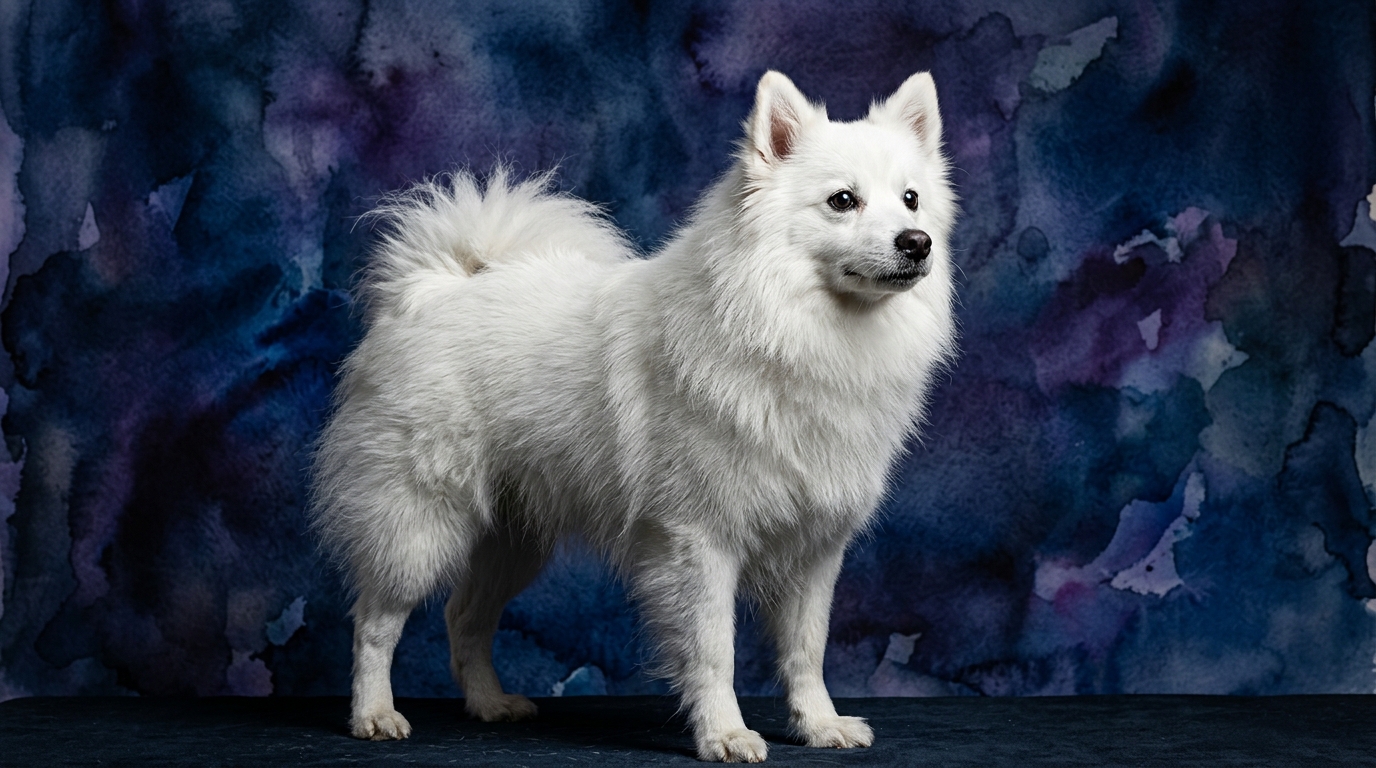
Side-by-Side Cognitive Profiles
The Cosmic Pet Pet IQ Lab employs a five-dimensional framework to assess canine cognition, offering a granular view beyond traditional notions of 'smartness.' This framework helps us understand how breeds like the English Bulldog and the American Eskimo Dog approach the world, learn, and interact.
For the English Bulldog, our analysis shows a Problem Solving score of 2/5, indicating a preference for established routines and a tendency to rely on human guidance when faced with novel situations. Their Training Speed also stands at 2/5, suggesting that new commands and behaviors require consistent, patient repetition to solidify. Where they truly shine is in Social Intelligence, scoring an impressive 4/5, reflecting a deep attunement to human emotions and social dynamics. Instinctive Drive is moderate at 3/5, often manifesting as a desire for comfort and companionship, while Memory is rated 2/5, meaning complex sequences or infrequently practiced commands may fade without regular refreshers. The English Bulldog's Coren rank is #77, placing it within a specific range of working and obedience intelligence.
In contrast, the American Eskimo Dog presents a different cognitive landscape. Their Problem Solving ability is rated 3/5, showing a moderate capacity for independent thought and initiative when tackling new challenges or figuring out puzzles. Training Speed is also 3/5, indicating they generally grasp new commands at a reasonable pace, making them responsive to structured learning. Their Social Intelligence is 3/5, meaning they understand human cues and form strong bonds, though perhaps with a touch more independence than the Bulldog. Instinctive Drive matches at 3/5, often channeled into vigilance or a desire for engagement, consistent with their Spitz heritage. Memory also scores 3/5, suggesting a good retention of learned behaviors and commands. Notably, the American Eskimo Dog is not Coren-ranked, highlighting that its cognitive strengths may not align with the specific metrics used in that ranking system, but are clearly defined by our broader IQ dimensions.
Where the English Bulldog Excels Cognitively
The English Bulldog's primary cognitive strength lies in its remarkable Social Intelligence, scoring 4/5, which is a full point higher than the American Eskimo Dog. This dimension reflects their profound ability to connect with humans on an emotional level, read subtle cues, and integrate seamlessly into family life. They possess an innate capacity for empathy, often appearing to understand and respond to the emotional states of their human companions.
This elevated social acumen means English Bulldogs are masters of companionship. They excel at being a comforting presence, often seeking proximity and offering quiet support. Their cognitive processing is geared towards observing and responding to social dynamics, making them exceptional at forming deep, unwavering bonds and becoming a truly integrated member of the household, anticipating needs through observation rather than complex task execution.
Where the American Eskimo Dog Holds the Cognitive Edge
The American Eskimo Dog demonstrates a clear cognitive advantage in several key areas: Problem Solving (3/5 vs. 2/5), Training Speed (3/5 vs. 2/5), and Memory (3/5 vs. 2/5). These scores collectively point to a more agile and adaptable mind, particularly when it comes to learning new behaviors and navigating novel situations.
Their higher Problem Solving score means Eskies are more inclined to independently assess and act upon new challenges, whether it's figuring out a puzzle toy or navigating a new environment. Coupled with their faster Training Speed, they tend to pick up commands and routines more readily, reducing the amount of repetition required. The stronger Memory further reinforces this, ensuring that learned behaviors are retained more effectively over time, making them a more responsive and versatile partner in structured learning environments.
Training: Patience vs. Responsiveness
When it comes to training, the cognitive profiles of these two breeds dictate vastly different experiences. The American Eskimo Dog, with its 3/5 scores in Problem Solving, Training Speed, and Memory, is generally considered more straightforward to train for obedience and tricks. They are quicker to grasp new concepts, more likely to independently figure out what's being asked of them, and better at retaining that information. This responsiveness makes positive reinforcement highly effective, as they are eager to engage and learn, often enjoying the mental stimulation that training provides.
Conversely, training an English Bulldog requires a distinct approach due to their 2/5 scores in Problem Solving, Training Speed, and Memory. They are not as quick to process new commands or generalize learned behaviors to different contexts. What might be perceived as 'stubbornness' is often a reflection of their slower cognitive processing and a preference for comfort and routine over novelty. Training sessions must be short, highly engaging, and consistent, utilizing high-value rewards. While their high Social Intelligence means they desire to please their family, the pathway to achieving new behaviors is longer and demands exceptional patience and creativity from the trainer, focusing on clear, simple instructions and ample repetition.
Matching Breeds to Lifestyles: Active vs. Relaxed Owners
The American Eskimo Dog's cognitive makeup aligns well with active owners who enjoy engaging their canine companions in varied mental and physical pursuits. Their higher scores in problem-solving and training speed mean they thrive on activities that challenge their intellect, such as agility, advanced obedience, trick training, or engaging puzzle toys. Owners who enjoy teaching new things and providing consistent mental stimulation will find the Eskie to be a responsive and enthusiastic participant, benefiting from a lifestyle that offers regular opportunities for learning and exploration.
The English Bulldog, on the other hand, is an ideal match for more relaxed owners who prioritize companionship and comfort over intense mental or physical exertion. Their exceptional social intelligence makes them content with simply being near their family, observing the household's activities, and offering a comforting presence. Owners who appreciate a calm, empathetic companion that integrates seamlessly into a quiet home environment will find the Bulldog's cognitive profile perfectly suited to their lifestyle. While they still benefit from gentle mental engagement, their happiness stems more from emotional connection and predictable routines than from constant novelty or complex tasks.
The Verdict: Choosing Your Canine Companion
The Verdict
Choose an English Bulldog if you prioritize a deeply empathetic, low-maintenance companion who excels at reading your moods and provides unwavering comfort and social connection.
Opt for an American Eskimo Dog if you seek a more mentally agile partner eager to learn, solve puzzles, and engage in varied activities, offering a responsive and adaptable bond.
🧠 Find Your Pet's IQ Score
Our Pet IQ Lab assessment covers 25+ tests across 5 cognitive dimensions — personalized to your breed.
Take the Full IQ Test →Frequently Asked Questions
Does the English Bulldog's lower Coren rank mean it's not capable of learning?
The Coren rank reflects specific types of working and obedience intelligence, which the Bulldog scores lower in for training speed and problem-solving. However, their high social intelligence means they are very capable of learning social cues and adapting to family routines, just at a different pace and with different motivations than breeds excelling in those specific Coren metrics.
Are American Eskimo Dogs better for first-time dog owners due to their higher IQ scores?
Their higher scores in problem-solving, training speed, and memory can make them more straightforward to train for obedience, which can be beneficial for first-time owners. However, their moderate instinctive drive and need for mental engagement mean a new owner should be prepared for consistent training and enrichment to prevent boredom-related behaviors, as an under-stimulated Eskie might develop unwanted habits.
How does 'instinctive drive' differ between these two breeds, given they both score 3/5?
While both score 3/5 in instinctive drive, its manifestation can differ. For the English Bulldog, this might lean towards a strong desire for comfort, routine, or a protective instinct within their immediate home environment. For the American Eskimo Dog, consistent with their Spitz heritage, it could translate into a heightened sense of vigilance, a tendency towards vocalization, or a desire to 'work' in engaging activities.