
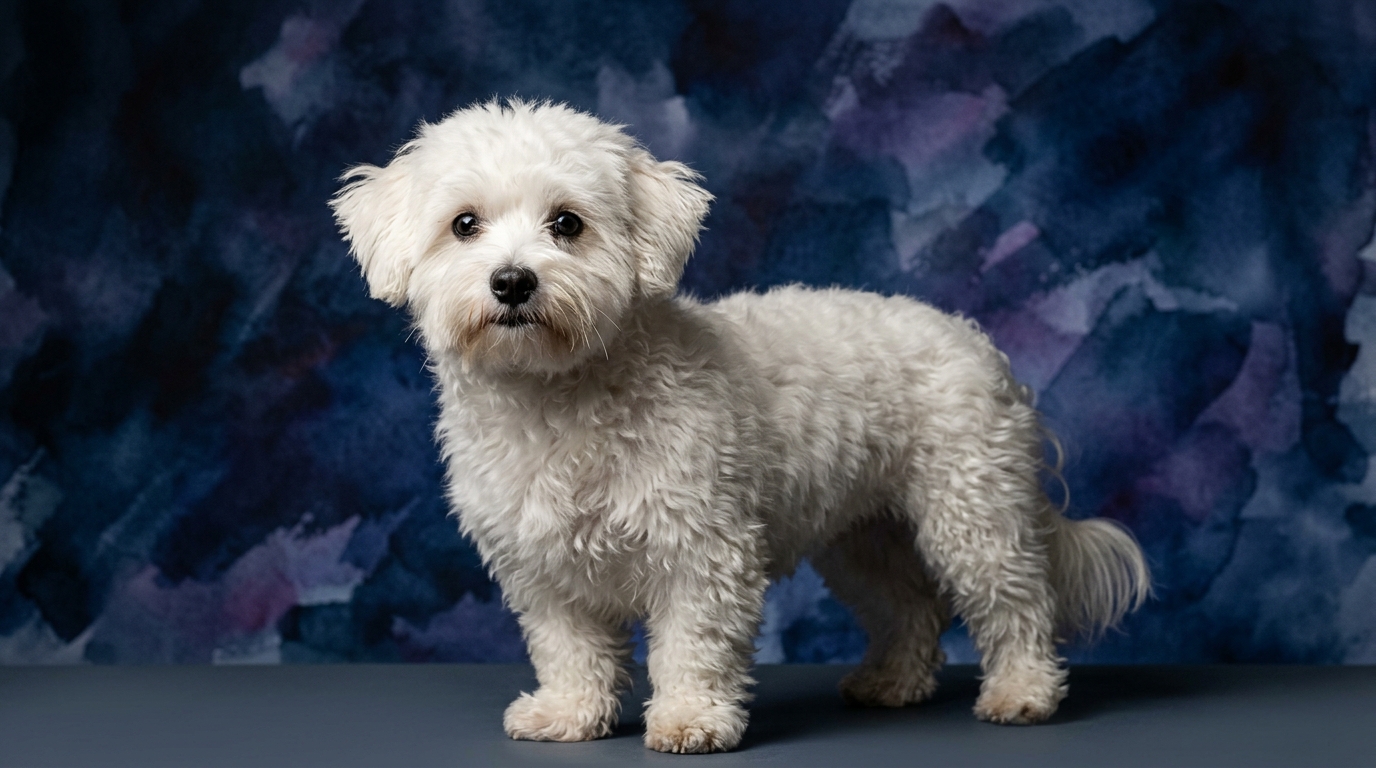
Side-by-Side IQ Profile: Bulldog vs. Coton de Tuléar
The Cosmic Pet Pet IQ Lab employs a multi-dimensional approach to understanding canine cognition, moving beyond simplistic notions of 'smartness' to explore distinct mental strengths. For the English Bulldog, ranked #77 by Coren for obedience and working intelligence, their profile reveals a unique set of aptitudes: a Problem Solving score of 2/5 suggests they aren't quick to devise novel solutions independently, preferring established routines. Their Training Speed, also 2/5, indicates that learning new commands requires significant repetition and patience. However, the Bulldog truly shines in Social Intelligence with a remarkable 4/5, demonstrating a profound capacity to understand and respond to human emotions and social cues. Their Instinctive Drive is moderate at 3/5, often channeled into companionship rather than complex tasks, and their Memory at 2/5 means they may require frequent refreshers for learned behaviors.
In contrast, the Coton de Tuléar, while not yet Coren-ranked, presents a more balanced and generally higher cognitive profile across several dimensions. Their Problem Solving is rated 3/5, signifying a moderate ability to navigate new situations and figure things out. Similarly, their Training Speed stands at 3/5, suggesting they grasp new commands at an average pace. The Coton’s Social Intelligence is also 3/5, indicating a good connection with their human companions, though perhaps less acutely empathetic than the Bulldog. Their Instinctive Drive is 3/5, often manifesting in playful curiosity, and their Memory at 3/5 points to a solid retention of experiences and training.
Where the English Bulldog Wins Cognitively
When examining the cognitive strengths of these two breeds, the English Bulldog’s undeniable triumph lies in its exceptional Social Intelligence, scoring a robust 4 out of 5. This isn't about performing complex tricks or solving intricate puzzles; rather, it’s about a deep, intuitive understanding of the human emotional landscape. Bulldogs possess a remarkable ability to read subtle shifts in their owner's mood, offering comfort or companionship precisely when needed. They form incredibly strong emotional bonds, often appearing to anticipate their human's feelings or intentions without verbal cues. This high level of emotional attunement makes them profoundly empathetic companions, skilled at providing a calming, reassuring presence. While their problem-solving might not be their forte, their capacity for social connection and emotional resonance is a specific cognitive advantage that enriches the human-animal bond in a distinct and powerful way, fostering a sense of mutual understanding that goes beyond mere obedience.
Where the Coton de Tuléar Wins Cognitively
The Coton de Tuléar demonstrates a clear cognitive advantage in areas related to learning, adaptability, and independent thought. With a Problem Solving score of 3/5, they are generally more adept at figuring out novel situations, navigating obstacles, or even working out how to access a coveted toy. This moderate problem-solving capacity translates into a more inquisitive and adaptable nature, allowing them to adjust more readily to new environments or routines. Furthermore, their Training Speed of 3/5, coupled with a Memory score of 3/5, means they typically grasp new commands and retain learned behaviors more efficiently than the Bulldog. This combination of cognitive traits makes the Coton a more responsive and versatile learner, capable of picking up a wider repertoire of tricks or participating in various structured activities with greater ease. They tend to be quicker studies, requiring fewer repetitions to solidify a new skill, which can be a significant benefit for owners interested in engaging in consistent training or mental enrichment exercises.
Which Is Easier to Train and Why
Based on their respective IQ profiles, the Coton de Tuléar is generally the easier breed to train, and this difference stems from clear behavioral predispositions. The Coton's higher Training Speed (3/5), Problem Solving (3/5), and Memory (3/5) mean they are quicker to understand what is being asked of them, more adept at figuring out how to perform the desired action, and better at retaining that information over time. This cognitive synergy makes positive reinforcement highly effective, as they quickly associate actions with rewards and remember the sequence. In contrast, the English Bulldog's lower scores in Training Speed (2/5), Problem Solving (2/5), and Memory (2/5) mean that training requires an exceptional degree of patience and consistency. Bulldogs are not inherently disobedient, but their cognitive processing for complex commands takes longer. They may need many more repetitions to internalize a new behavior and might not generalize learned skills to new contexts as readily. Owners often perceive this as 'stubbornness,' but it's more accurately a reflection of their cognitive architecture, which favors routine and simplicity over rapid learning of intricate tasks. Training a Bulldog necessitates short, engaging sessions and a deep understanding of their individual pace, focusing on clear, simple cues rather than multi-step commands.
Which Suits Active Owners vs. Relaxed Owners
The divergent cognitive profiles of the Bulldog and Coton de Tuléar directly influence their suitability for owners with different activity levels. For active owners who enjoy engaging their pet in consistent training, interactive games, or even light dog sports, the Coton de Tuléar is often the more fitting choice. Their moderate problem-solving abilities, combined with decent training speed and memory, mean they thrive on mental stimulation. Cotons enjoy learning new tricks, excel at puzzle toys, and can be enthusiastic participants in activities like obedience, rally, or agility (scaled appropriately for their size). They possess an inquisitive nature that aligns well with an owner eager to explore various forms of engagement.
Conversely, the English Bulldog is an ideal companion for relaxed owners seeking a more tranquil and emotionally supportive presence. Their lower problem-solving drive and training speed mean they aren't typically seeking constant mental challenges or strenuous physical activities. Instead, they excel at being a calm, affectionate presence by your side. Their high social intelligence allows them to deeply connect with their humans, making them perfect for those who value quiet companionship, gentle affection, and a dog that is content with moderate, leisurely walks and plenty of couch cuddles.
The Verdict
Choose an English Bulldog if you seek a profoundly empathetic and calm companion who excels at emotional connection and thrives on a relaxed, affectionate presence.
Opt for a Coton de Tuléar if you desire an adaptable, inquisitive, and more readily trainable companion who enjoys mental challenges and interactive learning.
🧠 Find Your Pet's IQ Score
Our Pet IQ Lab assessment covers 25+ tests across 5 cognitive dimensions — personalized to your breed.
Take the Full IQ Test →Frequently Asked Questions
Are Bulldogs truly 'stubborn' or is it a misunderstanding of their intelligence?
Bulldogs are not inherently stubborn but rather possess a cognitive profile with lower training speed, problem-solving, and memory, meaning they require more patience and consistency during training. Their processing style favors routine and simple commands over rapid, complex learning, often misinterpreted as defiance.
Can Coton de Tuléars participate in dog sports?
Yes, Coton de Tuléars can be well-suited for various dog sports. Their moderate problem-solving, training speed, and memory make them capable learners for activities like obedience, rally, or even miniature agility, enjoying the mental and physical engagement.
How important is social intelligence in a pet dog?
Social intelligence is crucial for a pet dog, particularly for integration into a family. The Bulldog's high social IQ means they are deeply attuned to human emotions and social cues, fostering a strong, empathetic bond and making them excellent, comforting family companions.