
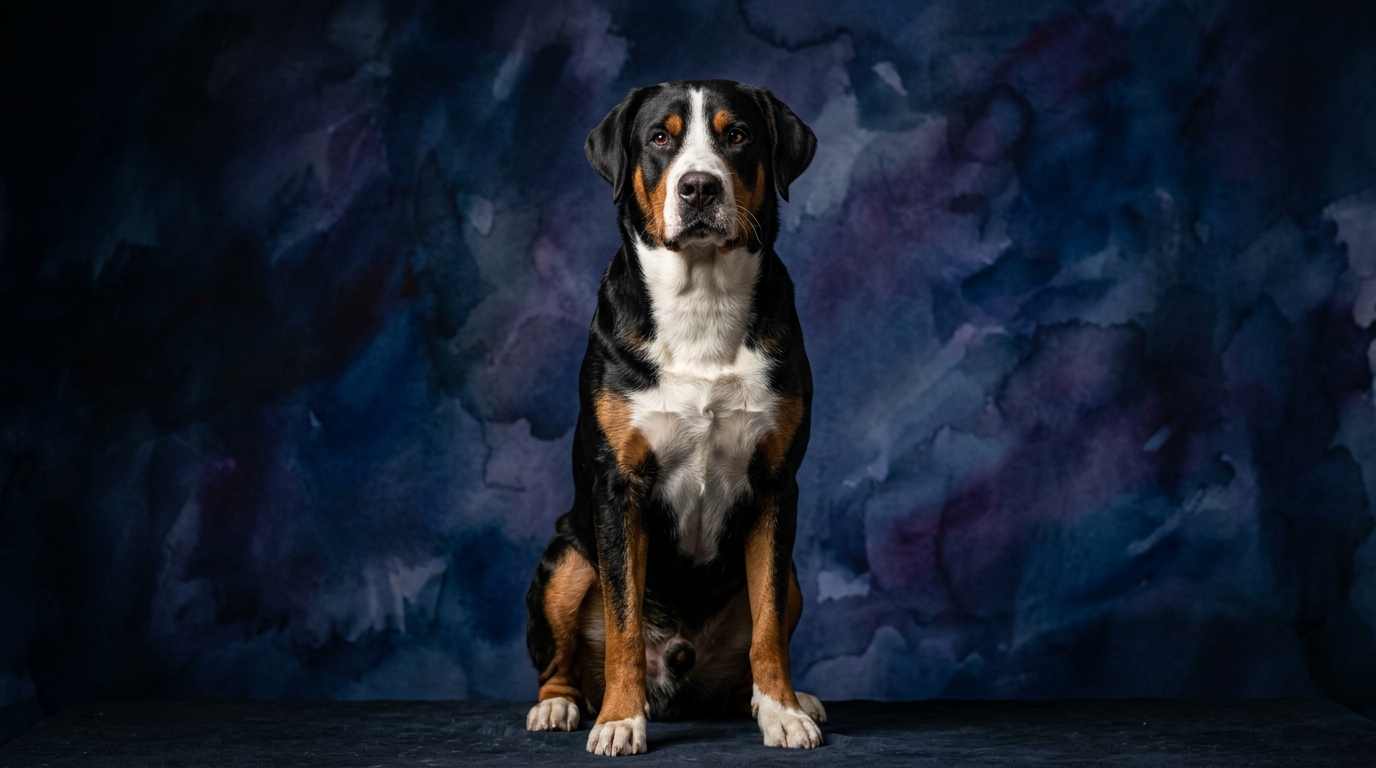
Side-by-Side IQ Profile: English Bulldog vs. Greater Swiss Mountain Dog
The English Bulldog, with its #77 Coren rank, presents a cognitive profile optimized for companionship. Its Problem Solving score of 2/5 suggests a preference for routine and human guidance over independent puzzle-solving, meaning they might take longer to grasp novel situations or complex mechanics. Similarly, a Training Speed of 2/5 indicates that learning new commands requires consistent, patient repetition, as they process and integrate new information at a more leisurely pace. However, where the Bulldog truly shines is its Social Intelligence, scoring an impressive 4/5; these dogs are adept at reading human emotions and social cues, often prioritizing harmony and connection within their family unit. Their Instinctive Drive is a moderate 3/5, manifesting more as a desire for comfort and companionship rather than intense task-orientation, while their Memory at 2/5 suggests they thrive with straightforward, reinforced cues rather than intricate sequences.
The Greater Swiss Mountain Dog, though not Coren-ranked, clearly embodies the working breed ethos in its cognitive makeup. Its Problem Solving ability is a respectable 3/5, indicating a capacity to independently assess and navigate moderately complex situations, making them more adaptable to new environments or challenges. Their Training Speed also scores 3/5, meaning they generally pick up new commands and routines with reasonable efficiency, responding well to clear, consistent instruction. The Swissy's Social Intelligence sits at 3/5, reflecting a strong loyalty and connection to their family, though perhaps with a more independent streak than the Bulldog, valuing partnership in tasks as much as pure affection. An Instinctive Drive of 3/5 highlights their historical role in herding and guarding, providing a balanced motivation for purposeful activity, and their Memory at 3/5 supports the retention of a wider array of learned behaviors and experiences over time.
Where the English Bulldog Wins Cognitively
The English Bulldog's standout cognitive strength lies squarely in its Social Intelligence, scoring a 4/5 compared to the Greater Swiss Mountain Dog's 3/5. This higher social acuity means Bulldogs are exceptionally attuned to the subtle nuances of human emotion and body language. They often seem to anticipate their owner's moods, offering comfort or initiating interaction at just the right moment, demonstrating a profound empathetic connection. This isn't about performing tricks, but about deeply understanding and integrating into the human family dynamic, making them incredibly intuitive companions.
This superior social understanding translates into a unique ability to foster profound emotional bonds. Bulldogs excel at reading the room, so to speak, often adapting their behavior to maintain household harmony. They might subtly lean into you when you're stressed or offer a gentle nudge when they sense you need a moment of quiet companionship. While they might take longer to learn a new "sit" command, their mastery of social interaction is immediate and deeply ingrained, making them unparalleled in their role as empathetic family members.
Where the Greater Swiss Mountain Dog Wins Cognitively
The Greater Swiss Mountain Dog demonstrates cognitive advantages in areas crucial for a capable working companion. With a Problem Solving score of 3/5 versus the Bulldog's 2/5, the Swissy shows a greater propensity for independent thought when faced with novel challenges. They are more likely to attempt to figure out a new gate latch, navigate an unfamiliar trail, or understand the mechanics of a new task without constant human intervention, reflecting a natural curiosity and an ability to learn from their environment.
Furthermore, the Swissy's Training Speed and Memory both register at 3/5, surpassing the Bulldog's 2/5 in both categories. This means they generally absorb new commands and retain learned behaviors more efficiently. Owners often find the Swissy more responsive to training cues and capable of building a larger repertoire of skills over time, from basic obedience to more complex tasks like carting or advanced agility. Their improved memory allows them to string together multiple commands and recall them even after a period of inactivity, making them more versatile partners in structured activities.
Which is Easier to Train and Why
When it comes to formal training, the Greater Swiss Mountain Dog generally presents an easier and more rewarding experience for owners, largely due to its superior Training Speed (3/5) and Memory (3/5) compared to the English Bulldog's 2/5 in both categories. Swissys typically grasp new commands more quickly, requiring fewer repetitions to solidify a behavior. Their working breed heritage instills a certain drive to understand and cooperate with human directives, making them more amenable to structured learning environments.
The Bulldog, by contrast, with its leisurely Training Speed, often requires immense patience and creative motivation. What might be perceived as stubbornness is often a slower processing speed for novel tasks and a stronger internal drive for comfort over complex obedience. While they can and do learn, the journey is typically longer and less direct. The Swissy's better Problem Solving ability also contributes to its trainability, allowing it to adapt to different training methods and generalize learned behaviors more effectively across various situations, unlike the Bulldog which thrives on strict consistency in familiar settings.
Which Suits Active Owners vs. Relaxed Owners
The choice between these two breeds heavily depends on an owner's lifestyle and activity level. The Greater Swiss Mountain Dog, with its moderate Instinctive Drive (3/5) and better Problem Solving capacity, is an excellent fit for active owners who enjoy outdoor adventures and engaging their dog in purposeful activities. These dogs thrive when given a job, whether it's hiking, carting, or participating in dog sports, and they possess the physical and cognitive stamina to keep pace with an energetic lifestyle. They appreciate mental stimulation alongside physical exercise, making them ideal for individuals or families who want a canine partner for their active pursuits.
Conversely, the English Bulldog is perfectly suited for more relaxed owners who prioritize companionship and a less demanding physical routine. Their lower Problem Solving and Training Speed scores, combined with their moderate Instinctive Drive, mean they are generally content with shorter walks, comfortable lounging, and plenty of quality time with their human family. While they enjoy play, it's often in shorter bursts, and their primary focus is often on comfort and social interaction rather than rigorous activity. For those seeking a devoted, low-key companion happy to share the sofa, the Bulldog is an ideal match.
The Verdict
Choose an English Bulldog if your primary desire is an exceptionally empathetic, emotionally attuned companion who thrives on social connection and a relaxed, comfortable lifestyle, and you are prepared for a patient, consistent approach to training.
Opt for a Greater Swiss Mountain Dog if you seek a capable, biddable partner for an active lifestyle, appreciate a dog that learns efficiently and can engage in purposeful tasks, and are ready to provide consistent mental and physical stimulation.
🧠 Find Your Pet's IQ Score
Our Pet IQ Lab assessment covers 25+ tests across 5 cognitive dimensions — personalized to your breed.
Take the Full IQ Test →Frequently Asked Questions
Is the English Bulldog truly less intelligent than the Greater Swiss Mountain Dog?
The Cosmic Pet Pet IQ Lab data suggests they have different cognitive strengths. While the Bulldog scores lower in problem-solving and training speed, it excels in social intelligence, indicating a different kind of mental aptitude focused on emotional connection rather than task execution.
How does "Social Intelligence" manifest differently in these two breeds?
For the Bulldog (4/5), social intelligence means a deep intuitive understanding of human emotions and subtle social cues, often leading to highly empathetic companionship. The Swissy (3/5) shows strong loyalty and partnership, valuing cooperation in tasks, but perhaps with less emphasis on reading nuanced emotional states.
Can an English Bulldog be trained for complex tasks despite its lower "Training Speed"?
Yes, an English Bulldog can certainly learn complex tasks, but it will typically require more patience, repetition, and a highly positive, reward-based approach. Their slower training speed means owners must be consistent and break tasks into smaller, manageable steps, celebrating every small success.