
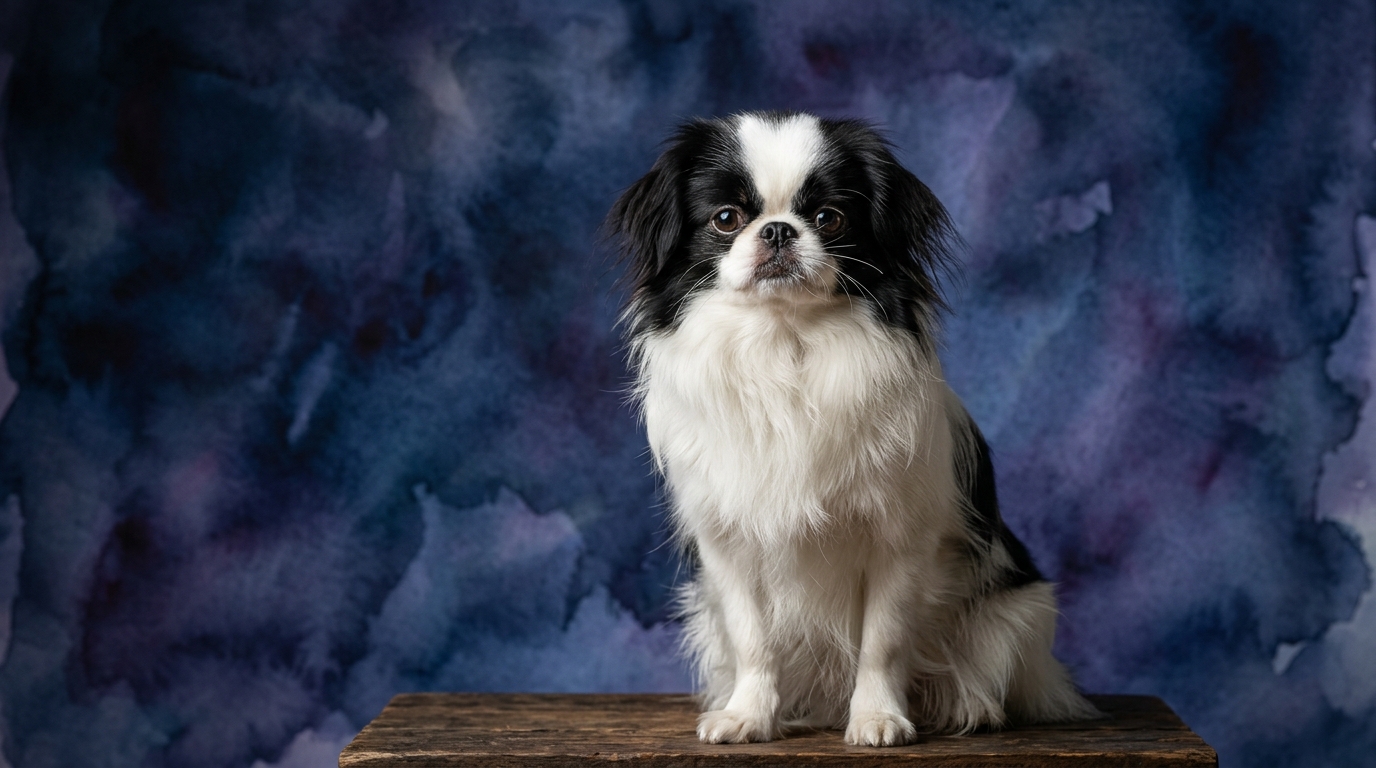
Side-by-Side IQ Profile: Bulldog vs. Japanese Chin
The Cosmic Pet Pet IQ Lab employs five key dimensions to evaluate canine cognition, providing a nuanced view beyond simplistic labels. For the English Bulldog, ranked #77 by Coren, their profile is marked by specific strengths and areas requiring more patience. Their Problem Solving is rated 2/5, indicating they often prefer established routines over innovative solutions, tending to rely on persistence rather than complex strategy. Training Speed also scores 2/5, suggesting a need for consistent, patient instruction and positive reinforcement to solidify new behaviors. However, their Social Intelligence shines at 4/5, highlighting a profound attunement to human emotions and pack dynamics. Instinctive Drive stands at 3/5, rooted in their historical role as a companion, manifesting as calm vigilance rather than a high working drive. Memory is 2/5, meaning learned tasks benefit from regular refreshers to ensure strong retention.
The Japanese Chin, a Toy breed not yet ranked by Coren, presents a different cognitive blueprint. Their Problem Solving is a moderate 3/5, allowing them to navigate simple domestic challenges or cleverly influence their owners to achieve desired outcomes. Training Speed also scores 3/5, indicating they are generally responsive and pick up commands at a fair pace with appropriate motivation. Their Social Intelligence is 3/5, demonstrating an affectionate nature and strong bonds with their chosen humans, though perhaps not with the broad empathy of the Bulldog. Instinctive Drive is 3/5, primarily centered around companionship, comfort, and being the focal point of their human's attention. Finally, Memory scores 3/5, suggesting they retain learned routines and behaviors without requiring excessive repetition, aiding their role as adaptable companions.
Where the English Bulldog Wins Cognitively
The English Bulldog's standout cognitive strength lies squarely in their Social Intelligence (4/5). They are exceptionally attuned to the emotional states of their human family members, often sensing distress or joy with remarkable accuracy. This makes them profoundly empathetic companions, capable of offering quiet comfort or joining in celebratory moods without needing explicit instruction. Their strong social awareness allows them to integrate seamlessly into a family unit, understanding household dynamics and individual preferences, making them masters of subtle, affectionate companionship. This deep emotional connection often translates into a calm, unwavering loyalty, where their presence alone can be a source of profound comfort and stability within the home.
Where the Japanese Chin Wins Cognitively
The Japanese Chin demonstrates a more balanced cognitive profile, particularly excelling in areas where the Bulldog faces greater challenges. Their Problem Solving (3/5) is more developed, allowing them to figure out how to get desired attention or navigate minor domestic obstacles with a subtle cleverness. This isn't about complex logical tasks, but rather an astute observational skill to achieve their goals, often involving charming their way to a treat or a lap. Furthermore, their Training Speed (3/5) and Memory (3/5) are more robust, making them generally quicker to grasp new commands and retain them over time. This means less repetition is typically needed, and learned behaviors are more likely to stick, contributing to their adaptability as a companion and making them a more straightforward pupil in training scenarios.
Which is Easier to Train and Why
Considering their respective IQ profiles, the Japanese Chin generally presents as the easier breed to train. Their Training Speed (3/5) and Memory (3/5) scores indicate a quicker grasp of new concepts and better retention of learned behaviors compared to the English Bulldog's 2/5 in both categories. A Japanese Chin is often more eager to engage in training sessions, motivated by praise and treats, and can learn a wider repertoire of tricks or commands with less repetition. For instance, teaching a Chin to 'stay' or 'come' might require fewer sessions before the behavior becomes reliable, and they are generally more adaptable to varied training methods.
In contrast, the English Bulldog's Training Speed (2/5) combined with their independent streak means that consistency and patience are paramount. They might learn a command, but their recall or execution could be slower and require more ongoing reinforcement. While Bulldogs are capable of learning, their rate of acquisition and retention is simply not as swift, making the overall training journey more extended and demanding for the owner seeking quick results. Their lower Problem Solving (2/5) also means they might struggle more with generalizing commands to new environments or adapting to changes in training methods, whereas the Chin's 3/5 gives them a slight edge in adapting to varied scenarios and learning from observation.
Which Suits Active Owners vs. Relaxed Owners
When considering lifestyle compatibility, the divergence in physical and mental energy between these two breeds becomes clear. The English Bulldog, with its lower overall activity requirements and a preference for established routines, is an ideal match for more relaxed owners. Their instinctive drive (3/5) leans towards comfort and companionship rather than strenuous activity, making them content with moderate daily walks and ample lounging time. Owners who appreciate a calm, steadfast presence and are prepared for a slower pace in training will find the Bulldog a fulfilling companion. They thrive in environments where predictability and gentle interaction are prioritized, offering a quiet, affectionate presence without demanding constant energetic engagement.
The Japanese Chin, while a toy breed, possesses a more engaged demeanor that suits owners who enjoy interactive play and consistent mental stimulation. Their problem solving (3/5) and moderate training speed (3/5) mean they benefit from regular, short training sessions and puzzle toys that challenge their minds. While not requiring extensive outdoor adventures, they enjoy playful indoor games and benefit from consistent human interaction to prevent boredom. Owners who are present, enjoy teaching new tricks, and can provide a stimulating home environment without necessarily needing a running partner will find the Japanese Chin's spirited yet affectionate nature a wonderful fit. They thrive on being involved in daily activities and appreciate owners who can match their curious and engaging personality.
The Verdict
Choose the English Bulldog if your priority is a deeply empathetic, calm, and loyal companion who excels in understanding human emotions, and you are prepared for a patient, consistent approach to training. They are ideal for owners seeking a steadfast presence and who appreciate a slower, more deliberate pace of life.
Opt for the Japanese Chin if you desire a responsive, adaptable companion who enjoys interactive mental engagement and learns new behaviors with moderate speed, fitting well into a home that provides consistent attention and playful stimulation. They are best for owners who appreciate a lively yet affectionate presence and enjoy teaching new skills.
🧠 Find Your Pet's IQ Score
Our Pet IQ Lab assessment covers 25+ tests across 5 cognitive dimensions — personalized to your breed.
Take the Full IQ Test →Frequently Asked Questions
Are English Bulldogs difficult to train?
While not inherently difficult, English Bulldogs require significant patience and consistency due to their Training Speed (2/5) and independent nature. They respond best to positive reinforcement and a structured routine, and owners should anticipate a slower learning curve compared to some other breeds.
Do Japanese Chins need a lot of exercise?
Japanese Chins have moderate energy levels and do not require extensive exercise; daily indoor play and short walks are usually sufficient. Their instinctive drive (3/5) leans more towards companionship and mental engagement through interactive games rather than strenuous physical activity.
Which breed is better with children, based on their social intelligence?
The English Bulldog, with its superior Social Intelligence (4/5), often excels with children, demonstrating a calm, patient, and empathetic demeanor. The Japanese Chin's Social Intelligence (3/5) is balanced, making them good with respectful children, but they might prefer a quieter interaction compared to the Bulldog's robust tolerance.