
Side-by-Side Cognitive Profiles: Bulldog vs. Keeshond
The English Bulldog, ranking 77th on the Coren scale, presents a cognitive profile oriented towards social connection rather than complex independent tasks. With problem-solving and training speed both at 2/5, they approach new challenges with a steady, unhurried pace, requiring patience and consistent, positive methods during learning. Their social intelligence, however, shines at 4/5, indicating a profound capacity for understanding human cues and forming deep, empathetic bonds. A moderate instinctive drive (3/5) points to a balanced internal motivation, while a memory score of 2/5 suggests that while they can retain information, repetition is crucial for long-term recall of commands or routines.
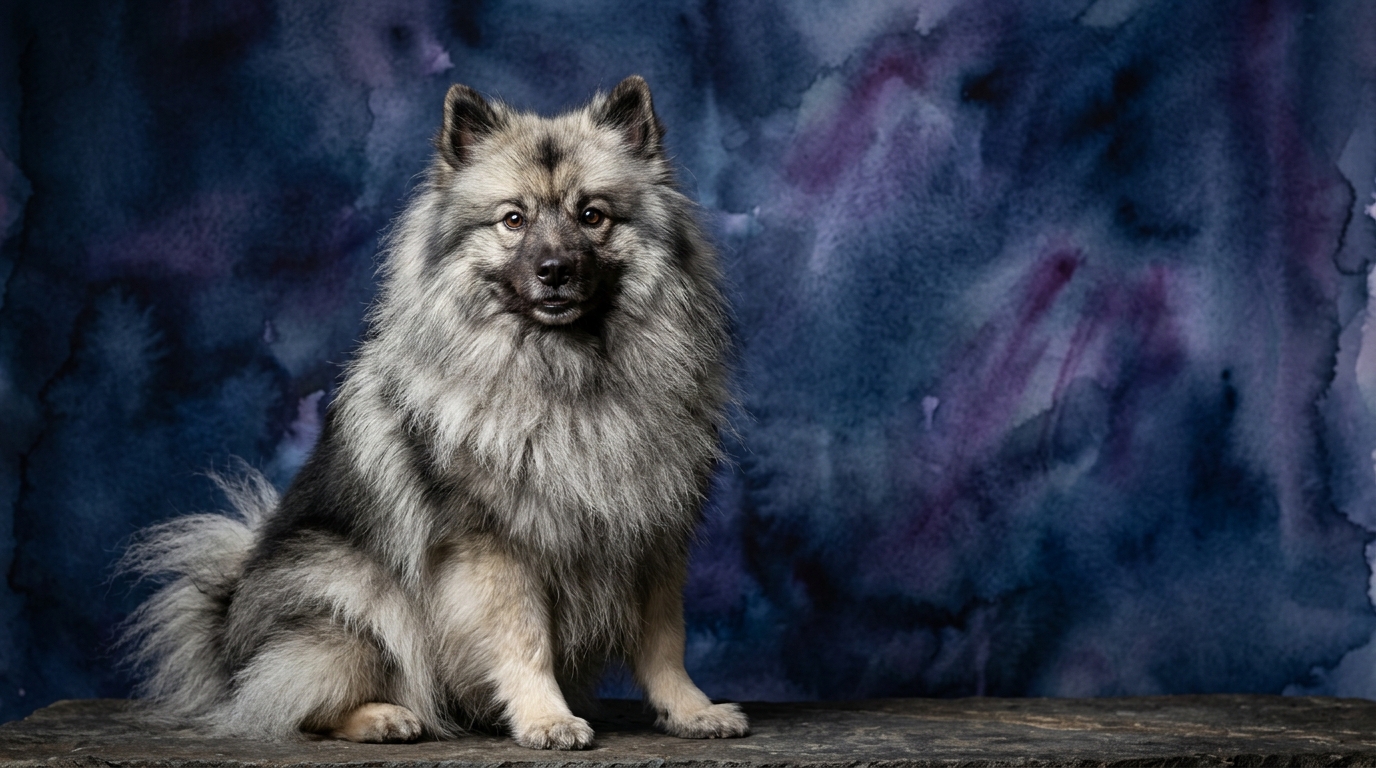
In contrast, the Keeshond, a non-sporting breed positioned significantly higher at 16th on the Coren scale, displays a different cognitive blueprint. Their problem-solving and training speed both score an impressive 4/5, highlighting an agile mind capable of quickly grasping new concepts and devising solutions to environmental puzzles. While their social intelligence is a respectable 3/5, indicating good interactive skills, it's their memory that truly stands out with a perfect 5/5, allowing them to retain vast amounts of information and experiences with minimal reinforcement. An instinctive drive of 3/5 suggests a balanced internal motivation, making them responsive without being overly driven by primal urges.
Where the English Bulldog's Cognition Excels
The English Bulldog's primary cognitive strength lies in their profound social intelligence (4/5). This isn't merely friendliness; it's an inherent ability to read and respond to human emotions and intentions with remarkable accuracy, often acting as intuitive companions. They excel at forming strong, empathetic bonds, understanding subtle household dynamics, and offering comfort. Their cognitive focus is on communal harmony and deep connection, making them exceptional emotional support animals or gentle companions who thrive on close human interaction and reciprocated affection.
While not scoring high in independent problem-solving or rapid training, the Bulldog's moderate instinctive drive (3/5) combined with their social intelligence means they are often content with predictable routines and their people's company. They aren't prone to constantly seeking complex mental challenges independently, preferring engagement that reinforces their bond. This translates into a generally easygoing dog within a familiar environment, not always demanding novel stimuli, which can be a distinct advantage for owners seeking a relaxed, devoted presence rather than a canine partner for advanced obedience or agility.
Where the Keeshond's Cognition Shines
The Keeshond's cognitive profile is marked by exceptional problem-solving abilities (4/5) and a stunning memory (5/5). These traits combine to create a dog that is not only quick to learn but also incredibly adept at retaining information and applying past experiences to new situations. They excel at understanding cause-and-effect, often figuring out how to open gates or retrieve hidden items. This mental agility means they thrive on intellectual engagement, quickly mastering complex command sequences and remembering them long-term, making them stellar candidates for advanced obedience, trick training, or dog sports requiring intricate routines.
Their speed in training (4/5) further complements their memory and problem-solving. Keeshonden pick up new cues rapidly, often requiring fewer repetitions than many other breeds. This efficiency in learning makes training sessions highly rewarding and productive, allowing owners to teach a wide repertoire of behaviors and commands with relative ease. The Keeshond's cognitive architecture is built for rapid acquisition and steadfast retention, enabling them to navigate complex environments and respond reliably to varied instructions, showcasing a remarkable capacity for adaptive learning.
Training Ease: A Tale of Two Temperaments
When it comes to training, the Keeshond (training speed 4/5) generally presents a smoother, faster learning curve compared to the English Bulldog (training speed 2/5). The Keeshond's quick grasp of concepts and superior memory means they can master new commands in fewer repetitions and retain them for longer periods. For instance, teaching a Keeshond a multi-step retrieve or agility sequence will likely progress rapidly due to their eagerness to engage mentally.
The English Bulldog, while certainly trainable, requires a different approach. Their slower training speed and lower memory score necessitate patience, consistency, and positive reinforcement. They might take longer to grasp a new command, and without regular practice, it might fade more quickly. House-training a Bulldog, for example, might involve more consistent supervision and scheduled outings. Their motivation often stems from pleasing their social group (social intelligence 4/5), so making training a bonding experience, even if at a leisurely pace, is highly effective.
Lifestyle Match: Active Minds vs. Relaxed Spirits
The Keeshond, with its high problem-solving (4/5) and memory (5/5) coupled with a moderate instinctive drive (3/5), is an excellent match for active owners who enjoy engaging their dog in mental and moderate physical activities. They thrive on learning new tricks, participating in obedience classes, or exploring new environments. An owner who enjoys puzzle toys, regular training, and varied outings will find the Keeshond a responsive and eager partner, preventing boredom and potential mischief from an understimulated mind.
The English Bulldog, conversely, with lower scores in problem-solving and training speed but high social intelligence (4/5), is ideally suited for more relaxed owners. They do not demand constant mental stimulation or rigorous physical exertion. Their needs center around companionship, comfort, and a predictable routine. Owners appreciating a devoted, calm presence, quiet evenings, or short, leisurely strolls will find the Bulldog a perfect fit. Their moderate instinctive drive means they are generally content with their surroundings and human company, without constantly seeking adventure.
The Verdict
Choose the English Bulldog if you seek an exceptionally devoted, calm, and socially intuitive companion who thrives on close human connection and a predictable, relaxed lifestyle, valuing emotional presence over intellectual challenges.
Opt for the Keeshond if you desire an agile-minded, quick-learning, and highly trainable dog who excels at problem-solving, remembers commands with precision, and flourishes with engaging mental and moderate physical activities.
🧠 Find Your Pet's IQ Score
Our Pet IQ Lab assessment covers 25+ tests across 5 cognitive dimensions — personalized to your breed.
Take the Full IQ Test →Frequently Asked Questions
Is the English Bulldog difficult to train?
While not as quick to learn as some breeds (training speed 2/5), English Bulldogs are certainly trainable. They require patience, consistency, and positive reinforcement, often responding best when training is a bonding experience that leverages their strong social intelligence.
Do Keeshonden need a lot of mental stimulation?
Yes, Keeshonden benefit greatly from regular mental stimulation due to their high problem-solving (4/5) and memory (5/5) scores. Puzzle toys, trick training, and varied learning opportunities help keep their agile minds engaged and prevent boredom.
Which breed is better with children?
Both breeds can be good with children, but in different ways. The English Bulldog's high social intelligence and calm demeanor often make them very patient and gentle companions. The Keeshond's playful nature and trainability mean they can be taught to interact appropriately and enjoy engaging in games.