
Side-by-Side IQ Profile: A Cognitive Blueprint
The English Bulldog, with a Coren rank of #77, sits on the lower end of working and obedience intelligence, suggesting a need for more repetitions to learn new commands and less consistent recall. Their Problem Solving is rated 2/5, indicating a preference for established routines over novel challenges, often approaching obstacles with direct, physical methods rather than analytical thought. Training Speed at 2/5 aligns with their Coren ranking, meaning patience and unwavering consistency are paramount, as they process and internalize new commands at a deliberate pace. Where they truly shine is Social Intelligence at 4/5, indicating a profound capacity to read human emotions and social cues, making them highly attuned and affectionate companions. Instinctive Drive at 3/5 suggests a moderate level of innate behaviors, perhaps linked to their historical roles, but not as dominant as in many working breeds. Memory is rated 2/5, implying that while they can learn and remember, it might require more consistent reinforcement to solidify these memories over time.
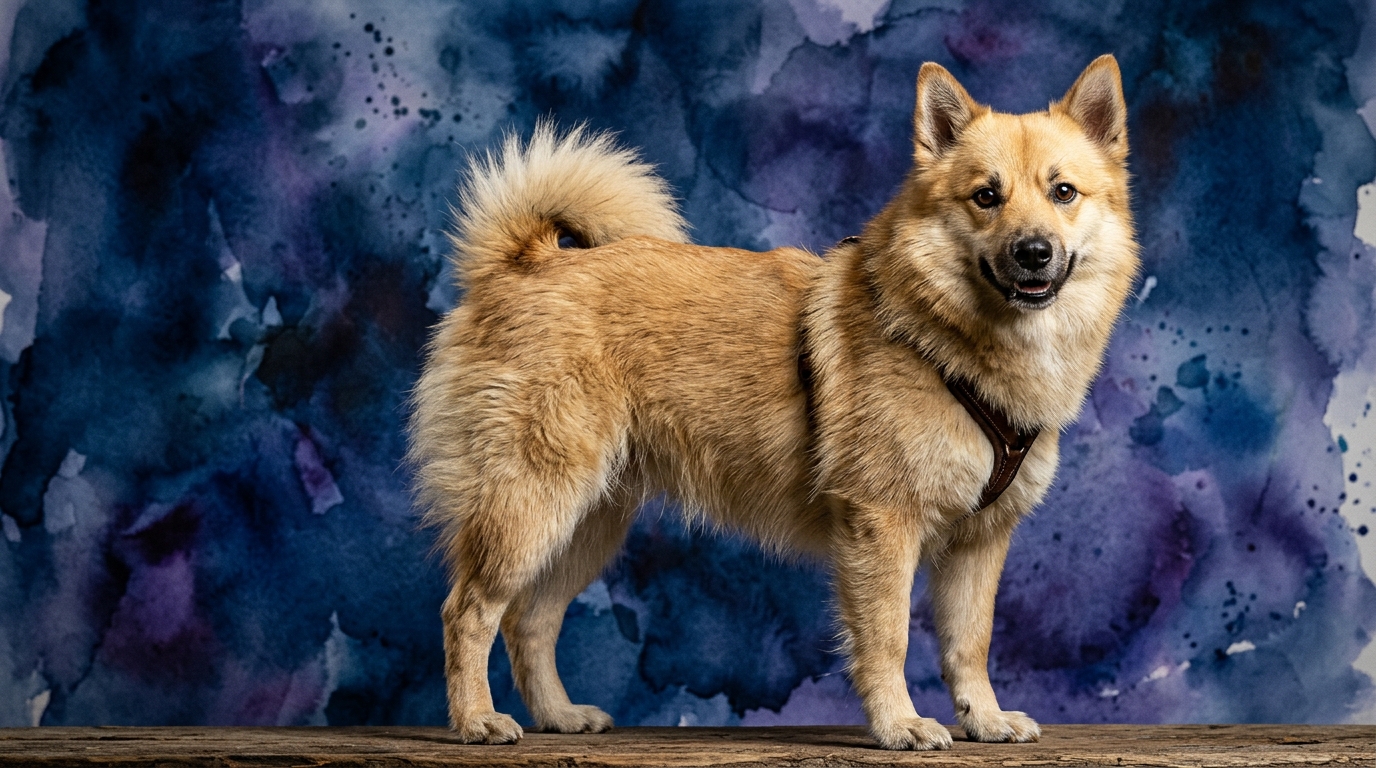
The Norwegian Buhund, while lacking a specific Coren rank, reveals a different cognitive landscape through The Cosmic Pet's IQ metrics. Their Problem Solving is rated 3/5, indicating a capable mind that can independently assess situations and devise solutions, a crucial trait for a herding dog navigating complex flock dynamics. Training Speed also stands at 3/5, suggesting they grasp new concepts and commands with reasonable efficiency, making them responsive to guidance. Social Intelligence is 3/5, meaning they are observant and can connect with humans, though perhaps with less overt emotional expressiveness or need for constant interaction compared to the Bulldog. Instinctive Drive is 3/5, reflecting their heritage as working dogs with inherent herding tendencies, which can manifest as a desire to gather or control. Memory at 3/5 points to a solid capacity for retaining learned behaviors and experiences, beneficial for complex tasks and consistent performance.
Where the English Bulldog Wins Cognitively
The English Bulldog's cognitive strength distinctly lies in its elevated Social Intelligence, rated at 4/5. This isn't merely about being "friendly"; it describes a profound capacity to read and respond to human emotional states and social signals. A Bulldog might intuitively sense a family member's sadness and offer a comforting presence, or understand subtle shifts in tone and body language during interactions. This high social aptitude makes them exceptional companions, fostering deep bonds through their perceptive, empathetic nature. They excel in environments where emotional connection and companionship are prioritized over complex tasks or problem-solving. Their ability to integrate seamlessly into a family unit, understanding its dynamics and the emotional needs of its members, is a hallmark of their specific cognitive prowess. This translates into a dog that often anticipates a cuddle, offers a reassuring nudge, or simply enjoys being a quiet, understanding presence, making them masters of emotional support within their human pack.
Where the Norwegian Buhund Wins Cognitively
The Norwegian Buhund showcases a more versatile and active cognitive profile, particularly excelling in Problem Solving (3/5), Training Speed (3/5), and Memory (3/5) when compared to the Bulldog. Their 3/5 Problem Solving ability means they are more likely to independently figure out how to open a gate, retrieve a hidden toy, or navigate a new environment effectively. This isn't just about physical dexterity; it's about mental flexibility and the capacity to adapt strategies. Their Training Speed, also at 3/5, indicates a quicker uptake of new commands and routines, making them more adaptable to varied training exercises and learning new sports or jobs. This efficiency in learning, combined with a 3/5 Memory, allows them to retain a broader repertoire of commands and experiences over time, building upon past lessons. These combined strengths make the Buhund adept at tasks requiring mental agility, independent thought, and consistent recall, reflecting their heritage as self-reliant herding dogs. They thrive on mental engagement and the challenge of mastering new skills.
Training: Patience vs. Progression
When considering ease of training, the Norwegian Buhund generally offers a more straightforward experience due to its higher Training Speed (3/5) and Problem Solving (3/5). Buhunds tend to grasp new commands and concepts with fewer repetitions, making training sessions feel more progressive and rewarding for both dog and owner. Their inherent drive to work and engage, coupled with a solid memory, means they are often eager to learn and retain what they've been taught, making them suitable for activities like obedience, agility, or even advanced trick training.
In contrast, the English Bulldog, with its Training Speed of 2/5 and Problem Solving of 2/5, requires a different approach. Training a Bulldog demands significant patience, consistency, and positive reinforcement. They aren't necessarily "stubborn" in a malicious way, but rather process information at a slower pace and may require more motivation to engage in repetitive tasks. Their lower problem-solving score means they might not spontaneously try to figure out a solution if a command isn't immediately clear, preferring to wait for explicit guidance. Owners must break down tasks into smaller, manageable steps and celebrate every tiny success. While a Buhund might learn "stay" in a few sessions, a Bulldog might take weeks, but once learned, their strong social intelligence means they genuinely aim to please their person, even if the learning curve is longer.
Lifestyle Match: Active Companion vs. Relaxed Presence
The distinct cognitive profiles of these breeds lead to very different lifestyle suitability. The Norwegian Buhund, with its balanced Problem Solving (3/5), Training Speed (3/5), and a moderate Instinctive Drive (3/5), thrives with active owners who enjoy engaging their dog's mind and body. These dogs benefit from regular training, puzzle toys, and opportunities to use their natural herding instincts, perhaps through structured play or dog sports. An owner who enjoys hiking, consistent training sessions, or even canine sports like agility or rally obedience would find a Buhund a stimulating and capable partner. Their cognitive makeup suggests they are happiest when given a "job" to do, whether that's learning new tricks or accompanying their human on adventures.
Conversely, the English Bulldog's strengths align perfectly with a more relaxed, companionship-focused lifestyle. Their lower Problem Solving (2/5) and Training Speed (2/5) mean they are less inclined to seek out complex mental challenges or prolonged, strenuous activities. Their high Social Intelligence (4/5) means their primary "job" is often to be a devoted, emotionally perceptive family member. Owners who prefer gentle strolls, cozy evenings on the couch, and a dog whose greatest joy is simply being near them will find the Bulldog an ideal match. While they still require basic training and mental stimulation, it's typically less intense and more focused on reinforcing their role as a beloved, calm companion rather than a working partner.
The Verdict
Choose the English Bulldog if your primary desire is a deeply empathetic, calm companion who excels in social connection and thrives in a relaxed home environment, and you possess the patience for a deliberate training journey.
Opt for the Norwegian Buhund if you seek an agile, intelligent partner eager to learn and engage in activities, and you can provide consistent mental and physical challenges for a dog with a versatile cognitive toolkit.
🧠 Find Your Pet's IQ Score
Our Pet IQ Lab assessment covers 25+ tests across 5 cognitive dimensions — personalized to your breed.
Take the Full IQ Test →Frequently Asked Questions
Does Coren ranking apply to both breeds?
The Coren ranking specifically evaluates working and obedience intelligence, placing breeds based on how quickly they learn new commands and obey them. While the English Bulldog is ranked #77, the Norwegian Buhund does not have a formal Coren ranking, meaning its direct comparison on this specific scale isn't available. The Cosmic Pet's IQ metrics offer a broader assessment for breeds like the Buhund.
Can an English Bulldog learn complex tricks despite its lower training speed?
Absolutely, an English Bulldog can learn complex tricks, but it will require more time, patience, and repetition than with a breed rated higher in Training Speed. Their high social intelligence means they are motivated to please their beloved humans, so with consistent, positive reinforcement and breaking tricks into small steps, they can achieve impressive feats. The key is adapting the training style to their learning pace.
What kind of "job" would a Norwegian Buhund enjoy most, given its instinctive drive and problem-solving?
A Norwegian Buhund, with its instinctive drive and problem-solving abilities, would thrive in roles that engage its mind and body. They particularly enjoy activities like agility, herding trials (even if just for fun), rally obedience, or even scent work. Any "job" that allows them to think independently, solve puzzles, and work alongside their human will satisfy their cognitive needs and energetic spirit.