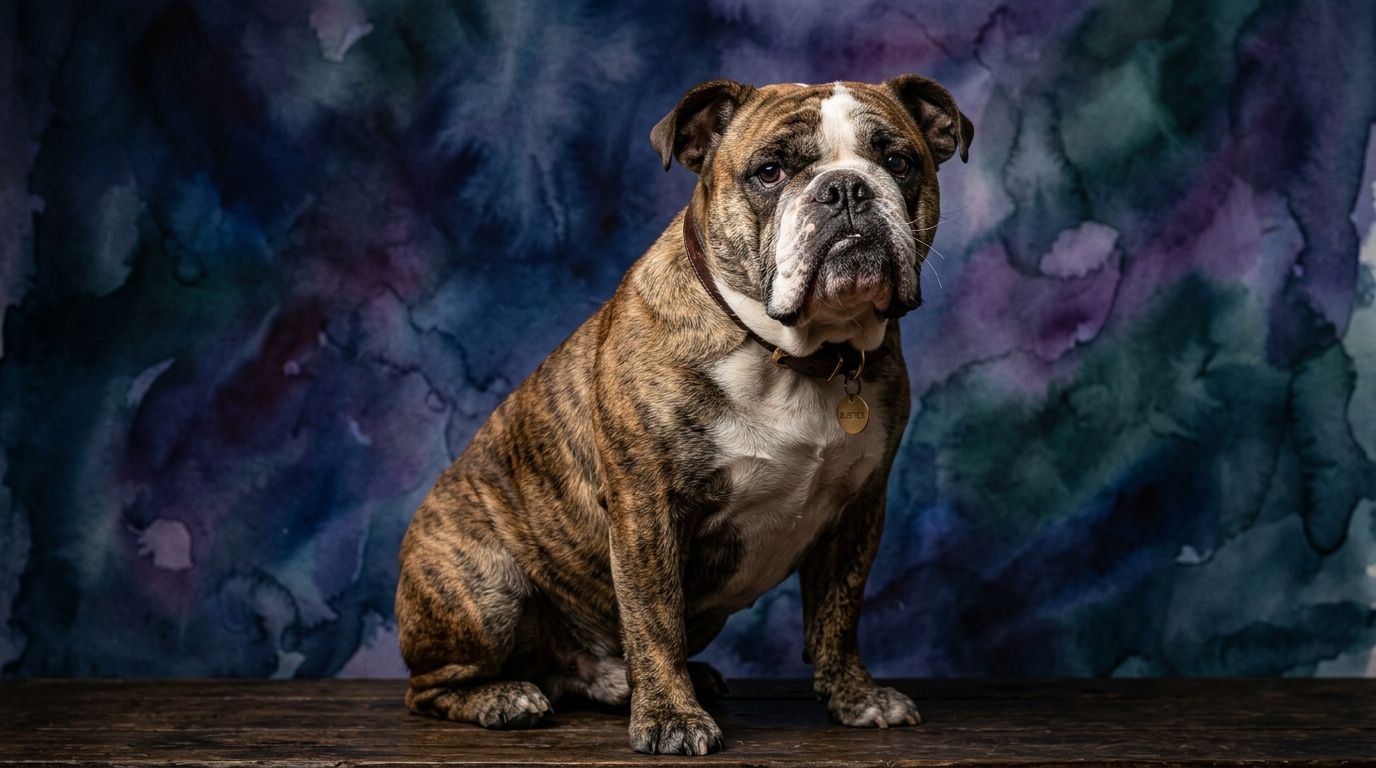
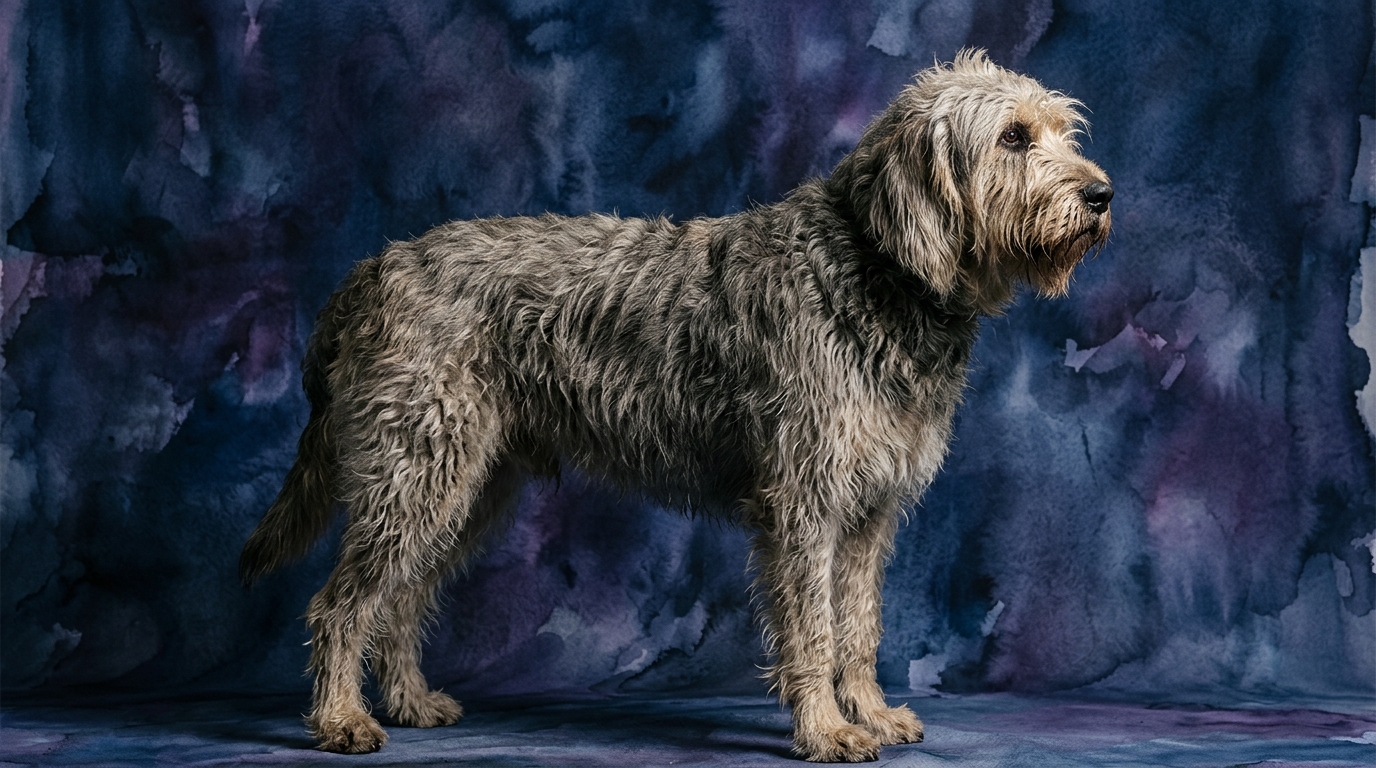
Side-by-Side Cognitive Profiles: Bulldog vs. Otterhound
The English Bulldog presents a unique cognitive blueprint according to The Cosmic Pet Pet IQ Lab. Their problem-solving ability scores 2 out of 5, indicating a preference for predictable routines and less spontaneous innovation when faced with new obstacles. Training speed also registers at 2 out of 5, suggesting patience and consistent, positive reinforcement are key. Where they truly shine is in social intelligence, scoring an impressive 4 out of 5, reflecting a deep understanding of human social cues. Their instinctive drive, rated 3 out of 5, points to moderate internal motivation, often expressed through companionship. Finally, memory at 2 out of 5 implies learned behaviors may require more repetition to become firmly ingrained.
In contrast, the Otterhound's cognitive profile paints a picture of a more versatile and driven working breed. Their problem-solving capabilities are rated 3 out of 5, indicating a moderate aptitude for navigating new situations and figuring out solutions independently, particularly those related to their strong sensory world. Training speed also sits at 3 out of 5, suggesting a more responsive learner. Social intelligence is 3 out of 5, reflecting a capacity for connection but perhaps with an independent streak. Their instinctive drive, matching the Bulldog at 3 out of 5, is often channeled into powerful scenting. Memory scores 3 out of 5, suggesting a solid capacity for retaining learned information.
Where the English Bulldog Shines Cognitively
The English Bulldog's cognitive strength lies prominently in its social intelligence, rated 4 out of 5 by The Cosmic Pet Pet IQ Lab, a full point higher than the Otterhound. This elevated score signifies a profound capacity for understanding and responding to human emotions, subtle cues, and family dynamics. Bulldogs often exhibit an almost intuitive grasp of their owner's mood, offering comfort or seeking interaction. This social acumen translates into a dog that thrives on companionship and integrates seamlessly into family life, often becoming the emotional anchor of a household.
While their instinctive drive is rated equally with the Otterhound at 3 out of 5, the Bulldog's expression of this drive is distinctly different. Rather than relentless hunting, their drive often manifests as a strong desire for comfort, routine, and proximity to loved ones. This intrinsic motivation for connection, coupled with moderate energy, allows them to excel where patient, affectionate presence is paramount. They prioritize social bonding over environmental exploration, making them exceptionally dedicated housemates, not easily distracted when focused on human companions.
Otterhound's Cognitive Strengths
The Otterhound truly excels in areas requiring mental agility and independent thought, particularly evident in their problem-solving and training speed, both rated 3 out of 5 by The Cosmic Pet Pet IQ Lab. This indicates a breed more inclined to assess novel situations and devise solutions independently. Their problem-solving skills are often linked to their historical role as scent hounds, demanding initiative and strategic thinking. This cognitive strength means they can often figure out how to open gates, find hidden toys, or follow a scent trail with impressive determination, showcasing proactive engagement.
Complementing their problem-solving ability is their superior training speed, also a 3 out of 5, a full point higher than the English Bulldog. This suggests Otterhounds generally grasp new commands and routines more quickly, often displaying an eagerness to learn when the task is engaging and rewards their natural instincts. Their memory, also rated 3 out of 5, further supports their trainability; they are more likely to retain learned behaviors. This combination makes the Otterhound a more responsive candidate for advanced training or tasks requiring consistent application of learned skills.
Training Dynamics: Which is Easier to Guide?
When evaluating ease of training, The Cosmic Pet Pet IQ Lab data points to a clearer path with the Otterhound. With a training speed score of 3 out of 5, the Otterhound generally demonstrates a quicker uptake of new commands and concepts compared to the English Bulldog's 2 out of 5. This difference stems from the Otterhound's working dog background, where responsiveness to handlers was crucial. While they possess a strong, independent scent drive, this can be leveraged in training, making activities like nose work highly rewarding. They tend to be more biddable, eager to cooperate.
The English Bulldog, with its 2 out of 5 training speed, often requires a more patient and persistent approach. Their cognitive profile suggests they are not as quick to absorb new information or change established routines, which can sometimes be perceived as stubbornness. This isn't a lack of desire to please, but rather a preference for comfort and predictability, coupled with a slower processing speed. Training a Bulldog necessitates short, engaging sessions, abundant positive reinforcement, and an understanding that repetition is key. Their learning curve is generally longer, requiring methodical dedication.
Lifestyle Match: Active Companions vs. Relaxed Partners
The distinct cognitive profiles of the English Bulldog and Otterhound naturally align with different owner lifestyles. The English Bulldog, with its lower problem-solving and training speed scores (both 2/5) and a moderate instinctive drive (3/5), coupled with a high social intelligence (4/5), is an ideal match for individuals seeking a more relaxed, companion-focused partner. Their preference for routine and less intense mental stimulation means they are content with shorter, leisurely walks and ample cuddle time. Owners appreciating deep emotional attunement will find them a perfect fit.
Conversely, the Otterhound, with its higher problem-solving (3/5), training speed (3/5), and solid memory (3/5), combined with a strong instinctive drive (3/5) geared towards scent work, is better suited for active owners. This breed flourishes with consistent mental and physical challenges that engage their powerful nose and problem-solving capabilities. Owners who enjoy outdoor adventures, hiking, or canine sports like tracking will find the Otterhound an enthusiastic and capable partner, requiring regular stimulation to prevent boredom and destructive behaviors.
The Verdict
Opt for an English Bulldog if your lifestyle prioritizes a deeply affectionate, socially astute companion content with moderate activity and a predictable routine, where a strong emotional bond is paramount.
Select an Otterhound if you seek an active, problem-solving partner eager for engaging mental and physical challenges, thriving in environments that encourage their natural scenting and working instincts.
🧠 Find Your Pet's IQ Score
Our Pet IQ Lab assessment covers 25+ tests across 5 cognitive dimensions — personalized to your breed.
Take the Full IQ Test →Frequently Asked Questions
Does the English Bulldog's lower training speed mean they cannot be trained effectively?
Not at all. The English Bulldog's 2/5 training speed simply means they require more patience, consistency, and positive reinforcement, often learning best through short, fun sessions rather than intense, prolonged training. They are certainly capable of learning a wide range of commands and behaviors with dedication.
Are Otterhounds good family dogs given their strong instinctive drive?
Yes, Otterhounds can be wonderful family dogs. While their instinctive drive is strong, it's typically channeled into scenting abilities rather than aggression. Their social intelligence of 3/5 means they form good bonds with family members, though they might be more independent than a Bulldog. Early socialization and consistent training are key to smooth integration.
How do the problem-solving differences manifest in daily life for these breeds?
An Otterhound (3/5 problem-solving) might more readily figure out how to open a cupboard or navigate a complex path to a desired object, often employing their nose and persistence. An English Bulldog (2/5 problem-solving) would likely rely more on established routines or seek human assistance when faced with a novel obstacle, preferring familiar solutions.