
Side-by-Side IQ Profile: Bulldog (English) vs. Toy Poodle
At The Cosmic Pet Pet IQ Lab, we analyze canine intelligence across five key dimensions, offering a more granular view than a single 'smartness' score. For the English Bulldog, ranked #77 in Coren's working and obedience intelligence, their profile paints a picture of a companion-focused breed. Their Problem Solving is rated 2/5, indicating they may not naturally excel at deciphering complex novel challenges without guidance. Training Speed also sits at 2/5, suggesting that patience and repetition are key for successful learning. Where they truly shine is Social Intelligence, scoring an impressive 4/5, demonstrating a strong capacity to understand human cues and emotions. Their Instinctive Drive is moderate at 3/5, a remnant of their historical purpose, now often expressed as a desire for comfort and routine. Memory is rated 2/5, meaning learned behaviors might require more frequent refreshing.
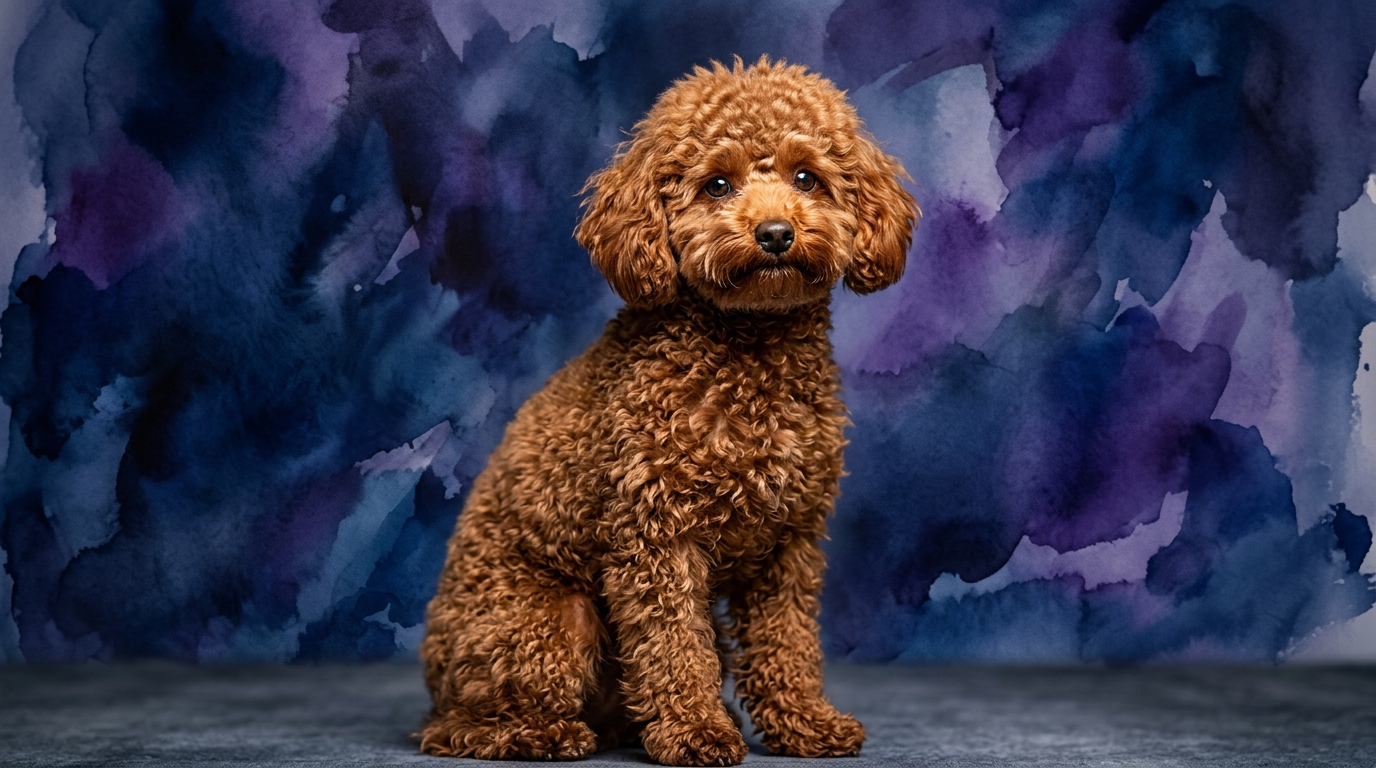
In stark contrast, the Toy Poodle, holding a formidable #2 rank in Coren's working and obedience intelligence, presents a profile of exceptional cognitive agility. Their Problem Solving ability is a stellar 5/5, reflecting a natural aptitude for figuring out intricate situations and adapting to new information. Training Speed matches this at 5/5, indicating they grasp new commands and concepts with remarkable swiftness, often requiring minimal repetitions. Social Intelligence for the Toy Poodle is 3/5, demonstrating good responsiveness to human interaction but perhaps less emphasis on nuanced emotional reading compared to the Bulldog. Instinctive Drive is also 3/5, pointing to a moderate, adaptable drive that can be channeled into various activities. Their Memory is outstanding at 5/5, allowing them to retain vast amounts of information and complex sequences over long periods.
Where the English Bulldog Wins Cognitively
While the Toy Poodle often garners acclaim for its processing power, the English Bulldog possesses a distinct cognitive advantage in the realm of social intelligence. Scoring 4/5, higher than the Toy Poodle's 3/5, Bulldogs demonstrate an exceptional capacity to interpret and respond to human emotional states. This isn't merely about being affectionate; it's about a deep, intuitive understanding of their owner's moods, subtle body language, and vocal inflections. They are masters of emotional resonance, often seeking to comfort a distressed owner or mirroring a relaxed one, creating profound, empathetic bonds.
This elevated social IQ means a Bulldog can be an unparalleled emotional support companion, highly attuned to the nuances of human interaction. Their perceived 'stubbornness' in training is often less about an inability to understand and more about a lack of intrinsic motivation for tasks that don't align with their comfort or desire for social connection. When a task is presented in a way that leverages their strong social drive – making it a shared, rewarding experience with their beloved person – their cognitive strengths in understanding social cues come to the forefront, enabling them to engage deeply on an emotional level.
Where the Toy Poodle Wins Cognitively
The Toy Poodle's cognitive strengths lie squarely in areas of rapid acquisition, retention, and application of information, scoring 5/5 in Problem Solving, Training Speed, and Memory. This breed exhibits a remarkable capacity for abstract thought and pattern recognition, allowing them to quickly generalize concepts from one situation to another. Whether it's navigating complex agility courses, learning intricate trick sequences, or understanding multi-step commands, their mental processing is exceptionally efficient and agile.
Their superior problem-solving ability means a Toy Poodle isn't just following commands; they are often actively trying to understand the 'how' and 'why' of a task. This makes them adept at figuring out puzzle toys, opening latches, or devising novel solutions to get what they want. Coupled with their excellent memory, once a Toy Poodle learns something, it tends to stick, making them incredibly reliable in performing learned behaviors even after long breaks. This combination of mental attributes makes them highly adaptable and capable of excelling in a wide array of canine activities that demand quick wit and sustained focus.
Which is Easier to Train and Why?
When it comes to ease of training, the Toy Poodle undoubtedly takes the lead, primarily due to their stellar 5/5 ratings in both Training Speed and Memory. Toy Poodles possess an innate eagerness to engage in learning activities, often picking up new commands or behaviors in just a few repetitions. Their capacity to retain this information is equally impressive, meaning that once a behavior is learned, it is rarely forgotten. This makes them highly rewarding for owners who enjoy the process of teaching and shaping behavior, as progress is often swift and tangible. Their intrinsic motivation for mental engagement means they often view training as a fun, collaborative game.
The English Bulldog, with its 2/5 ratings in Training Speed and Memory, presents a different training journey. They are not untrainable, but they require a significantly more patient, consistent, and highly motivating approach. Bulldogs tend to learn at a slower pace, necessitating more repetitions and shorter, engaging training sessions to prevent mental fatigue. Their memory for commands is also less robust, meaning that regular refreshers are crucial to maintain learned behaviors. Training a Bulldog effectively means understanding their preference for comfort and companionship, and using high-value rewards and positive reinforcement to make every learning experience enjoyable and worthwhile from their perspective, rather than relying on a natural drive to perform complex tasks.
Which Suits Active Owners vs. Relaxed Owners?
The choice between an English Bulldog and a Toy Poodle often hinges on an owner's lifestyle and their capacity to meet a dog's specific cognitive and physical needs. For active owners who thrive on engagement, mental challenges, and consistent interaction, the Toy Poodle is an exceptional match. Their high problem-solving skills, rapid training speed, and excellent memory mean they flourish with regular mental stimulation. They excel in dog sports like agility, obedience, and rally, and enjoy learning complex tricks or participating in scent work. An owner who can provide consistent training, puzzle toys, and varied activities will find a Toy Poodle to be an endlessly engaging and rewarding companion, often seeking out opportunities to learn and interact.
Conversely, for relaxed owners seeking a devoted companion whose primary joy comes from close proximity and emotional connection rather than strenuous mental tasks, the English Bulldog is often a more suitable choice. While they still require basic training and mental engagement, their lower drive for complex problem-solving and training means they are perfectly content with a more predictable, comfortable routine. Their high social intelligence makes them superb companions for quiet evenings, gentle walks, and simply being present with their human. They offer deep affection and comfort without demanding constant high-level cognitive work, making them ideal for individuals or families with a more laid-back lifestyle who value emotional connection above all else.
The Verdict
Choose the English Bulldog if you seek a deeply affectionate, empathetic companion who excels at emotional connection and comfortable companionship over complex cognitive tasks.
Opt for the Toy Poodle if you desire a highly trainable, mentally agile partner capable of mastering intricate commands, excelling in dog sports, and thriving on consistent mental stimulation.
🧠 Find Your Pet's IQ Score
Our Pet IQ Lab assessment covers 25+ tests across 5 cognitive dimensions — personalized to your breed.
Take the Full IQ Test →Frequently Asked Questions
Is the Bulldog truly stubborn?
Often, what appears as stubbornness in a Bulldog is a combination of lower intrinsic motivation for tasks that don't immediately reward them and their slower training speed. It's less about a lack of understanding and more about needing the 'why' to be compelling, often through high-value rewards and positive reinforcement.
Can a Bulldog learn tricks?
Absolutely, English Bulldogs can learn a variety of tricks and commands, but it requires significant patience, consistency, and breaking tasks into smaller, manageable steps. Their strong social intelligence means they enjoy engaging with their owner, making training a bonding experience.
Do Toy Poodles need a lot of mental stimulation?
Yes, their exceptional problem-solving, training speed, and memory capabilities mean Toy Poodles thrive on regular mental challenges. Without adequate mental engagement like puzzle toys, training sessions, or learning new commands, they can become bored and potentially develop unwanted behaviors.
How do their social intelligences differ in practice?
The Bulldog's higher social IQ makes them incredibly perceptive to human moods, often seeking to offer comfort or simply enjoying quiet, close proximity. The Poodle, while social, might express their intelligence through more active engagement, seeking out interactions that involve tasks, play, or learning, rather than purely emotional presence.