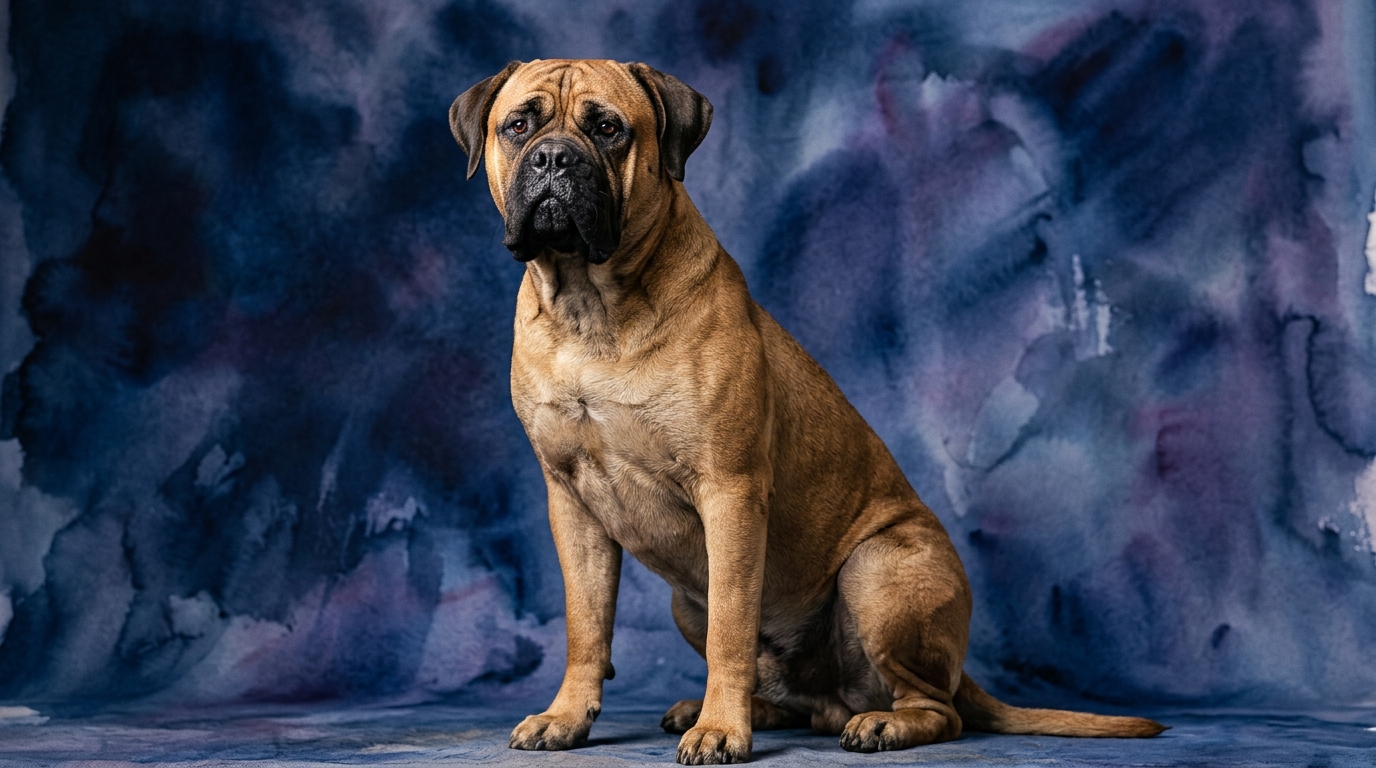
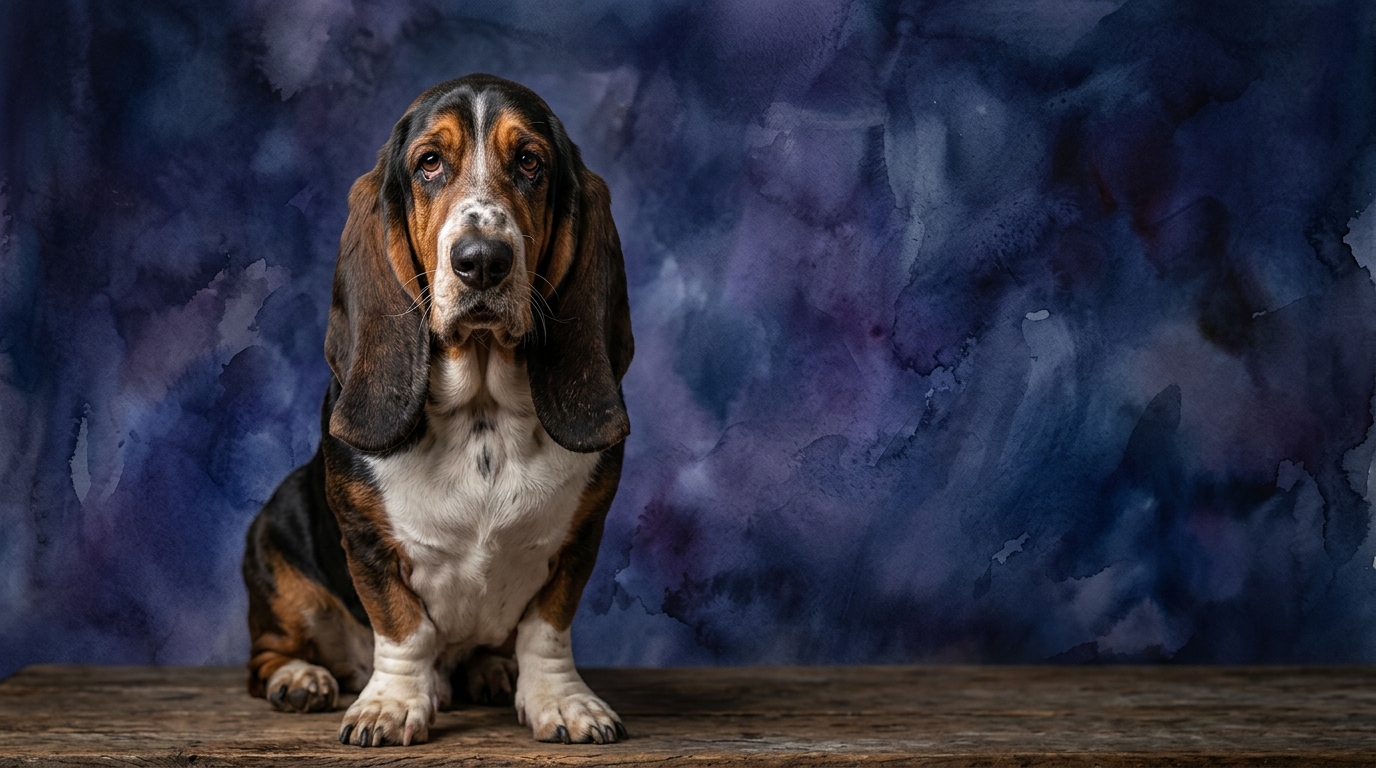
Side-by-Side IQ Profile: Bullmastiff vs. Basset Hound
The Cosmic Pet Pet IQ Lab assesses canine intelligence across five key dimensions, providing a granular view of how breeds process information and interact with their world. For both the Bullmastiff and the Basset Hound, each dimension scores a solid 3/5, indicating a competent and effective level of cognitive ability, though expressed through different lenses.
A Bullmastiff's Problem Solving score of 3/5 suggests they are adept at navigating common environmental challenges, such as figuring out how to open a gate or retrieve a toy from under furniture, often employing a direct, methodical approach. Their Training Speed, also 3/5, means they acquire new commands and routines with consistent repetition and clear instruction, demonstrating a willingness to learn without being exceptionally quick. Social Intelligence at 3/5 indicates they read human and canine cues adequately for most domestic interactions, understanding household dynamics and emotional states. The Instinctive Drive score of 3/5 for a Bullmastiff primarily reflects their historical role as guardians; they possess a natural inclination to observe and protect their territory and family, driven by a watchful vigilance. Finally, their Memory at 3/5 ensures they retain learned behaviors and routines effectively over time, recalling past experiences and commands reliably.
For the Basset Hound, a Problem Solving score of 3/5 manifests differently, often centered around their primary sensory input: scent. They excel at 'solving' scent puzzles, tracking trails, or locating hidden items, demonstrating persistence rather than rapid analytical thought. Their Training Speed of 3/5 means they learn, but often at their own pace, requiring patience and highly motivating rewards, particularly if the task doesn't align with their natural inclinations. Social Intelligence at 3/5 allows them to form strong bonds with their human families and generally coexist peacefully with other pets, though they can be quite independent. The Basset Hound's Instinctive Drive at 3/5 is overwhelmingly focused on their powerful nose; they are driven to follow interesting scents, a deep-seated instinct that often overrides other stimuli. Their Memory, also 3/5, means they remember established routines and the location of favored napping spots or food sources, but their recall for commands might be secondary to a compelling scent trail.
Where the Bullmastiff Cognitively Excels
Despite identical raw scores, the Bullmastiff's cognitive strengths lean towards practical application in a structured environment, rooted in their working breed heritage. Their 3/5 in Problem Solving, combined with their instinctive drive for guardianship, allows them to excel in scenarios requiring situational awareness and a measured response. For instance, a Bullmastiff might more readily assess a new person entering the home, discerning intent through body language and tone, and adjust their demeanor accordingly – from watchful neutrality to a subtle, protective stance if perceived as a threat. This isn't about complex deduction, but rather a reliable, instinct-driven assessment of their immediate environment.
Their blend of social intelligence and memory also gives them an edge in understanding and adhering to household rules and routines that contribute to their perceived 'job' of protecting the family unit. They might more consistently remember where they are allowed and not allowed, or the sequence of events leading to a walk or meal, because these routines contribute to a predictable and secure environment they are predisposed to maintain. Their cognitive profile supports a steady, dependable presence, capable of making sound, if not lightning-fast, judgments in familiar contexts.
Where the Basset Hound Cognitively Excels
The Basset Hound's cognitive strengths are deeply intertwined with their extraordinary olfactory capabilities and hound independence. While their Problem Solving is rated 3/5, it shines brightest when the 'problem' involves scent. A Basset Hound can meticulously unravel a complex scent trail over vast distances, processing a myriad of olfactory data points that are imperceptible to other breeds. This isn't just an instinct; it's a sophisticated form of sensory information processing and persistent tracking that requires focus and an internal map-making ability based on smell.
Their 3/5 in Instinctive Drive, specifically their unwavering dedication to scent, translates into an impressive cognitive endurance for tasks involving their nose. Where a Bullmastiff might quickly move on if a problem isn't immediately solvable or relevant to their guardianship role, a Basset Hound will demonstrate remarkable cognitive persistence when following a scent. This singular focus, while sometimes perceived as stubbornness in training, is a testament to their specialized intelligence. Their memory also supports this, allowing them to recall specific scents and their associated outcomes, making them formidable at tracking and scent discrimination tasks over time.
Which is Easier to Train and Why
When considering ease of training, the Bullmastiff generally presents a more straightforward path for the average owner compared to the Basset Hound, despite their similar IQ scores. A Bullmastiff's 3/5 Training Speed is often bolstered by their desire to please their perceived leader and their historical role requiring cooperation with handlers. They respond well to clear, consistent commands and positive reinforcement, understanding that compliance often leads to positive outcomes and reinforces their place within the family structure. Their protective instincts mean they also benefit from structured socialization and obedience, which they typically absorb effectively if introduced early and consistently.
The Basset Hound, conversely, can pose a greater challenge due to their profound independent streak and overwhelming scent drive. While their Training Speed is also 3/5, it's often overshadowed by their instinctive urge to follow a compelling scent. A Basset Hound on a trail is a Basset Hound deaf to commands; their cognitive focus is entirely consumed by their nose. Training requires immense patience, creativity, and high-value rewards to compete with the allure of a good smell. While they certainly can learn commands and house rules, their motivation is often self-directed rather than handler-oriented, making consistency and engagement from the owner absolutely paramount to overcome their natural predispositions.
Which Suits Active Owners vs. Relaxed Owners
The Bullmastiff, while large and powerful, typically suits owners who are moderately active but appreciate a dog with a calm, watchful demeanor indoors. Their cognitive profile, emphasizing guardianship and routine, means they thrive with consistent, moderate exercise—daily walks, supervised playtime in a secure yard—followed by ample relaxation time with their family. They are not high-energy dogs requiring constant stimulation, but their cognitive needs for understanding their role and surroundings mean they benefit from structured engagement, not just physical activity. Owners who enjoy teaching basic obedience, reinforcing good manners, and providing a clear, predictable environment will find a Bullmastiff a rewarding companion.
The Basset Hound, despite its somewhat relaxed appearance, actually suits owners who understand and can manage its unique activity requirements. While they are not sprinters, they need consistent, moderate exercise, particularly opportunities to explore scents safely. A 'relaxed' owner for a Basset Hound isn't one who foregoes walks, but one who embraces leisurely, sniff-filled strolls rather than intense jogs. Their cognitive drive for scent work means they need mental stimulation through scent games or safe outdoor exploration more than rigorous physical exertion. Owners who are patient, enjoy slow-paced outdoor adventures, and are prepared to manage a dog with a powerful, independent nose will find the Basset Hound a delightful, if sometimes single-minded, companion.
The Verdict
Choose the Bullmastiff if you seek a loyal, watchful companion who thrives on routine and clear leadership, offering a dependable presence and a desire to integrate into the family structure as a guardian.
Opt for the Basset Hound if you appreciate an independent, charming dog whose world revolves around scent, and you are prepared for patient training and leisurely, sniff-centric explorations.
🧠 Find Your Pet's IQ Score
Our Pet IQ Lab assessment covers 25+ tests across 5 cognitive dimensions — personalized to your breed.
Take the Full IQ Test →Frequently Asked Questions
Do Bullmastiffs and Basset Hounds have similar trainability?
While both breeds have a 3/5 training speed, their underlying motivations differ. Bullmastiffs are generally more responsive to handler-led training due to their working background, whereas Basset Hounds require more patience and high-value rewards to overcome their independent, scent-driven focus.
Which breed is better for a family with children?
Both breeds can be excellent with children, but their temperaments vary. Bullmastiffs are often gentle giants, naturally protective and tolerant, while Basset Hounds are typically laid-back and good-natured, though their independence means they might wander off mentally during play. Supervision is always crucial for any dog interacting with children.
How do their problem-solving skills differ in daily life?
A Bullmastiff's 3/5 problem-solving often involves assessing situations for safety or navigating physical obstacles in a direct manner. A Basset Hound's 3/5 problem-solving is predominantly expressed through their superior olfactory skills, meticulously following scent trails or locating hidden items, rather than complex logical reasoning.