
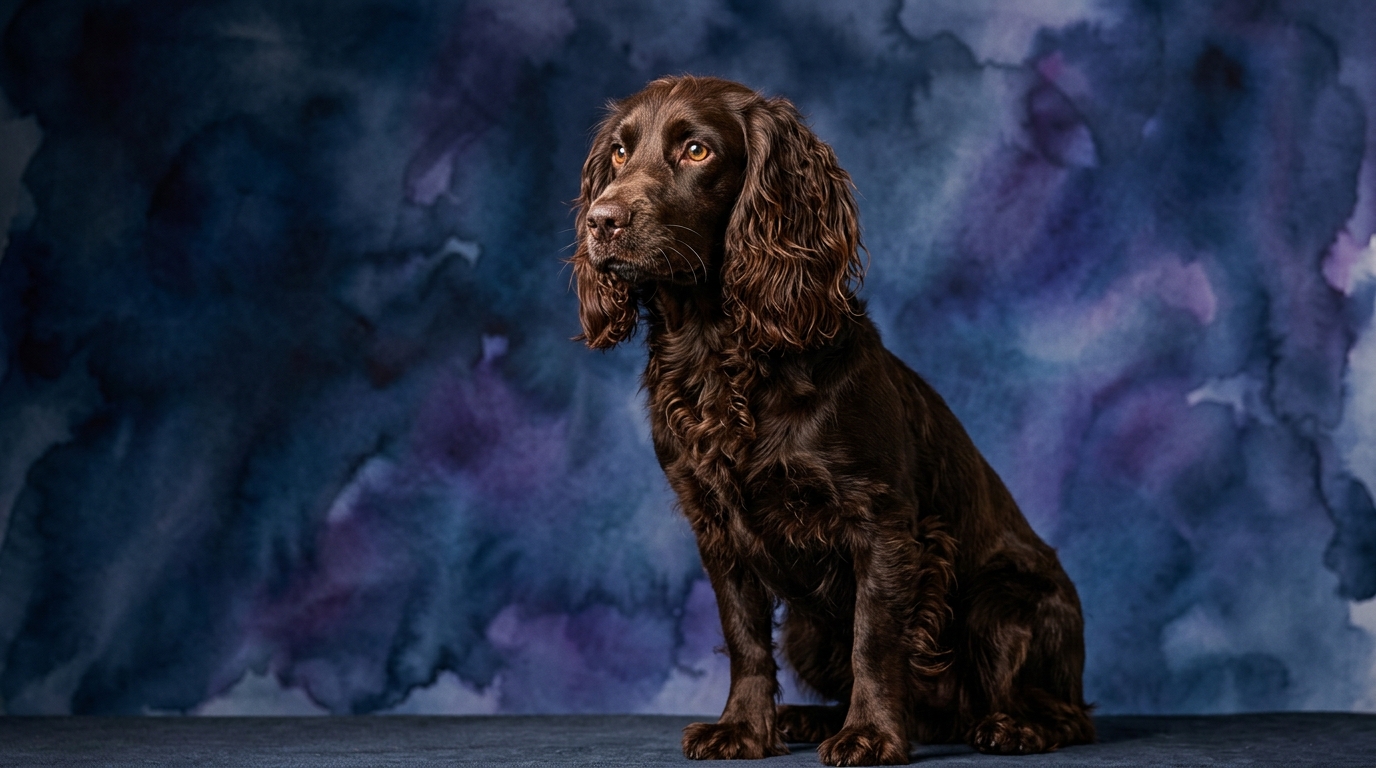
Side-by-Side IQ Profile: Understanding Their Minds
At The Cosmic Pet Pet IQ Lab, we assess canine intelligence across five key dimensions. Interestingly, both the Bullmastiff and the Boykin Spaniel register a consistent 3/5 across the board, suggesting a foundational level of cognitive competence that is practical and adaptable, rather than exceptional in any single metric. This shared scoring, however, manifests very differently in their everyday behaviors and learning styles.
For the Bullmastiff, a working breed ranked #69 by Coren for obedience intelligence, a 3/5 in **Problem Solving** indicates a practical approach to challenges, often involving assessing situations for potential threats or resource protection rather than complex, multi-step puzzles. Their problem-solving tends to be grounded in their protective instincts, evaluating changes in their environment with a methodical, observant gaze. A 3/5 in **Training Speed** suggests they learn at a steady pace, requiring consistent, clear instruction and positive reinforcement, often motivated by their bond with their handler but with an independent streak. Their **Social Intelligence** at 3/5 reflects a discerning nature; they are adept at reading familiar human emotions and intentions, particularly within their immediate family, but may be reserved with strangers. **Instinctive Drive** at 3/5 speaks to their inherent guardian nature, a steady impulse to observe and protect their territory and people. Finally, their **Memory** at 3/5 implies a good retention of routines, learned commands, and recognition of individuals and places, which is crucial for their role as a steadfast companion and protector.
The Boykin Spaniel, a sporting breed not listed in Coren's rankings, also scores 3/5 across all dimensions, but these scores are interpreted through the lens of their active, collaborative nature. Their 3/5 in **Problem Solving** often translates to quick, on-the-fly decision-making in dynamic environments, such as navigating varied terrain to retrieve game or figuring out how to reach a thrown toy. This problem-solving is typically driven by their strong prey drive and desire to work. A 3/5 in **Training Speed** means they are generally eager and capable learners, often responding well to reward-based methods and thriving on engaging, varied training sessions, though their enthusiasm can sometimes be a distraction. Their **Social Intelligence** at 3/5 is characterized by an outgoing, friendly disposition, a keen ability to read their handler's cues in a working context, and a general affability towards people and other animals. The 3/5 **Instinctive Drive** is prominently displayed in their robust retrieving and scenting abilities, a strong innate desire to hunt and work. Their **Memory** at 3/5 is reliable for commands, routes, and the location of retrieved items, essential for their field work and for remembering playful interactions.
Where the Bullmastiff Wins Cognitively
While both breeds share identical numerical scores, the Bullmastiff demonstrates a distinct cognitive strength in areas related to calm, observational judgment and a deep understanding of their immediate social structure. Their 3/5 social intelligence, combined with their 3/5 problem-solving, leans towards a nuanced discernment of intent, making them excellent evaluators of unfamiliar situations. They excel at processing subtle cues from their environment and the people within it, not for immediate action like a spaniel, but for considered assessment. This manifests as a thoughtful deliberation before responding, a cognitive trait invaluable in a guardian. Their memory, also a 3/5, is particularly robust for recalling specific individuals and their established roles within the family unit, contributing to their unwavering loyalty and consistent protective behavior. This allows them to quickly identify 'safe' versus 'unusual' patterns, contributing to their composed presence.
Where the Boykin Spaniel Wins Cognitively
The Boykin Spaniel's cognitive strengths shine in dynamic, interactive, and task-oriented scenarios. Their 3/5 problem-solving is particularly effective when applied to real-time environmental challenges, such as navigating dense cover or water during a retrieve, demanding quick spatial reasoning and adaptability. This isn't about deep contemplation but swift, effective action. Their 3/5 instinctive drive is a powerful cognitive engine, making them highly motivated to engage in activities that tap into their natural inclinations for scenting and retrieving. This drive translates into a persistent focus on tasks once engaged, demonstrating a sustained mental effort in pursuit of a goal. Furthermore, their social intelligence, while also 3/5, is geared towards collaborative work; they are exceptionally attuned to their handler's body language and verbal cues in the field, making them highly responsive partners in active pursuits.
Which is Easier to Train and Why
Determining which breed is 'easier' to train is less about raw training speed and more about aligning training methods with their inherent motivations and temperaments. Both breeds score 3/5 in training speed, implying they are capable learners. The Bullmastiff, despite its Coren ranking of #69, can present a training challenge due to its independent nature and a strong sense of self-preservation. They require a patient, confident leader who uses positive reinforcement and clear, consistent commands. Their training speed is steady, but they may need more repetition and a strong 'why' behind the command, often weighing the command against their own perceived needs. For example, a Bullmastiff might 'problem solve' whether a command is truly necessary or if they can find a more comfortable alternative, requiring the handler to be engaging and persuasive.
The Boykin Spaniel, in contrast, typically approaches training with an enthusiastic 'can-do' attitude, eager to please their handler and fulfill a purpose. Their high energy and strong instinctive drive, however, mean that training must be structured, engaging, and consistent to manage their exuberance and prevent distractions. While they pick up commands readily, their focus can wander if not kept mentally stimulated. A Boykin might learn a new trick quickly but might also become overstimulated in a busy environment, requiring the trainer to manage their energy. Therefore, while both learn at a similar pace, the Boykin Spaniel often *feels* easier to train for owners who enjoy active, game-based learning and can harness their innate drive, whereas the Bullmastiff requires a more patient, firm, and relationship-focused approach to training their steady but less overtly eager disposition.
Which Suits Active Owners vs. Relaxed Owners
The choice between these two breeds heavily depends on an owner's lifestyle and their capacity for providing appropriate mental and physical engagement. The Bullmastiff is a better fit for more relaxed owners who appreciate a calm, watchful companion. While they require daily walks and mental stimulation, their exercise needs are moderate compared to sporting breeds. Their cognitive engagement often revolves around observing their environment, patrolling their territory, and engaging in low-impact training sessions that reinforce their bond and good manners. They thrive in a home where they can be near their people, offering a quiet, reassuring presence. Their cognitive profile suits an owner who values a steadfast, observant companion over a high-energy participant in athletic endeavors.
Conversely, the Boykin Spaniel is ideally suited for active owners who lead an outdoor-oriented lifestyle. These dogs possess a boundless energy and a powerful drive to work, requiring significant daily physical exercise and consistent mental challenges. They excel in activities like hunting, retrieving, agility, dock diving, or long hikes, where their problem-solving and instinctive drives can be fully utilized. A Boykin Spaniel will not thrive as a sedentary companion; their cognitive well-being is intrinsically linked to purposeful activity. Owners who can provide regular opportunities for their Boykin to 'work' and explore will find a highly engaged and satisfied partner, one whose cognitive functions are sharpened through constant interaction with their environment and handler.
The Verdict
Choose the Bullmastiff if you seek a calm, discerning guardian whose intelligence manifests in loyal observation and steady companionship, thriving on clear boundaries and a composed home environment.
Opt for the Boykin Spaniel if your lifestyle is active and outdoorsy, and you desire a spirited, collaborative partner whose intelligence shines in dynamic problem-solving and enthusiastic participation in purposeful activities.
🧠 Find Your Pet's IQ Score
Our Pet IQ Lab assessment covers 25+ tests across 5 cognitive dimensions — personalized to your breed.
Take the Full IQ Test →Frequently Asked Questions
Do Bullmastiffs need a lot of mental stimulation?
Yes, Bullmastiffs benefit from consistent mental engagement, though not necessarily high-intensity puzzles. Activities that leverage their observational skills, guardian instincts, and memory for routines, such as 'watch' games or learning new polite behaviors, are ideal for keeping their minds sharp and preventing boredom.
How does a Boykin Spaniel's problem-solving differ from other breeds?
A Boykin Spaniel's problem-solving (3/5) is typically applied to immediate, physical challenges in dynamic environments, such as navigating obstacles during a retrieve. It's less about abstract thought and more about quick, effective decision-making driven by their strong instinctive desire to complete a task, often in collaboration with a handler.
Are both breeds good with children given their social intelligence scores?
Both breeds score 3/5 in social intelligence, but this manifests differently. A Bullmastiff can be a patient, protective presence with children they consider part of their family, while a Boykin Spaniel is often a playful, energetic companion. However, all interactions should always be supervised, considering the Bullmastiff's size and the Boykin's exuberance.