Side-by-Side Cognitive Profile
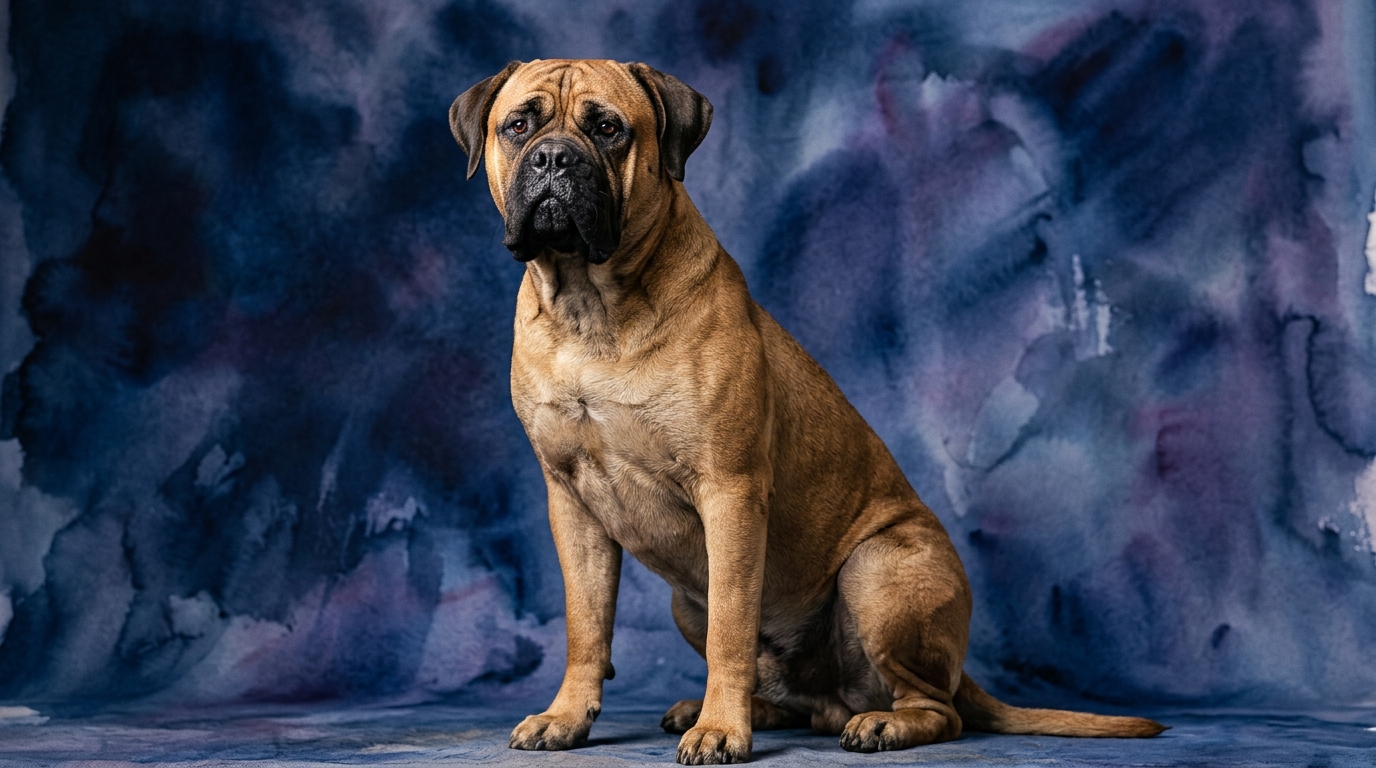
**Bullmastiff (Coren rank #69)**: Bred in 19th-century England as a gamekeeper's night dog, their cognitive profile reflects their need for measured, attentive guardian work. Their *Problem Solving (3/5)* score suggests a steady capacity to assess immediate environmental changes, such as identifying an unfamiliar presence or navigating household routines; their problem-solving leans towards practical, situational awareness within their defined territory. *Training Speed (3/5)* indicates they typically learn new commands at a moderate, consistent pace, aided by their desire to please their human companions. *Social Intelligence (3/5)* means they exhibit a balanced understanding of their human family dynamics, discerning moods and intentions, and carefully assessing welcomed guests versus potential intruders. Their *Instinctive Drive (3/5)* is pronounced, manifesting as a strong, silent deterrent rooted in their history of guarding estates. Finally, their *Memory (3/5)* demonstrates reliable recall for established routines, learned commands, and the faces of family and regular visitors, contributing to their dependable nature.
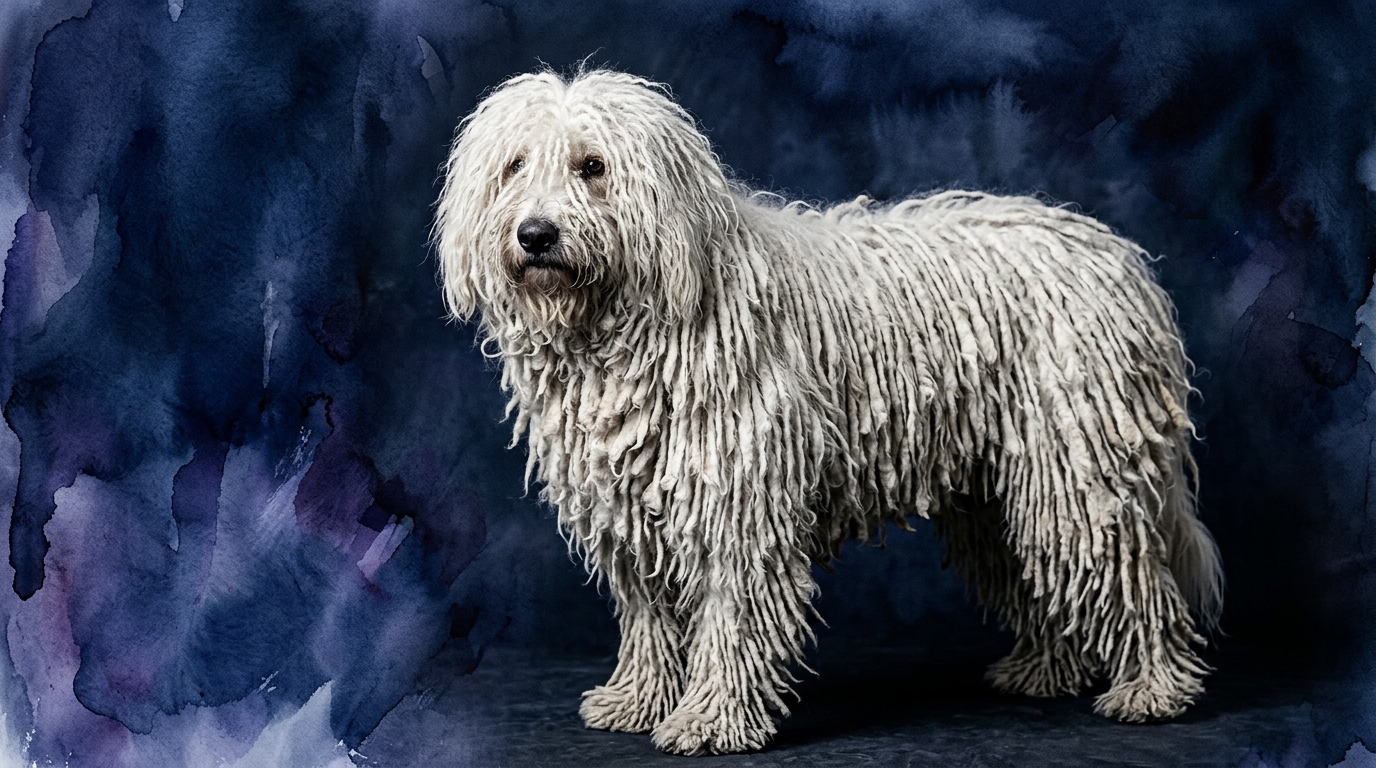
**Komondor (Coren rank #67)**: Originating from Hungary, these majestic dogs were developed to independently guard livestock, a role that profoundly shaped their mental landscape. For a Komondor, their *Problem Solving (3/5)* score translates into an ability to independently strategize and react to threats to their flock, such as identifying predators or leading sheep away from danger, often without human input. While capable of learning, their *Training Speed (3/5)* is often tempered by their independent nature, meaning they absorb information steadily but might require more motivation to *comply* if a command doesn't align with their perceived guardian duty. Their *Social Intelligence (3/5)* is primarily geared towards their charges (livestock) and immediate human family, often displaying a reserved demeanor towards strangers and excelling at reading animal behavior and environmental cues related to threat assessment. The Komondor's *Instinctive Drive (3/5)* is a powerful, unwavering instinct for protection and vigilance, making them born guardians constantly surveying their environment. They possess a robust *Memory (3/5)* for their territory, the boundaries of their charge, and past encounters, which informs their ongoing protective strategies and vigilance.
Where the Bullmastiff Wins Cognitively
The Bullmastiff, with its heritage as a gamekeeper's assistant, often demonstrates a nuanced cognitive edge in collaborative problem-solving and social discernment within a human-centric environment. While both breeds score 3/5 in problem-solving, a Bullmastiff's application of this skill frequently involves interpreting complex human cues and adapting its protective responses accordingly, perhaps distinguishing between a boisterous child and a genuine threat with greater subtlety. Their social intelligence (3/5) also shines in their ability to integrate seamlessly into diverse family dynamics, often showing a more overt desire to engage and participate in household activities. This engagement fosters a cognitive responsiveness that allows them to anticipate human needs and reactions, making them particularly adept at forming deep, interactive bonds that rely on mutual understanding rather than independent oversight.
Where the Komondor Wins Cognitively
Conversely, the Komondor’s cognitive strengths are profoundly shaped by its ancient role as an independent livestock guardian. Its 3/5 problem-solving score manifests as superior autonomous decision-making in unpredictable outdoor environments. A Komondor excels at assessing threats, strategizing defensive positions, and managing a flock without direct human command, demonstrating a self-reliance that is less common in breeds historically working *with* humans. Their instinctive drive (3/5) is uniquely channeled into persistent vigilance and a profound understanding of their territory, allowing them to patrol and protect with unwavering focus. This independence in thought processes means they can operate effectively in isolation, making complex judgments about safety and danger purely based on their innate wisdom and observational skills, a cognitive trait invaluable in their traditional role.
Which is Easier to Train and Why
When evaluating ease of training, the Bullmastiff generally presents a more straightforward path for the average owner, despite both breeds sharing a 3/5 training speed score. Bullmastiffs typically possess a strong desire to please their human companions, a behavioral trait stemming from their history of working in close cooperation with gamekeepers. This eagerness translates into a steady willingness to engage in training sessions and respond to commands, as they often perceive obedience as a way to maintain their valued position within the family unit. Their social intelligence (3/5) allows them to quickly understand what is expected of them, and while they might not be lightning-fast learners, their consistent effort and focus make progress reliable.
The Komondor, while equally capable of learning (3/5 training speed), approaches training with a different cognitive framework. Their millennia-long history of independent livestock guarding has cultivated a deep-seated self-reliance and a tendency to evaluate commands through the lens of their own perceived duty. A Komondor might learn a command but may choose not to execute it if it doesn't align with their understanding of their protective role or if they deem it unnecessary. This isn't a lack of comprehension, but rather an exercise of their formidable independent judgment. Training a Komondor often requires immense patience, understanding of their guardian instincts, and a consistent demonstration of leadership to convince them that following a command is indeed beneficial or part of their 'job.' Their instinctive drive (3/5) for protection means they are always on alert, which can sometimes make them less immediately receptive to structured obedience when their attention is on their perceived surroundings.
Suitability for Active vs. Relaxed Owners
For owners seeking a more relaxed, yet structured companionship, the Bullmastiff often proves to be a better fit. While they certainly benefit from regular exercise and mental engagement, their activity requirements are generally moderate. They enjoy being part of family life, often content with a good walk, some playtime, and plenty of relaxed time indoors with their people. Their instinctive drive (3/5) for protection is typically expressed as a calm, watchful presence within the home, making them excellent, low-key guardians who are not constantly seeking an 'active' duty. They thrive on routine and consistent human interaction, making them suitable for owners who appreciate a steadfast, devoted companion without demanding excessive physical exertion or constant supervision.
The Komondor, despite not being a high-energy sprinting breed, implicitly suits owners who are more 'active' in understanding and accommodating their unique guardian needs. Their cognitive profile, particularly their problem-solving (3/5) and instinctive drive (3/5), means they require a substantial 'job' or an environment that allows them to fulfill their protective role. This isn't about running miles, but about having a territory to patrol, perceived charges to oversee, and the mental stimulation of independent vigilance. A Komondor thrives when it has space and purpose, making them ideal for owners with larger properties, livestock, or those who truly appreciate and can manage a dog with deeply ingrained autonomous guardian instincts. A 'relaxed' owner who expects a purely passive pet might find the Komondor's self-directed nature challenging, as their mental activity is constant even when their physical activity is low.
The Verdict
If you seek a devoted, family-integrated guardian who thrives on human partnership and a predictable routine, the Bullmastiff is an excellent choice.
For those who value an autonomous, vigilant protector capable of independent decision-making in a more expansive, working environment, the Komondor stands ready to fulfill its ancient role.
🧠 Find Your Pet's IQ Score
Our Pet IQ Lab assessment covers 25+ tests across 5 cognitive dimensions — personalized to your breed.
Take the Full IQ Test →Frequently Asked Questions
Do Bullmastiffs and Komondors learn at the same rate, given their identical training speed scores?
While both score 3/5 in training speed, the *manifestation* differs; Bullmastiffs tend to be more eager to please, leading to more consistent progress, whereas Komondors learn steadily but may require more motivation to *comply* due to their independent nature.
How do their social intelligence scores (3/5) compare in practical terms?
A Bullmastiff's social intelligence often focuses on nuanced family interaction and discerning human intentions, while a Komondor's is more geared towards assessing threats to its charges and territory, often appearing more reserved with strangers.
Which breed is better for a first-time dog owner?
Generally, the Bullmastiff is a more manageable choice for a first-time owner due to their more cooperative nature and desire to please, whereas the Komondor's strong independent guardian instincts require an owner with significant experience and understanding of working breeds.