Side-by-Side IQ Profile: Unpacking Identical Scores
At The Cosmic Pet Pet IQ Lab, we assess canine intelligence across five critical dimensions, each scored on a scale of 1 to 5. Intriguingly, both the Bullmastiff and the Xoloitzcuintli register a consistent 3/5 across the board. This doesn't mean their cognitive processes are identical, but rather that their capabilities within each dimension operate at a similar, moderate level, expressed uniquely through their breed-specific temperaments and instincts.
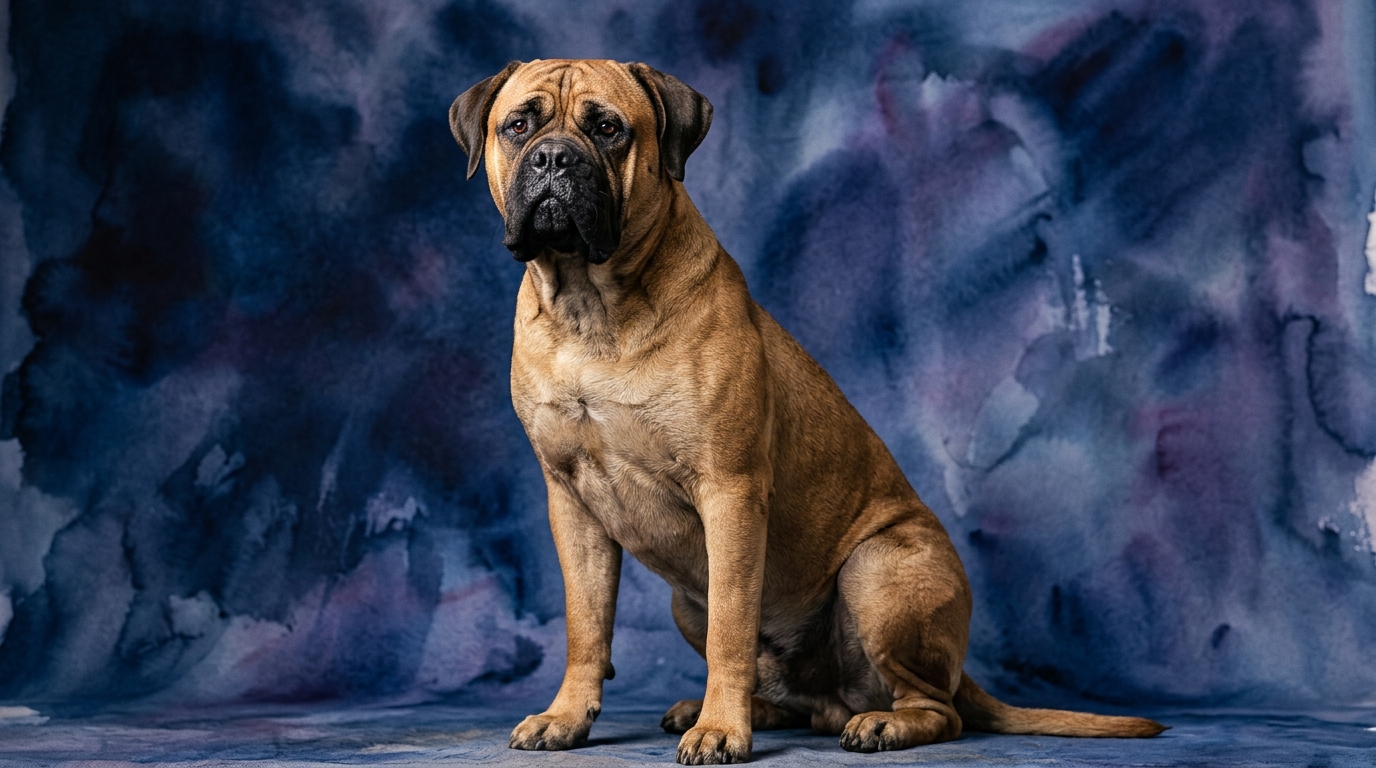
For the **Bullmastiff**, a breed developed for guarding, its **Problem Solving (3/5)** typically manifests in practical, task-oriented ways. It can learn to navigate familiar obstacles or routines, but might not spontaneously innovate solutions to entirely novel, abstract puzzles. Its **Training Speed (3/5)** reflects a moderate learning curve, requiring consistent, patient instruction to embed commands. Bullmastiffs exhibit **Social Intelligence (3/5)** through their discerning nature; they form deep bonds with their family but are reserved with strangers, reading familiar human cues effectively. Their **Instinctive Drive (3/5)** is prominently shaped by their protective heritage, showing strong territoriality and a watchful temperament. Finally, their **Memory (3/5)** allows them to retain learned behaviors and significant experiences, though occasional refreshers might be beneficial.
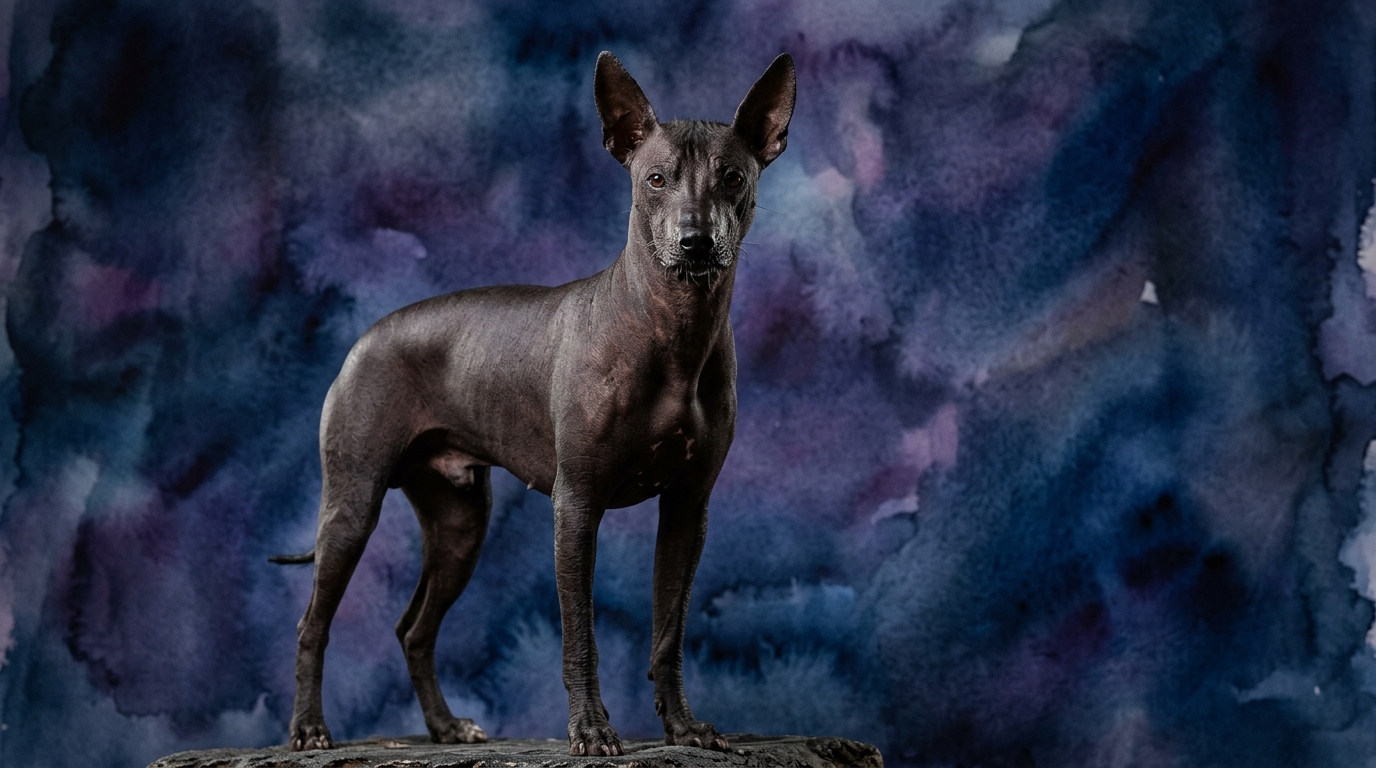
The **Xoloitzcuintli**, an ancient breed with a rich history, also scores **Problem Solving (3/5)**. These dogs can demonstrate resourcefulness in achieving desired outcomes, like figuring out how to access a favorite toy or a sunbeam, often through persistent trial and error rather than complex deduction. Their **Training Speed (3/5)** is moderate, but often paired with a sensitive and independent streak, requiring gentle, consistent methods. In **Social Intelligence (3/5)**, Xolos are renowned for their intense devotion to their chosen humans, often described as 'velcro dogs,' while remaining aloof or wary of outsiders—a selective sociability. Their **Instinctive Drive (3/5)** includes a moderate prey drive, leading them to enjoy chasing, and a natural alertness that makes them good watchdogs. Their **Memory (3/5)** is robust for routines, people, and significant events, with some owners noting a strong recall for both positive and negative interactions.
Where the Bullmastiff's Cognition Shines
Despite identical raw scores, the Bullmastiff's cognitive strengths are distinctly colored by its history as a 'Gamekeeper's Night Dog.' Its **Social Intelligence (3/5)**, while reserved, carries a profound sense of discernment. This isn't mere shyness; it's a careful assessment of new individuals and situations, a cognitive process crucial for its protective role. A Bullmastiff's calm, steady presence when encountering strangers, coupled with its watchful gaze, signifies a nuanced understanding of social dynamics from a guardian's perspective. It processes potential threats or benign intentions with a quiet gravity.
Furthermore, its **Instinctive Drive (3/5)**, specifically its guarding instinct, is highly refined. This drive isn't just a generic alertness; it's a purposeful, deep-seated inclination to deter and protect its family and territory. This requires an underlying cognitive framework that evaluates environmental cues, assesses risk, and decides on an appropriate, often non-aggressive, response. The Bullmastiff's ability to be a silent deterrent, rather than a frantic barker, speaks to a controlled, considered application of this instinct, demonstrating a specific cognitive edge in situational awareness and measured response.
Where the Xoloitzcuintli's Cognition Excels
The Xoloitzcuintli, with its ancient lineage and often more primitive behaviors, expresses its intelligence in ways that underscore its adaptability and deep human bond. Its **Problem Solving (3/5)**, while numerically identical to the Bullmastiff's, often manifests with a greater degree of self-directed persistence and physical agility. A Xolo might more readily experiment with different approaches to reach a desired object or explore its environment for novel stimulation, using its lithe body to navigate challenges. This active engagement with its surroundings to solve personal 'puzzles' can appear more independent and resourceful.
The Xolo's **Memory (3/5)** also holds a unique edge, particularly concerning routines, human nuances, and emotional contexts. Their intense devotion often means they are acutely attuned to their owner's habits, mood, and subtle commands, anticipating needs with remarkable precision. This depth of memory can extend to remembering specific interactions, both positive and negative, with a vividness that influences future behavior. While this can sometimes present training challenges if negative experiences are imprinted, it fundamentally speaks to a robust and emotionally connected memory system that allows for a rich, nuanced understanding of their world and their place within it.
Training Dynamics: Bullmastiff vs. Xoloitzcuintli
When it comes to **Training Speed (3/5)**, both breeds present a moderate learning pace, yet their underlying temperaments dictate very different approaches. The Bullmastiff, despite its Coren rank of #69 (indicating above-average working and obedience intelligence compared to many breeds), can be quite strong-willed. They often possess an underlying desire to please their family, but their sheer size and guarding instincts mean that early, consistent, and firm leadership is paramount. Training must be grounded in positive reinforcement, clearly demonstrating the 'why' behind compliance. Without proper motivation and clear boundaries, a Bullmastiff's resolve can quickly translate into stubbornness, making their considerable physical presence challenging to manage. Their guarding drive needs careful channeling through socialization and consistent command work, rather than suppression.
The Xoloitzcuintli, also with a **Training Speed (3/5)**, presents a different set of considerations. Often described as sensitive and independent, Xolos do not always possess the same overt 'eagerness to please' found in some working breeds. Harsh training methods are counterproductive and can lead to fear or complete shutdown. Instead, a gentle, consistent, and patient approach, heavily reliant on positive reinforcement and building a strong trusting relationship, is crucial. Their primitive nature means they respond best to clear, predictable boundaries and routines. While they learn commands, their independent spirit means they might choose whether to comply based on their current motivation. For an experienced owner who understands primitive breeds, the Xolo's intelligence is accessible, but it requires a nuanced, empathetic training style that respects their independent streak.
Lifestyle Match: Active vs. Relaxed Owners
Matching a dog's energy levels and cognitive needs to an owner's lifestyle is essential for a harmonious relationship. The **Bullmastiff**, despite its 'Working' group classification, is often considered a 'gentle giant' or 'couch potato' once past puppyhood. Their exercise requirements are moderate; daily walks, some playtime in a secure yard, and mental stimulation are sufficient. They are not endurance athletes but enjoy purposeful activity alongside their humans. These dogs are well-suited for owners who appreciate a calm, watchful presence in the home and can provide consistent, moderate physical activity. Their size and potential for protective behavior demand an owner who is confident, consistent, and prepared to be a strong leader, even if their own lifestyle is more relaxed.
The **Xoloitzcuintli**, while a 'Non-Sporting' breed, can be surprisingly energetic, especially in their younger years. They require consistent daily exercise beyond a simple stroll. Activities like brisk walks, hiking, active playtime, and even dog sports can fulfill their physical and mental stimulation needs. Their agility and intelligence mean they thrive when given tasks or opportunities to explore. While they are intensely affectionate and enjoy cuddling, they are not content to be purely sedentary. Xolos are best suited for active owners who can provide consistent physical engagement and mental challenges. Their sensitivity also means they flourish in a calm, structured home environment where their needs for activity are met without overstimulation.
The Verdict
Choose the Bullmastiff if you seek a loyal, protective companion with a calm demeanor, valuing a discerning social intelligence focused on family protection, and are prepared for patient, consistent training with a large, strong-willed dog.
Opt for the Xoloitzcuintli if you desire an ancient, devoted, and active companion, ready to commit to gentle, consistent training for a sensitive, independent primitive breed, and appreciate a deep, selective bond with an agile, resourceful dog.
🧠 Find Your Pet's IQ Score
Our Pet IQ Lab assessment covers 25+ tests across 5 cognitive dimensions — personalized to your breed.
Take the Full IQ Test →Frequently Asked Questions
Are Bullmastiffs generally good with children?
Their calm and patient nature, combined with a natural protective instinct towards their family, often makes Bullmastiffs excellent companions for children. However, due to their substantial size, supervised interactions are always recommended to prevent accidental bumps.
Do Xoloitzcuintli require significant grooming?
No, Xoloitzcuintli are renowned for their minimal grooming needs, particularly the hairless variety. Their skin requires regular moisturizing and sun protection, while the coated variety only needs occasional brushing.
What is the primary difference in their protective instincts?
The Bullmastiff's protection is typically a deliberate, watchful deterrence of perceived threats, often expressed through its imposing presence and quiet assessment. The Xoloitzcuintli's protective instinct is often more vocal and reactive, acting as an alert system to strangers or unusual occurrences.