Side-by-Side Cognitive Profiles
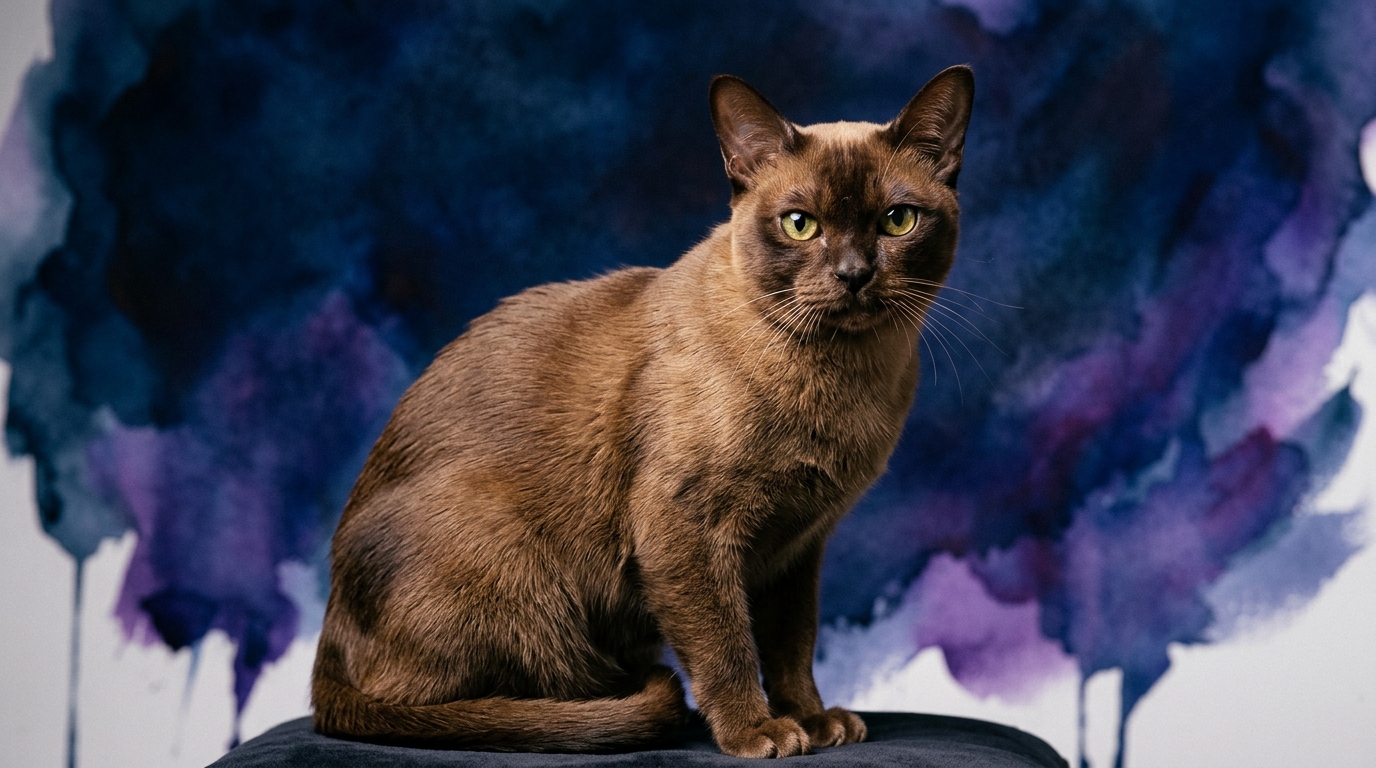
**Burmese**
**Problem Solving (4/5):** The Burmese cat displays a notable capacity for figuring out environmental challenges, like manipulating puzzle toys to retrieve treats or learning to open certain cabinets. They approach new situations with an exploratory mindset, often experimenting with different actions until they achieve a desired outcome, indicating strong adaptive learning.
**Training Speed (5/5):** This breed picks up new commands and routines with remarkable alacrity. Their eagerness to engage and their ability to quickly associate verbal cues or hand signals with specific actions make them exceptional students, often mastering tricks or leash training faster than many other felines. Their responsiveness to positive reinforcement is particularly pronounced.
**Social Intelligence (5/5):** Burmese cats excel at understanding and responding to human emotional states and social cues. They form deep, communicative bonds with their family members, often seeking out interaction and initiating play or affectionate moments. Their adeptness at reading subtle body language and vocal tones allows for highly nuanced interspecies communication.
**Instinctive Drive (3/5):** While they possess natural feline hunting instincts, these are generally moderate compared to some other breeds. Their drive to stalk, chase, and pounce is present and can be satisfied with interactive play, but it doesn't typically dominate their daily activities or manifest as an overwhelming need for intense predatory simulation.
**Memory (4/5):** Burmese cats exhibit a robust memory, recalling routines, specific locations of favored toys or treats, and past interactions with people or other pets. They remember complex sequences of events and can apply learned solutions to similar problems encountered days or weeks later, suggesting strong long-term recall.
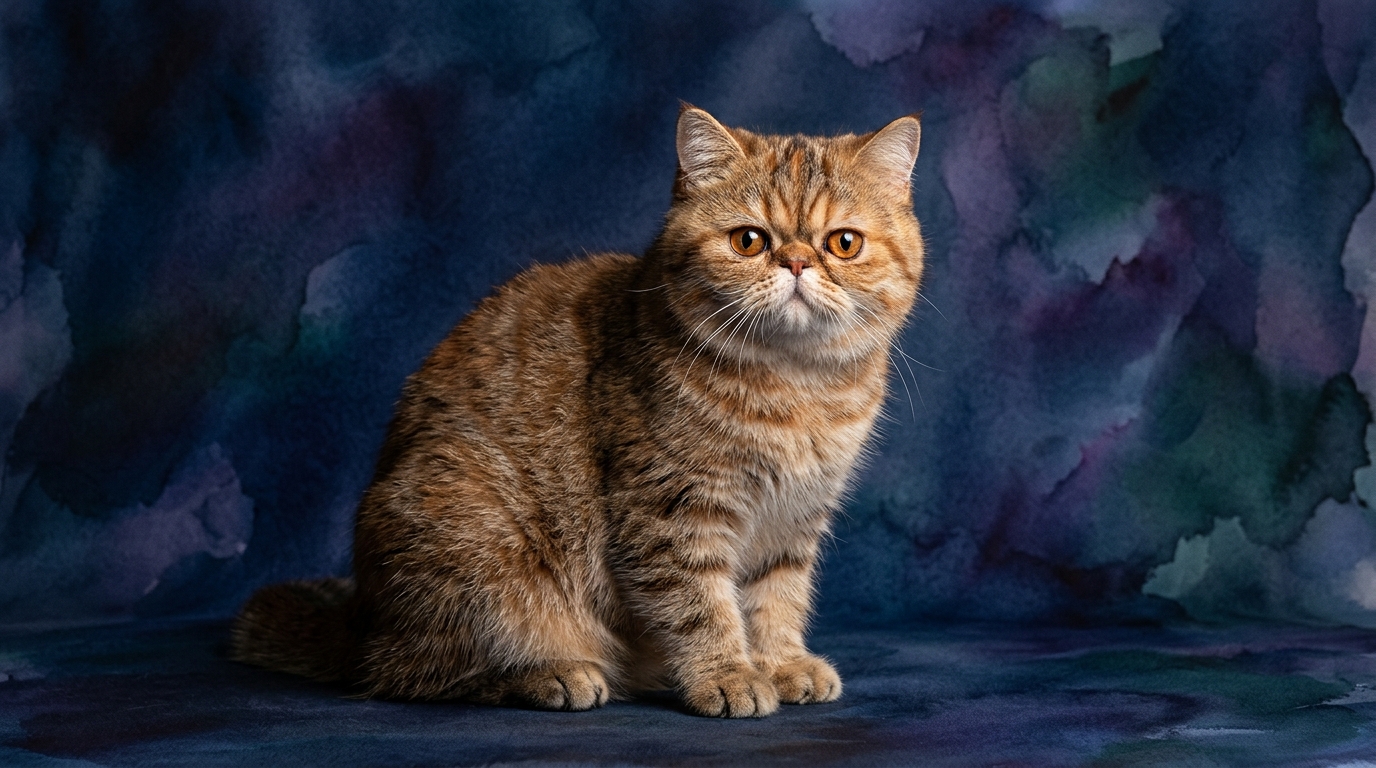
**Exotic Shorthair**
**Problem Solving (3/5):** Exotic Shorthairs typically approach environmental puzzles with a more measured, sometimes less persistent, attitude. While they can solve straightforward problems, they might require more repetition or simpler challenges to grasp complex sequences. Their problem-solving efforts are often driven by immediate comfort or food rewards rather than an intrinsic drive to explore complex mechanisms.
**Training Speed (3/5):** This breed can be trained, but they generally take more time and consistent effort to learn new commands or modify behaviors. Their learning style benefits from patience and very clear, positive reinforcement, as they may not possess the same inherent eagerness to please or rapid associative learning capabilities as some more active breeds.
**Social Intelligence (3/5):** Exotic Shorthairs are affectionate and enjoy companionship, but their social interactions tend to be more understated. They appreciate a calm presence and will often seek out quiet cuddles rather than engaging in boisterous play or constant communication. They are perceptive enough to recognize familiar faces and routines, but may not delve as deeply into complex human emotional nuances.
**Instinctive Drive (3/5):** Similar to the Burmese, the Exotic Shorthair has a moderate instinctive drive. They enjoy gentle play that simulates hunting, but their energy levels are generally lower, leading to less intense or prolonged bursts of predatory behavior. Their focus is often more on comfort and relaxation than on active pursuit.
**Memory (3/5):** Exotic Shorthairs possess a functional memory for daily routines, favorite napping spots, and the location of their food bowls. They remember familiar people and places, but their recall of intricate sequences or less frequently encountered situations might not be as sharp or enduring as breeds with higher scores in this dimension.
Where the Burmese Excels Cognitively
The Burmese cat distinctly outperforms the Exotic Shorthair in several cognitive domains, particularly in areas requiring active engagement and rapid learning. Their Training Speed score of 5/5 highlights an exceptional ability to grasp new concepts quickly, making them highly responsive to clicker training for tricks like 'sit' or 'fetch,' or even walking on a leash. This contrasts with the Exotic Shorthair's more deliberate learning pace. Furthermore, the Burmese's Social Intelligence, also rated 5/5, means they are remarkably attuned to human emotions and social dynamics, often initiating interactions and displaying a profound understanding of their owner's mood, a nuanced level of connection that is less pronounced in the more independent Exotic Shorthair. Their superior Problem Solving (4/5 vs. 3/5) allows them to more readily navigate complex environments, such as figuring out how to open child-proofed cabinets or solving multi-step puzzle feeders, demonstrating a proactive curiosity.
Cognitive Strengths of the Exotic Shorthair
While the Burmese excels in active cognitive domains, the Exotic Shorthair's cognitive profile offers distinct advantages for owners seeking a specific type of feline companionship. Their moderate instinctive drive (3/5, matching the Burmese) means they are less likely to be consumed by intense predatory urges, contributing to a tranquil home environment without constant demands for vigorous play. This translates to a cat less prone to hyperactive behaviors driven by instinct. Additionally, their more subdued social intelligence (3/5) means they are content with a less demanding social role, appreciating calm proximity over constant interactive communication. This allows them to thrive in quieter settings, where their cognitive focus is on comfort and peaceful coexistence rather than elaborate problem-solving or sustained energetic engagement.
Ease of Training: Burmese vs. Exotic Shorthair
The Burmese cat is distinctly easier to train due to its impressive Training Speed (5/5) and high Social Intelligence (5/5). They possess an inherent eagerness to interact and please their human companions, making them highly receptive to positive reinforcement methods. A Burmese will often quickly associate a specific sound, like a clicker, with a reward, and then link that reward to a desired action, such as jumping onto a designated perch or coming when called. Their strong memory (4/5) further solidifies learned behaviors over time. In contrast, the Exotic Shorthair, with its 3/5 scores in both Training Speed and Social Intelligence, requires more patience and consistency. While trainable, they are less driven by the need for constant interaction or approval, and their learning curve is generally flatter. An Exotic Shorthair might understand a command but choose not to perform it if the motivation isn't immediately compelling, or they might require many more repetitions to solidify the association compared to the Burmese's rapid uptake. This difference stems from the Burmese's more outgoing and people-oriented disposition versus the Exotic Shorthair's generally more placid and independent nature.
Matching Feline Intelligence to Owner Lifestyles
For active owners who relish engaging with their pets and appreciate a feline companion that seeks out interaction, the Burmese is an excellent match. Their high Problem Solving (4/5) and Social Intelligence (5/5) mean they thrive on interactive play, puzzle feeders, and even learning tricks or going for leash walks. They will actively participate in family life, often following their owners from room to room, initiating games, or "conversing" with soft chirps and meows. They require mental stimulation to prevent boredom and will reward an owner's efforts with enthusiastic participation. Conversely, the Exotic Shorthair is ideally suited for relaxed owners seeking a more tranquil and undemanding companion. Their moderate scores across all cognitive dimensions indicate a cat that is content with a quieter lifestyle. They enjoy gentle affection and proximity but are typically not insistent on constant play or elaborate mental challenges. A relaxed owner will appreciate their calm demeanor and independent streak, as the Exotic Shorthair is often happy to observe from a comfortable spot, providing companionship without requiring intensive, high-energy engagement.
The Verdict
If you desire an interactive, highly trainable feline companion who will actively engage in family life, thrives on mental stimulation, and forms deeply communicative bonds, the Burmese is an unparalleled choice.
Opt for the Exotic Shorthair if you prefer a calm, affectionate, and less demanding companion who enjoys a serene household, offers quiet comfort, and requires less intensive interactive engagement.
🧠 Find Your Pet's IQ Score
Our Pet IQ Lab assessment covers 25+ tests across 5 cognitive dimensions — personalized to your breed.
Take the Full IQ Test →Frequently Asked Questions
Can Exotic Shorthairs be trained to do tricks?
Yes, Exotic Shorthairs can be trained to perform tricks, but it generally requires more patience and consistent positive reinforcement than with a Burmese. They may learn at a slower pace and might not be as eager to perform on command, but with dedication, basic tricks and routines are achievable.
Are Burmese cats prone to destructive behaviors if not mentally stimulated?
Due to their high problem-solving abilities and social intelligence, Burmese cats can become bored or seek out their own entertainment if not provided with sufficient mental and physical stimulation. This could potentially lead to behaviors like exploring forbidden areas or manipulating objects, though typically not destructive in a malicious sense.
How do their social needs compare with other cat breeds?
The Burmese has exceptionally high social needs, often described as dog-like in their devotion and desire for interaction, making them more demanding than many other cat breeds. The Exotic Shorthair has moderate social needs, enjoying companionship but often content with less intense interaction, placing them on the more independent side compared to the most clingy breeds.