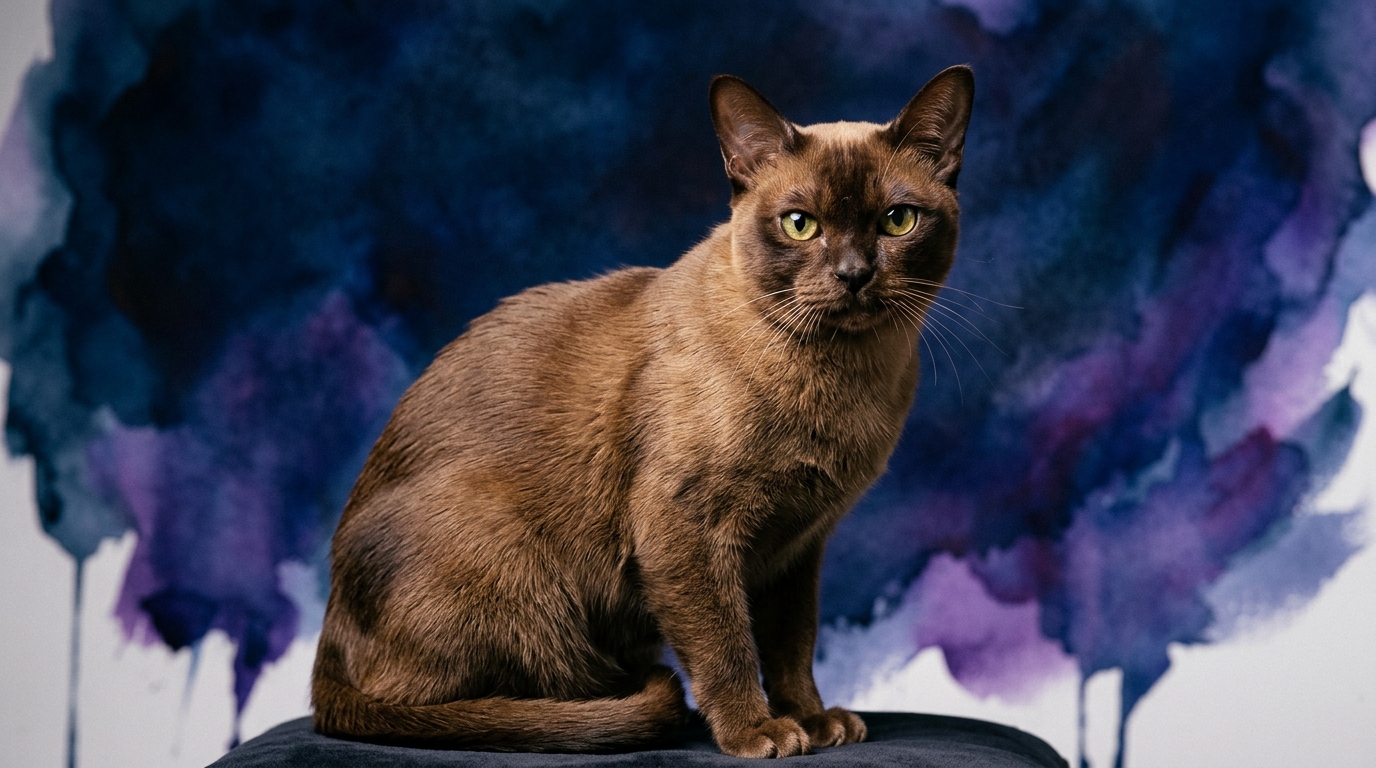
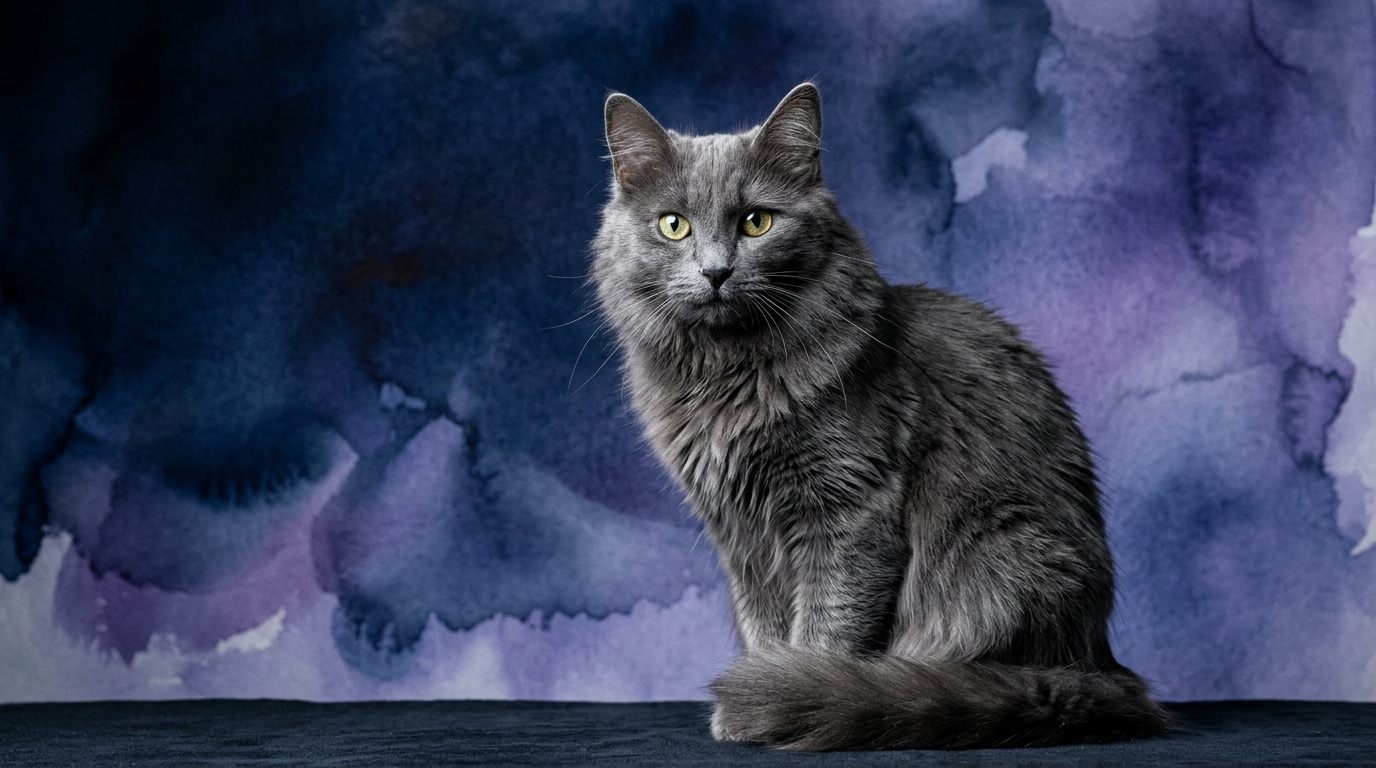
Side-by-Side IQ Profile: Burmese vs. Nebelung
The Burmese cat presents a compelling profile of cognitive agility, particularly in its interaction with the world. Its Problem Solving rating of 4/5 suggests a breed adept at navigating complex environments, often figuring out how to open cabinets or manipulate objects to achieve a goal, demonstrating a proactive and curious mind. With a perfect 5/5 in Training Speed, they absorb new commands and routines with remarkable ease, making them highly responsive companions for interactive owners. Their Social Intelligence also scores a perfect 5/5, indicating an exceptional capacity to read human emotions, engage in reciprocal interactions, and integrate seamlessly into a family dynamic, often seeking out companionship. A moderate Instinctive Drive of 3/5 means their natural hunting behaviors are present but often channeled through engaging play rather than overt predatory focus, while their 4/5 Memory ensures they retain learned behaviors and past experiences, contributing to their consistent and eager responsiveness.
In contrast, the Nebelung exhibits a more measured and discerning cognitive approach. Its Problem Solving ability at 3/5 points to a cat that can solve straightforward puzzles but might take more time or require clearer cues for intricate challenges, often preferring observation before action. A Training Speed of 3/5 indicates an average pace of learning, meaning consistency and patience are key when teaching new behaviors, as they are less driven by immediate broad social reward. Their Social Intelligence, also at 3/5, suggests a selective and often reserved approach to social interaction; they typically form deep, enduring bonds with a few chosen individuals rather than engaging broadly with everyone. The Nebelung's Instinctive Drive matches the Burmese at 3/5, indicating a similar level of natural hunting inclination, often expressed through focused, solitary play. Finally, a Memory rating of 3/5 implies they retain information adequately, but perhaps without the immediate recall or long-term detail seen in breeds with higher scores, requiring more routine reinforcement.
Where the Burmese Excels Cognitively
The Burmese's cognitive strengths truly shine in areas demanding quick adaptation and nuanced social finesse, making them exceptionally engaging companions. Their superior Problem Solving (4/5) means they are often the ones figuring out how to open childproof latches, retrieve toys from challenging spots, or even manipulate household objects to get attention, demonstrating a proactive and persistent approach to their environment. This isn't just about mischief; it reflects a genuine curiosity and a drive to overcome obstacles, often with creative solutions. Furthermore, their unparalleled Training Speed (5/5) means a Burmese can master complex tricks, leash training, or even respond to their name with remarkable swiftness, often picking up new routines after just a few repetitions. This rapid assimilation of information makes them exceptionally rewarding for owners who enjoy interactive training sessions and seek a highly responsive pet.
Perhaps most notably, the Burmese's perfect 5/5 in Social Intelligence sets them apart as deeply empathetic and communicative felines. They possess an acute ability to discern human moods and intentions, often responding with comforting purrs, playful nudges, or even a soft head-butt precisely when needed, demonstrating a profound understanding of social cues. This breed doesn't just coexist; they actively participate in the emotional landscape of their home, forming deep, intuitive connections that go beyond mere companionship. Their robust capacity to learn and remember social interactions and routines (Memory 4/5) further cements their role as highly attuned family members, often anticipating routines or responding to subtle gestures that other breeds might overlook, creating a truly symbiotic relationship.
Where the Nebelung Shines Cognitively
While the Nebelung's cognitive scores might appear lower than the Burmese, their strengths lie in a different kind of intellectual engagement, often characterized by thoughtful observation and a discerning nature rather than boisterous activity. Their 3/5 Problem Solving, for instance, isn't a deficit but rather a preference for a more deliberate approach; a Nebelung might spend more time observing a new puzzle or situation before attempting a solution, often choosing the most efficient path once decided, rather than engaging in frantic trial-and-error. This careful consideration can make them surprisingly effective at tasks they deem worthwhile, even if their initial learning speed (Training Speed 3/5) is more moderate, as they prioritize precision.
The Nebelung's 3/5 Social Intelligence, though lower than the Burmese's broad sociability, reflects a profound depth in their chosen relationships, showcasing a selective and intense loyalty. Instead of engaging with everyone, they often exhibit a keen selective intelligence, forming intensely loyal bonds with a select few individuals. This means they are exceptionally good at understanding the specific nuances of *their* person's routine, preferences, and subtle cues, becoming highly attuned and devoted companions within a smaller, trusted circle. Their moderate Memory (3/5) supports this by allowing them to consistently recall the habits, comforts, and safe spaces associated with their inner circle, fostering a predictable and secure environment that they thrive in, providing a deep, quiet companionship. Their consistent Instinctive Drive (3/5), mirroring the Burmese, also means they maintain a healthy balance of natural feline behaviors, such as focused play, without being overly distracted by their environment, allowing for a concentrated engagement with their preferred activities or people.
Trainability: Which Cat is Easier to Teach?
Without question, the Burmese cat is significantly easier to train due to its exceptional Training Speed (5/5) and high Social Intelligence (5/5), which combine to create a highly receptive learner. A Burmese genuinely enjoys interaction and quickly grasps the cause-and-effect of training, often responding to positive reinforcement with eagerness and a desire to please its human companion. For example, teaching a Burmese to "sit," "stay," or "fetch" can be a matter of a few short, consistent sessions, as they are motivated by the engagement itself and the reward of human attention. Their strong memory (4/5) ensures that once a behavior is learned, it's retained with remarkable consistency, making them reliable in their responses and capable of learning a wide repertoire of commands.
The Nebelung, while certainly trainable, requires more patience and a different approach, aligning with its 3/5 Training Speed and Social Intelligence. They are less driven by the broad social engagement that motivates a Burmese and may take longer to associate commands with actions, often needing more repetition and clearer, quieter cues. Training a Nebelung often succeeds best with calm, consistent sessions focused on building trust with a single individual, rather than boisterous group activities or numerous trainers. Their tendency to be reserved means they might be less inclined to perform for novelty or general attention, preferring to learn behaviors that are meaningful within their established routines or directly benefit their chosen person, making consistency crucial.
Matching Feline Intellect to Your Lifestyle
The Burmese is an ideal companion for active owners who relish interactive engagement and enjoy a cat that is deeply integrated into daily life. Their high Problem Solving (4/5) and boundless Social Intelligence (5/5) mean they thrive on mental stimulation, enjoying puzzle toys, learning new tricks, and actively participating in family activities, often following their owners from room to room. Owners who appreciate a cat that "talks back" with various vocalizations and actively seeks out companionship will find the Burmese's communicative nature and constant, affectionate presence a perfect fit. They adapt well to new routines, environments, and people, making them suitable for dynamic and bustling households.
Conversely, the Nebelung is better suited for relaxed owners who appreciate a quieter, more independent, yet deeply loyal companion, preferring a calm and predictable environment. While they enjoy playtime and affection, their 3/5 Social Intelligence means they prefer a serene atmosphere and might retreat from excessive commotion or unfamiliar guests. Owners who understand and respect a cat's need for personal space, while still providing consistent affection and a predictable routine, will find a devoted and comforting friend in the Nebelung. They thrive in homes where their chosen person is present but not constantly demanding interaction, offering a serene and watchful presence rather than an insistent one, making them perfect for tranquil settings.
The Verdict
For those seeking a highly interactive, quick-learning, and exceptionally social feline companion, the Burmese, with its rapid training and deep social intelligence, is the clear choice.
If your home thrives on a quieter presence, valuing deep, selective bonds and a thoughtful, observant companion, the Nebelung will offer profound loyalty and a serene, yet engaged, partnership.
🧠 Find Your Pet's IQ Score
Our Pet IQ Lab assessment covers 25+ tests across 5 cognitive dimensions — personalized to your breed.
Take the Full IQ Test →Frequently Asked Questions
Are Burmese cats good with children and other pets?
Yes, Burmese cats, with their high Social Intelligence (5/5), typically adapt very well to children and other household pets, often seeking out interaction and play. Their adaptable nature makes them excellent family companions, provided introductions are managed thoughtfully.
Do Nebelung cats enjoy playing?
Absolutely, Nebelung cats do enjoy playing, particularly with their chosen person, often displaying their moderate Instinctive Drive (3/5) through focused hunting games. They might prefer consistent, one-on-one play sessions over boisterous group activities, valuing the bond formed during these interactions.
How do Burmese and Nebelung memory differences affect their behavior?
The Burmese's superior Memory (4/5) means they consistently recall learned behaviors and routines, making them highly predictable and responsive to commands. The Nebelung's moderate Memory (3/5) means they retain information adequately, but might benefit from more consistent reinforcement for complex tasks, relying more on established routines within their trusted environment.