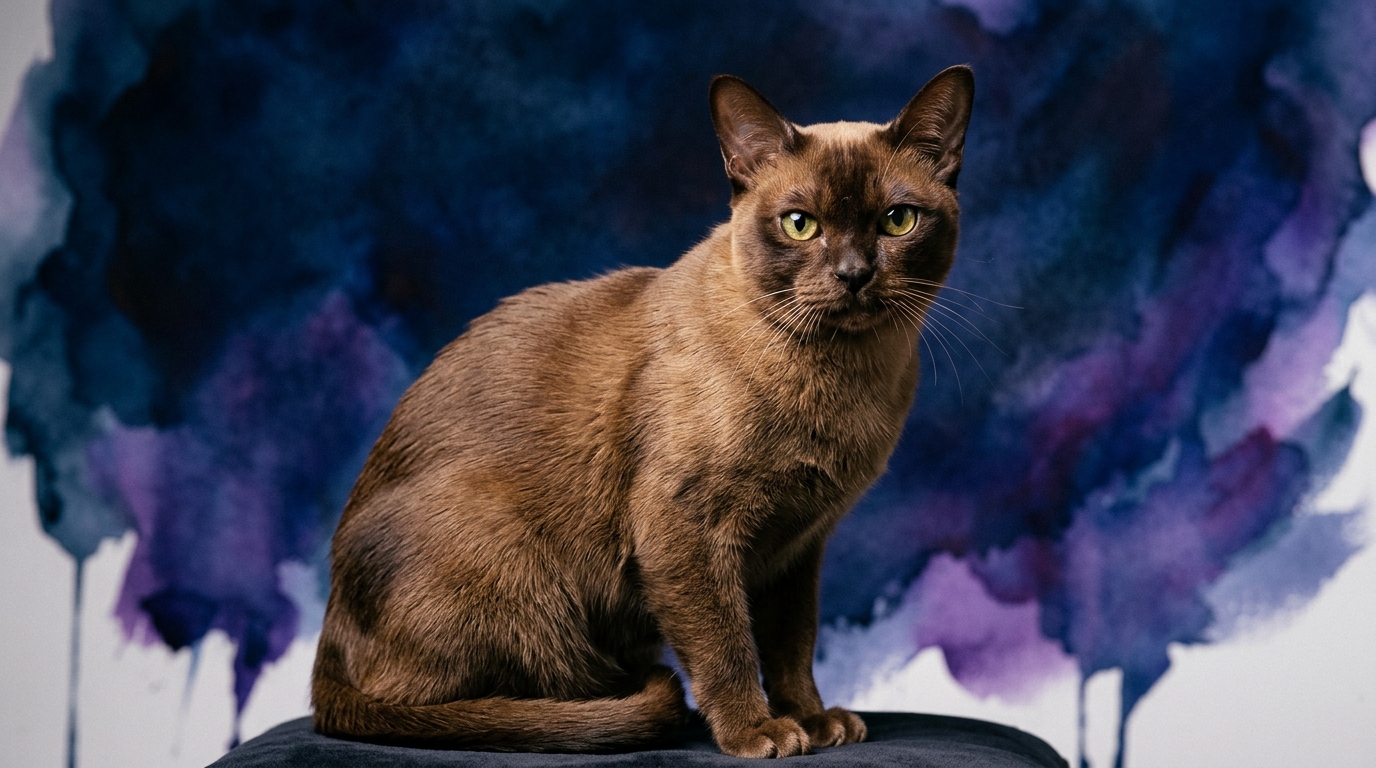
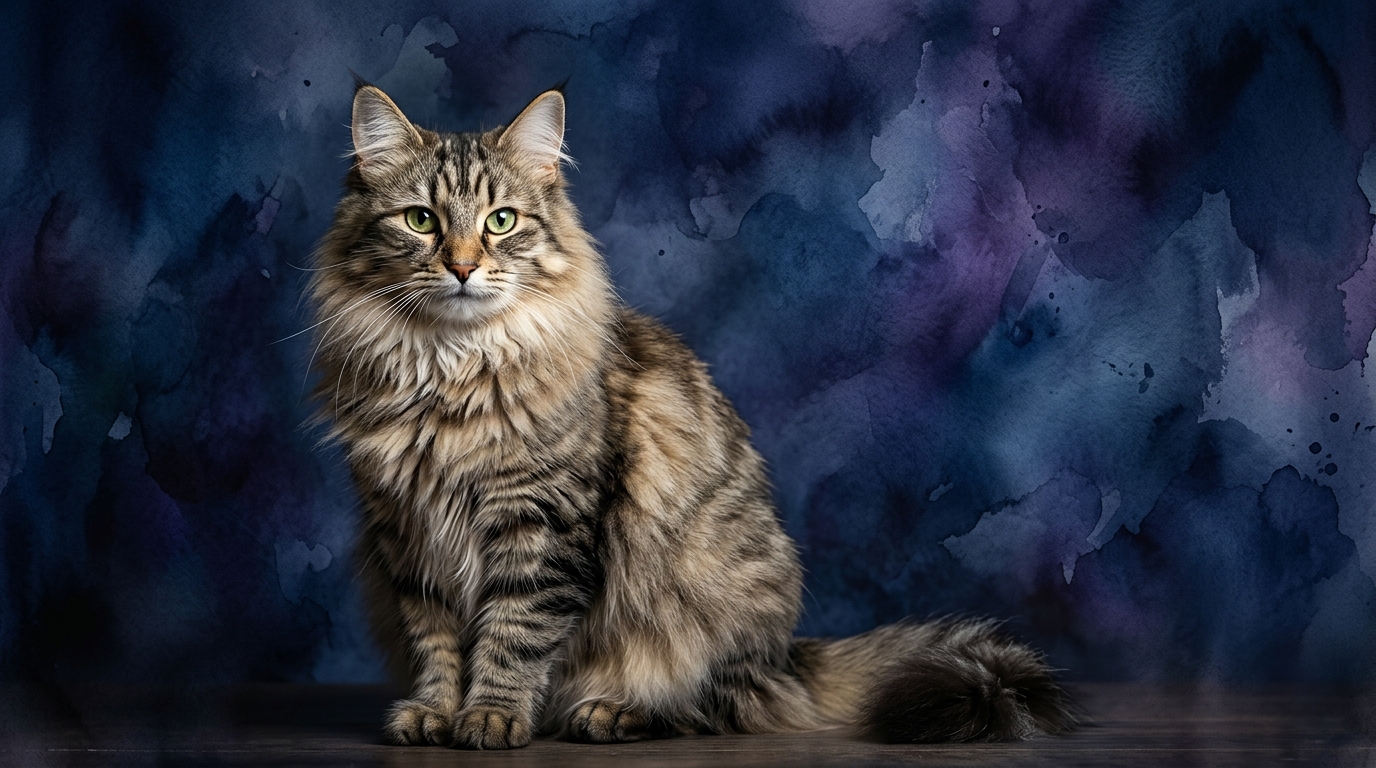
Side-by-Side IQ Profile: Burmese vs. Norwegian Forest Cat
The Cosmic Pet Pet IQ Lab provides a fascinating framework for understanding feline cognition, breaking down intelligence into five key dimensions. For the Burmese, these dimensions paint a picture of a highly interactive and adaptable companion. Their Problem Solving is rated 4/5, indicating a strong capacity for figuring out environmental puzzles, such as opening cabinets or manipulating objects to achieve a goal, often driven by their curiosity and desire for interaction. Their Training Speed is an exceptional 5/5, meaning they learn new commands and routines with remarkable quickness, often picking up complex tricks after just a few repetitions, making them highly responsive to guidance. Social Intelligence, another standout at 5/5, highlights their profound understanding of human emotions and social cues; they actively seek and thrive on interaction, often initiating cuddles or responding empathetically to their owners' moods. Their Instinctive Drive is a moderate 3/5, suggesting that while they enjoy play, their natural hunting and exploratory instincts are less intense, more inclined to engage in interactive games with humans rather than extensive solitary stalking or climbing expeditions. Finally, their Memory is a robust 4/5, reliably recalling people, daily routines, and previously learned behaviors or preferred hiding spots for toys over long periods.
In contrast, the Norwegian Forest Cat’s IQ profile reflects a more independent and naturally driven feline, perfectly adapted to their heritage. Their Problem Solving also scores 4/5, but this manifests in a practical, independent approach, adept at navigating complex outdoor environments, finding clever ways to access high perches, or overcoming physical obstacles with ingenuity. Their Training Speed is a steady 3/5; while capable of learning, they require consistent, patient guidance and clear motivation, often responding best when the training aligns with their natural inclinations or offers a clear reward. Social Intelligence is rated 3/5, indicating that these cats are affectionate but tend to be more reserved and observant in their social interactions, enjoying companionship on their own terms rather than constantly seeking active engagement, though they form deep bonds with their chosen humans. Where they truly shine is their Instinctive Drive, a commanding 5/5, reflecting pronounced natural instincts for hunting, climbing, and exploring, requiring outlets for vigorous play, scaling heights, and investigating their surroundings with intense focus and agility. Like the Burmese, their Memory is a reliable 4/5, demonstrating strong recall for their territories, the habits of their human companions, and the locations of resources or favored napping spots, contributing to their confident independence.
Where the Burmese Wins Cognitively
When it comes to cognitive strengths, the Burmese cat's superior Training Speed and Social Intelligence give them a distinct edge in human-cat interaction. Their perfect 5/5 score in Training Speed means they assimilate new information and respond to cues with remarkable efficiency. This isn't just about performing tricks; it translates into a cat that quickly understands household rules, adapts to new routines, and can be easily guided through positive reinforcement. Their eagerness to engage makes them highly receptive to learning complex tasks and routines, often mastering commands that might take other breeds significantly longer.
Furthermore, the Burmese's unparalleled 5/5 Social Intelligence allows them to navigate the nuances of human companionship with profound understanding. They are incredibly attuned to their owners' moods and intentions, often anticipating needs or offering comfort without explicit prompting. This deep social acuity enables them to form exceptionally strong bonds, making them highly responsive to verbal and non-verbal communication. Their cognitive strength lies in their ability to integrate seamlessly into human family dynamics, making them not just pets, but active, empathetic participants in daily life.
Where the Norwegian Forest Cat Wins Cognitively
The Norwegian Forest Cat's cognitive prowess truly shines in areas rooted in their strong natural instincts and independent spirit. Their top score of 5/5 in Instinctive Drive means they possess an innate, powerful urge to explore, hunt, and climb, translating into exceptional environmental awareness and problem-solving within natural or simulated wild contexts. While their Problem Solving score of 4/5 matches the Burmese, its application differs; the Norwegian Forest Cat excels at figuring out how to scale tall structures, navigate complex outdoor terrains, or strategically 'hunt' toys, showcasing ingenuity driven by their inherent exploratory nature.
This robust physical and mental drive equips them with a unique form of intelligence focused on self-sufficiency and mastering their physical world. They are adept at creating their own entertainment, meticulously investigating every nook and cranny, and overcoming physical challenges with a thoughtful approach. Their cognitive strength is less about social manipulation and more about practical, hands-on engagement with their environment, making them masterful navigators and resourceful individuals who thrive when given opportunities to exercise these deep-seated natural behaviors.
Which is Easier to Train and Why
Based on their Pet IQ Lab profiles, the Burmese cat is unequivocally easier to train than the Norwegian Forest Cat. The Burmese's perfect 5/5 Training Speed, coupled with their 5/5 Social Intelligence, creates a highly receptive and motivated learner. They genuinely enjoy the process of interaction and learning as a form of bonding with their human companions. This means they pick up cues quickly, respond enthusiastically to positive reinforcement, and are often eager to please, making command training, leash walking, or even complex tricks a relatively straightforward and rewarding experience.
The Norwegian Forest Cat, with a Training Speed of 3/5, is certainly trainable, but they approach learning with a more independent mindset. They may require more patience, repetition, and a clear understanding of what's in it for them, such as a favorite treat or engaging play. Their social intelligence, while present, is not as geared towards eager cooperation as the Burmese. Training a Norwegian Forest Cat often means appealing to their strong instinctive drives and curiosity, making sessions fun and challenging rather than relying solely on social praise, which they may appreciate less than a tangible reward or an interesting puzzle to solve.
Which Suits Active Owners vs. Relaxed Owners
Understanding these cognitive distinctions helps match a breed to an owner's lifestyle. The Burmese, with their extreme Social Intelligence and moderate Instinctive Drive, is an ideal companion for relaxed owners or those who desire a highly interactive, affectionate presence in their home. They thrive on constant human companionship, often following their owners from room to room, seeking cuddles, and engaging in conversational meows. While they enjoy play, their physical demands are moderate, making them perfectly content with indoor life and ample lap time. They are best suited for individuals or families who can provide consistent social interaction and reciprocate their deep desire for connection.
Conversely, the Norwegian Forest Cat, characterized by a dominant 5/5 Instinctive Drive and more independent Social Intelligence, is better suited for active owners or those who can provide a stimulating, enriching environment. These cats need ample opportunities to climb, explore, and engage in play that mimics their natural hunting behaviors. They thrive with access to tall cat trees, shelves for scaling, and interactive toys that challenge their problem-solving skills and satisfy their robust physical and mental energy. While affectionate, they offer companionship on their own terms, often preferring to observe from a high perch or engage in vigorous play sessions rather than prolonged periods of passive cuddling, making them a great fit for owners who appreciate their adventurous spirit and can facilitate it.
The Verdict
Choose the Burmese if you seek a highly interactive, socially astute companion that learns quickly and thrives on close human connection, often participating actively in household life.
Choose the Norwegian Forest Cat if you appreciate an independent, robust cat with strong natural instincts, who enjoys exploring, climbing, and engaging in play that challenges their physical and mental prowess, offering companionship on their own terms.
🧠 Find Your Pet's IQ Score
Our Pet IQ Lab assessment covers 25+ tests across 5 cognitive dimensions — personalized to your breed.
Take the Full IQ Test →Frequently Asked Questions
Are Burmese cats good with children?
Yes, their high social intelligence and affectionate nature often make them excellent companions for respectful children, as they enjoy interaction and can be quite tolerant and playful with their younger human friends.
Do Norwegian Forest Cats need a lot of space?
While adaptable to various living situations, their strong instinctive drive and love for climbing mean they benefit greatly from vertical space like tall cat trees or shelves, and secure outdoor access if possible, to satisfy their exploratory nature and keep them mentally stimulated.
Which breed is more prone to separation anxiety?
The Burmese, with their extreme social intelligence and reliance on human companionship, may be more prone to showing signs of distress or loneliness when left alone for extended periods compared to the more independent Norwegian Forest Cat, who often handles solitude better.