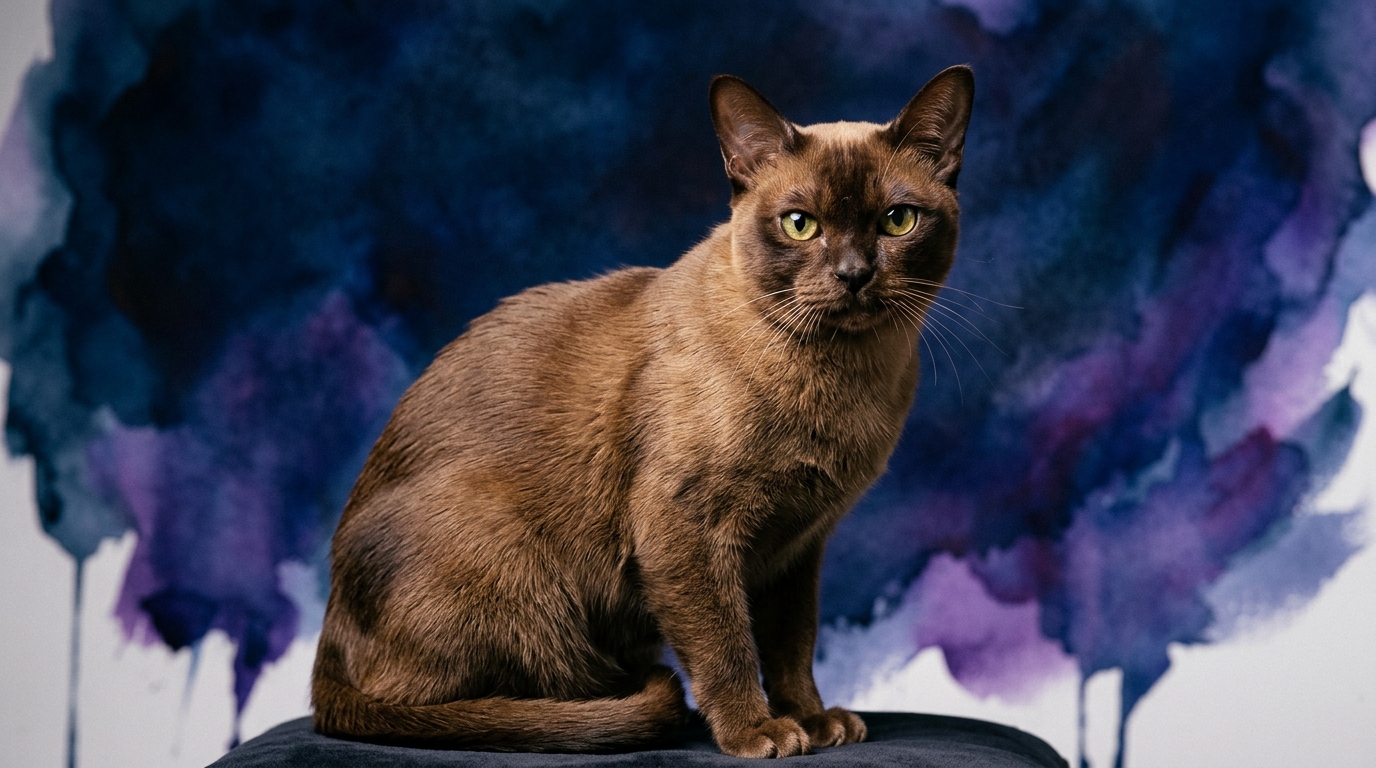
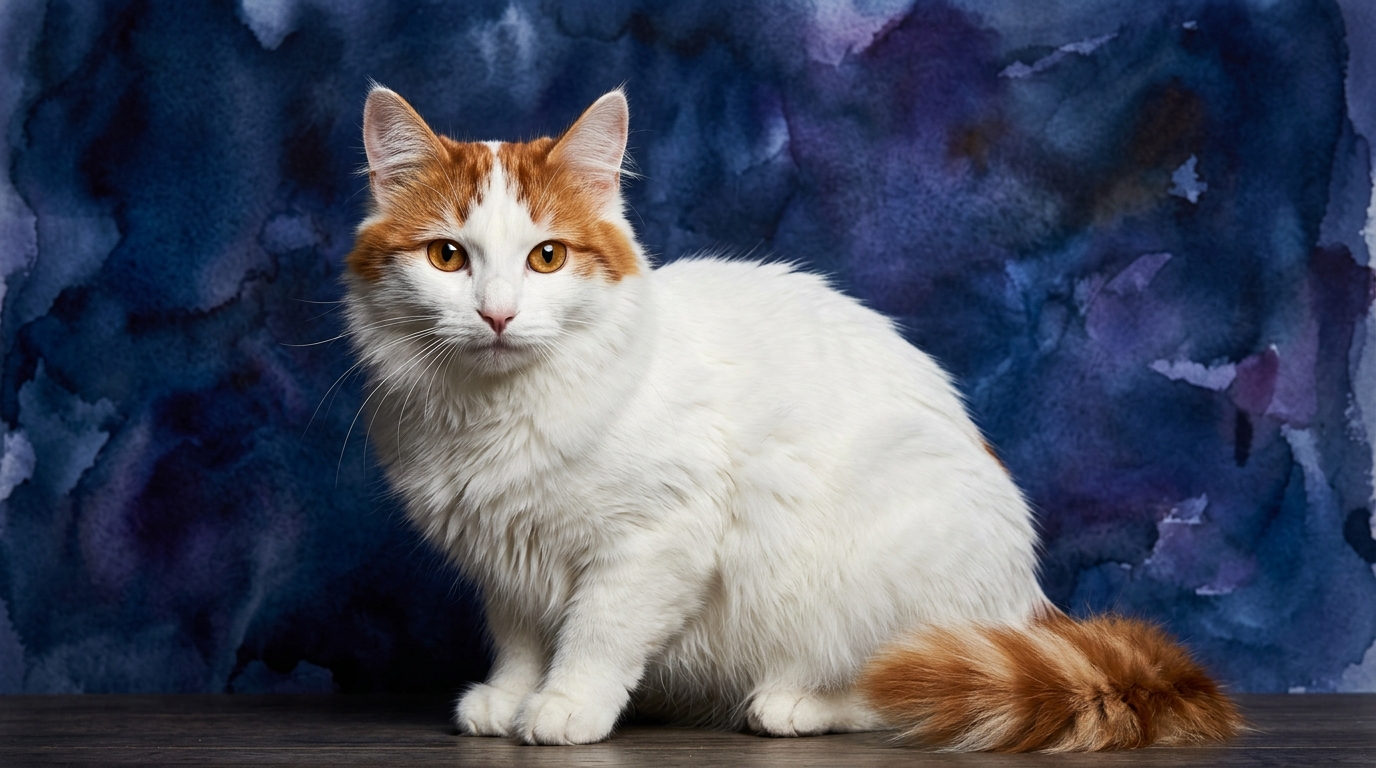
Side-by-Side Cognitive Profiles: Burmese vs. Turkish Van
To truly understand the mental faculties of these two captivating breeds, we must examine their individual cognitive dimensions as assessed by The Cosmic Pet Pet IQ Lab. These five dimensions — problem-solving, training speed, social intelligence, instinctive drive, and memory — paint a detailed picture of how each cat interacts with its world and its human companions.
The Burmese cat exhibits a cognitive profile marked by high adaptability and social attunement. Their Problem Solving is rated at 4/5, indicating an adeptness at navigating complex environmental challenges and figuring out intricate puzzles. Training Speed stands at an exceptional 5/5, signifying a remarkable capacity for rapid learning and quick acquisition of new behaviors and commands. Their Social Intelligence is also a stellar 5/5, reflecting an acute sensitivity to human emotions and a strong desire for interactive companionship. An Instinctive Drive of 3/5 suggests a moderate prey drive, making them playful hunters without being overly intense. Finally, their Memory at 4/5 ensures excellent recall for routines, learned tasks, and significant individuals.
In contrast, the Turkish Van presents a profile leaning towards independence and focused practicality. Their Problem Solving is rated at 3/5, meaning they are capable of resolving practical issues but might be less inclined towards abstract or complex mental exercises. Training Speed is 3/5, indicating they can learn, but often require more patience and repetition to master new skills. Social Intelligence is also 3/5, suggesting they form bonds selectively and value their personal space, preferring interaction on their own terms. Their Instinctive Drive matches the Burmese at 3/5, manifesting as a focused curiosity and a natural inclination for exploration, often famously involving water. Their Memory is rated at 3/5, sufficient for daily routines and essential recall, though perhaps less detailed or enduring than the Burmese.
Where the Burmese Cat Cognitively Shines
The Burmese cat consistently demonstrates cognitive strengths that position it as a highly interactive and adaptable feline. Their outstanding 5/5 training speed is a clear differentiator, signifying an exceptional ability to assimilate new commands, routines, and even complex tricks with remarkable efficiency. This rapid learning curve means Burmese cats often require fewer repetitions to grasp new concepts, making training a highly rewarding and often swift process. This cognitive agility is further bolstered by their 4/5 problem-solving capability, allowing them to not only learn from direct instruction but also to independently devise strategies for navigating their environment, such as opening cabinets or figuring out puzzle toys.
Beyond their impressive learning and problem-solving skills, the Burmese's 5/5 social intelligence is a profound cognitive advantage. This high score indicates an exquisite attunement to human emotions, intentions, and communication cues. They don't just coexist; they actively seek to understand and engage with their human companions, often displaying a remarkable empathy and responsiveness. This deep social awareness fosters a reciprocal relationship where the Burmese can anticipate needs and respond with genuine connection, making them profoundly communicative and integrated members of a household. Their 4/5 memory ensures that these social bonds, learned behaviors, and established routines are retained over long periods, contributing to their consistent and predictably affectionate nature.
Cognitive Strengths of the Turkish Van
While the Burmese cat undeniably excels in areas of rapid learning and overt social engagement, the Turkish Van possesses a distinct cognitive architecture that fosters unique strengths, particularly valued by owners who appreciate a self-possessed feline companion. Their 3/5 in social intelligence, for instance, doesn't signify a lack of connection, but rather an innate capacity for robust self-sufficiency. This cognitive independence allows them to navigate their environment and entertain themselves with remarkable autonomy, demonstrating a 'win' for owners seeking a cat that thrives without constant human intervention or validation. This self-reliance means they are less prone to separation anxiety and are content to observe and interact on their own terms, fostering a quieter yet profound bond.
Furthermore, their 3/5 instinctive drive, matching that of the Burmese, often manifests as a highly focused and persistent curiosity. This drive fuels their exploration and engagement with their surroundings, notably their well-documented affinity for water, allowing them to pursue their interests with singular determination. Their problem-solving ability, rated at 3/5, combined with this drive, enables them to methodically figure out practical challenges within their domain, such as finding creative ways to access interesting spaces or engaging in intricate play. This persistent, independent problem-solving and self-directed engagement represent a cognitive triumph for individuals who value a cat's inherent ability to thrive and find fulfillment through its own internal motivations and explorations.
Training Dynamics: Burmese vs. Turkish Van
When it comes to trainability, the Burmese cat presents a significantly easier and more rewarding experience compared to the Turkish Van, a distinction rooted deeply in their divergent cognitive profiles. With an exceptional training speed of 5/5, the Burmese demonstrates an unparalleled aptitude for learning new commands, tricks, and household routines with remarkable efficiency. This rapid assimilation is profoundly bolstered by their 5/5 social intelligence, which makes them exquisitely responsive to human cues, vocalizations, and body language. They inherently seek to understand and engage with their human companions, making them eager participants in training sessions and quick to associate actions with desired outcomes or rewards.
Their strong memory (4/5) further cements learned behaviors, ensuring consistency once a skill is acquired and reducing the need for constant reinforcement. A Burmese often approaches training as a shared activity, driven by their desire for interaction and approval. Conversely, the Turkish Van, with a 3/5 training speed, requires a more patient and persistent approach. While certainly capable of learning, their selective social intelligence (3/5) means they may be less outwardly motivated by human approval and more driven by their own immediate interests or intrinsic rewards. Their independent nature often means they engage in training on their own terms, making sessions potentially longer and less consistently productive for owners seeking rapid results. The Burmese's inherent desire for interactive companionship and their cognitive agility make them profoundly more amenable to structured training protocols and a joy to teach.
Matching Feline Intellect to Owner Lifestyles
The choice between a Burmese and a Turkish Van significantly depends on an owner's lifestyle and their desired level of feline interaction and cognitive engagement. Active owners who enjoy direct engagement, interactive play, and the rewarding challenge of teaching complex behaviors will likely find the Burmese an ideal match. Their 5/5 social intelligence means they thrive on constant companionship, often following their humans from room to room, participating in household activities, and even initiating play. Their rapid training speed (5/5) and problem-solving abilities (4/5) make them excellent candidates for clicker training, leash walking, or even learning retrieve games, providing ample opportunity for stimulating, shared activities. They require an owner who can dedicate time to their emotional and cognitive needs, offering consistent interaction and mental enrichment to prevent boredom and ensure their highly social nature is fulfilled.
In contrast, the Turkish Van, with its more independent cognitive profile (3/5 social intelligence), is better suited for relaxed owners who appreciate a cat with a strong sense of self and a less demanding need for constant human interaction. While they form deep bonds, these are often expressed through quiet companionship rather than overt displays of clinginess. Their moderate training speed (3/5) suggests they will learn routines, but perhaps won't be as enthusiastic about elaborate tricks, preferring activities that align with their natural curiosity and instinctive drives. Owners who appreciate a cat that is content to explore its environment independently, engage in self-directed play, and offers affection on its own terms will find the Turkish Van a fulfilling companion. They are still playful and curious, but their cognitive makeup lends itself to a more self-sufficient existence, making them suitable for households where quiet co-existence is valued alongside affectionate moments, rather than constant, demanding interaction.
The Verdict
Choose the Burmese if you desire a highly interactive, communicative, and exceptionally trainable companion eager to participate actively in your daily life and form a deep, reciprocal bond.
Opt for the Turkish Van if you appreciate an independent, self-reliant cat that forms selective bonds and enjoys exploring its environment on its own terms, offering affection without demanding constant attention.
🧠 Find Your Pet's IQ Score
Our Pet IQ Lab assessment covers 25+ tests across 5 cognitive dimensions — personalized to your breed.
Take the Full IQ Test →Frequently Asked Questions
Are Burmese cats good with children?
With a 5/5 social intelligence, Burmese cats are often patient and adaptable with children, thriving on the interaction. They enjoy play and can form strong bonds, making them generally suitable for family environments where they receive positive engagement.
Do Turkish Van cats really like water?
Yes, Turkish Van cats are uniquely predisposed to water, often enjoying playing in it or even swimming. This distinctive trait is linked to their instinctive drive, making them fascinating companions for owners who appreciate this unusual feline behavior.
Which cat requires more consistent mental stimulation?
While both benefit from enrichment, the Burmese, with higher problem-solving and social intelligence, often demands more consistent mental stimulation through interactive play and training to prevent boredom. The Turkish Van, being more self-reliant, might find adequate stimulation through independent exploration and less direct human intervention.