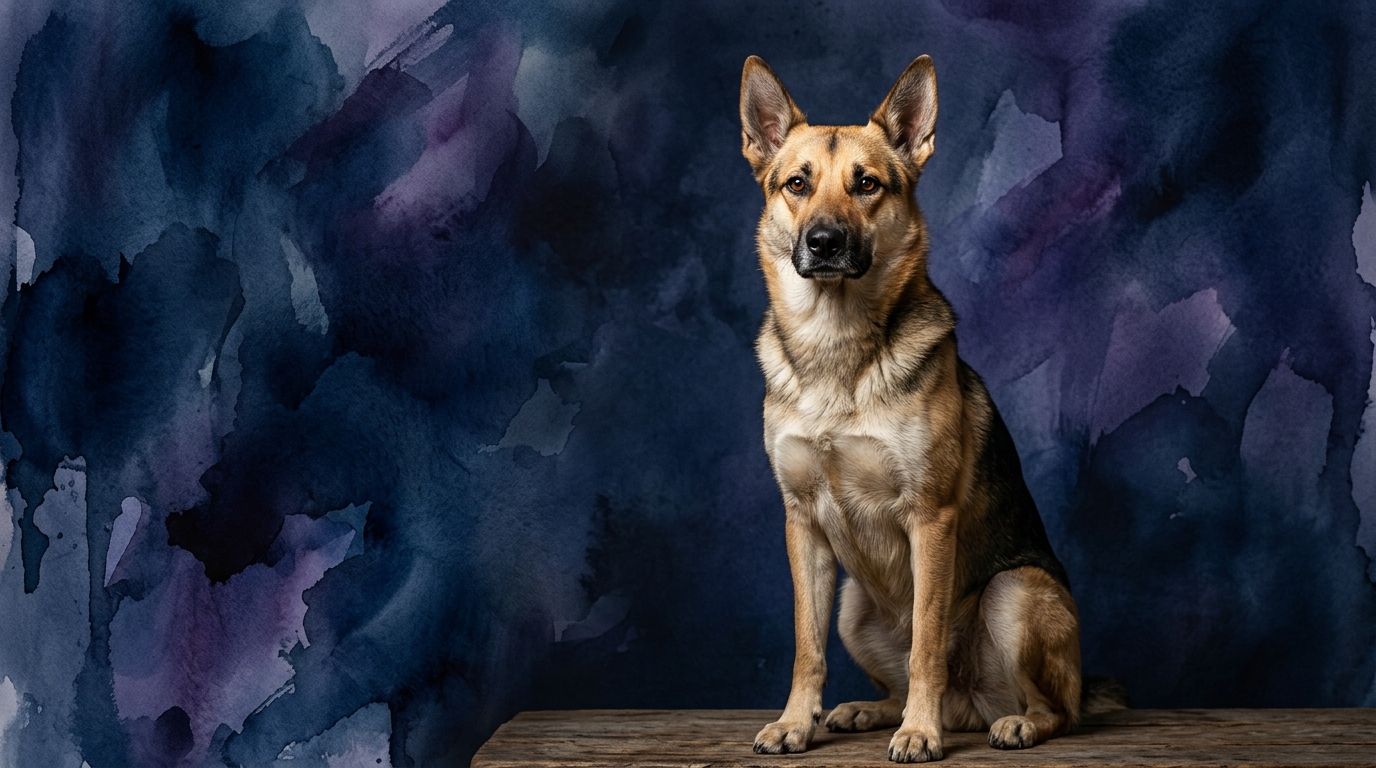
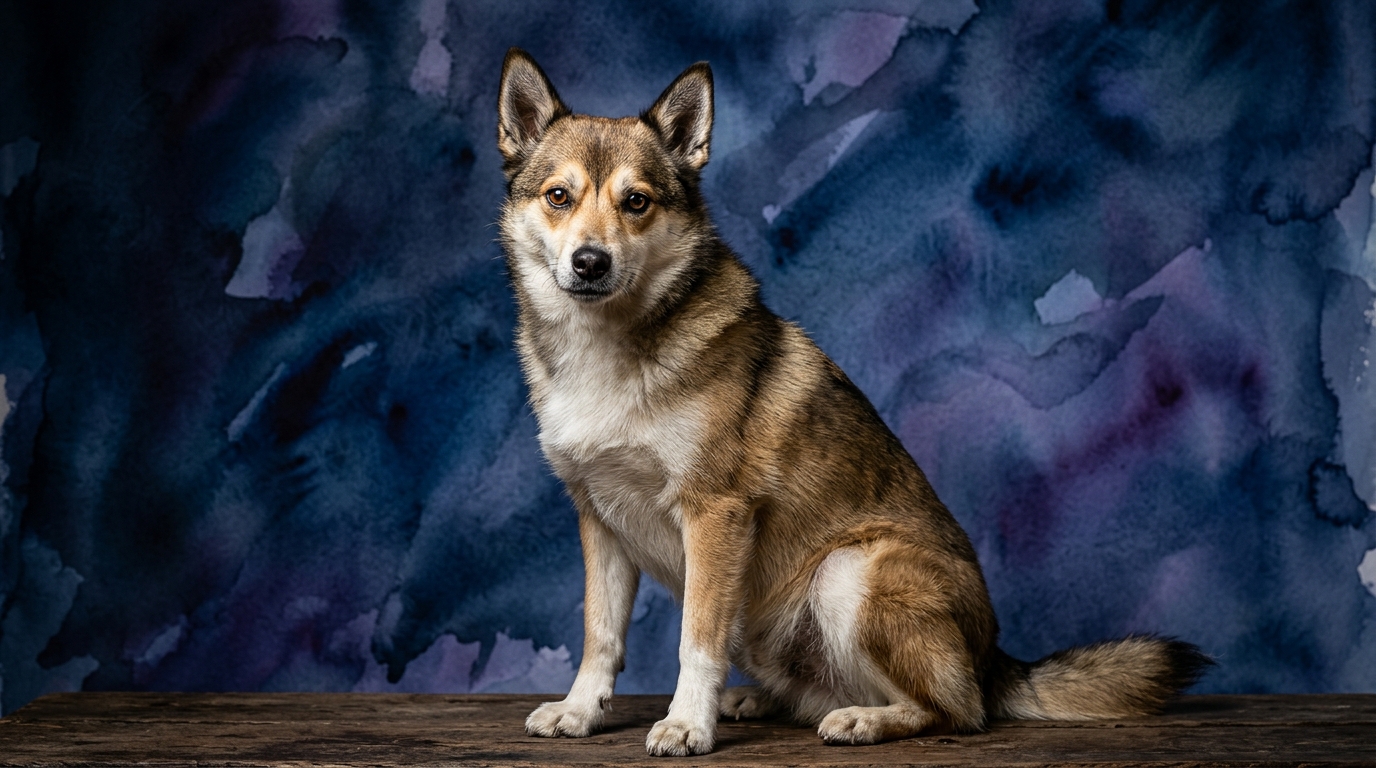
Side-by-Side IQ Profile: Canaan Dog vs. Norwegian Lundehund
The Cosmic Pet Pet IQ Lab employs a five-dimensional framework to assess canine intelligence, moving beyond simplistic notions to explore the nuances of a dog's mind. Let's delve into how the Canaan Dog and the Norwegian Lundehund measure up.
For the **Canaan Dog**, a breed with a Coren ranking of #43, their cognitive profile reflects their heritage as independent herders and guardians. Their Problem Solving is rated at 3/5, indicating an ability to navigate moderately complex situations and adapt to new challenges, often relying on their own judgment rather than constant human direction. Training Speed, also at 3/5, suggests they learn new commands at a respectable pace, capable of grasping routines but perhaps requiring consistent reinforcement due to their independent streak. Social Intelligence, at 3/5, means they can interpret human cues and interact appropriately within their social structure, though they often maintain a reserved demeanor. Their Instinctive Drive, rated 3/5, points to a moderate inherent inclination for their historical tasks, such as vigilance and territorial awareness, which translates into a natural aptitude for specific roles without being overly obsessive. Critically, their Memory stands out at 4/5, indicating a strong capacity to retain learned behaviors, recognize patterns, and remember past experiences, which is invaluable for a dog expected to operate with some autonomy.
The **Norwegian Lundehund**, a breed not listed in Coren's rankings, presents a distinct cognitive makeup shaped by its specialized role in hunting puffins in rugged coastal environments. Their Problem Solving is also 3/5, but this manifests in a unique way: they excel at navigating complex physical environments, such as narrow rock crevices and slippery slopes, demonstrating a specific spatial and environmental problem-solving acumen. Training Speed, at 3/5, means they can learn, but their independent nature and often quirky motivation might require creative and patient training methods to maintain engagement. Social Intelligence, rated 3/5, shows they can connect with their human companions, though they tend to be wary of strangers and may prefer a smaller, familiar social circle. Their Instinctive Drive, also 3/5, is largely channeled into their historical hunting behaviors — curiosity, agility, and a drive to explore tight spaces, rather than traditional herding or guarding. Their Memory is rated 3/5, suggesting they retain information adequately for daily routines and learned tasks, but perhaps not with the same depth or long-term recall for complex sequences as the Canaan Dog.
Where the Canaan Dog Wins Cognitively
The Canaan Dog's cognitive strengths primarily stem from its superior Memory (4/5) and its historical role demanding self-reliance tempered with responsiveness. This enhanced memory allows them to not only learn commands but to retain them consistently over time, making them more reliable in performing complex sequences or remembering boundaries. This attribute, combined with their 3/5 Training Speed, means that once a concept is understood, it's likely to stick. Their Coren ranking of #43 further underscores their aptitude for formal obedience and structured learning, suggesting a mind that processes and retains human-directed tasks with greater efficiency than many other breeds. For tasks requiring consistent application of learned rules, such as advanced obedience, agility, or even service work, the Canaan Dog's memory offers a distinct advantage, allowing for more nuanced and dependable performance.
Where the Norwegian Lundehund Wins Cognitively
The Norwegian Lundehund's cognitive advantages, while not reflected in a higher numerical score for any single dimension, lie in the *specialized nature* of their Problem Solving (3/5) and Instinctive Drive (3/5). Their unique physical attributes, like extra toes and hyper-flexible joints, are a testament to an evolutionary path focused on navigating extremely challenging terrain. This translates into a highly specialized form of intelligence: exceptional spatial reasoning and body awareness when confronted with physical obstacles. They are masters of finding creative, often contorted, solutions to access tight spaces or overcome barriers, a cognitive trait directly linked to their puffin-hunting ancestry. While not excelling in abstract problem-solving, their practical, environmental ingenuity is unparalleled. Their social intelligence, while rated 3/5, often manifests as a deep, albeit selective, bond with their chosen family, demonstrating a nuanced understanding of their inner circle's dynamics.
Which is Easier to Train and Why
When it comes to ease of training, the Canaan Dog generally presents a more straightforward path for owners seeking traditional obedience. Their stronger Memory (4/5) means they are more likely to remember commands and routines consistently, reducing the need for constant re-teaching. While they possess an independent streak, their 3/5 Training Speed and Coren ranking indicate an inherent capacity and willingness to engage in structured learning. They respond well to clear, consistent methods, and their problem-solving (3/5) allows them to grasp the 'why' behind certain actions, leading to more reliable compliance. Their social intelligence (3/5) also means they are generally attuned to their handler's expectations, even if they sometimes choose to test boundaries.
The Norwegian Lundehund, conversely, can be more challenging for conventional obedience training due to their highly independent nature and a memory score of 3/5. While they are capable of learning at a 3/5 Training Speed, their motivation often needs to be carefully managed. They thrive on positive reinforcement and engagement, but their innate drive to explore and their historical role as solo hunters means they are less inclined to blindly follow commands. Training a Lundehund requires immense patience, creativity, and a willingness to embrace their unique quirks. They might understand a command perfectly well but choose not to execute it if a more interesting scent or sight captures their attention, reflecting their practical, rather than obedience-focused, problem-solving. Owners must recognize that their 'stubbornness' is often a reflection of their self-sufficient cognitive processing rather than a lack of understanding.
Which Suits Active Owners vs. Relaxed Owners
The **Canaan Dog** is generally better suited for active owners who appreciate a dog with purpose and structure. Their instinctive drives (3/5) and problem-solving abilities (3/5) mean they thrive on mental and physical engagement. They benefit from consistent exercise, whether it's long walks, hiking, or participating in dog sports like agility, herding trials, or advanced obedience. Owners who can provide clear leadership, consistent training, and ample opportunities for their dog to think and move will see the Canaan Dog flourish. Their reserved nature and territorial instincts also mean they require socialization and guidance to ensure they are well-adjusted, making them a fit for owners committed to proactive management and engagement.
The **Norwegian Lundehund**, while physically capable, can suit a slightly different type of active owner, or even one who is more relaxed about structured activity but provides plenty of novel exploration. Their unique physical attributes suggest a need for opportunities to climb, explore, and use their body in varied ways, rather than just repetitive running. They are not typically high-energy in the traditional sense but need mental stimulation through scent work, puzzle toys, and exploring new environments where their specialized problem-solving can shine. Relaxed owners, provided they are consistent with training and tolerant of independent behaviors like 'Lundehund Lick' or 'puffin cries,' could find a companion in this breed, especially if they enjoy quiet companionship and don't demand strict obedience. They are less about sustained exertion and more about curious, independent exploration.
The Verdict
Choose the Canaan Dog if you seek a vigilant, intelligent companion capable of consistent obedience, thriving with structured training and an owner who appreciates a dog with a strong memory and independent spirit that responds well to leadership.
Opt for the Norwegian Lundehund if you are charmed by a quirky, independent companion with specialized physical problem-solving skills, tolerant of unique behaviors, and willing to engage in patient, creative training for a dog more interested in exploring than strict adherence.
🧠 Find Your Pet's IQ Score
Our Pet IQ Lab assessment covers 25+ tests across 5 cognitive dimensions — personalized to your breed.
Take the Full IQ Test →Frequently Asked Questions
Are Canaan Dogs good with children?
Canaan Dogs can be good with older, respectful children who understand how to interact with dogs. Their social intelligence (3/5) means they can integrate into a family structure, but their reserved nature and territorial instincts mean they typically do not tolerate rough play and require careful introductions and supervision with younger children.
Do Norwegian Lundehunds require a lot of exercise?
Norwegian Lundehunds have moderate exercise needs, less about intense, sustained activity and more about varied, stimulating exploration. Daily walks combined with opportunities for scent work, climbing, or navigating interesting terrain will satisfy their instinctive drives and specialized problem-solving abilities without over-exertion.
Are either of these breeds suitable for first-time dog owners?
Neither breed is typically recommended for first-time dog owners. Both the Canaan Dog and Norwegian Lundehund possess independent temperaments, requiring experienced handlers who understand their specific cognitive and behavioral nuances, and who can provide consistent training and socialization to manage their unique traits effectively.